



Gilt Wall Lamps
These gilt wall lamps bring warmth and decorative focus to a room, drawing the eye upwards through traditional French and Florentine designs.
Gilt Wall Lamps
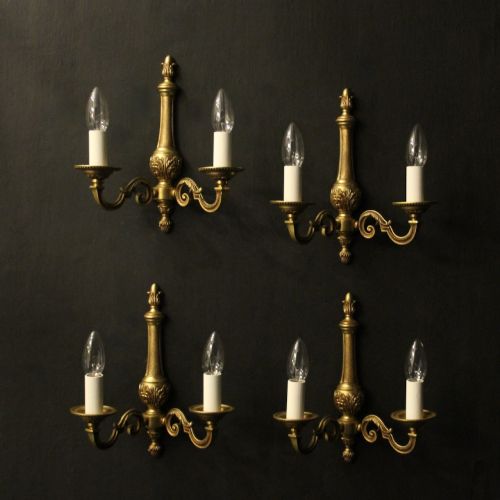
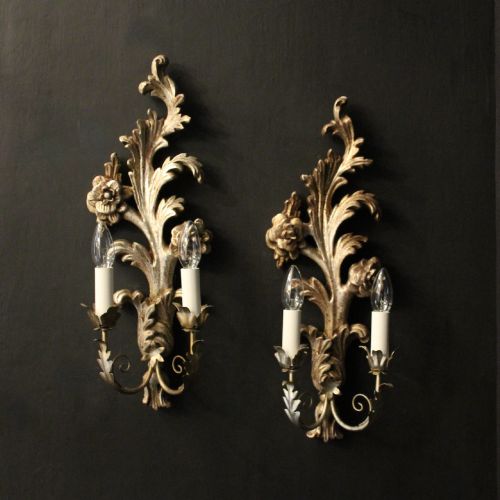
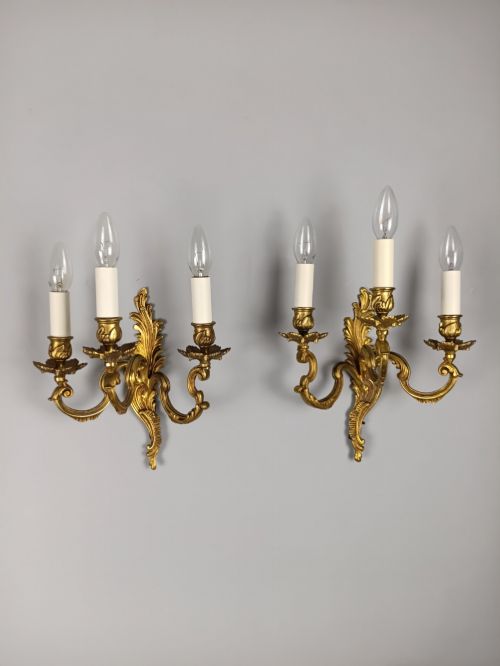
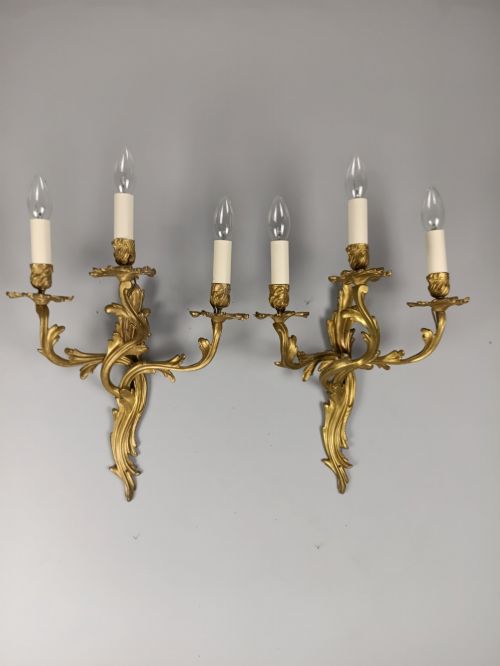
When buyers search for gilt wall lamps, they find decorative lighting fixtures designed to mount directly onto vertical surfaces. The selection on this page consists predominantly of French and Florentine wall lights and sconces originating from the Victorian era up to 1930.
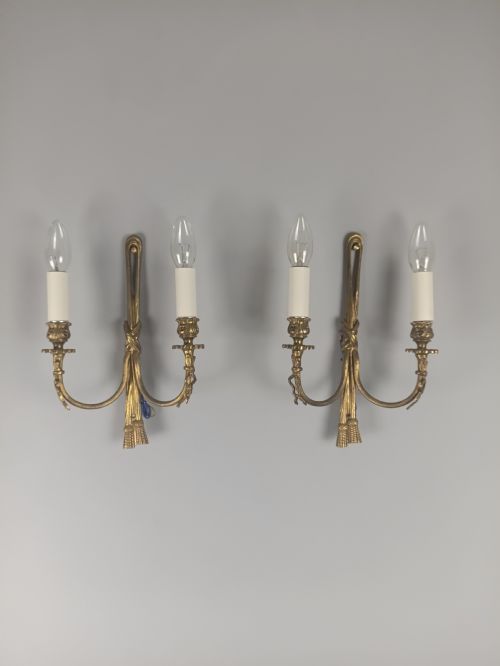
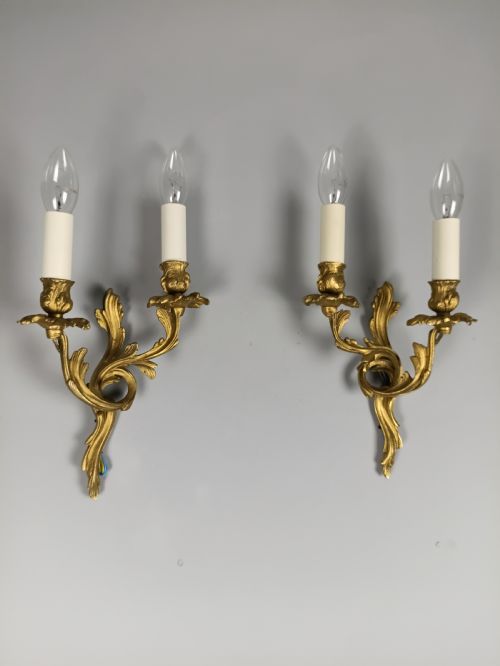
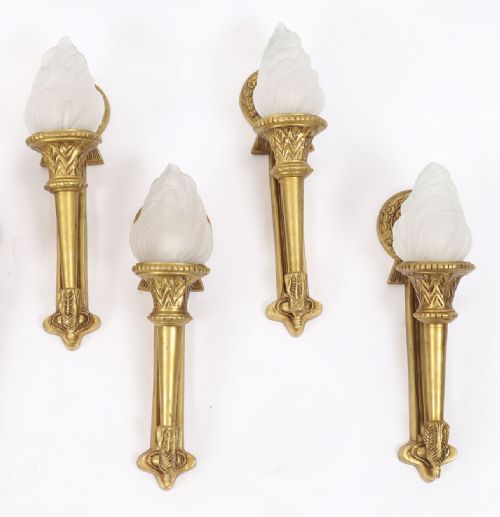
Most examples take the form of twin-arm or triple-arm brackets, often made as matched pairs or larger sets of four. The dominant visual language draws heavily on Rococo, Neo-Classical, and Louis XVI styles, incorporating ornate casting and traditional mounting formats.
How they were made
The construction relies on metals such as brass and bronze, finished with surface gilding, silver giltwood, or ormolu. Artisans cast these metals into elaborate forms, including ribbon motifs, cherubs, and flaming torches, sometimes combining the metalwork with glass or crystal elements.
The decorative detailing reflects the period's preference for sculptural forms, utilising techniques like fire gilding on bronze and detailed wood carving for Florentine pieces. Many surviving examples have been subsequently rewired for modern electrical use while retaining their original metal frames.
Listings span the Victorian era to 1930, featuring metals like ormolu, gilt bronze, and gilded brass across French and Florentine designs.
What varies in quality
Quality in these wall lights is defined by the crispness of the metal casting and the depth of the gilding. Finer pieces display sharply rendered details in motifs like acanthus leaves and cherubs, whereas simpler examples show softer edges from worn moulds.
The integrity of the construction, the weight of the bronze or brass, and the harmonious integration of glass or crystal components dictate the overall standing of an individual piece.
The Gilt Wall Lamps Glossary
- Ormolu
- High-quality gilded bronze achieved through a mercury-gilding process that creates a deep, durable golden finish. This technique was widely employed in fine French decorative objects.
- Sconce
- A wall-mounted lighting fixture designed to hold candles or electric bulbs. These fixtures project outward to illuminate surrounding wall spaces.
- Rococo
- An ornate 18th-century design style characterised by asymmetrical scrolls, shell motifs, and natural curves. This aesthetic reappeared frequently in later revival lighting.
- Neo-Classical
- A decorative style inspired by classical antiquity, featuring symmetry, urns, flaming torches, and restrained geometric lines. It provides a formal contrast to heavier Rococo curves.
- Giltwood
- Timber treated with a thin layer of gold leaf or gold paint applied over a prepared base. Florentine makers utilised this method for carved wall brackets.
Gilt Wall Lamps: Frequently Asked Questions
How are wall sconces installed?
These fixtures mount directly onto wall surfaces over existing electrical wiring junction boxes.
Professional installation is recommended to secure the weight of cast bronze or brass frames safely.
Were these lamps originally electric?
Many of these pieces originated as candle sconces before being converted for electricity during later periods.
Rewired examples allow safe integration into modern domestic lighting schemes while preserving antique metalwork.
How do I identify a French Rococo sconce?
French Rococo pieces feature asymmetrical scrolls, organic plant forms, and elaborate cast bronze or gilded brass arms.
They often appear in matched pairs and display a distinct sense of ornamental movement.
Where should I place wall lights?
Wall lights work effectively in pairs flanking mirrors, fireplaces, or architectural doorways to provide balanced ambient illumination.
Their decorative gilt surfaces also serve as visual focal points in hallways and reception rooms.