
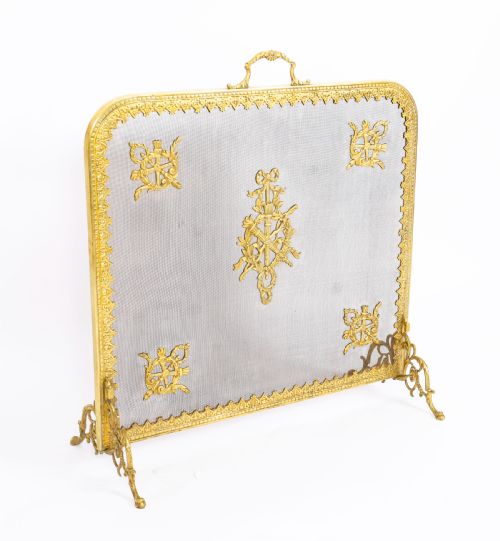
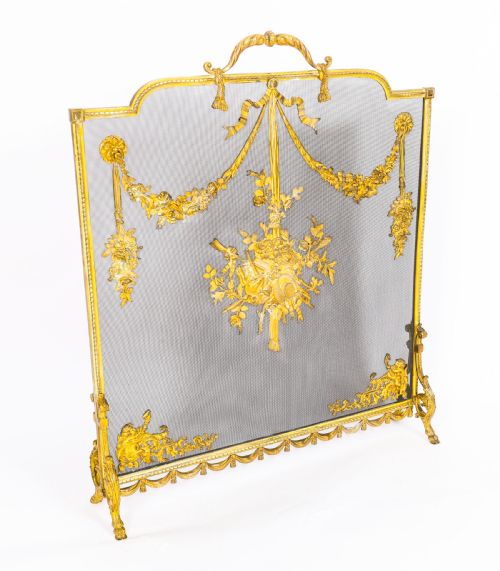


Gilt Metal Spark Screen
A gilt metal spark screen brings warmth and French refinement to a hearth, offering protective mesh framed in ornate cast metal.
Gilt Metal Spark Screen
When you search for a gilt metal spark screen, you examine decorative fireplace accessories designed to shield a room from embers while framing the hearth with period elegance. The pieces available span the nineteenth century, including specific dates from the eighteen-hundreds up to nineteen hundred, alongside broad nineteenth-century items.
The dominant forms you meet on this page are French fire screens executed in revived historical styles. These range from French Rococo and Rococo Revival to Louis XIV Revival, Louis XVI, French Empire Revival, and Louis XV style, with occasional Victorian neoclassical revival examples.
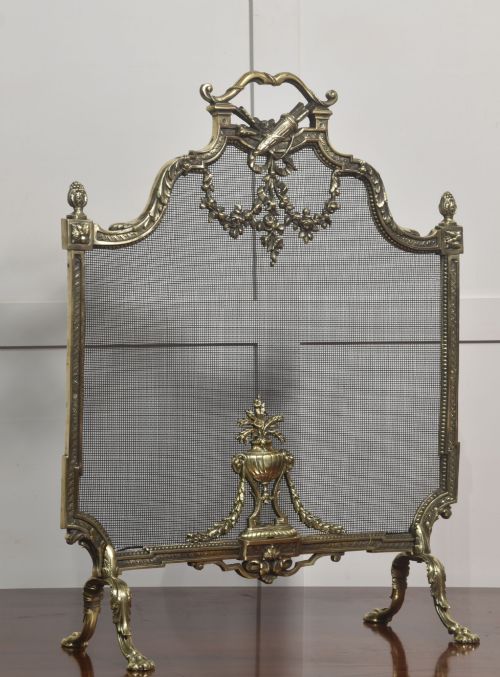
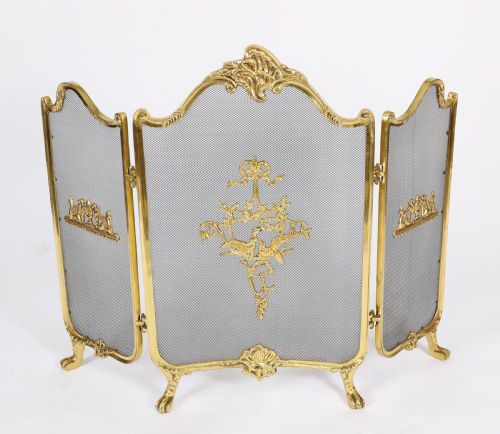
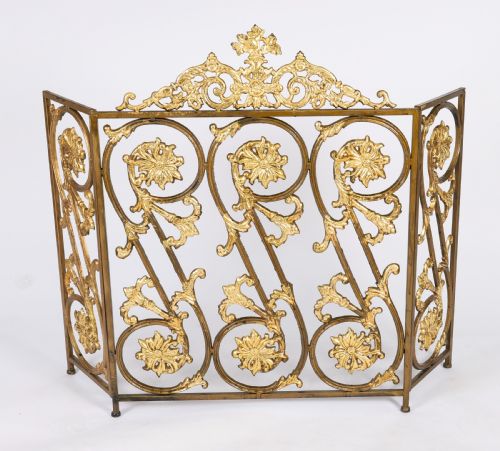
Makers and creators fashioned these fire guards in elaborate configurations, including triple fire screens, peacock fan fire screens, and rectangular frames decorated with floral and musical trophies or classical motifs. Most listings originate from French workshops or follow distinct French decorative traditions of the eighteen hundreds.
How they were made
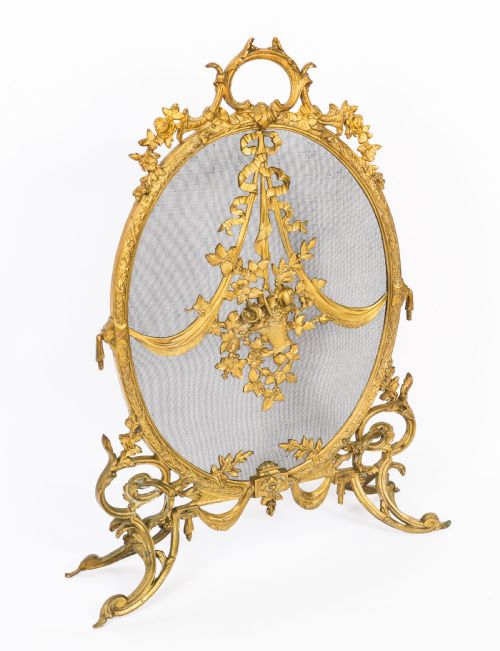
Artisans constructed the structural frames of a gilt metal spark screen using cast metals such as gilt bronze, ormolu, gilt brass, and standard brass. These components were cast and chased to produce intricate scrolls, flaming torches, and classical trophies typical of revival aesthetics.
The protective barrier itself consists of fine wire mesh, steel mesh, or standard mesh fitted securely within the heavy metal borders. This combination provided both the necessary spark protection and the delicate transparency required for decorative interior settings.
Materials recorded across the current inventory include wire mesh, gilt bronze, ormolu, brass, and steel mesh.
What varies in quality
The sophistication of the casting and chasing defines the upper tier of these fireplace accessories, where crisp relief work and deep gilding elevate simple guards into sculptural statements. Finer examples display meticulous detail in human figures, musical instruments, and botanical motifs.
Structural complexity also separates standard items from exceptional ones, such as folding triple screens or articulating peacock fan mechanisms that require precise mechanical joints. The weight of the bronze or brass and the integrity of the integrated mesh further distinguish superior workshop production.
The Gilt Metal Spark Screen Glossary
- Ormolu
- Gilded bronze produced through a mercury amalgamation process common in high-end French decorative metalwork. This finish yields a rich, deep golden tone that survives centuries of hearth exposure.
- Fire Screen
- A decorative interior accessory placed before a fireplace opening when the fire is unlit. They protect the room from stray sparks during use and conceal the dark grate during warmer months.
- Rococo Revival
- A nineteenth-century design movement mimicking the asymmetrical scrolls, shell motifs, and natural curves of the eighteenth-century French court. It appears frequently in the cast frames of these hearth guards.
- Trophy
- A decorative grouping of related symbols, such as musical instruments or classical arms, cast in relief on the metal frame. These groupings reflect the elaborate decorative vocabulary of French revival periods.
Gilt Metal Spark Screen: Frequently Asked Questions
How do I use a fire screen safely?
Place the screen directly in front of the fireplace opening to catch stray sparks and embers while the fire burns. Ensure the stable metal feet rest firmly on a hearth rug or stone floor.
Keep the mesh clear of direct, sustained contact with roaring logs to protect the finish. Move the screen using the solid metal frame once the metal has cooled completely.
How do I clean gilt metal?
Dust the gilt bronze or brass surfaces gently with a soft, dry cloth to prevent the accumulation of soot and grime. Avoid abrasive cleaners, polishes, or harsh chemicals that strip the delicate gold surface.
Vacuum the wire or steel mesh very carefully using a soft brush attachment. Professional conservation is recommended if the gilding requires more intensive cleaning.
How can I tell the period?
Examine the casting quality, fastener types, and stylistic vocabulary to determine the age of the piece. Nineteenth-century French revival items often feature heavy bronze casting and hand-chased details associated with nineteenth-century workshops.
Compare the specific revival style, such as Louis XVI or Empire, with documented period motifs. Structural wear on the mesh and the rear supports also provides clues to age.
What is a peacock fan screen?
A peacock fan screen is a specialised fire screen featuring folding metal panels that fan outward like a tail. This design allows the guard to expand across wide hearth openings and fold flat when not in use.
These screens typically combine gilt metal frames with fine mesh inserts to balance decorative expansion with practical spark protection. They represent a distinct, highly engineered form of nineteenth-century fireplace accessory.