
Gilt Framed River Landscape
A gilt framed river landscape brings water, sky and nineteenth-century atmosphere straight into a room through oil and watercolour.
Gilt Framed River Landscape
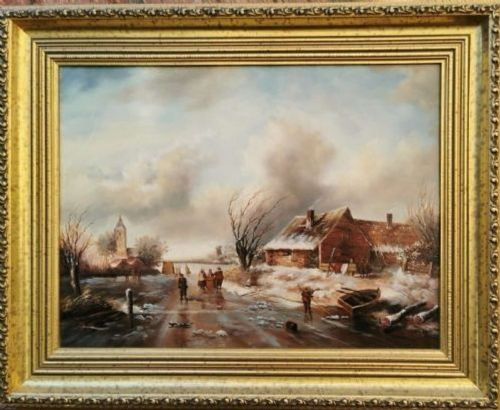
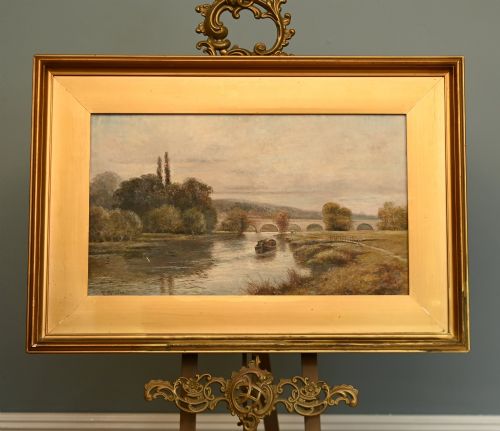
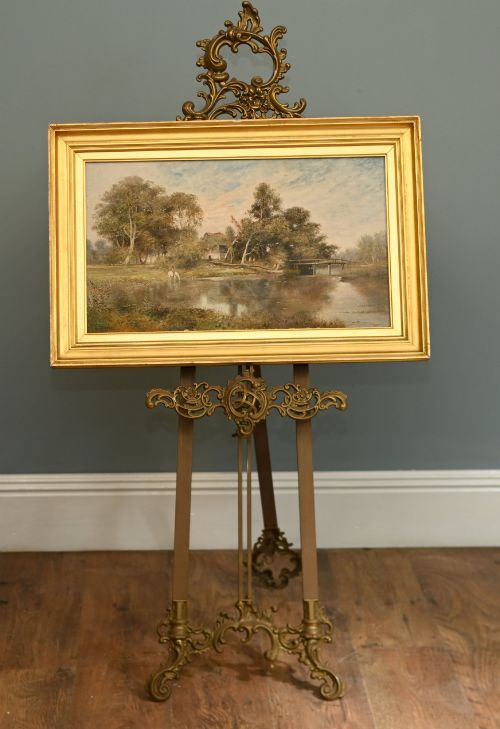
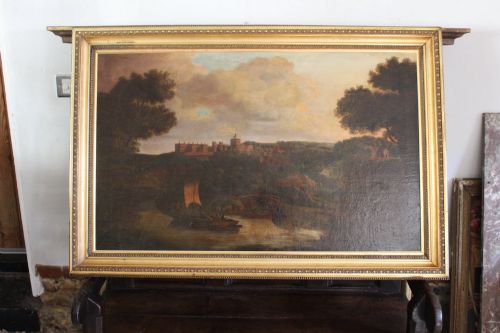
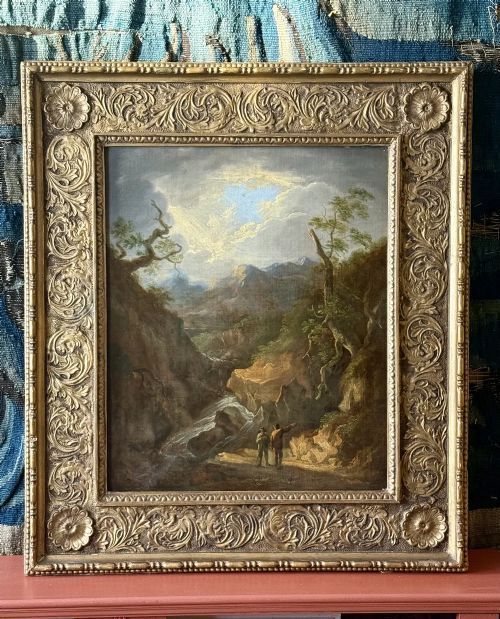
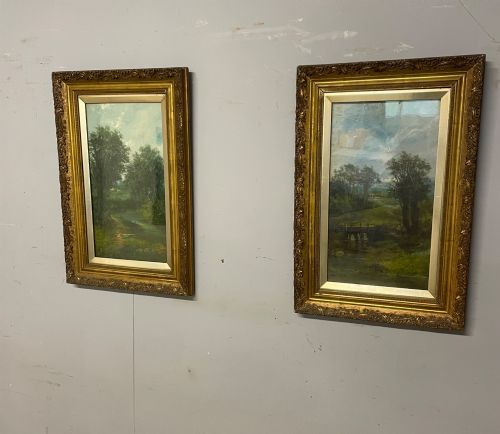
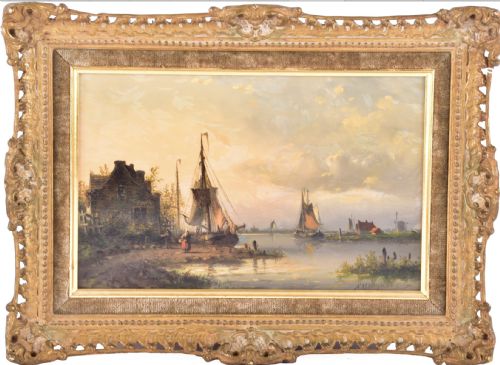
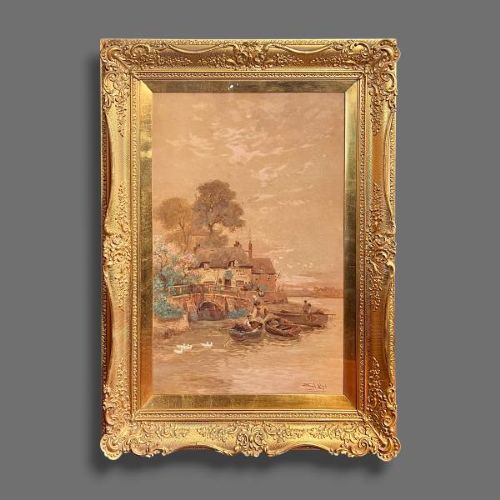
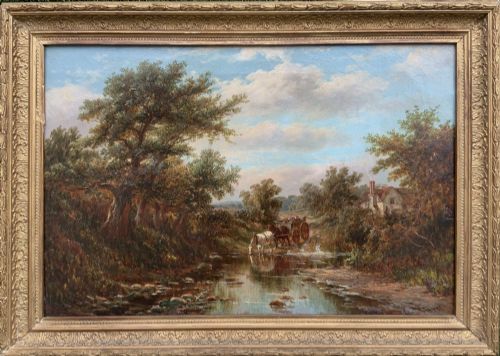
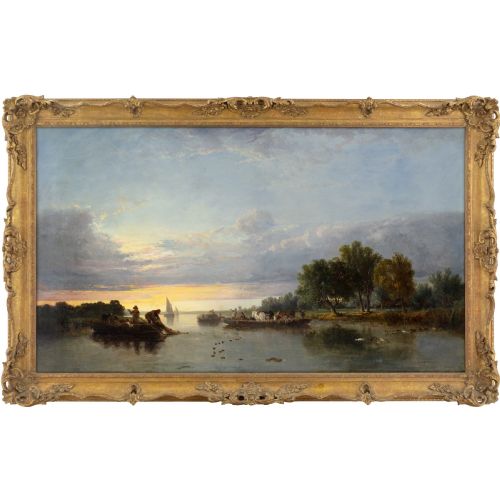
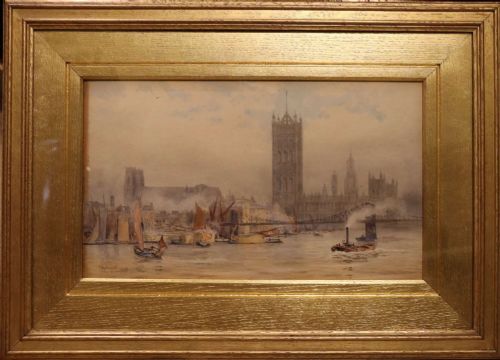
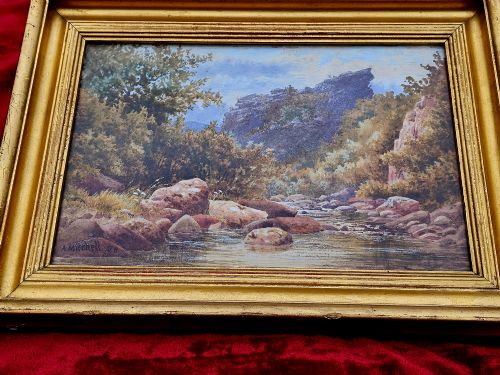
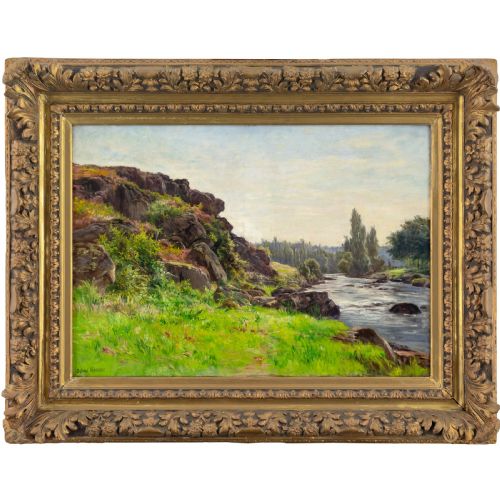
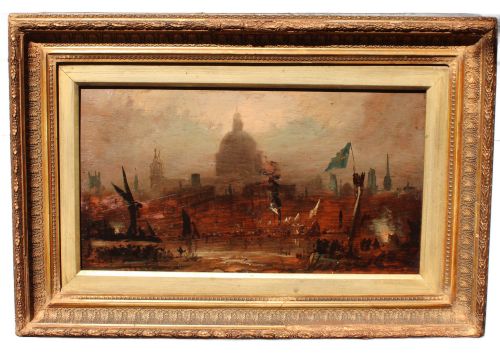
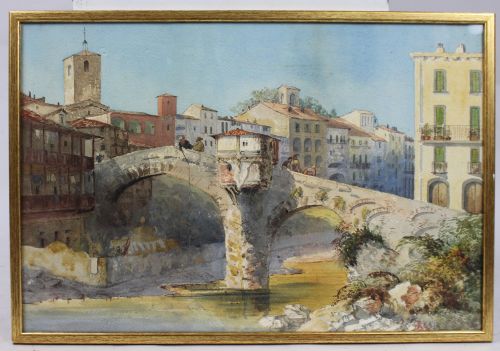
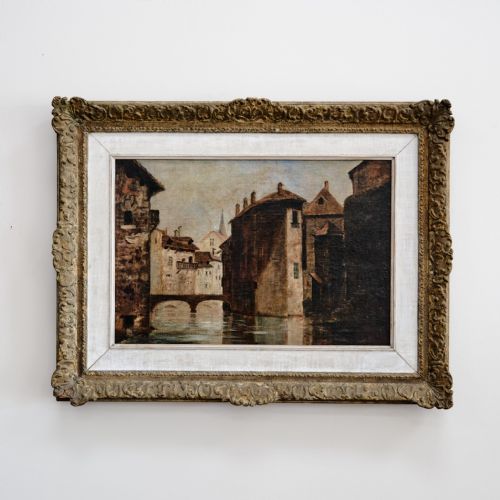
A gilt framed river landscape captures waterways, bridges and pastoral riverbanks recorded mostly during the nineteenth century. These works range from intimate oil sketches on board to large scale watercolours and detailed canvases housed in period frames.
The prevalent forms on this page include British and continental scenes depicting the Thames, French waterways and Dutch canals. Painters of this era captured the changing light on water using realistic or impressionistic brushwork.
Buyers seek these framed artworks to anchor a room with traditional depth and historical character. The combination of painted water and ornate gold leaf framing creates a focal point that suits both period interiors and contemporary spaces.
Materials and Construction
The foundational support relies on canvas stretched over wooden frames, sturdy wooden panels, or heavy paper for watercolours. Artists applied oil paints or watercolours using layered brushwork to achieve depth in the water and sky.
The characteristic frames are constructed from wood shaped with gesso, which is a plaster mixture carved or moulded into decorative patterns. These mouldings were then finished with layers of gilt or gold leaf to produce the bright metallic border.
Nineteenth-century artists frequently braved unpredictable British weather outdoors, returning indoors with damp boots and river mud on their easels.
Judging Quality and Execution
Quality rests upon the artist's ability to handle light, perspective and the natural movement of water. Stronger pieces show confident brushwork and harmonious colour palettes that hold the viewer's attention across the entire composition.
The integration between the painting and its original frame dictates much of the visual success. Intricately moulded gesso frames that complement the age and palette of the artwork elevate the overall presence of the piece.
Nicolaas Martinus Wijdoogen·Stuart Lloyd·Thomas Thomas·Edward Williams·H Medlycott·Gabriel Mathieu·Robert Thorne Waite·Francis Moltino·Willem Bos·George Oyston·Alfred East·Albert Rieger·Paul Desire Trouillebert·E Brown·T C Hofland·Henry H Parker·Charles Clair·Charles William Wyllie·Alexandre Le Bihan·Thomas Baker·Andre Prevot Valeri·Mario Pinetti·Arthur Herbert Rigg
The Gilt Framed River Landscape Glossary
- Gesso
- A plaster mixture applied to wood frames and carved or moulded into decorative patterns before gilding. This layer provides the smooth base for crisp surface ornamentation.
- Giltwood
- Wood that has been coated with thin sheets of gold leaf or metallic powder. It provides the characteristic bright metallic finish seen on antique frames.
- Oil on Canvas
- Pigment mixed with drying oil applied to a woven fabric support stretched over a wooden frame. This medium allows for rich colour depth and blended tones.
- Watercolour
- Pigments suspended in a water-based solution applied to paper. It creates luminous washes and delicate atmospheric effects.
- Impressionism
- A nineteenth-century painting style focusing on the visual impression of the moment, particularly shifting light and open brushwork.
Gilt Framed River Landscape: Frequently Asked Questions
How do I hang a heavy gilt framed painting?
Heavy frames require sturdy picture hooks screwed directly into wall studs or solid masonry using appropriate wall anchors. Weight should be distributed evenly across robust brass D-rings attached securely to the wooden stretcher bars.
Avoid using simple picture wire on older frames unless the hardware has been checked for strength. Ensure the hanging height places the centre of the canvas at comfortable eye level.
Are these paintings original period works?
The selections on this page date primarily from the nineteenth century and early twentieth century. They include original hand-painted oils and watercolours created by listed artists and continental schools of the period.
Signatures, artist registry records and framing styles help confirm the period origins of each artwork. Examination of the canvas back and stretcher construction also reveals age.
Where should I place a river landscape in my home?
River landscapes suit living rooms, studies or hallways where natural light can illuminate the brushwork and gilding. Placing the artwork away from direct sunlight and damp environments protects both the canvas and the frame.
Pairing the painting with traditional furniture or contrasting it against a plain wall allows the ornate frame to stand out. Consider sightlines from seating areas to enjoy the composition fully.