


Gilt Decorated Glass
Gilt decorated glass brings together gold leaf and transparent vessels from the eighteenth century to the twentieth.
Gilt Decorated Glass
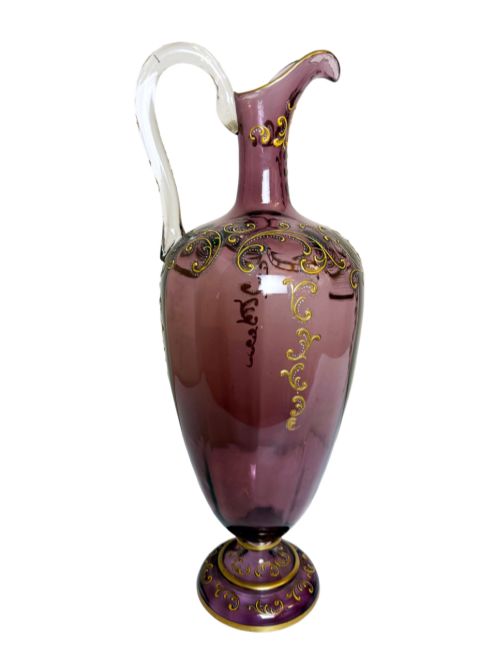
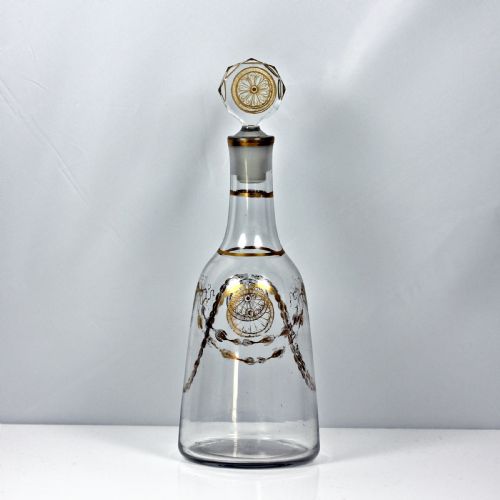
When you examine gilt decorated glass, you find domestic and decorative objects ranging from Georgian decanters and nineteenth-century vases to wall mirrors framed in giltwood. These pieces combine transparent or coloured vessels with applied gold leaf, enamel, and hand-painted motifs.
The version you are most likely to meet on this page is the Victorian table piece, such as a blown glass pitcher, a mantle lustre, or an engraved vase. Alongside these glassware items, the selection includes related mirrors and cabinets featuring gilt decoration.
How they were made
Glassmakers shaped vessels through blowing and cutting, utilising clear, ruby, white, and peachblow glass bodies. Artisans then applied gold leaf, leaf gilding, and enamel paint to the cooled surfaces, sometimes combining engraving with the metallic decoration.
For larger furnishing pieces such as wall mirrors and cabinets, makers relied on wood carcasses finished with gesso and giltwood to complement the glass components.
Some apothecary jars listed here once held medicinal tinctures before earning a quiet retirement on a collector's shelf.
What varies in quality
Quality rests upon the precision of the hand painting and the crispness of the glass engraving beneath or beside the gold. Pieces that retain their full gilt layer without rubbing or dulling demonstrate superior preservation and craftsmanship.
The sophistication of the design, whether a chinoiserie motif on a mirror or an intricate floral appliques on a pitcher, separates standard production wares from the finer workshop creations.
James Giles·Baccarat·Adelbert Niemeyer
The Gilt Decorated Glass Glossary
- Mantle lustre
- A glass ornament hung with crystal prisms designed for a fireplace mantelpiece. These pieces often feature painted enamel and gilt decoration.
- Peachblow glass
- A nineteenth-century art glass shading from pink to white or red to cream. It provides a coloured ground for subsequent gilding.
- Gesso
- A plaster-based material applied to wood frames before gilding. It creates a smooth, raised surface for gold leaf.
- Tincture bottle
- A medicinal glass jar used by apothecaries. Antique examples frequently display gilt labels or decorative panels.
- Chinoiserie
- A European decorative style reflecting Chinese artistic traditions. It appears on mirrors and decorative objects from the Georgian and Edwardian periods.
Gilt Decorated Glass: Frequently Asked Questions
Are these glass pieces safe for daily use?
Most antique decanters, pitchers, and vases serve better as display items than as everyday tableware. The hand-applied gold leaf wears away with frequent handling and washing.
Use them for occasional dining or keep them on mantelpieces and inside display cabinets to preserve the finish.
How can I tell Georgian glass from Victorian pieces?
Georgian glass often displays heavier metal content and simpler, refined forms such as half-sized decanters with classical gilt patterns. Victorian items show greater variety in coloured glass bodies and denser enamel decoration.
Examining the pontil mark at the base helps determine the manufacturing period and blowing technique.
Why do some items combine glass and giltwood?
Mirrors and vitrines pair glass panels with giltwood frames to maximise light reflection within a room. The carved wooden frames receive gesso and gold leaf to match the reflective properties of the central mirror plate.
This combination was particularly favoured during the Regency and Victorian periods for principal reception rooms.