


Gilded Glass Lamp
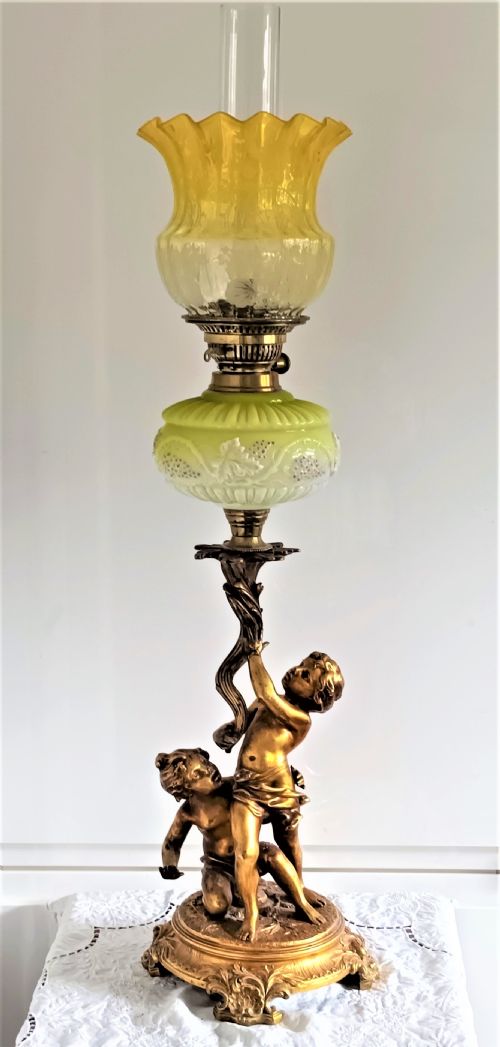
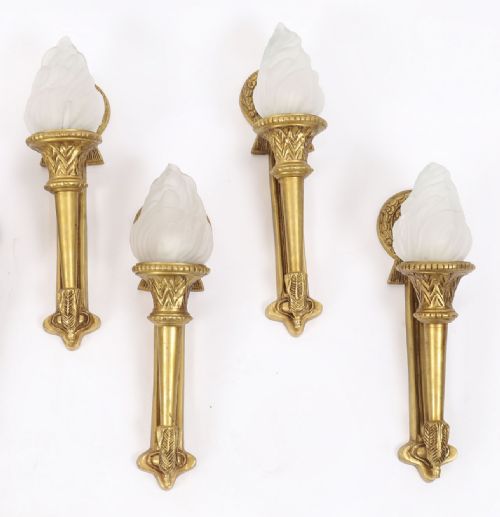
These gilded glass lamp designs combine reflective metalwork with transparent and frosted bodies to bring rich illumination into domestic spaces.
Gilded Glass Lamp
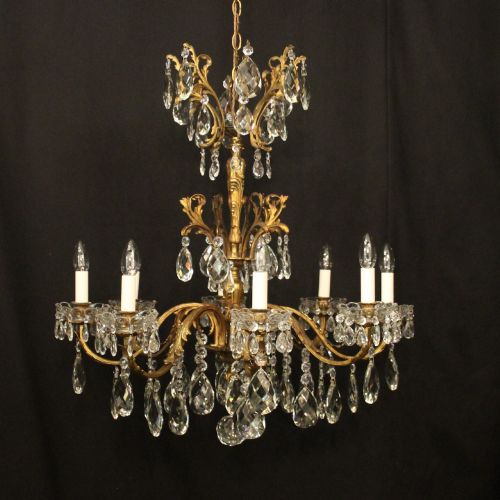
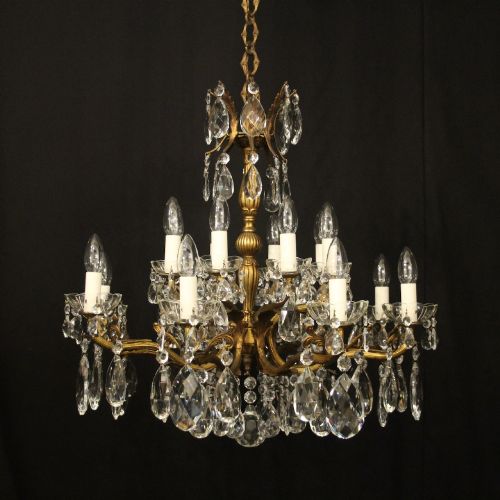
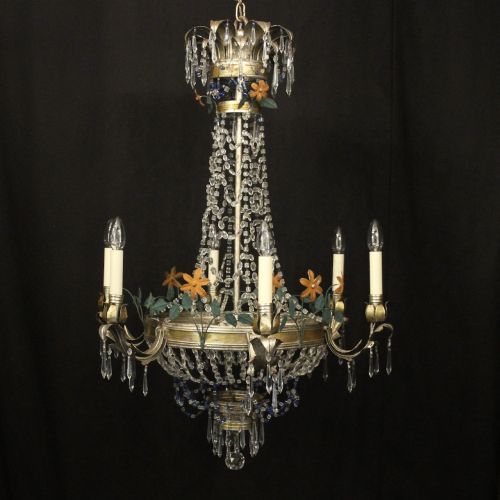
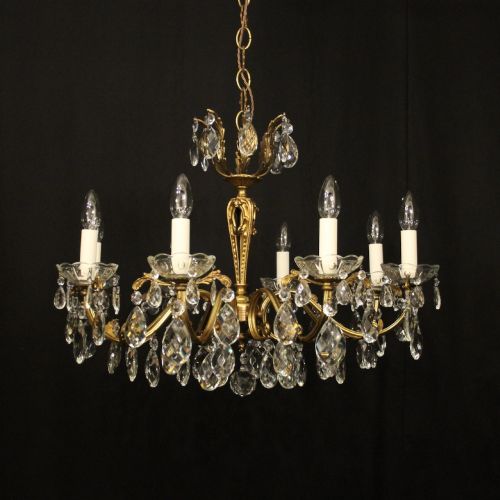
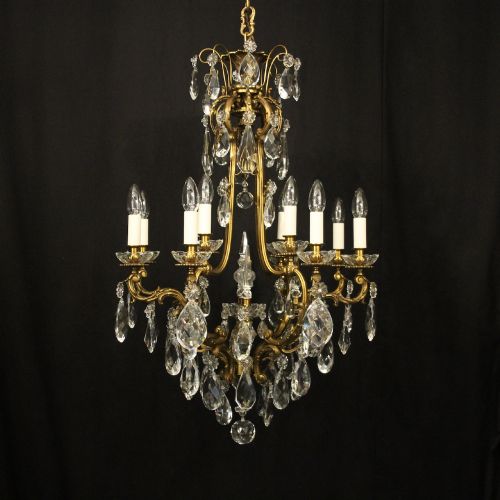
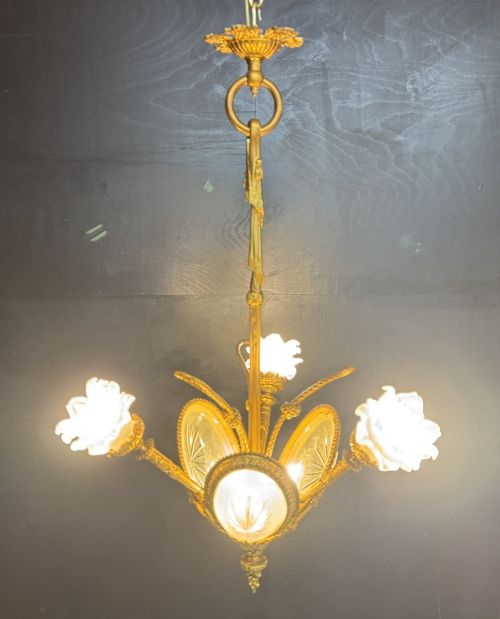
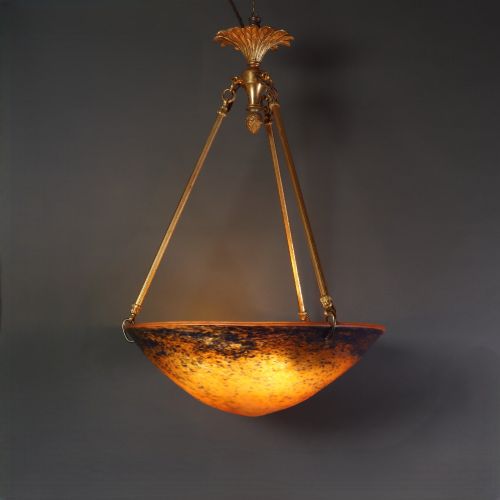
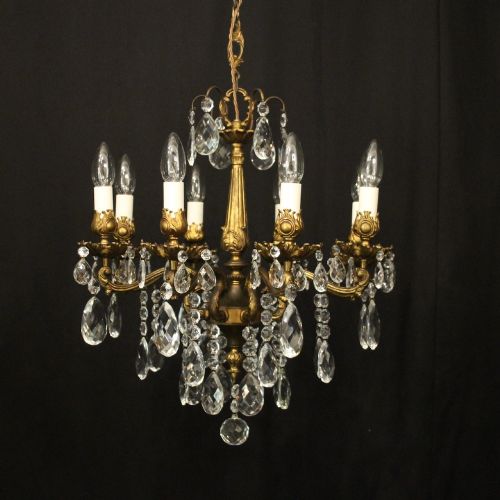
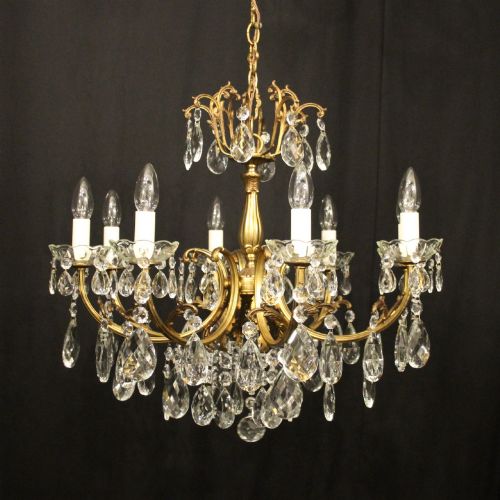
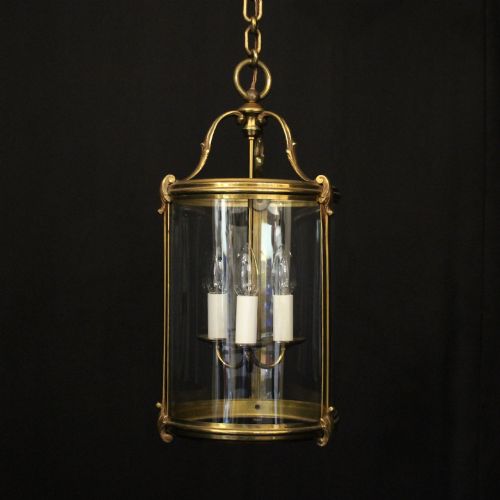
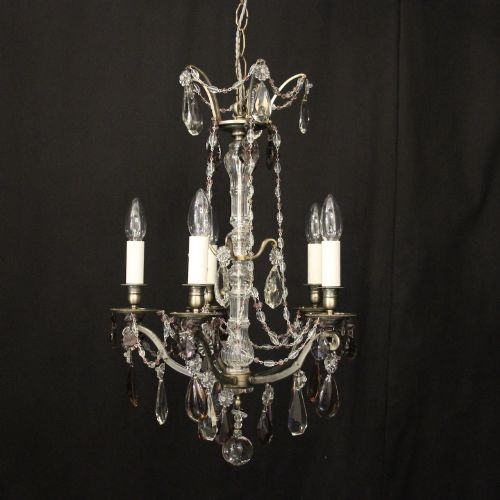
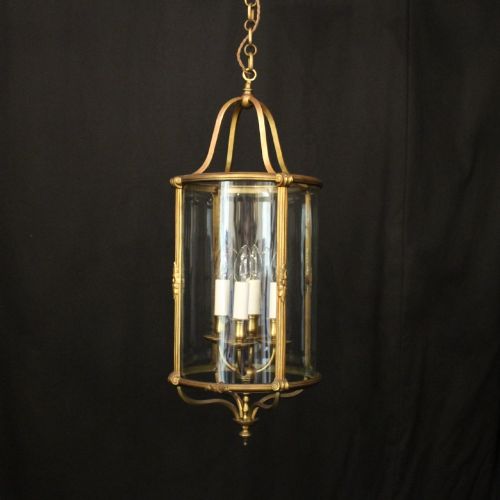
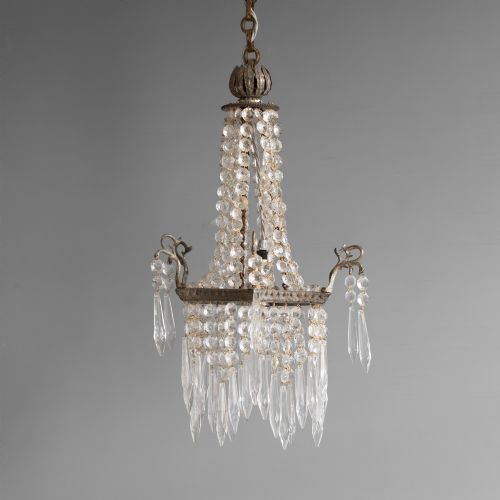
A gilded glass lamp unites transparent, frosted, or cut glass bodies with metallic decoration in forms ranging from table lamps and desk lamps to elaborate multi-armed chandeliers and hanging hall lanterns. The pieces appearing most frequently across these listings originate from French workshops spanning the nineteenth century through the nineteen-thirties, often incorporating crystal drops, tent and waterfall arrangements, or convex glass panels.
Beyond French lighting, the inventory includes English Victorian oil lamps with gilt decoration, Arts and Crafts beaten copper designs, and Bohemian ruby glass components. Styles trace a path from Victorian and Gothic revival through French Louis XVI and Rococo forms to streamline Art Deco expressions, reflecting how makers applied gilding to glass and metal mounts across successive eras.
Materials and construction
Makers constructed these fixtures using glass, crystal, and frosted bodies paired with brass, bronze, or copper mounts. Metal frameworks received surface gilding, ormolu finishes, or silver gilt treatments to secure glass components, lustres, and faceted crystal drops.
Individual glass elements involved blowing, cutting, or moulding, followed by hand-etching or the application of gilt decoration directly onto ruby or pink glass surfaces. Structural stability relied on threaded brass rods, pins, and metal suspension bands holding heavy glass bowls, shades, and chandelier arms together.
Gilded Glass Lamp Retail Price Guide 2026
Typical asking prices for gilded glass lamp among the pieces listed under this phrase on Sellingantiques today, from the lower quarter to the upper quarter. They describe what is for sale here now, not the wider market.
Listings feature French chandeliers and lanterns alongside English Victorian oil lamps, Arts and Crafts beaten copper lighting, and Bohemian ruby glass components.
Distinctions in quality
Quality rests upon the crispness of the cast bronze or brass mounts and the depth of the hand-chasing applied to the ormolu and gilt surfaces. Superior examples display heavier gauge metal frameworks that securely support complex glass configurations without sagging or misalignment.
The clarity and depth of the glass itself dictate the overall standard, distinguishing hand-cut crystal drops and finely etched Bohemian ruby glass from simpler pressed shades. Precision in the assembly of crystal beads, swags, and drops determines whether a fixture achieves a coherent, integrated design.
Charles Schneider
The Gilded Glass Lamp Glossary
- Ormolu
- Gilded bronze used extensively for decorative mounts on nineteenth-century lighting fixtures. The technique involves applying a mercury and gold amalgam to a bronze base before heating.
- Plafonnier
- A ceiling-mounted glass bowl light that sits flush or close to the ceiling surface. These fixtures often feature moulded Art Deco glass paired with decorative metal hardware.
- Lustre
- A cut glass pendant or hanging prism suspended from a chandelier or wall light to refract illumination. These glass drops catch and scatter light across the room.
- Tent and waterfall
- A chandelier configuration featuring an upper triangular tent of strung crystal beads falling into a cascading lower shower of drops. This arrangement maximises the reflective interplay between glass and gilt metal.
Gilded Glass Lamp: Frequently Asked Questions
What periods do these lamps cover?
The lighting fixtures span from the eighteenth century through the Edwardian era and into the nineteen-thirties. Pieces frequently date to the nineteenth century and the nineteen-twenties.
Design influences range from early Gothic and Rococo revivals to twentieth-century Art Deco and Arts and Crafts movements.
How were oil lamps adapted?
Victorian oil lamps combined glass reservoirs with gilded brass or ceramic bases to burn fuel before the widespread adoption of electricity. Many survive with their original burners and decorative glass fonts intact.
Some examples later received conversion wiring to hold electric lamp holders while retaining their period glass shades and gilt decoration.
Where were these lamps made?
A significant portion of the chandeliers and lanterns originated in France, particularly around nineteenth-century and early twentieth-century workshops. English makers produced notable oil lamps and Gothic lanterns.
Bohemian craftsmen specialised in ruby glass components, etched shades, and specialised chandelier arms that were exported and assembled across Europe.