

Gilded Glass Fixture
These hanging lights bring together reflective glass and gilded metal to brighten a room from above.
Gilded Glass Fixture
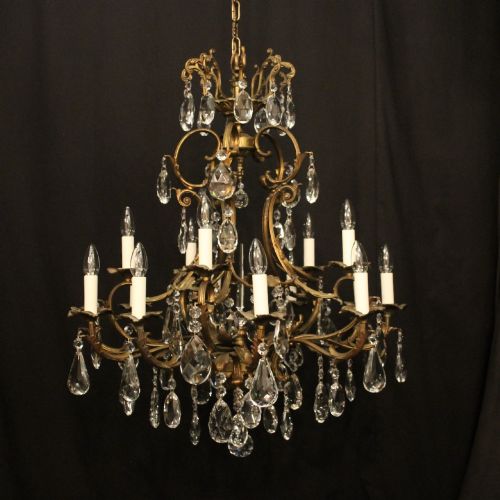
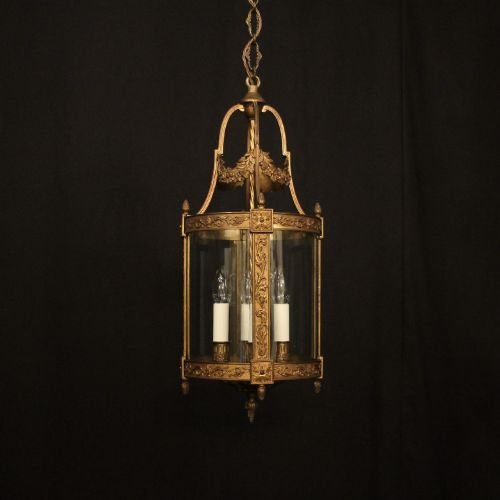
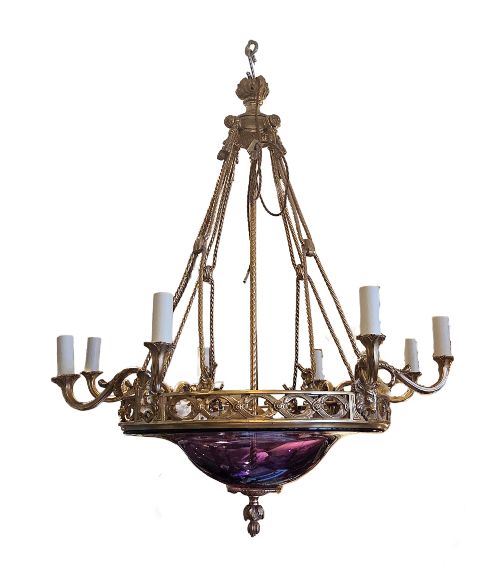
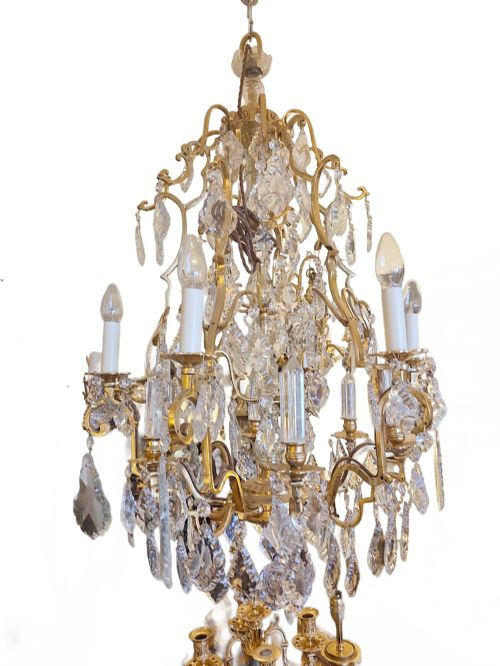
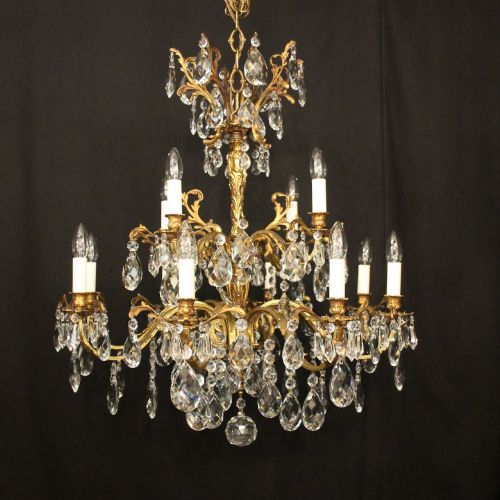
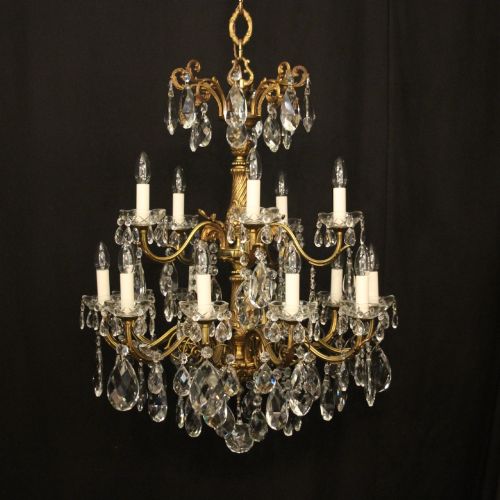
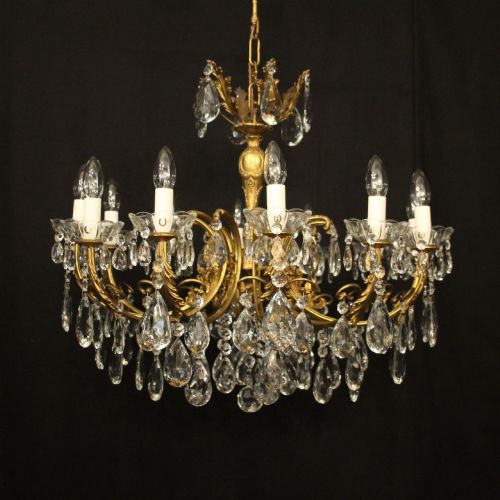
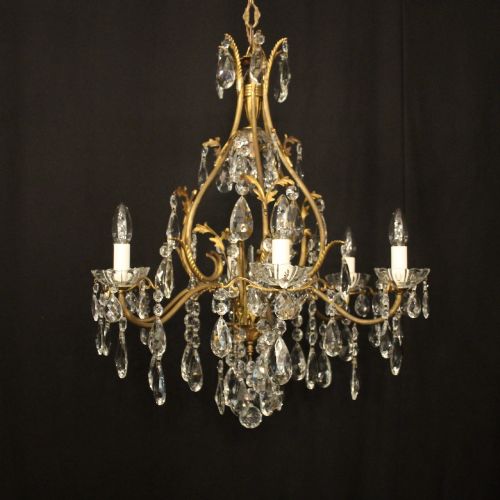
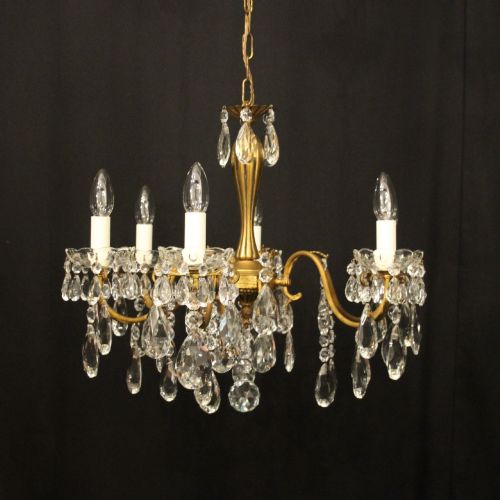
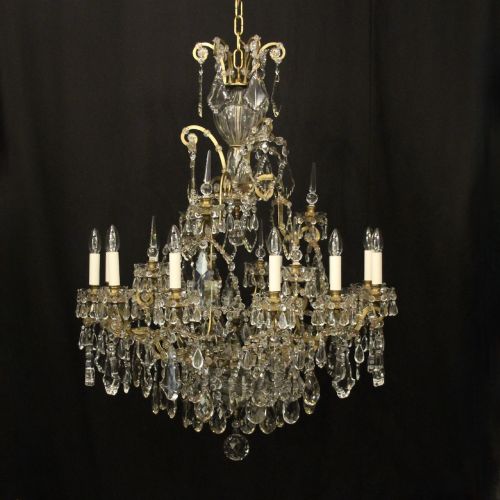
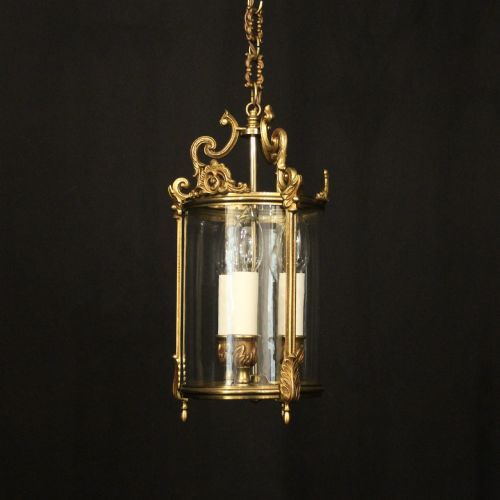
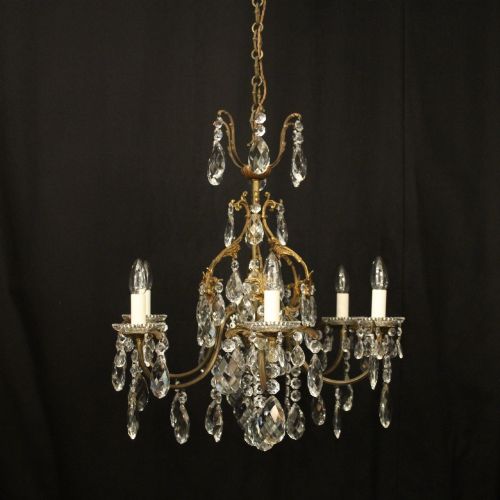
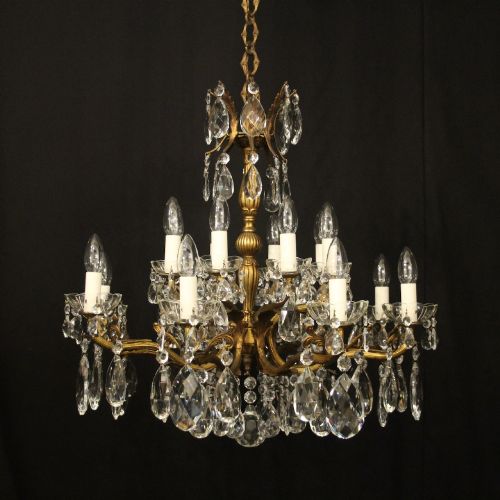
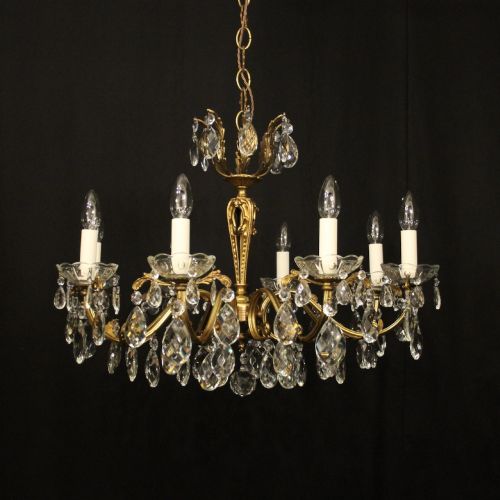
A gilded glass fixture lights a room using a combination of glass elements and gilded metal frames. The selection here ranges from grand chandeliers with numerous candle or bulb points to compact hall lanterns and ceiling lights.
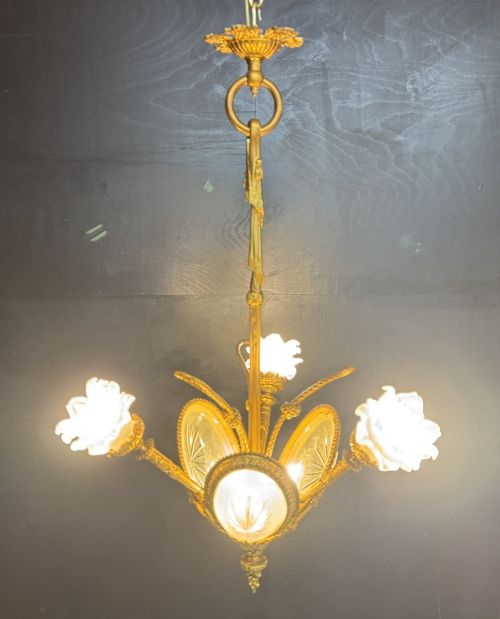
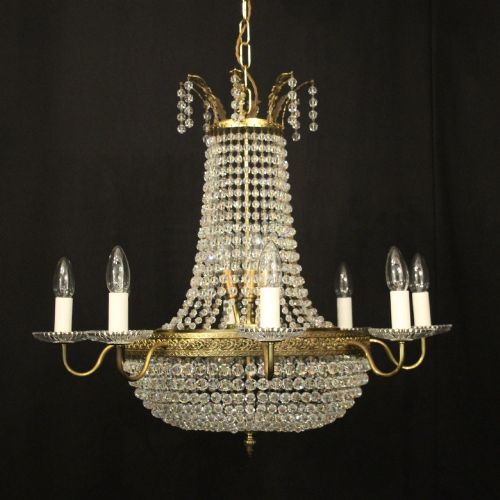
Most examples originate from French workshops or Italian centres, spanning periods from the nineteenth century through the 1930s. Common forms include birdcage chandeliers, tent and waterfall configurations, and convex wall or hall lanterns.
Buyers look for these pieces to provide functional illumination while adding decorative presence to high ceilings or corridors. The materials interact to bounce light around the interior space.
Construction and Materials
Makers built these pieces using metal frames of brass, bronze, or toleware treated with a gilded surface finish. Crystal, cut glass, and occasionally porcelain flowers or amethyst drops were then wired or pinned into position.
The glass components include moulded drops, beads, and heavy convex panes designed to catch and refract light. Metal mounts secure the glass elements to the central frame, supporting multi-tier formations such as waterfalls and birdcage designs.
Gilded Glass Fixture Retail Price Guide 2026
Typical asking prices for gilded glass fixture among the pieces listed under this phrase on Sellingantiques today, from the lower quarter to the upper quarter. They describe what is for sale here now, not the wider market.
Quality and Detail
The distinction between tiers of quality lies in the depth of the gilding and the precision of the glass cutting. Higher grade pieces utilise heavier bronze or brass castings alongside hand-cut crystal drops that produce sharper light refraction.
Construction methods also separate standard production from finer work, visible in how securely individual glass beads and pendants are wired to the metal armature. The complexity of the frame design, from simple single rings to elaborate multi-light tent structures, indicates the workshop ambition.
Charles Schneider
The Gilded Glass Fixture Glossary
- Ormolu
- Gilded bronze, where gold is applied to a base metal using a mercury amalgamation technique or through electroplating. This finish gives a warm metallic sheen to the structural mounts.
- Plafonnier
- A ceiling light fitted close to the surface rather than suspended on a chain or drop. These fixtures often utilise moulded art deco glass bowls.
- Tent and waterfall
- A lighting configuration where upper strings of crystal beads form a conical tent shape above a wider cascading drop of crystals. This arrangement maximises the diffusion of light.
- Birdcage
- A rounded metal frame structure enclosing the internal candle holders and decorated with dense rows of crystal drops. The silhouette resembles an avian enclosure.
- Toleware
- Painted sheet metal used in decorative light fittings, often combined with crystal elements or gilded accents. It provides contrasting colour alongside the glass.
Gilded Glass Fixture: Frequently Asked Questions
How do I hang a heavy antique chandelier?
Suspension requires fixing the light to a ceiling joist or using a designated load-bearing hook capable of supporting the combined weight of the metal frame and glass components.
Professional electrical installation is recommended to ensure the internal wiring safely handles the required voltage.
What rooms suit a hall lantern?
Hall lanterns are designed for narrow spaces, entranceways, and stairwells where headroom is limited yet decorative impact is desired.
Their enclosed or semi-enclosed frames protect the light source while casting patterns of light through the glass panels.
How do I clean a crystal chandelier?
Dust the fixture regularly using a soft feather duster or microfiber cloth while the power is switched off.
For deeper cleaning, apply a specialist glass cleaner to a cloth rather than spraying directly onto the metal and wiring components.
How can I tell the period of a light fixture?
Dating relies on examining the assembly methods, screw types, and stylistic indicators such as art deco geometric glass or nineteenth-century cast bronze mounts.
Comparative analysis of the crystal cuts and metal patination helps distinguish Edwardian and earlier Victorian production from later twentieth-century interpretations.