



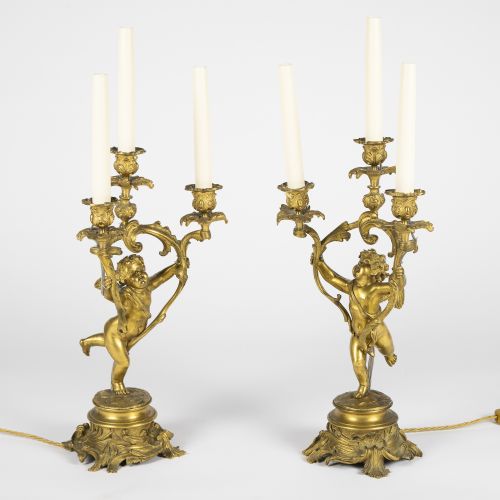
Gilded Brass Side Lamps
These gilded brass side lamps bring warmth and metallic brilliance to an interior, offering both focused illumination and period decorative presence.
Gilded Brass Side Lamps
Gilded brass side lamps span a variety of nineteenth and early twentieth century periods, incorporating styles from Regency to French Rococo Revival. When you search for gilded brass side lamps, you encounter lighting fixtures and occasional tables that integrate metallic illumination into domestic spaces.
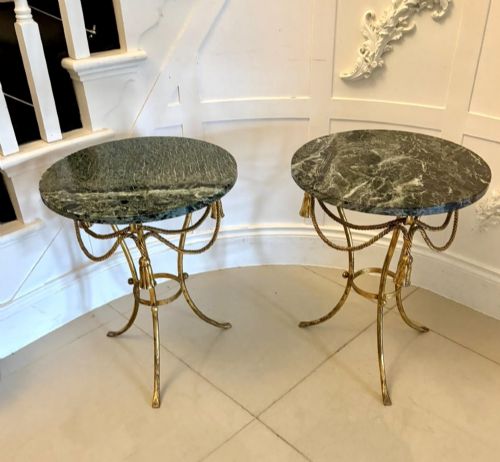
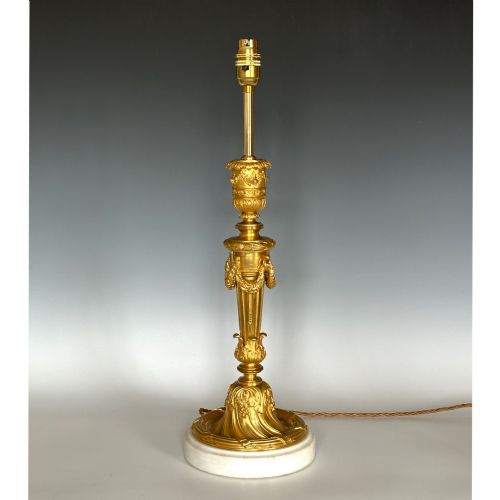
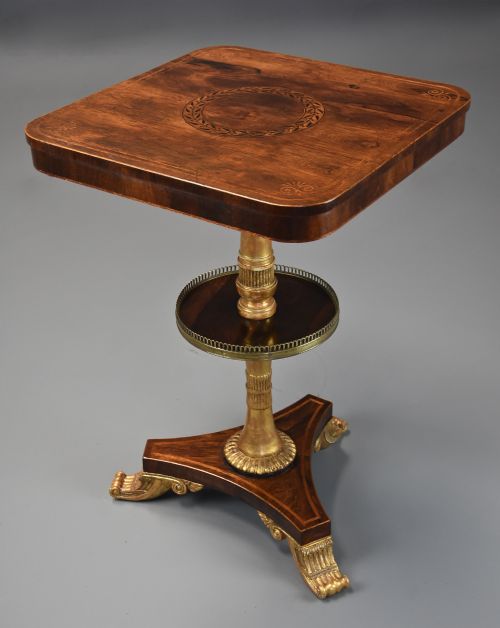
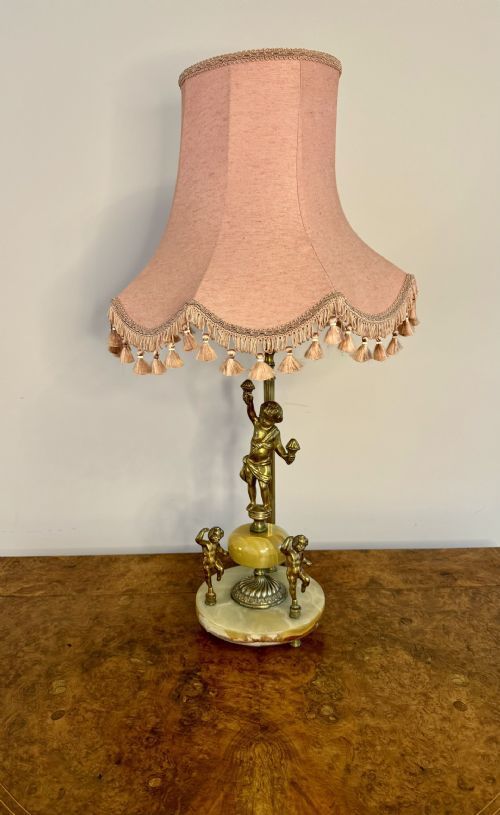
The selections on this page range from table lamps and lamp bases to side tables fitted with lighting elements. Materials extend beyond brass to include gilt bronze, ormolu, and marble, reflecting diverse manufacturing origins from Victorian workshops to continental ateliers.
How they were made
Metalworking techniques for these pieces involve casting brass, bronze, and ormolu into intricate decorative shapes, often finished with a layer of applied gilding. Many bases incorporate contrasting natural materials such as verde marble, onyx, and various woods including mahogany, rosewood, and walnut.
Assembly methods combine secure mechanical joints with fine chasing and finishing of the metal surfaces. Fabric elements and specialised wiring configurations are subsequently integrated to complete the conversion from candleholders or decorative figures into functional electric lamps.
One exceptional pair of nineteenth-century candlelamps is ingeniously modelled directly after basket-guard cavalry dress swords.
What varies in quality
The degree of crispness in the metal casting and the depth of the subsequent chasing set the standard for individual examples. Surfaces that retain fine details in the foliage, figural work, or geometric ornament demonstrate superior initial craftsmanship.
The selection of supporting materials such as solid marble or exotic hardwoods, alongside the weight and gauge of the metal components, distinguishes standard production from more ambitious workshop creations.
The Gilded Brass Side Lamps Glossary
- Ormolu
- Gilt bronze produced by applying a finely ground high-carat gold mercury amalgam to a bronze object, which is then heated to drive off the mercury. This technique creates a durable, warm golden surface found on many French pieces.
- Spelter
- An alloy primarily composed of zinc, often used as a less expensive substitute for bronze in nineteenth-century metalwork. It accepts gilding and finishes well, though it is softer and lighter than true bronze.
- Galleried
- A low decorative railing, typically pierced brass or wood, surrounding the edge of a table or shelf top. It prevents small items from sliding off the surface.
- Chinoiserie
- A European artistic style reflecting Chinese motifs and techniques, popular in furniture and decorative arts during the eighteenth and nineteenth centuries. It often involves lacquerwork and stylized landscape scenes.
- Verde marble
- A dark green decorative stone with lighter veining, frequently utilised for table tops and lamp bases to provide a strong visual contrast against polished metal.
Gilded Brass Side Lamps: Frequently Asked Questions
How do I date a gilded brass lamp?
Dating relies on stylistic clues, casting techniques, and the type of assembly screws or wiring components present. Victorians favoured heavy, ornate revival styles, while twentieth-century examples often display simpler lines.
Examining the underside and construction joints reveals how the metal was worked and whether components have been adapted from earlier candlesticks or oil lamps.
Are these lamps safe for modern use?
Most antique lighting requires rewiring to meet contemporary electrical standards. A qualified electrician can easily update internal cords and lamp holders while preserving the historic exterior.
It is wise to check that the weight of the base adequately supports any shade you choose to add.
What is the difference between ormolu and gilt bronze?
Ormolu specifically refers to the traditional French mercury gilding process applied to bronze during the eighteenth and nineteenth centuries. Gilt bronze is a broader term that can include various modern or alternative plating methods.
Both terms describe a gold surface layer over a bronze core, but ormolu generally indicates earlier, high-status manufacture.
How should I clean gilded brass?
Dusting gently with a soft, dry cloth is the safest way to maintain the surface. Avoid chemical polishes and abrasive cleaners, which can strip away the historic gilt layer.
Keeping the metal away from direct moisture preserves both the brass substrate and any mounted marble or wood.