






Georgian Wrought Iron Holder
Georgian wrought iron holder examples are robust early lighting pieces and utilitarian domestic implements that bring tactile historical character to an interior.
Georgian Wrought Iron Holder
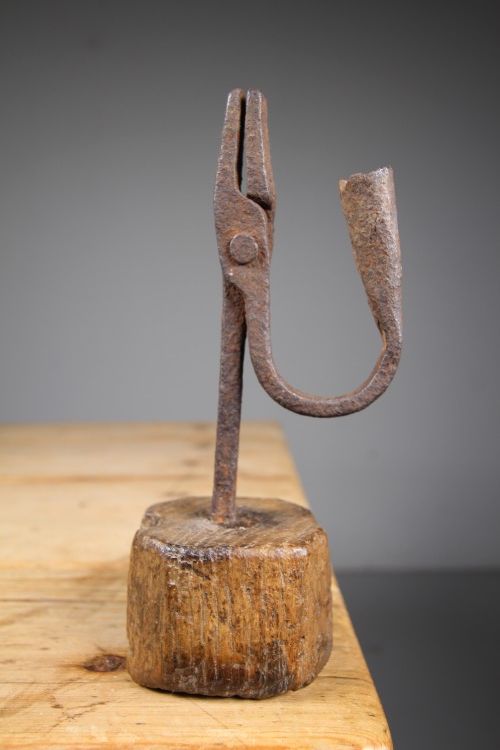
When you search for a georgian wrought iron holder, you encounter early lighting and hearth equipment primarily dating from the seventeenth, eighteenth, and early nineteenth centuries. These utilitarian objects include rushlight holders, candleholders, and candlesticks, alongside related domestic items such as meat skewers with holders and log bins.
The selection reflects both functional domestic lighting and kitchenware, with forms ranging from table-standing rushnips to larger scale pieces. These objects demonstrate the practical metalwork of their respective periods without unnecessary ornamentation.
How they were made
Blacksmiths forged these pieces by hand from wrought iron, shaping the metal while hot to create spring action jaws, twist stems, and sturdy bases. Tool marks and structural hammer blows remain visible on the surfaces of these items.
Some examples incorporate mixed media, combining wrought iron with hardwood bases, brass fittings, or copper bodies to provide stability and visual contrast. Makers utilised traditional joining techniques to assemble multi-part lighting devices and culinary sets.
Georgian Wrought Iron Holder Retail Price Guide 2026
Typical asking prices for georgian wrought iron holder among the pieces listed under this phrase on Sellingantiques today, from the lower quarter to the upper quarter. They describe what is for sale here now, not the wider market.
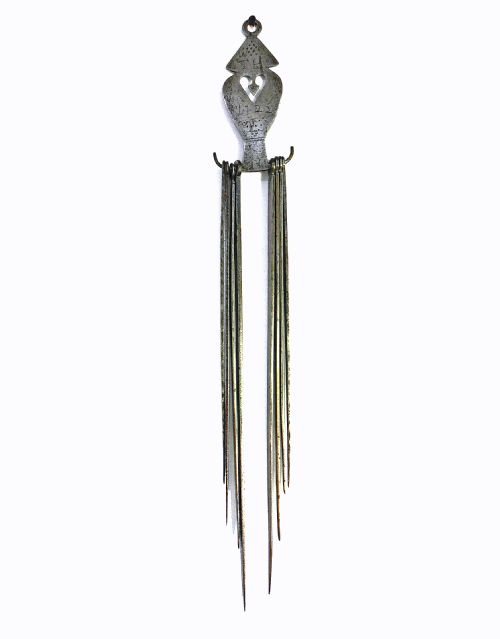
An early set of meat skewers comes fully engraved with the initials TH and the exact year 1722.
What varies in quality
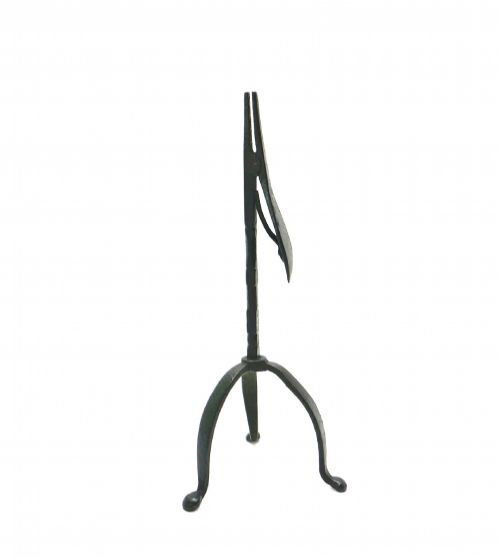
The distinction between standard domestic ironwork and superior examples lies in the complexity of the forging and the survival of original working mechanisms. Pieces featuring spring action tripod bases or cruciform designs demonstrate greater blacksmithing skill than basic utilitarian spikes.
Originality of surface and component parts dictates the standing of an individual piece, with untouched patination and complete assemblies commanding attention. The inclusion of dated inscriptions or distinct regional vernacular characteristics further elevates the standing of specific examples.
The Georgian Wrought Iron Holder Glossary
- Rushlight holder
- A mechanical device designed to grip a dried rush dipped in animal fat for domestic illumination. It typically combines a weighted base with a sprung pincer mechanism.
- Rush nip
- The pivoting jaw section of a rushlight holder that clamps the rush securely in place. It relies on a counterweight or a leaf spring to maintain tension.
- Tripod base
- A three-legged support structure used on table lamps and rushlight holders to ensure stability on uneven early modern surfaces. It is commonly forged from iron bars.
- Cruciform base
- A cross-shaped foot providing balanced support for taller lighting stands. This form appears on heavier floor or table-standing rushnip examples.
- Vernacular
- Regional domestic craftsmanship that prioritises local utility and traditional methods over metropolitan academic styles. Welsh and English regional variants display distinct structural habits.
Georgian Wrought Iron Holder: Frequently Asked Questions
What is a rushlight holder?
A rushlight holder is a functional device designed to burn dried rushes soaked in fat or grease to provide inexpensive household lighting. These iron implements were common in homes before candles became affordable for everyday use.
Most examples feature a weighted base, a horizontal arm, and a pair of spring-loaded jaws that clamp the rush securely at an angle for burning.
How do you date iron lighting?
Dating early iron lighting relies on examining the construction methods, tool marks, base configurations, and overall wear patterns left by the blacksmith. Regional stylistic traits and documented comparative examples help narrow the period of origin.
Form evolution, such as the transition from simple spikes to tripod and cruciform bases, also provides chronological clues for these utilitarian objects.
Were these pieces used for candles too?
Many surviving iron holders incorporate both a rushnip and a candle socket, allowing the household to burn either rushes or tallow candles depending on availability. These dual-purpose devices were essential for flexible domestic illumination.
Candlesticks of this period were forged to hold dipped tallow candles firmly in a simple metal cup or spike.
How do I clean wrought iron?
Wrought iron pieces should be cleaned gently with a dry brush or a soft cloth to remove dust without disturbing the historic surface patination. Avoid harsh chemical cleaners or abrasive scouring pads that can strip the protective oxide layer.
Applying a light coat of microcrystalline wax can help protect the metal from moisture and stabilise the historic surface over time.