
Georgian Seating
Georgian seating brings robust 18th-century craftsmanship and refined Regency elegance into domestic spaces through enduring wooden chairs, settles, and stools.
Georgian Seating
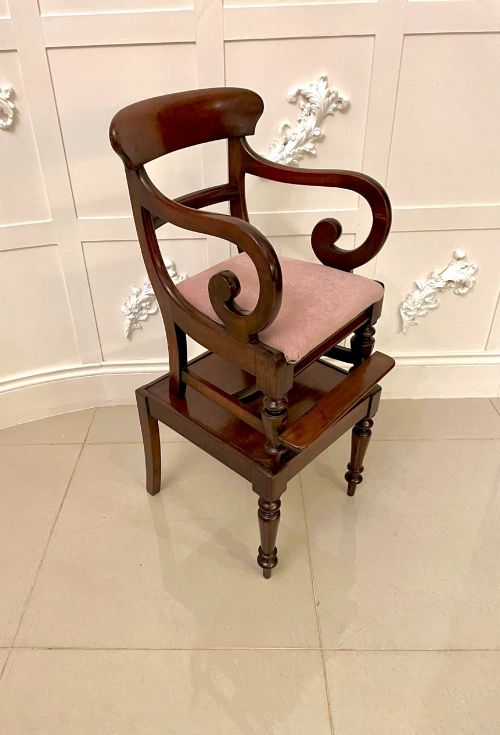
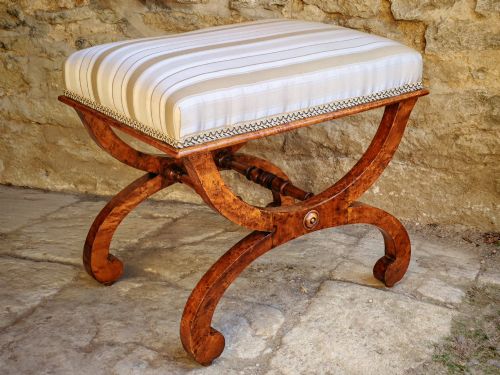
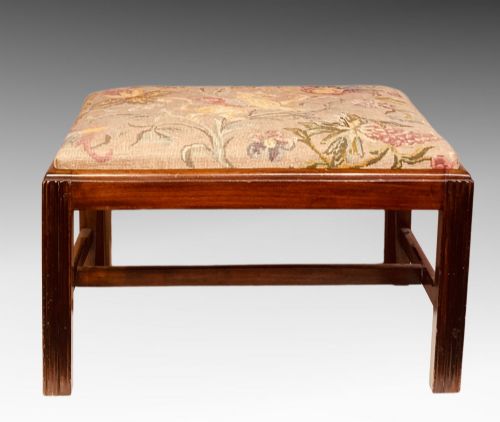
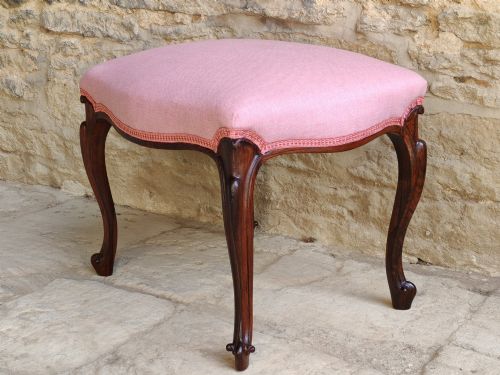
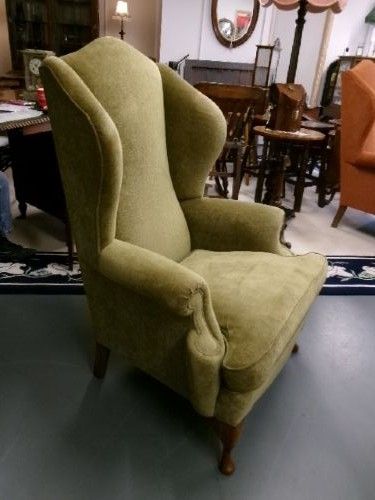
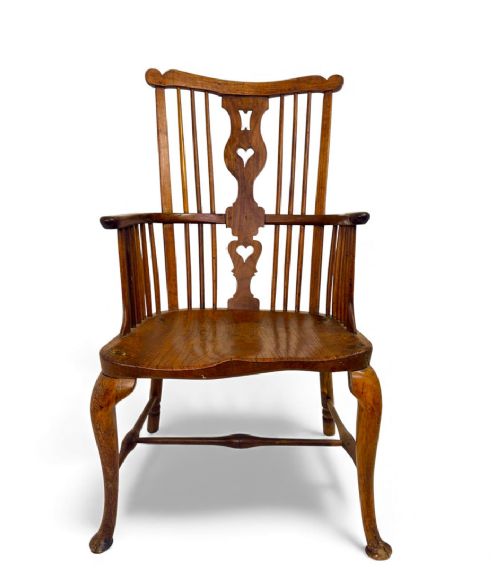
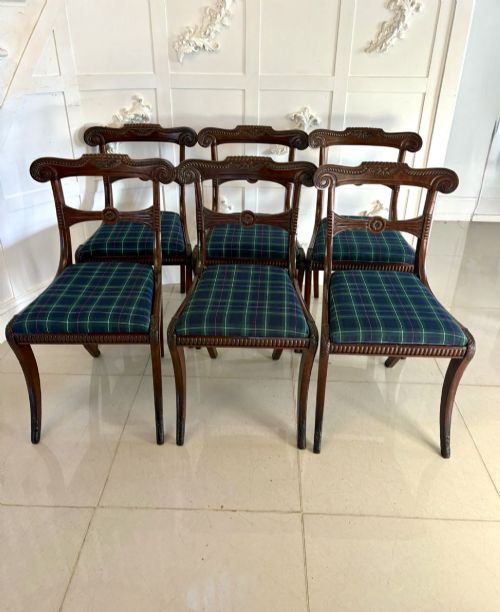
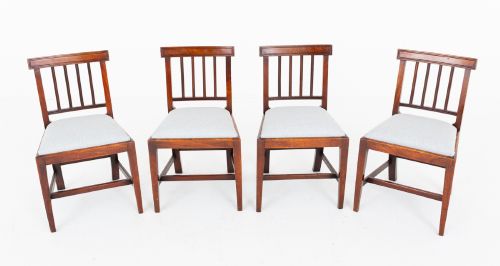
Georgian seating encompasses dining chairs, armchairs, benches, settles, and stools originating from the 18th century through the Regency period and later revival eras. Buyers encounter diverse forms ranging from formal mahogany dining sets to country windsor armchairs and sturdy oak settles.
The material palette spans dense hardwoods like mahogany and rosewood alongside regional timbers including oak, elm, ash, and yew. Individual pieces vary from unpretentious rush-seated Lancashire chairs to elaborate hall chairs with armorial painted backs.
Sets frequently appear alongside single armchairs and pairs, representing both urban cabinet-maker production and provincial craftsmanship. Regional variations such as Thames Valley armchairs and Scottish laburnum side chairs demonstrate distinct local traditions.
Materials and Construction
Makers utilised native and imported timbers, pairing structural hardwoods like oak and mahogany with pliable elements such as ash and elm for bentwood components. Joinery relied on traditional pegging and mortise-and-tenon methods to ensure longevity.
Surface finishes involved careful polishing of dense grains in woods like rosewood and gonçalo alves, while painted decoration appeared on armorial hall chairs and elbow chairs. Seats incorporated solid wooden boards, woven rush, or upholstered pads finished in leather and fabric.
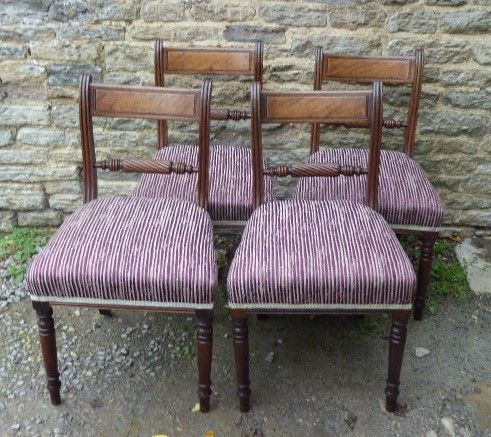
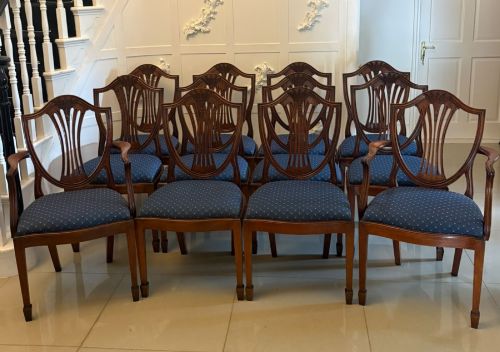
Listings feature extensive sets of twelve mahogany dining chairs alongside single country windsor armchairs in elm, ash, and yew.
Distinction in Craft
Quality rests in the precision of the joinery and the selection of timber, where dense grain and rich figuring elevate a piece above standard utility. Carved details demonstrate the hand of a skilled artisan rather than mechanical replication.
Originality of surface and structural integrity dictate standing, with untouched timber patination and retained board seats outranking heavily restored examples. Cohesion across larger dining sets separates uniform workshop output from assembled groupings.
The Georgian Seating Glossary
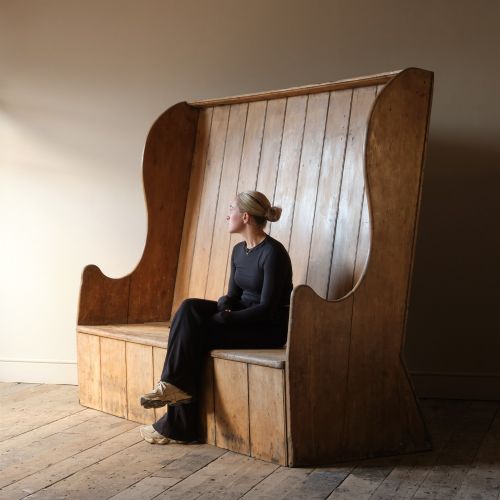
- Settle
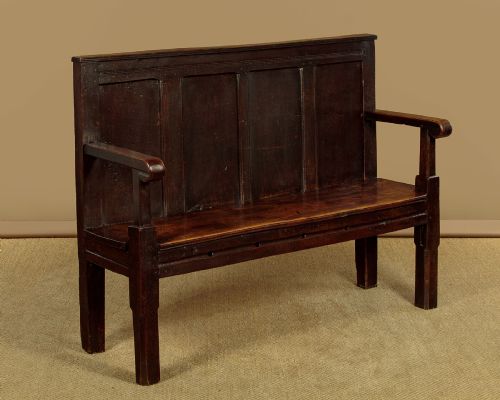
- A wooden bench with a high back, solid seat, and armrests designed to block draughts in large rooms. These pieces often incorporate panelled construction and under-seat storage.
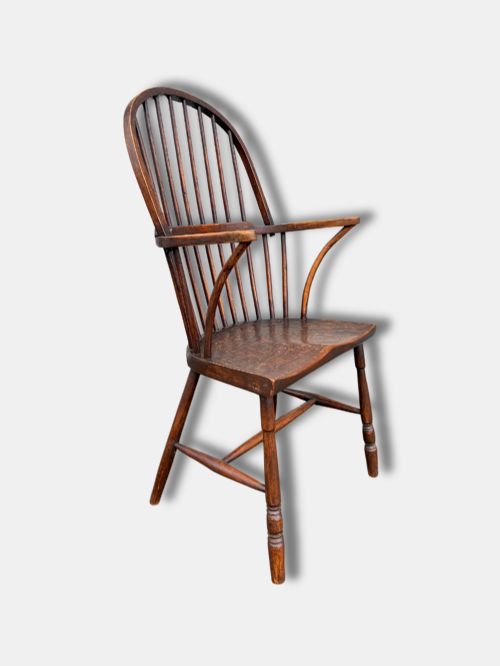
- Windsor chair
- A wooden chair featuring a bow or hoop back fitted into a solid sculpted wooden seat with turned legs. Regional variations utilise combinations of yew, elm, and ash.
- Shield back
- A dining chair backrest carved in the contour of a heraldic shield, popularised by late 18th-century designers. This form frequently appears in mahogany dining sets.
- Scabello
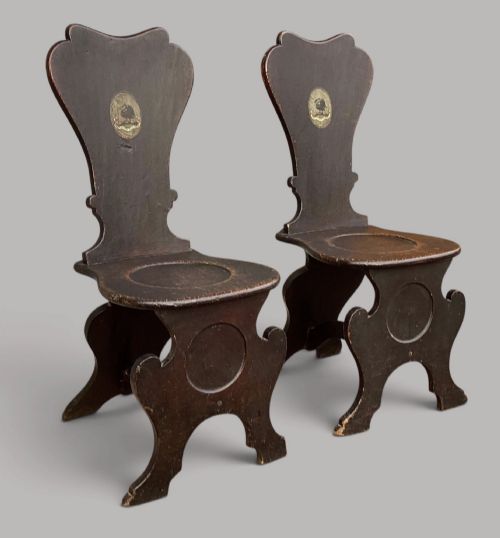
- An Italian Renaissance chair form adopted in 18th-century Irish furniture design, characterised by a flat wooden seat and trestle supports. Examples often display armorial painted backs.
- Carver
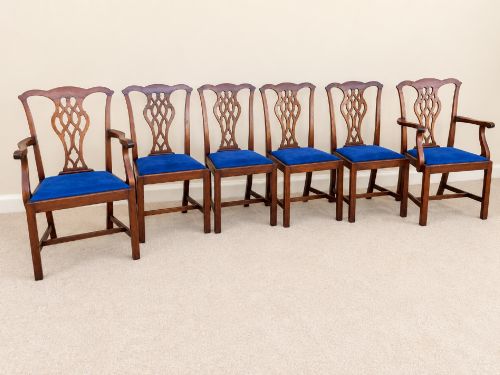
- An armchair designed to match a set of dining side chairs, traditionally placed at the head of a table. These pieces share the stylistic vocabulary of the wider set.
- Rush seat
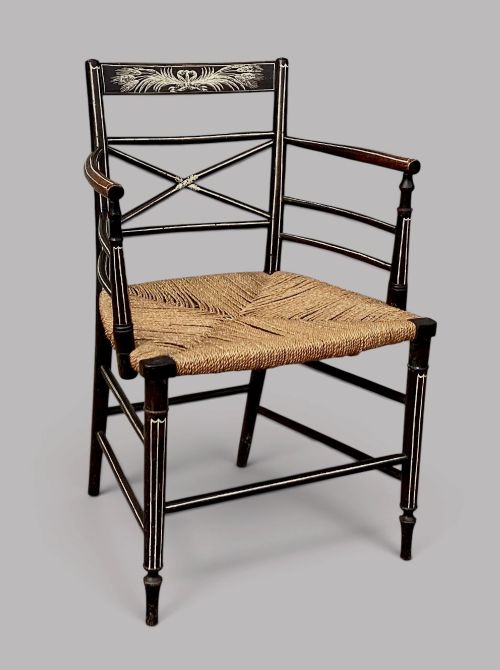
- A seating platform woven from dried marsh reeds, commonly found on provincial and country chairs. This traditional technique provides a resilient and slightly flexible surface.
Georgian Seating: Frequently Asked Questions
How do I care for antique wooden chairs?
Keep wooden seating away from direct heat sources and dramatic humidity shifts to prevent timber splitting and joint shrinkage. Apply traditional wax polish periodically to maintain the surface sheen and nourish the grain.
Avoid chemical cleaning agents that strip historic patination. Check structural joints regularly to ensure pegs and glue remain secure under daily use.
Are large dining chair sets genuine matches?
Many large sets of dining chairs have been assembled over time from smaller groupings or supplemented with later additions. Inspect the timber grain, construction methods, and subtle carving variations to determine uniformity.
Matching sets of twelve or more pieces often combine original chairs with professional carvers made in later revival periods. Consult the specific timber species and wear patterns across the set for consistency.
What is a country chair?
Country chairs are vernacular pieces made by regional craftsmen using locally available woods such as elm, ash, oak, and fruitwood. They prioritise functional durability over metropolitan stylistic trends.
These chairs frequently feature ladder backs, rush seats, or Windsor forms rather than elaborate mahogany carving. Their rustic character reflects the specific timber traditions of areas like the Thames Valley or Lancashire.
How do I distinguish regional chair styles?
Regional identification relies on timber selection and construction quirks characteristic of local workshops. For instance, Thames Valley chairs often utilise specific combinations of yew and elm, while Scottish pieces showcase native laburnum.
Examination of turning patterns and undercarriage bracing reveals the distinct hand of provincial makers. Comparing documented regional examples provides a reliable benchmark for attribution.