

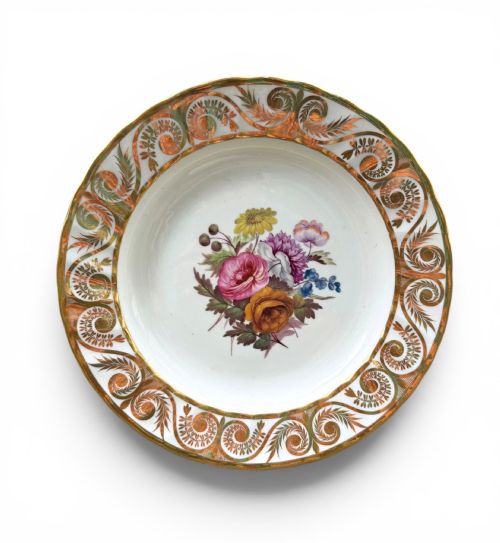
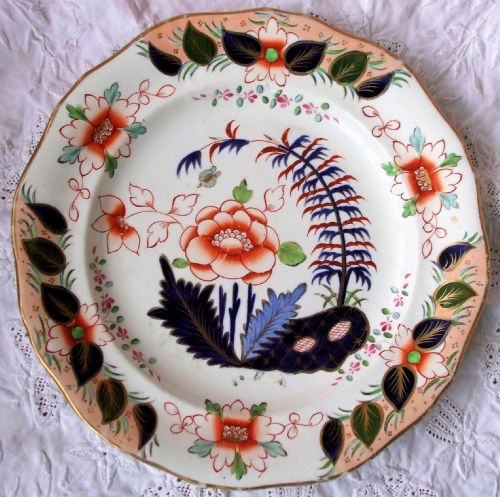
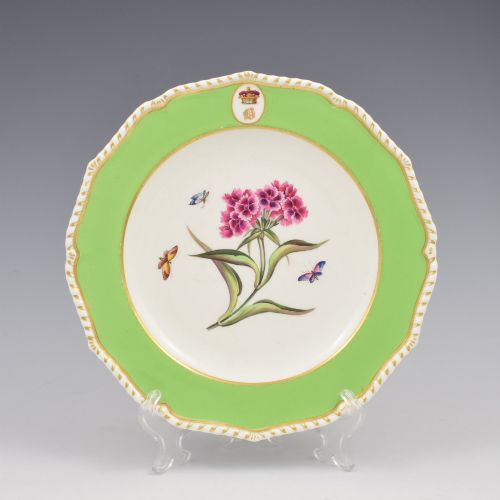


Georgian Porcelain Cabinet Dish
A georgian porcelain cabinet dish is a decorative ceramic plate made for display rather than dining.
Georgian Porcelain Cabinet Dish
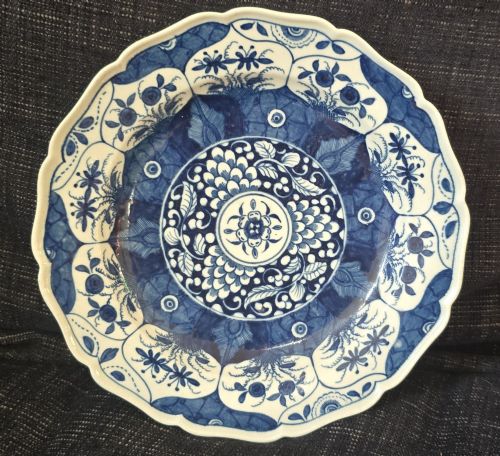
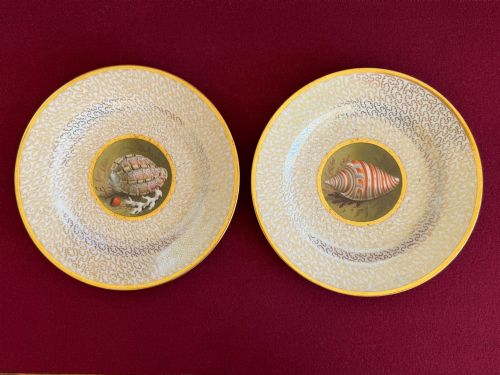
A georgian porcelain cabinet dish is primarily encountered as decorative plates, serving dishes, and dessert plates from the eighteenth and nineteenth centuries. These items were designed to be shown off in cabinets or on sideboards rather than used for everyday meals.
The pieces on this page span the Georgian, Regency, and nineteenth-century periods, capturing the shift from early English porcelain bodies to later ironstone. Makers employed styles such as Chinoiserie and Regency Chinoiserie alongside classical floral and armorial designs.
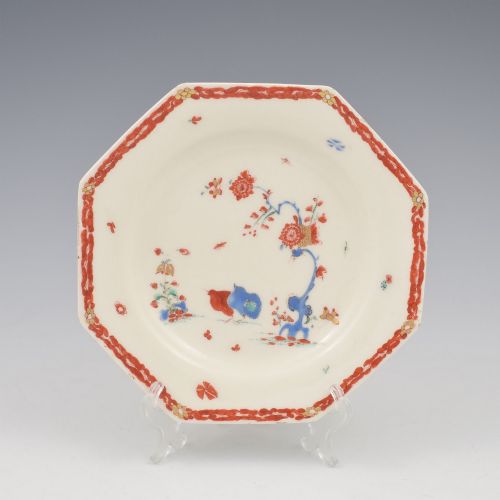
Buyers will find that most examples originate from notable English factories of the era, taking forms like octagonal plates, shell plates, and soup plates. Each piece reflects the refined aesthetic demands of its original domestic setting.
What varies in quality
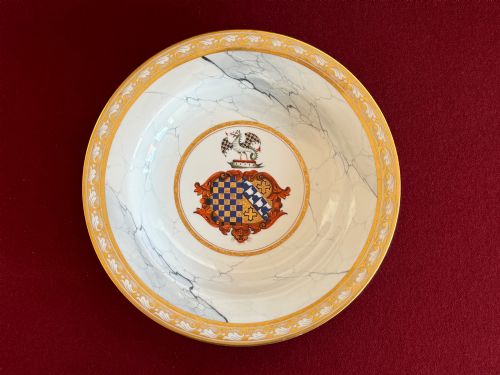
Quality rests significantly on the precision and artistry of the hand-painted decoration, such as detailed botanical studies or complex armorial crests. Superior examples feature named painters' work and richer applications of gold leaf and enamel.
The sophistication of the porcelain body itself also dictates the tier of the piece, distinguishing standard soft-paste or ironstone from finer translucent porcelain bodies. Finer potting and well-executed historical patterns like the Jabberwocky or Dragon in Compartments elevate a dish.
Georgian Porcelain Cabinet Dish Retail Price Guide 2026
Typical asking prices for georgian porcelain cabinet dish among the pieces listed under this phrase on Sellingantiques today, from the lower quarter to the upper quarter. They describe what is for sale here now, not the wider market.
The listings on this site feature pieces spanning the eighteenth and nineteenth centuries, including works in soft-paste porcelain, ironstone, and gold gilt.
Barr Flight and Barr·Bow Porcelain·Moses Webster·John Davenport of Longport·Bloor Derby·Chamberlain's Porcelain·Thomas Steele·Minton Porcelain·Flight Barr and Barr·Coalport·New Hall
The Georgian Porcelain Cabinet Dish Glossary
- Armorial
- Bearing a heraldic coat of arms. These dishes were often commissioned by aristocratic families to display their lineage.
- Soft-paste porcelain
- An early artificial ceramic composition made from glass frit and white clay. It fired at lower temperatures than hard-paste porcelain and yields a warm glaze.
- Kakiemon
- A style of Japanese porcelain decoration featuring asymmetrical designs and specific enamel colours. English factories frequently copied these patterns.
- Ironstone
- A heavy, durable type of earthenware patented in the nineteenth century. It offered a robust alternative to traditional porcelain.
- Gilding
- The application of gold leaf or gold powder to ceramic surfaces. It highlights rims, borders, and painted motifs.
Georgian Porcelain Cabinet Dish: Frequently Asked Questions
What is a cabinet dish?
A cabinet dish is an ornamental ceramic plate made to be displayed in a cabinet or room rather than served from at the table. These pieces usually feature elaborate hand-painted scenes or armorial bearings.
They represent the decorative pinnacle of historic English potteries and highlight the artistic skills of the period.
How were these dishes used?
These items were primarily used for display in drawing rooms or dining parlours to signal the owner's taste and wealth. Some dessert plates and serving dishes saw occasional use during formal dining courses.
Over time, their primary role shifted strictly to collection and interior decoration.
How do I care for antique porcelain?
Antique porcelain and ironstone require gentle handling and should be washed by hand in warm water with mild soap. Avoid soaking pieces with gilt or enamel decoration to protect the surface.
Display them securely on stable plate stands away from direct sunlight.
How can I tell the period?
The period can often be identified through factory marks, pattern numbers, and stylistic cues stamped or painted on the reverse. Early pieces show the characteristics of soft-paste bodies, while later items utilise ironstone or refined porcelain.
Comparing pattern names like Kakiemon or dragon designs to known factory timelines helps narrow down the date.