




Georgian Architectural Painting
Georgian architectural painting captures classical ruins, urban vistas and grand structures in oils and panels.
Georgian Architectural Painting
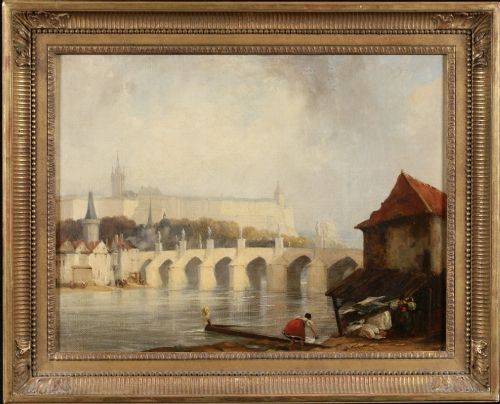
When buyers search for georgian architectural painting, they encounter canvases and panels depicting classical ruins, country houses, city views and structural elevations. The pieces span the eighteenth and nineteenth centuries, taking the form of oil paintings, overdoor panels and framed watercolours.
Most examples lean towards Italianate landscapes, urban scenes with bridges and cathedrals, or decorative panels styled after classical architecture. Painters rendered these subjects with varying degrees of academic precision or folk art naivety.
Origins stretch across British, Scottish and Italian schools, sometimes following specific circles or traditions such as romantic ruins and neoclassical design.
Materials and construction
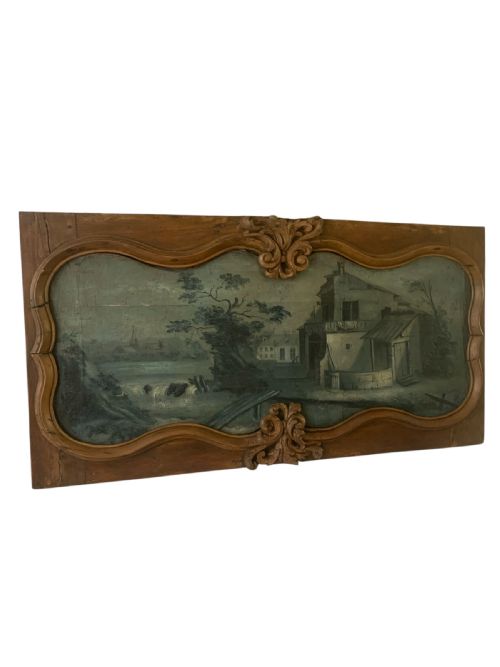
Makers laid oil paint onto woven canvas, oak panels or prepared pine supports, sometimes adding ink and watercolour on paper. Larger decorative elements incorporate carved wood, gesso and giltwood frames.
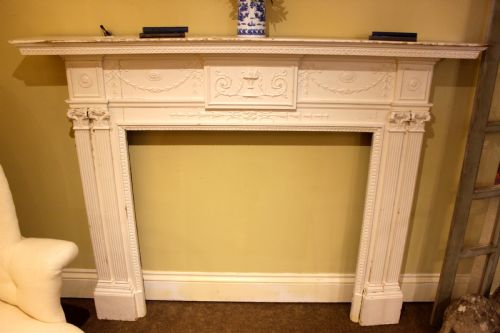
Structural components and painted surfaces reflect the carpentry and artistic techniques of the period, from hand-stretched canvases to polychrome panels and painted fire surrounds.
Current listings feature oil on canvas, carved wood, pine, gesso, giltwood and paper spanning the eighteenth and nineteenth centuries.
Quality and execution
Superior works demonstrate a secure grasp of perspective, atmospheric depth and architectural proportion, particularly in the handling of classical columns, arches and masonry. Lesser examples rely on naive charm and flatter perspective.
The sophistication of the painted surface, the preservation of the original pigment and the quality of the accompanying carved wood or gesso frame separate standard decorative pieces from finer artistic achievements.
Giovanni Paolo Panini·George Lambert·John Cawthorn·James Basire·William Marlow·John Thirttle
The Georgian Architectural Painting Glossary
- Oil on Canvas
- Pigment suspended in drying oil applied to a woven fabric support stretched over a wooden frame. This medium allowed artists to achieve rich tonal gradations and durability.
- Neoclassical
- A style drawing inspiration from the classical art and culture of ancient Greece and Rome. It manifests in symmetrical compositions, architectural motifs and austere dignity.
- Trumeau
- A decorative wall mirror or panel placed between windows or above a fireplace, often featuring an integrated painting. It creates a unified architectural scheme within a room.
- Gesso
- A plaster mixture consisting of a binder mixed with chalk, gypsum or pigment used to prepare surfaces for painting or gilding. It provides a smooth base for intricate carved wooden details.
- Polychrome
- The practice of decorating architectural elements, panels or carvings in multiple colours. It brings visual depth and vibrancy to wooden surfaces.
Georgian Architectural Painting: Frequently Asked Questions
What is a georgian architectural painting?
These works depict buildings, classical ruins, streetscapes and structural studies executed in oils, watercolours or applied to wooden panels during the eighteenth and nineteenth centuries.
They reflect an era fascinated by antiquity, landscape design and urban expansion, functioning as both fine art and interior decoration.
Where were these paintings displayed?
Owners typically hung them in panelled reception rooms, libraries and grand halls alongside overmantel mirrors and architectural plaques.
Overdoor panels and trumeau mirrors were built directly into the decorative woodwork of period properties to unify the interior scheme.
How do I care for an oil painting?
Keep canvases and panels away from direct sunlight, excessive moisture and rapid temperature fluctuations to prevent the paint layer from cracking.
Dust surfaces gently with a soft, dry brush and avoid using chemical cleaning agents on the historic pigment or gilt frames.
How can I distinguish period styles?
Neoclassical pieces feature clean lines, symmetrical ruins and restrained classical motifs, whereas baroque or romantic works emphasise dramatic light, decaying masonry and expressive movement.
Examining the support materials, framing techniques and regional school characteristics helps confirm the chronological context.