






George III Flatware
George iii flatware brings the refined silverwork and dining elegance of the late eighteenth century straight to the modern table.
George III Flatware
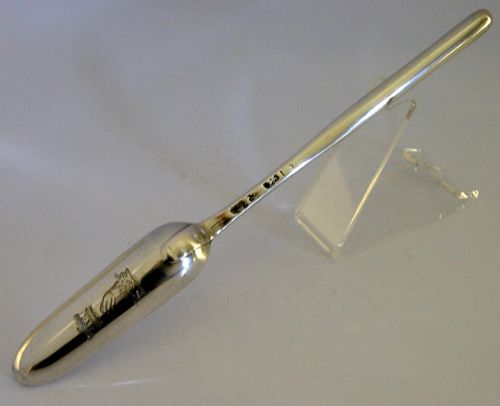
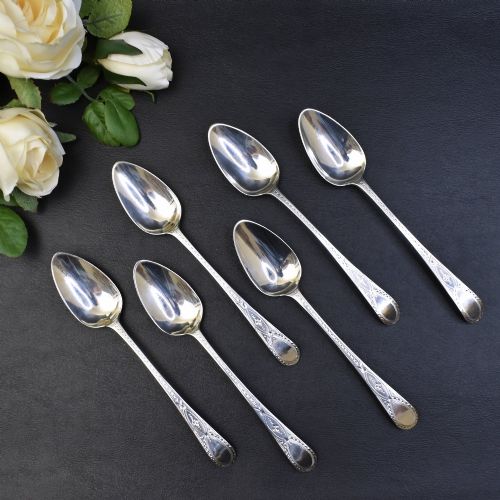
When you search for george iii flatware, you encounter silver serving pieces, spoons, and forks spanning the Georgian period and the late eighteenth century. Caddy spoons, teaspoons, serving spoons, and serving utensils form the core of what appears in this category.
The version you are most likely to meet on this page is sterling silver tableware from London, Birmingham, Exeter, York, or Irish provincial centres, often featuring bright-cut engraving or traditional Old English and Hanoverian patterns.
Alongside spoons and forks, related dining accessories such as mahogany knife boxes, trays, and salvers occasionally accompany the silver to complete the table setting.
What varies in quality
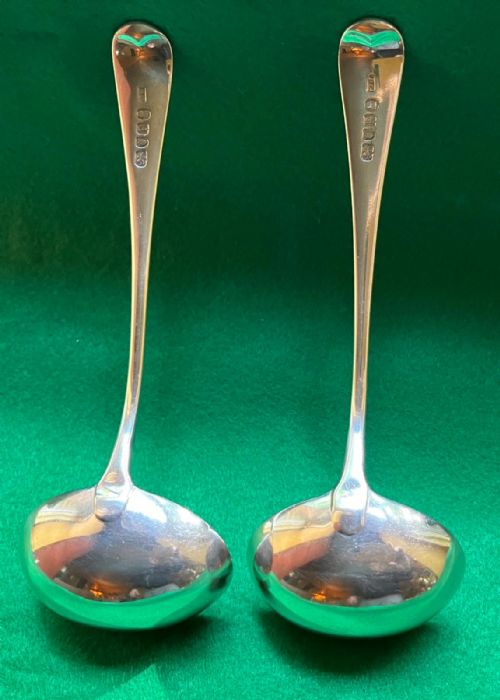
The standard of george iii flatware rests upon the crispness of the silversmith's original hallmarks, the depth of any hand-engraved crests or bright-cut patterns, and the overall weight of the silver. Pieces that retain their sharp lines and balanced proportions command greater appreciation.
For associated wooden items such as knife boxes, quality is defined by the richness of the mahogany grain, the precision of the boxwood inlay, and the intact condition of internal fittings like velvet or silk.
Several caddy spoons are shaped precisely like fluttering vine leaves, proving that Georgian silversmiths loved turning tea time into a botanical sculpture gallery.
Joseph Willmore·Peter and Anne Bateman·Wilkes Booth·Thomas Daniell·Alexander Henderson
The George III Flatware Glossary
- Bright-cut
- An engraving technique using faceted cuts to create sparkling geometric or floral patterns on silver surfaces. This method was particularly popular on late eighteenth-century teaspoons and caddy spoons.
- Old English pattern
- A traditional eighteenth-century spoon design featuring a downward-turning rounded end and a heel on the back of the bowl. It remains one of the most recognisable silhouettes in Georgian silver.
- Hanoverian pattern
- An earlier eighteenth-century flatware style distinguished by a central ridge running down the front of the handle and an upturned terminal. Table forks and spoons from the mid-century frequently adopt this form.
- Basting spoon
- A large, long-handled spoon utilised in the kitchen or at the dining table for serving juices and sauces. These substantial pieces often showcase provincial British assay marks.
- Caddy spoon
- A small scoop designed specifically for measuring loose tea leaves from a caddy into a teapot. Makers delighted in shaping these miniature silver pieces as vine leaves, shells, or simple bowls.
George III Flatware: Frequently Asked Questions
How do I clean antique silver flatware?
Clean sterling silver pieces gently using a dedicated silver cloth or a mild, non-abrasive silver polish to preserve the original hallmarks and delicate bright-cut engraving. Avoid harsh chemical dips that can strip away the natural patina accumulated over centuries.
Store your flatware in tarnish-resistant rolls or lined wooden boxes when not in use to protect the surfaces from atmospheric moisture and everyday wear.
Can I use george iii flatware daily?
Many collectors and enthusiasts enjoy using Georgian silver for special meals, as sterling silver is durable enough for regular dining. Hand washing is essential, as modern dishwashers use harsh detergents and high heat that damage antique metal.
Take care with delicate items such as pierced fish slices, sugar tongs, and caddy spoons, reserving them for lighter serving tasks rather than heavy preparation work.
How do I identify a maker's mark?
Look for small stamped initials or symbols struck into the back of the spoon handle or the base of the silver piece. These punch marks typically indicate the silversmith, the town of assay such as London or Birmingham, and a date letter.
Reference marks against standard historical tables to discover the exact year of production and the workshop responsible for crafting the item.
What is the difference between a berry spoon and a standard serving spoon?
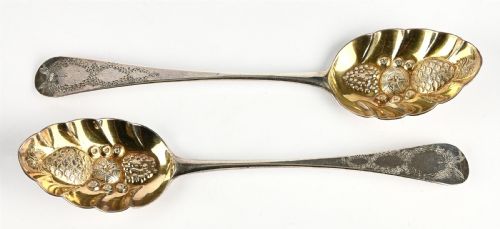
Berry spoons are usually eighteenth-century serving spoons that were heavily embossed and fruit-chased during the Victorian era. Silversmiths added raised fruit and foliage designs to plain bowls to suit changing dining tastes.
Standard serving spoons retain their original Georgian engraving and flat bowl profiles without the later Victorian embellishments.