



Geometric Hanging Light
A geometric hanging light brings striking lines and period illumination to a room, offering the distinct architectural silhouettes of early twentieth-century design.
Geometric Hanging Light
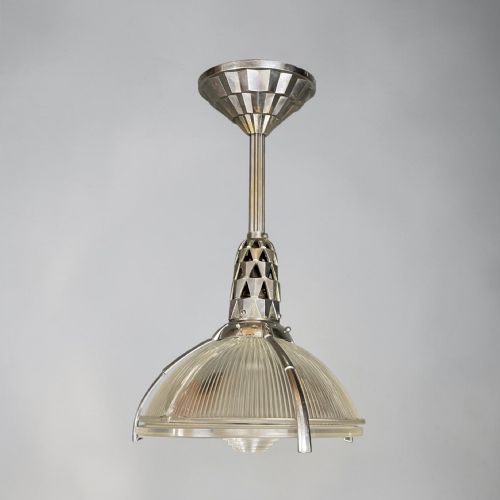
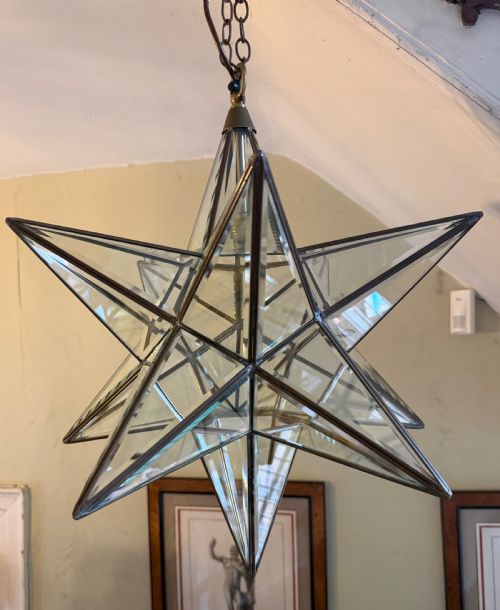
When you search for a geometric hanging light, you encounter ceiling fixtures and pendant lights originating mainly from the 1920s and 1930s. These pieces include panelled lanterns, star-shaped fixtures, and flush-mounted plafonniers defined by angular metalwork and symmetrical forms.
The versions most commonly met on this page belong to the Art Deco style and the broader twentieth-century period. They combine structural metal frames with glass diffusers to project targeted or ambient illumination downward into a space.
Materials and construction
Makers constructed these fixtures using brass, chrome, copper, nickel plated metal, steel, bronze, and wrought iron to form rigid geometric frames. These metals provide the structural integrity required to hold multiple glass panels securely.
Transparent, bevelled, opaque, and frosted glass components are set directly into the metal frameworks to soften the light source. Moulded glass elements also appear, adding texture and pattern to the finished ceiling light.
Geometric Hanging Light Retail Price Guide 2026
Typical asking prices for geometric hanging light among the pieces listed under this phrase on Sellingantiques today, from the lower quarter to the upper quarter. They describe what is for sale here now, not the wider market.
The listings show metal and glass materials exclusively, led by brass, chrome, and frosted glass across the 1920 and 1930 periods.
Judging quality
Quality in these hanging lights rests on the precision of the metalwork and the complexity of the glass components. Frames constructed from heavy bronze, brass, or wrought iron with tightly fitted panels represent higher standard manufacture than simpler sheet metal constructions.
The sophistication of the glass work similarly dictates the tier of the piece, with bevelled edges, heavy frosted panels, or moulded surface details distinguishing finer examples from standard commercial production.
Émile-Jacques Ruhlmann
The Geometric Hanging Light Glossary
- Pendant light
- A hanging light fixture suspended from the ceiling by a chain, cord, or metal rod. This form directs illumination downward into the central area of a room.
- Frosted glass
- Glass treated to create a cloudy or opaque surface that diffuses light evenly and reduces glare. It is frequently utilised in Art Deco ceiling lamps.
- Bevelled glass
- Glass panes with cut and polished angled edges that catch and refract light. This technique adds decorative visual depth to lantern frames.
Geometric Hanging Light: Frequently Asked Questions
How do I hang a geometric pendant light?
These fixtures suspend from the ceiling using chains, rods, or cords attached to the primary metal frame. Professional installation is recommended to support the weight of the metal and glass components safely.
Ensure the suspension height suits the room proportions, typically allowing sufficient clearance beneath the fixture for foot traffic.
What rooms suit an Art Deco ceiling light?
Pendant lights and lanterns fit well in hallways, dining spaces, and high-ceilinged rooms where their architectural shapes act as a focal point. Their symmetrical lines complement period properties and modern interiors alike.
Consider the scale of the ceiling light in relation to the floor area to maintain visual balance.
How do I clean frosted glass panels?
Remove dust gently from the metal frame and glass surfaces using a soft, dry cloth. For frosted glass, use a mild glass cleaner applied to a cloth rather than sprayed directly onto the fixture.
Take care around older metal finishes such as brass, copper, or plated surfaces to preserve the original patina.
Are these lights wired for modern standards?
Antique and vintage ceiling fixtures often require rewiring by a qualified electrician to meet current safety regulations. This ensures the internal lamp holders and wiring match modern household voltage requirements.
Original metal frames and glass shades can be retained while updating the electrical components safely.