

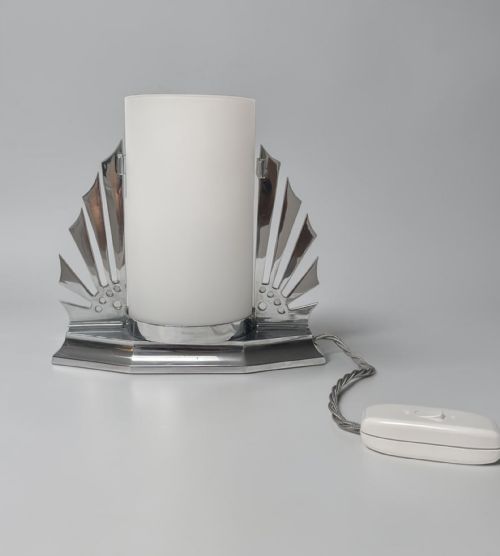


Geometric Glass Table Accents
Geometric glass table accents bring striking architectural silhouettes and brilliant illumination to interiors through vintage design.
Geometric Glass Table Accents
Geometric glass table accents comprise sculptural lighting pieces designed to illuminate surfaces while providing strong architectural forms. When exploring geometric glass table accents, buyers encounter table lamps dating from the early twentieth century through the mid-century period.
The prevalent examples on this page are table lamps originating from the Art Deco era, alongside Arts and Crafts and Mid-Century Modern pieces. These objects combine structured glass elements with metal components to create functional focal points for tables and desks.
Materials and construction methods
Maker construction relies on combinations of glass paired with metals such as chrome, brass, patinated metal, and nickel-plated bronze. Frosted glass and enamel provide contrasting surface textures, while selected bases incorporate wood such as mahogany.
Artisan techniques focus on geometric shaping, metal plating, and patination to achieve the distinct linear aesthetics of the period. Specialised glass shades, including works by specific glasshouses, integrate securely with metal frames to support electrical fittings.
Geometric Glass Table Accents Retail Price Guide 2026
Typical asking prices for geometric glass table accents among the pieces listed under this phrase on Sellingantiques today, from the lower quarter to the upper quarter. They describe what is for sale here now, not the wider market.
Listings feature table lamps combining glass with chrome, brass, and patinated metal across the nineteen-tens to nineteen-forties.
Distinguishing quality factors
Quality differences stem from the precision of the glass cutting and the refinement of the metal plating or patination. Finer examples display harmonious proportions between the glass shade and the supporting metal or wooden base.
Signatures or attributions to known makers elevate a piece above standard production items. The structural integrity of the metalwork and the originality of the glass components determine the standing of each lamp.
Muller Bros·Karl Palda
The Geometric Glass Table Accents Glossary
- Art Deco
- A design style characterised by sleek lines, geometric shapes, and modern industrial materials that emerged in the early twentieth century. This aesthetic dominates the lighting pieces found within these listings.
- Frosted glass
- Glass treated to create a translucent surface that diffuses light evenly across a room. This finish softens the illumination produced by vintage table lamps.
- Patinated metal
- Metal surfaces showing a natural or chemically induced ageing effect that alters the original colour and sheen. This finish adds depth and historical character to the lamp base.
- Nickel-plated bronze
- Bronze metal coated with a thin layer of nickel to provide a bright, corrosion-resistant finish. This combination offers a durable and reflective surface typical of modernist design.
Geometric Glass Table Accents: Frequently Asked Questions
What periods do these lamps represent?
These table lamps primarily represent the early twentieth century, spanning from the nineteen-tens through to the nineteen-forties. The selection captures distinct design movements including Arts and Crafts, Art Deco, and Mid-Century Modern.
Art Deco examples heavily feature linear motifs, geometric patterns, and industrial metals that define the era's decorative arts.
How were these lamps used historically?
Historically, these fixtures provided functional task and ambient lighting for domestic interiors, studies, and reception rooms. They sat upon desks, sideboards, and occasional tables to cast light while serving as decorative sculptures.
The integration of glass and polished metals allowed the pieces to reflect natural and artificial light within the room.
How do I care for antique glass and metal?
Maintenance requires gentle cleaning with soft cloths to preserve delicate glass shades and vulnerable metal finishes. Avoid harsh chemical cleaners that might strip patination from brass, bronze, or chrome surfaces.
Regular checks of vintage wiring ensure safe operation while maintaining the original components wherever possible.
How do I identify an Art Deco lamp?
Art Deco lighting is identified through symmetrical geometric forms, stylised motifs such as zig-zags or sails, and the combination of glass with chrome or brass. Designers of the period favoured clean architectural lines over ornate floral decoration.
Maker signatures etched into the glass or stamped onto the metal base often confirm the origin of the piece.