

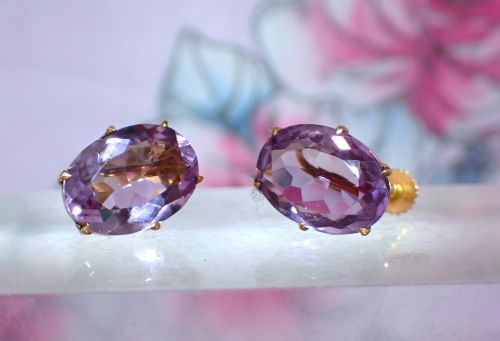

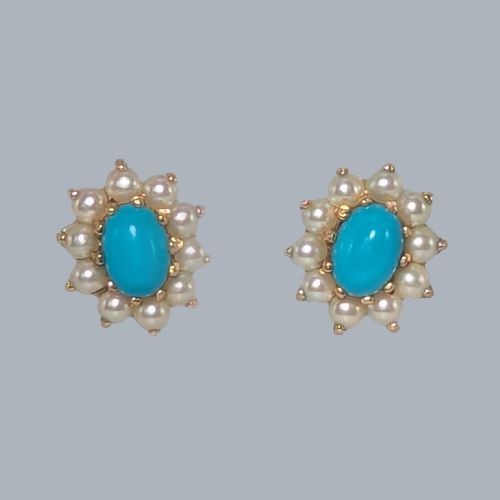


Gemstone Cluster Studs
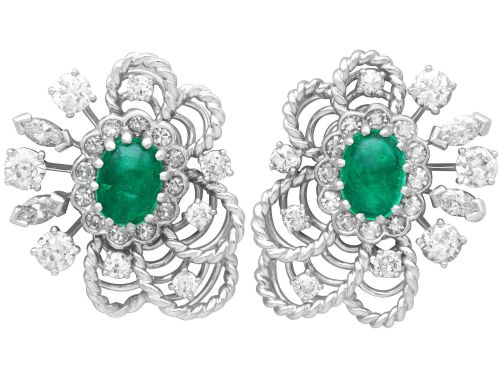
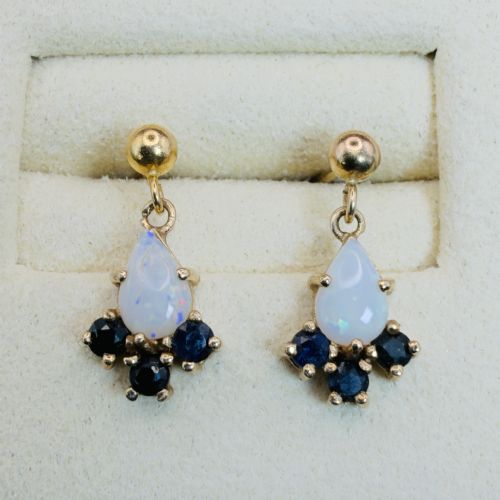
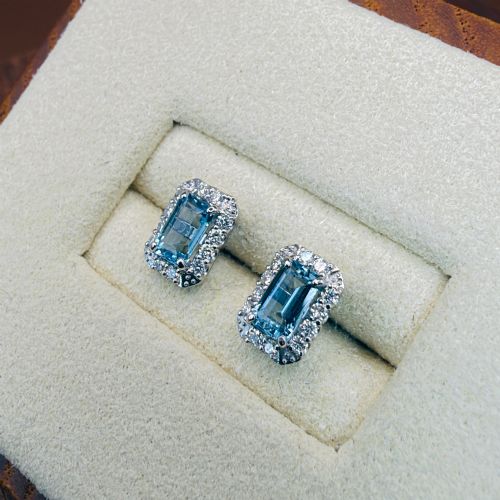
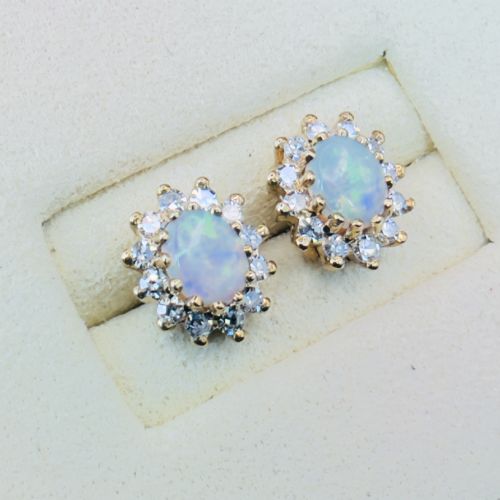
Gemstone cluster studs bring together coloured central stones and encircling smaller gems in compact, ear-hugging forms that deliver concentrated brilliance.
Gemstone Cluster Studs
Gemstone cluster studs gather a central stone surrounded by smaller gems to create compact, eye-catching earrings designed to sit close to the lobe or drop slightly below. When you examine gemstone cluster studs, you encounter forms spanning Georgian, Victorian, Edwardian, Art Deco, Mid-Century, and later periods.
The materials span 9ct gold, 18ct white gold, 18ct yellow gold, 14ct gold, and platinum settings holding diamonds, sapphires, emeralds, amethysts, garnets, opals, turquoises, and topazes. Stud earrings, drop earrings, and screw-on or clip-on variations appear frequently across the selection.
Traditional and vintage styles dominate, alongside Mid-Century Modern and Victorian Revival pieces. Buyers find both simple round arrangements and elaborate pear, oval, and heart-shaped configurations.
How they were made
Goldsmiths set central stones such as emeralds, sapphires, and diamonds into 9ct or 18ct gold and platinum using claw and bezel techniques. Surrounding accent diamonds or smaller coloured stones are closely aligned to form symmetrical floral or geometric halos.
Makers utilised filigree work and mixed metals like platinum paired with yellow or white gold, particularly in Art Deco and Edwardian examples. Hallmarks and secure screw-on or clip mechanisms indicate the structural craftsmanship applied across different decades.
Gemstone Cluster Studs Retail Price Guide 2026
Typical asking prices for gemstone cluster studs among the pieces listed under this phrase on Sellingantiques today, from the lower quarter to the upper quarter. They describe what is for sale here now, not the wider market.
Some Victorian clips boast a heavier garnet weight than a small apple.
What varies in quality
The calibre of the central gemstone relative to its surrounding melee stones dictates the overall visual harmony of the piece. Fine pairings feature stones with matched saturation and clean carat weight distribution.
The weight and purity of the precious metal mount, whether 9ct gold, 18ct white gold, or platinum, influences the enduring structure and crispness of the surrounding basket or bezel.
The Gemstone Cluster Studs Glossary
- Cluster
- An arrangement where a central gemstone is encircled by a border of smaller stones. This design maximises light reflection and perceived size.
- Cabochon
- A gemstone shaped and polished with a smooth, rounded surface rather than faceted. This cut is frequently seen on opals and turquoises.
- Melee
- Small gem-quality diamonds or coloured stones used to accent a primary centre stone. They form the sparkling border in cluster settings.
- Filigree
- Ornamental work consisting of fine, twisted metal threads soldered together in openwork patterns. It adds delicate texture to Edwardian and vintage mounts.
- Platinum
- A dense, durable, and naturally white precious metal used to securely hold diamonds and emeralds. It allows for finer, stronger prongs than gold.
Gemstone Cluster Studs: Frequently Asked Questions
How do I wear cluster studs daily?
These compact earrings sit snugly against the earlobe, making them practical for everyday wear without catching on clothing or hair. Their secure butterfly backs or screw-on fittings keep them firmly in place throughout the day.
For evening occasions, drop variations add gentle movement while retaining the concentrated colour of the central stone cluster.
What periods do these earrings span?
The available pieces reach from Georgian and Victorian eras through Edwardian, Art Deco, and Mid-Century Modern designs. Each era brings distinct metal choices, such as platinum combined with yellow gold in earlier pieces.
Twentieth-century examples often feature 9ct and 18ct gold settings housing sapphires, amethysts, and garnets in structured geometric arrangements.
Are these earrings clip-on or pierced?
The selection includes traditional post and butterfly fastenings alongside screw-on and clip-on mechanisms. Victorian and early twentieth-century examples frequently utilise screw-on backs designed for non-pierced ears.
Mid-century and later pieces generally incorporate standard posts for pierced lobes while maintaining the same dense cluster formation.
What stones are used in these clusters?
Central stones include diamonds, emeralds, sapphires, opals, amethysts, garnets, turquoises, and topazes. Surrounding stones are predominantly small diamonds or complementary coloured gems that enhance the primary hue.
Combinations range from traditional sapphire and diamond pairings to vibrant arrangements of peridots, pink sapphires, and aquamarines.