




Fretwork Display Shelf
A fretwork display shelf brings intricate pierced woodwork into rooms to lift collections of small objects.
Fretwork Display Shelf
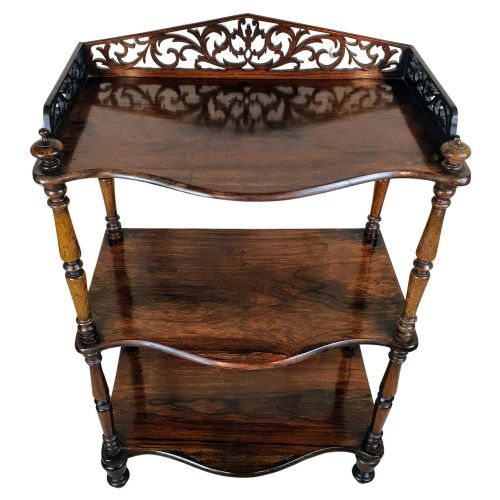
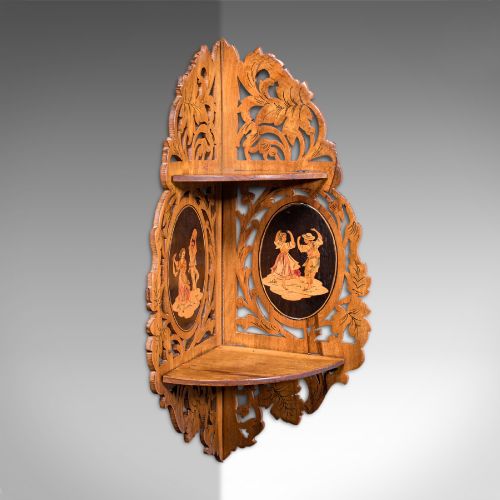
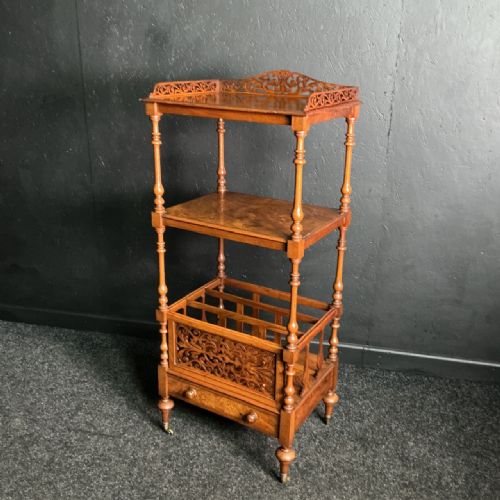
A fretwork display shelf groups items like whatnots, wall shelves, and corner brackets across periods spanning the eighteenth century to the Edwardian era. You find multi-tiered wooden stands designed to hold plates, books, and ornaments in compact spaces.
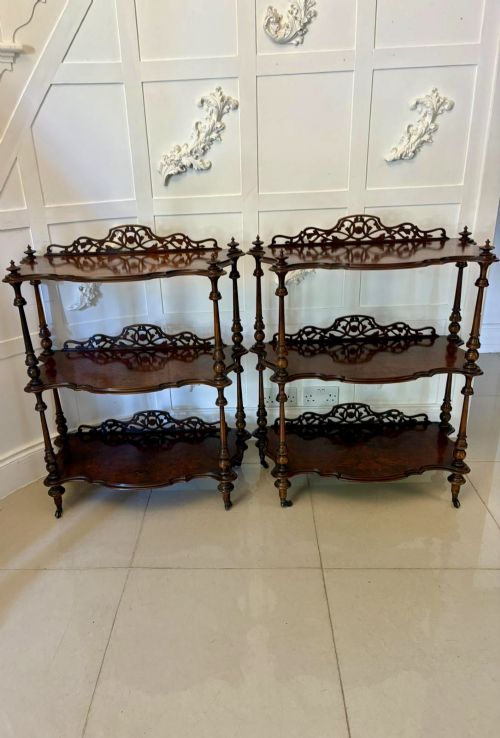
The Victorian period dominates the selection with burr walnut and mahogany pieces, alongside earlier Georgian pine and mahogany hanging racks and later Edwardian examples.
Makers utilised pierced wood panels and carved brackets to lighten heavy timber forms, creating tiered display furniture for sitting rooms and hallways.
How they were made
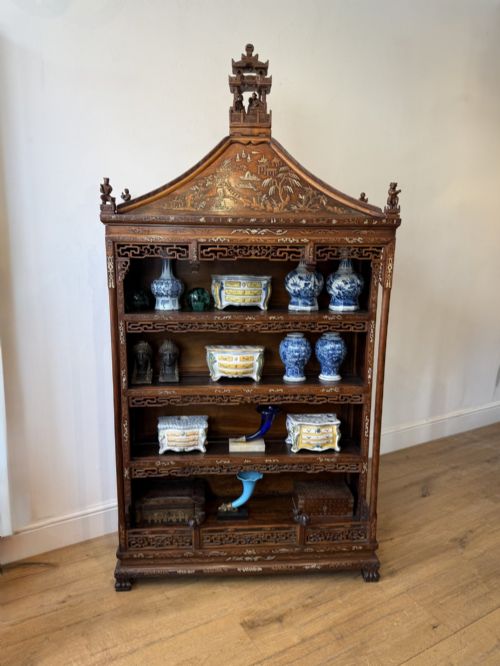
Cabinet makers constructed these shelves using dense hardwoods such as walnut, mahogany, and rosewood, often enhanced with burr walnut veneers and marquetry inlay. Olive wood and oak also appear, shaped into tiered platforms supported by turned columns and brackets.
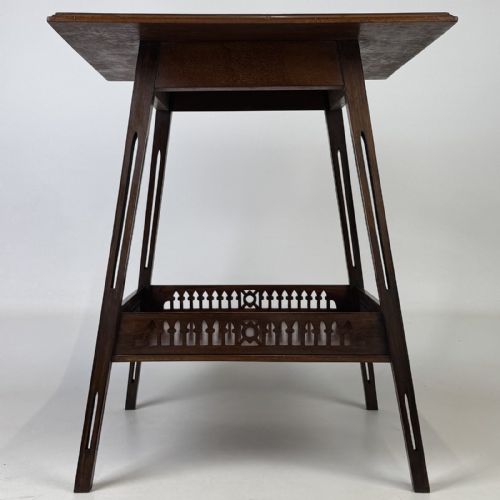
Fretwork panels were pierced by hand using fretsaws to create intricate geometric or floral patterns along the friezes and gallery rails. Joinery relied on precise mortise and tenon joints to bear the weight of stacked tiers without heavy bracing.
Fretwork Display Shelf Retail Price Guide 2026
Typical asking prices for fretwork display shelf among the pieces listed under this phrase on Sellingantiques today, from the lower quarter to the upper quarter. They describe what is for sale here now, not the wider market.
Listings feature walnut, mahogany, and rosewood across Victorian, Georgian, and Edwardian periods.
What varies in quality
The crispness of the pierced fretwork separates standard items from exceptional pieces, as deep, clean cuts require skilled hand carving. Timber selection dictates overall richness, with figured burr walnut and book-matched veneers commanding higher regard than plain pine.
Structural integrity across multiple tiers determines longevity, noting how well turned uprights and bracket supports align to prevent sagging under display objects.
Robert Strahan
The Fretwork Display Shelf Glossary
- Fretwork
- Pierced woodwork formed by cutting decorative patterns through thin boards. This technique creates open geometric or scroll designs along shelves and galleries.
- Whatnot
- A tiered movable piece of furniture designed for displaying ornaments and small possessions. These items feature multiple open shelves supported by slender uprights.
- Marquetry
- The art of applying decorative veneer pieces to a structure to form intricate patterns. Cabinet makers used various woods to create contrasting pictorial or floral motifs on tabletops and tiers.
- Canterbury
- A low stand featuring sloped partitions originally designed to hold sheet music or folios. Later versions integrate with multi-tiered whatnot designs.
Fretwork Display Shelf: Frequently Asked Questions
What is a fretwork display shelf?
A fretwork display shelf is a tiered wooden fixture featuring pierced, decorative panels designed to hold books, ceramics, and ornaments. These pieces range from corner brackets to multi-tiered freestanding whatnots.
They bring vertical storage and intricate woodwork into rooms without occupying heavy floor space.
How were hanging shelves used historically?
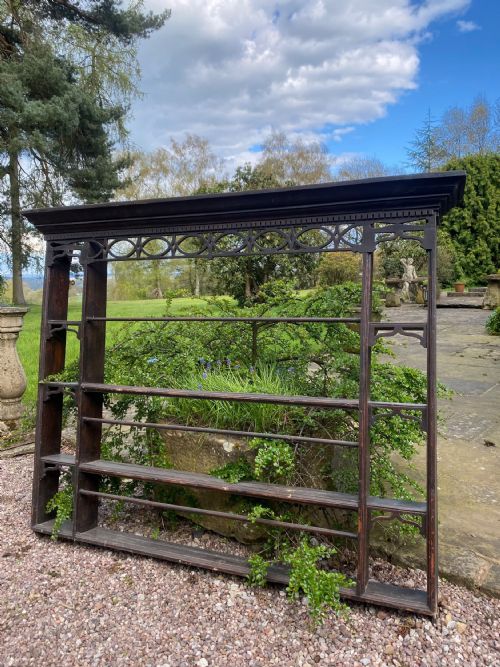
Hanging shelves and wall brackets provided accessible display space for prized porcelain and small books in period parlours and dining rooms. Delft racks held plates upright against walls for everyday use and exhibition.
They allowed households to display decorative ceramics securely above table height.
How do I care for walnut furniture?
Walnut furniture benefits from stable indoor humidity away from direct heat sources to prevent veneer lifting and timber cracking. Regular dusting with a dry cloth maintains the polished surface without moisture damage.
Periodic application of appropriate wax feeds the grain and preserves the tone of burr walnut.
What distinguishes Victorian whatnots?
Victorian whatnots frequently employ burr walnut and rosewood veneers with turned columns and fret-cut galleries. These multi-tiered stands showcase rich timber figures and elaborate marquetry inlay.
They developed from earlier Georgian hanging shelves into substantial freestanding display units.