

French Walnut Chest of Drawers
A French walnut chest of drawers brings warmth and distinct Continental presence to a room, offering deep storage through centuries of cabinet-making skill.
French Walnut Chest of Drawers
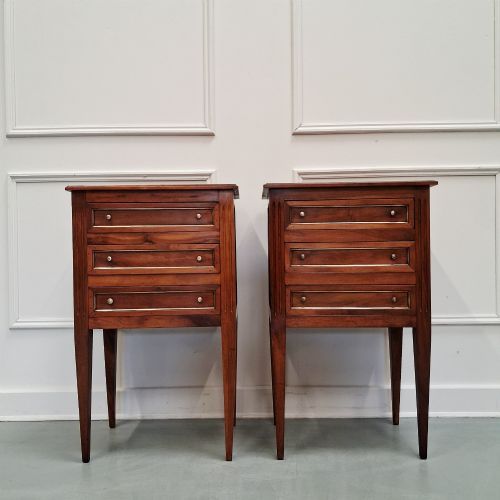
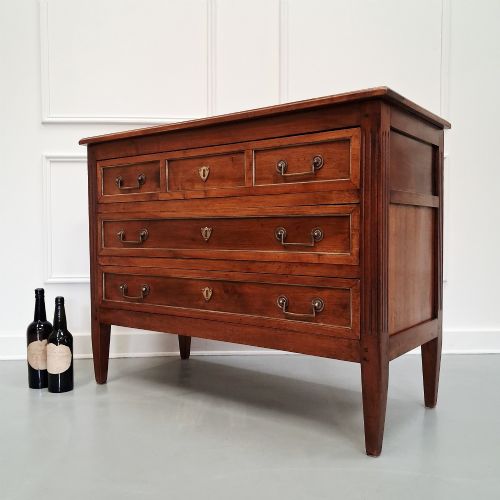
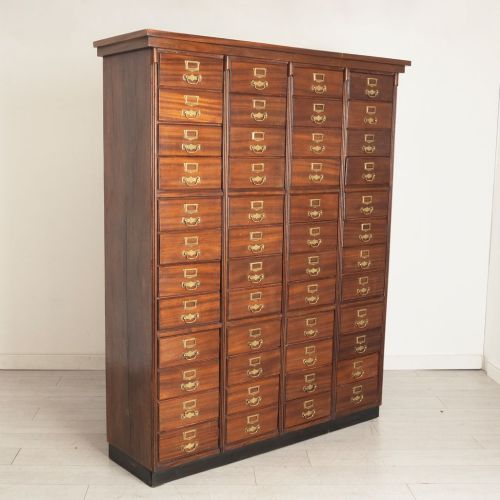
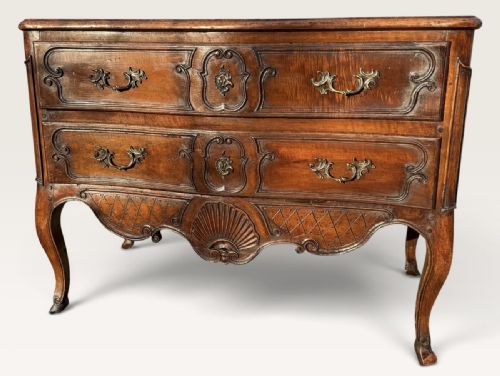
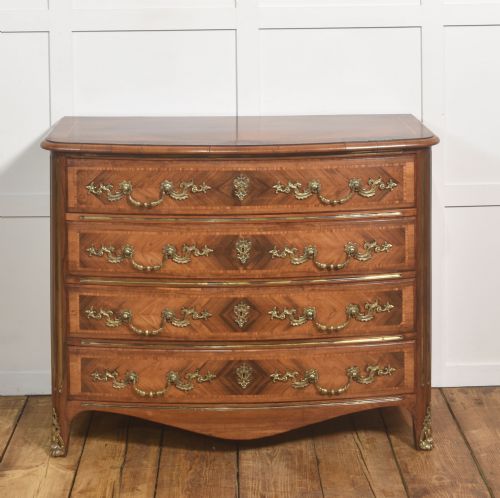
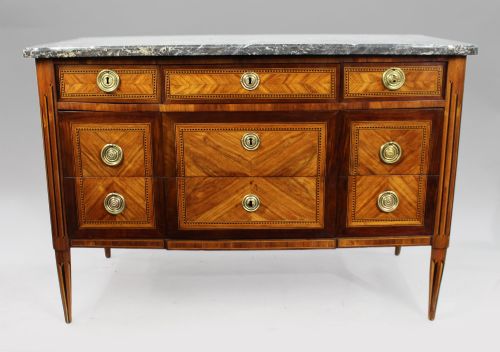
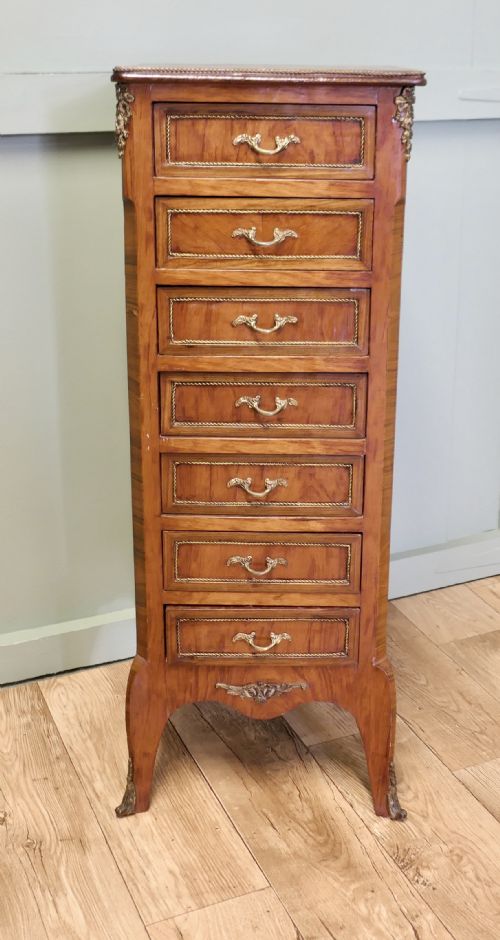
When you search for a french walnut chest of drawers, you encounter pieces originating primarily from the eighteenth and nineteenth centuries, alongside later revivals up to the 1930s. The selection spans robust provincial commodes, serpentine fronts, tall chests, and bedside cabinets.
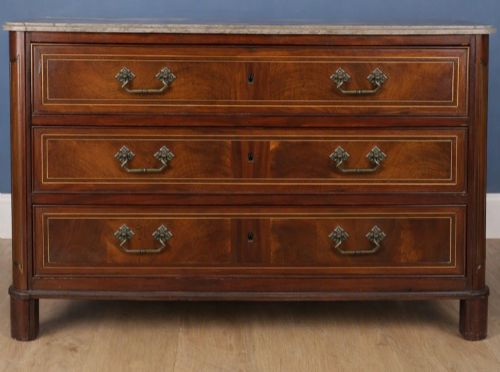
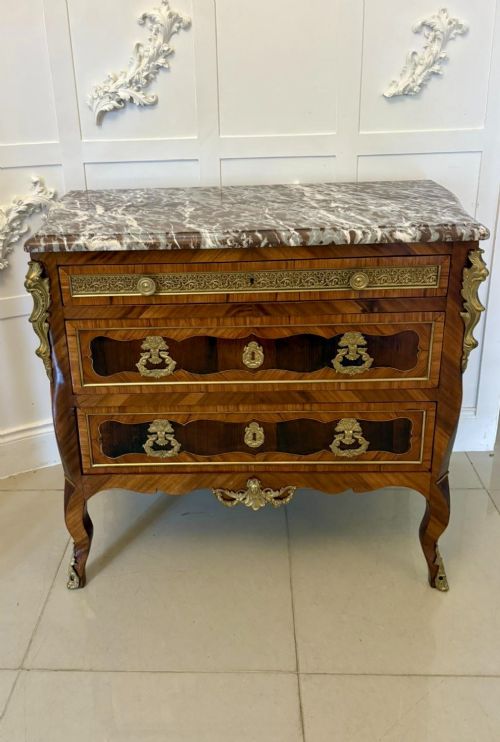
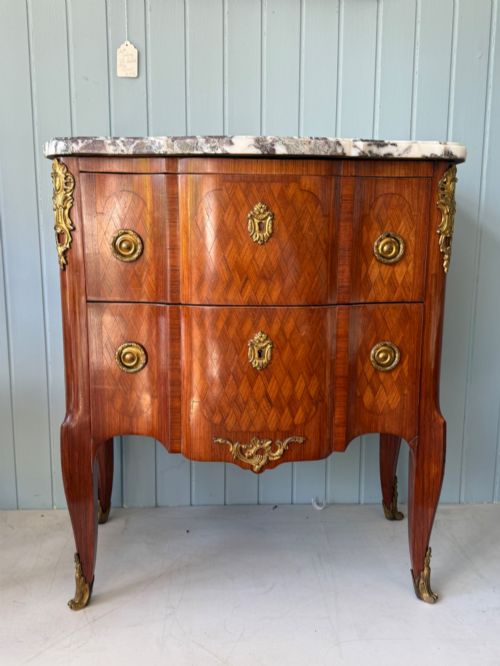
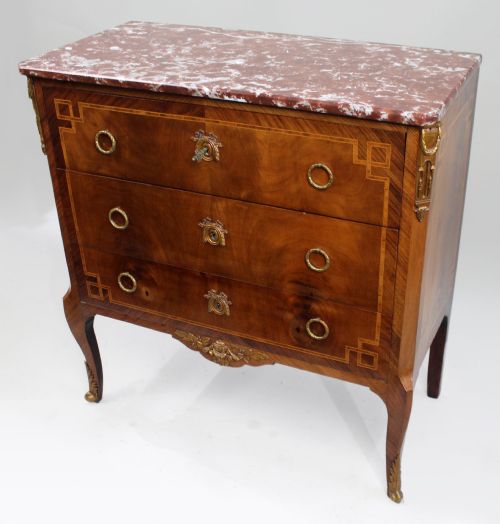
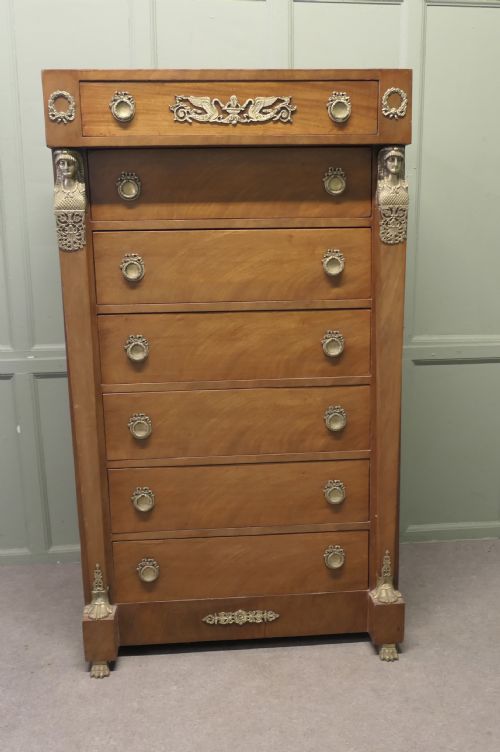
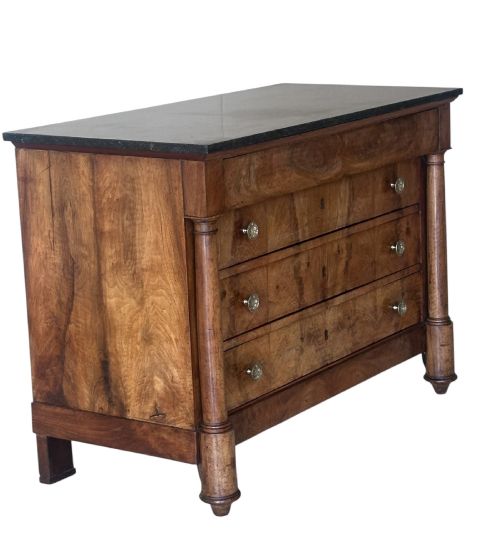
The most frequent form on this page is the commode, often featuring multiple drawers and serpentine or straight profiles. Alongside these are bedside cabinets and tall chests reflecting Louis XV, Louis XVI, and Empire styles.
Materials and Construction
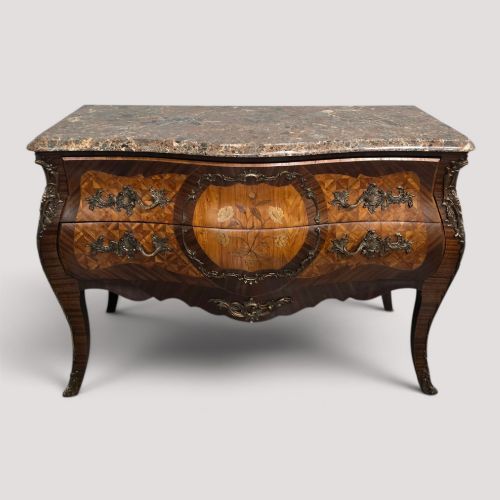
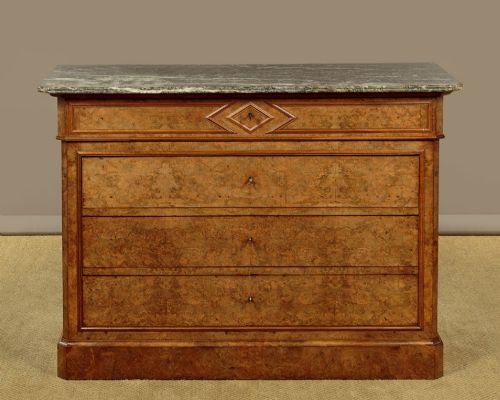
Cabinet-makers relied heavily on solid walnut and burr walnut veneers, frequently incorporating fruitwood for secondary timbers. Parquetry and marquetry inlay techniques create geometric or floral patterns across drawer fronts and sides.
Many examples are finished with heavy marble tops, ranging from white to rouge varieties, paired with cast brass or ormolu mounts and bronze hardware.
Listings span from the 1750s provincial pieces through 19th-century Victorian imports to 1930s revival commodes.
Assessing Quality
The division between standard pieces and the finest examples rests on the crispness of the marquetry and the choice of burr walnut figures. Superior pieces display seamless veneer matching and sophisticated serpentine curves.
Hardware and surface finishes dictate the overall execution, where hand-chased ormolu mounts and well-fitted marble slabs elevate the stature of the chest.
The French Walnut Chest of Drawers Glossary
- Commode
- A low chest of drawers or cabinet originating in France during the seventeenth century. These pieces usually feature generous proportions and decorative veneering.
- Marquetry
- The art of applying decorative pieces of veneer to a structure to form intricate designs. Craftsmen use various coloured woods to achieve pictorial effects.
- Ormolu
- Gilt bronze mounted on furniture as decorative feet, handles, or escutcheons. The technique involves applying a gold amalgam to bronze.
- Serpentine
- A furniture front or profile characterised by a double-curved line, convex in the centre and concave at the sides. This shape requires advanced woodworking skill.
- Parquetry
- A geometric mosaic of wood pieces used for decorative floors and furniture surfaces. It relies on precise angular fitting of contrasting timbers.
French Walnut Chest of Drawers: Frequently Asked Questions
How do I identify an 18th-century commode?
Eighteenth-century examples often display hand-cut dovetails, traditional timber shrinkage, and distinct regional French framing methods.
Surface patination develops over generations, showing softer edges and deeper warmth in the walnut grain compared to later revival pieces.
Where should I place a bedside cabinet?
These compact cabinets suit bedrooms as functional nightstands or living rooms as small lamp tables.
Their marble tops provide durable surfaces for daily items while introducing rich texture to the interior scheme.
What is the difference between marquetry and parquetry?
Marquetry forms pictorial or floral motifs using diverse veneer shapes and varied timber tones.
Parquetry sticks to strict geometric patterns like cubes, chevrons, or squares across the surface.
How do I care for a walnut commode?
Keep the wood away from direct heat sources and strong sunlight to prevent veneer cracking and fading.
Apply traditional beeswax occasionally to nourish the grain and maintain the natural lustre of the French polish.