
French Style Crystal Drops
French style crystal drops define the sparkle of period chandeliers, offering an instant touch of continental elegance to a room.
French Style Crystal Drops
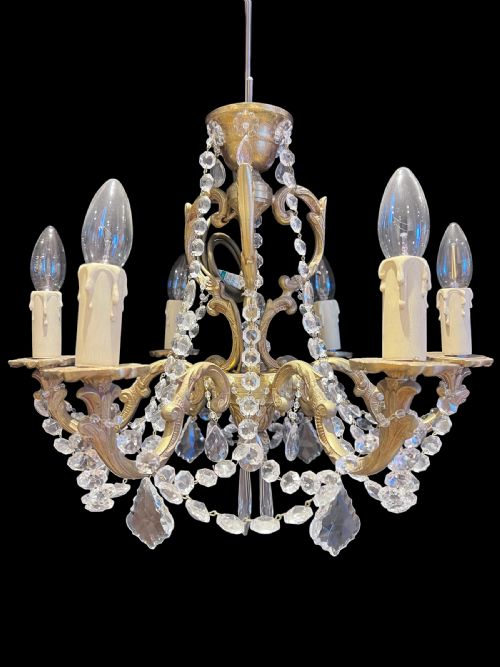
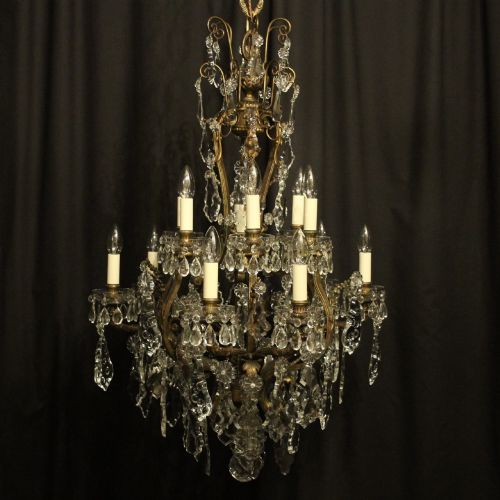
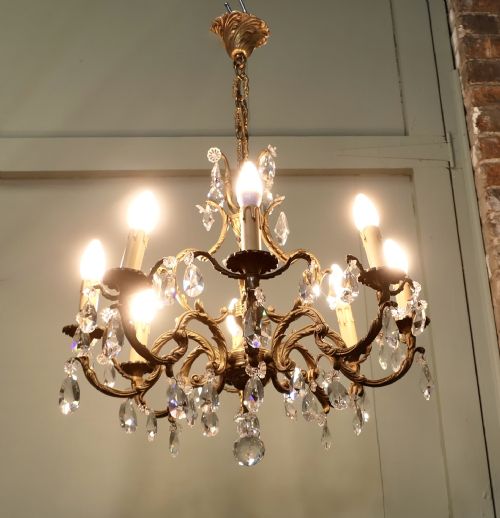
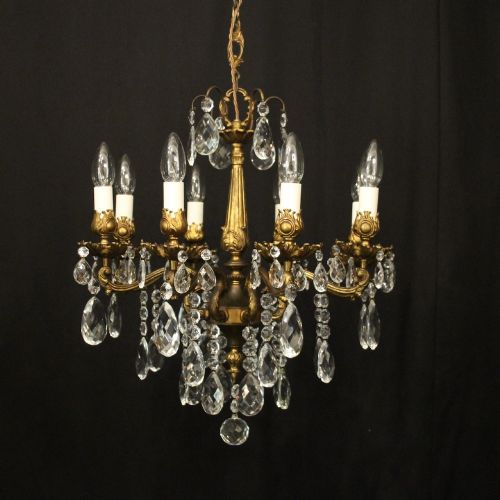
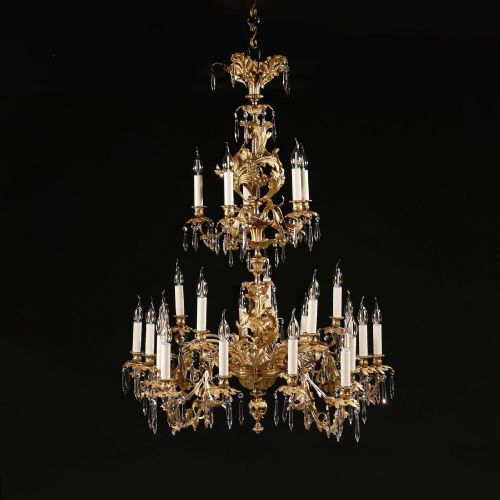
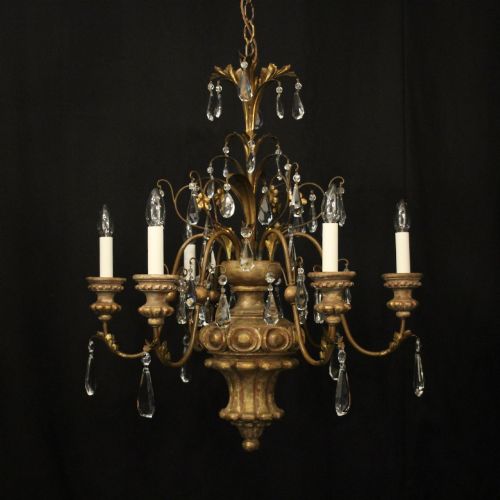
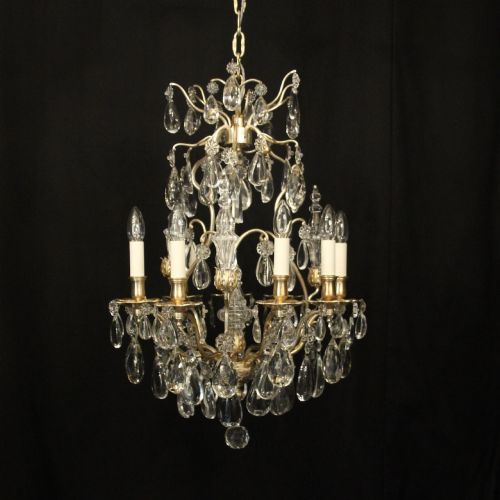
French style crystal drops appear principally on chandeliers, ceiling lights, and wall sconces dating from the late nineteenth century through to the 1930s. Buyers searching this phrase look for cut glass and crystal prisms that scatter light across a ceiling, set within frames of gilt brass, bronze, and wrought iron.
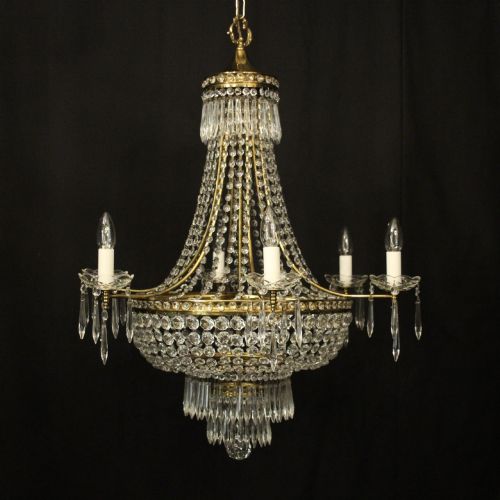
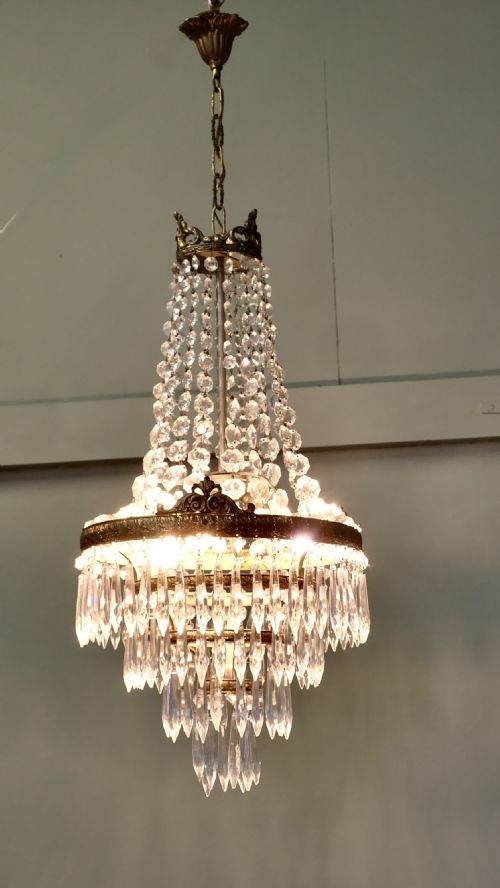
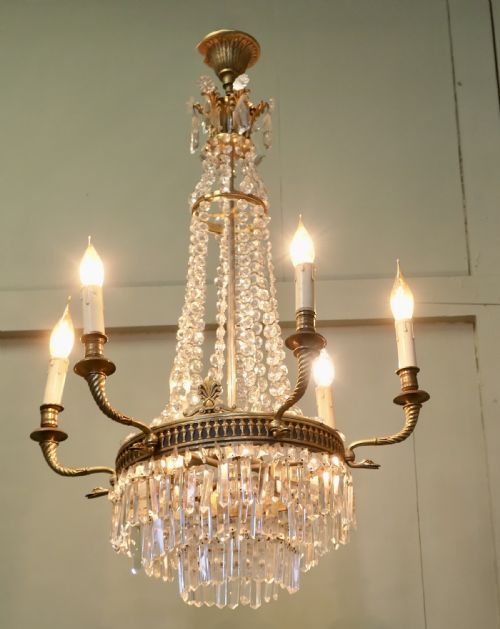
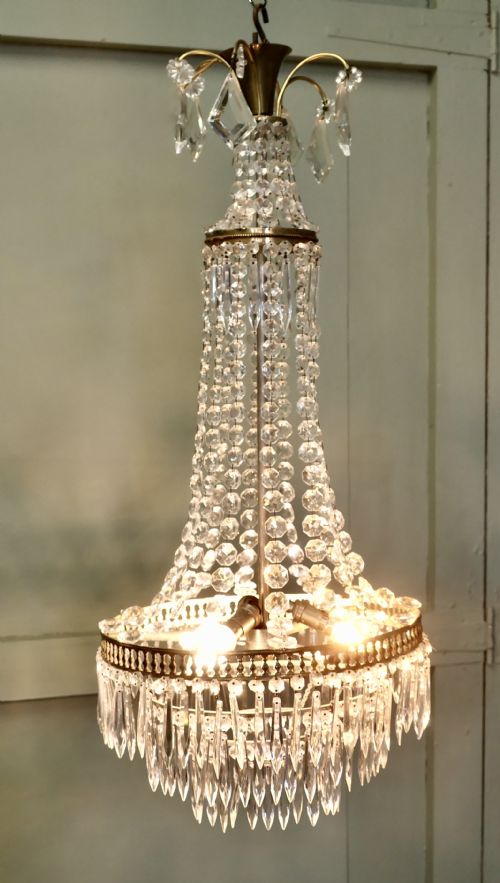
The most common forms on this page include tent and waterfall chandeliers, alongside smaller bag chandeliers and matching wall lights. These pieces draw on French Empire, Rococo, and Chateau styles, spanning Edwardian productions and later twentieth-century iterations.
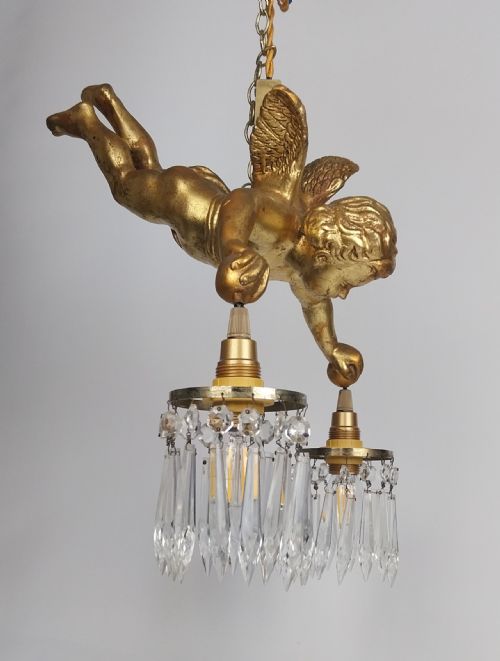
Makers and lighting designers utilised various configurations, from multi-branch candelabras to compact wall lights, dressing each metal frame with tiers of glass drops and lustres. The resulting fixtures serve as focal points in period interiors, combining structural metalwork with dangling refractive glass.
Materials and construction
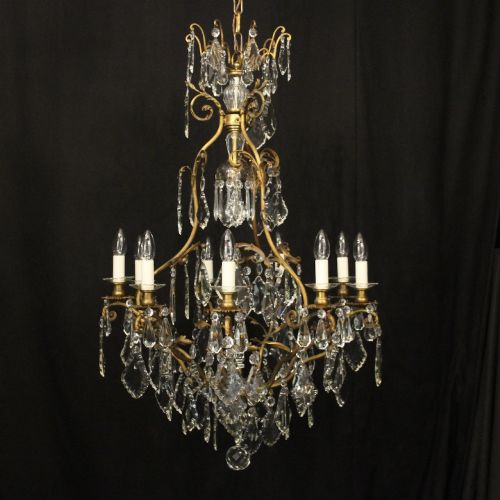
Makers built the structural frames of these light fittings using cast brass, gilded bronze, gilt toleware, and wrought iron. These metals were shaped into hoops, birdcage frameworks, and scrolling arms to support multiple candle lights or electric bulbs.
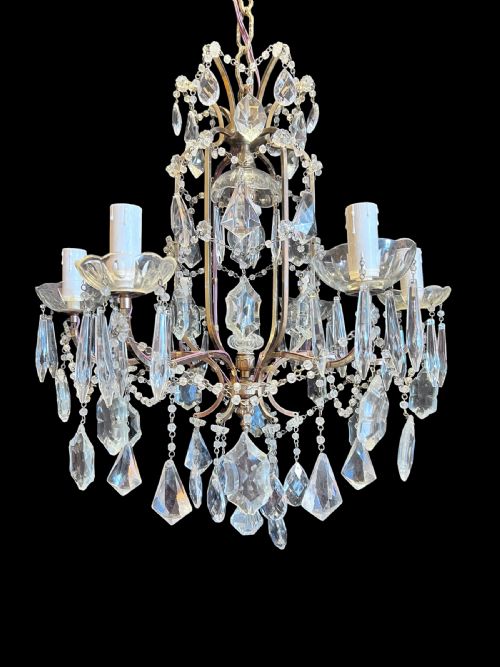
Workers then hung cut glass and crystal drops from the metal armatures using fine wire links. The glass components included moulded prisms, spikes, beads, and fruit shapes, which caught and reflected illumination from the lamps.
One chandelier even comes adorned with crystal amber and mauve fruits, proving that past makers liked to garnish their light with glass produce.
Factors determining quality
Quality rests in the clarity and cutting of the crystal drops, alongside the substance of the underlying metal frame. Heavy cast bronze or gilt brass mounts provide superior structural integrity compared to lighter pressed alternatives.
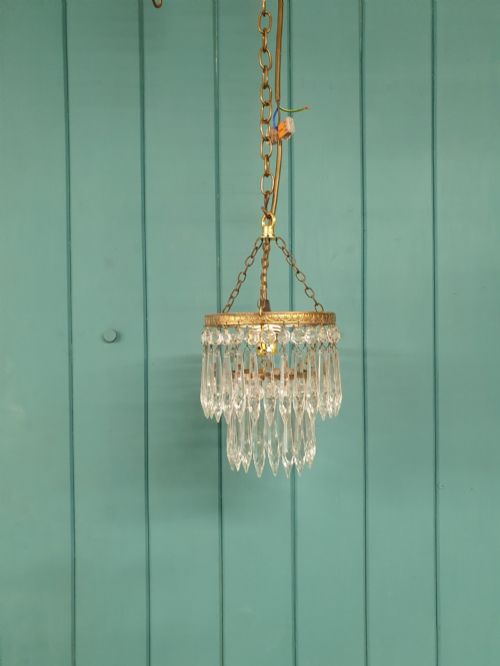
The sophistication of the design distinguishes finer examples, visible in complex tent and waterfall configurations rather than simpler single-tier drops. Precision in hand-cut glass facets yields sharper light refraction than moulded glass.
The French Style Crystal Drops Glossary
- Crystal drops
- Small cut glass pendants hung from lighting fixtures to refract light. They appear in various shapes including spears, pears, and spearheads.
- Tent and waterfall chandelier
- A lighting form featuring an upper conical tent of strings of beads falling to a wider cascading skirt of crystals. This arrangement creates a dense curtain of glass.
- Bag chandelier
- A lighting fixture where drops are arranged in a tapering, sack-like shape beneath a brass or bronze rim. The profile resembles a flat-bottomed pouch.
- Gilt bronze
- Metal alloy cast into decorative shapes and coated with a thin layer of gold. It provides a durable and ornate surface for French light fittings.
- Lustre
- A glass pendant or hanging prism suspended from a chandelier or wall sconce. These elements catch ambient light and candle flames.
French Style Crystal Drops: Frequently Asked Questions
How do I clean crystal drops?
Remove the drops carefully from the frame and wash them in warm soapy water using a soft cloth. Dry each piece thoroughly with a lint-free cloth before rehanging them.
Avoid using harsh chemical cleaners that can damage the metal wire links or dull the surface of the glass over time.
Are these lights wired for modern use?
Many period fixtures arrive with wiring of varying ages, and some retain older fittings that require updating. A qualified electrician should inspect and rewire the fixture to meet current safety standards before installation.
Rewiring ensures the metal frame and lamp holders safely accommodate modern household voltages.
How do I date a crystal chandelier?
Dating relies on examining the construction methods of the metal frame, the style of the casting, and the cut of the glass drops. Pieces from the nineteenth century often feature heavier bronze castings and hand-cut facets.
Later Edwardian and 1930s examples introduce different frame geometries, such as simpler bag styles and gilt toleware finishes.
Can wall lights match a main chandelier?
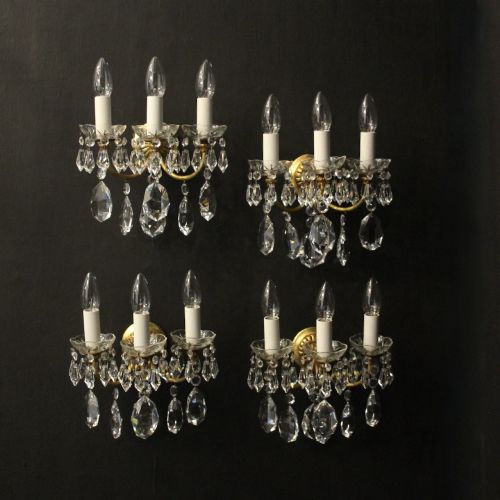
Matching wall sconces and triple-arm wall lights frequently accompany larger chandeliers from the same period. They share identical metal finishes, such as gilt brass or bronze, and use the same style of crystal drops.
Using coordinated wall lights helps maintain a consistent decorative theme throughout a room.