






French Rosewood Bureau
A french rosewood bureau brings writing surfaces into the room through figured grain and gilt mounts, offering fitted compartments for daily correspondence.
French Rosewood Bureau
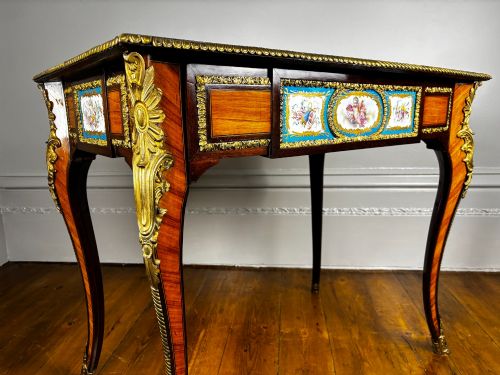
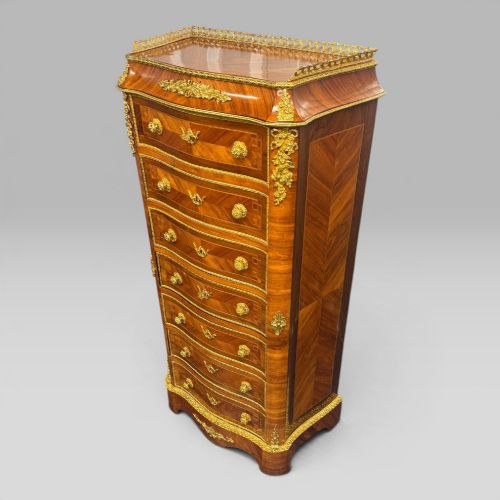
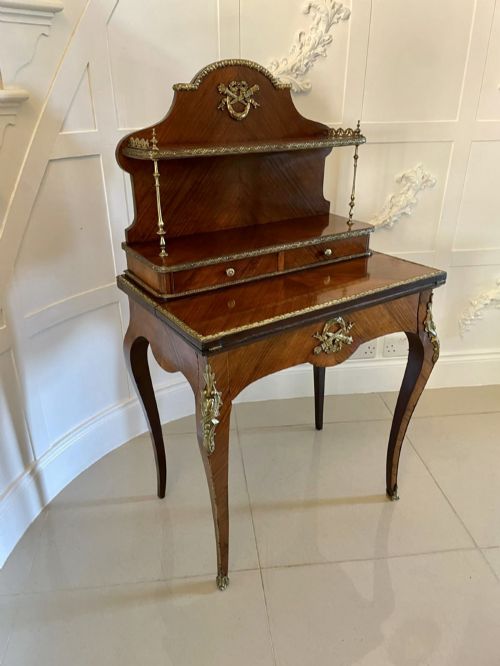
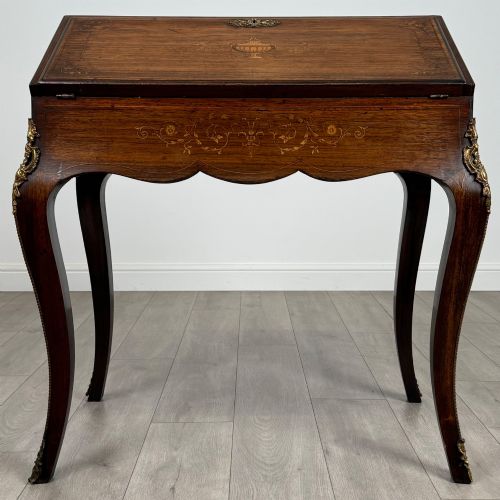
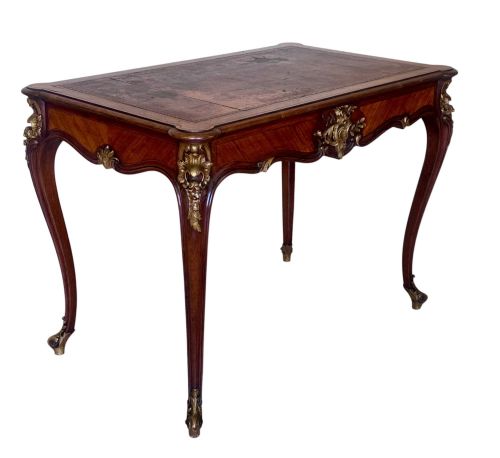
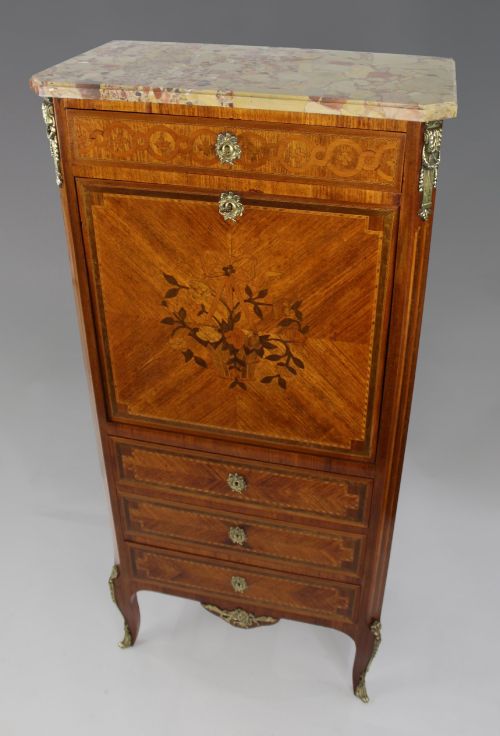
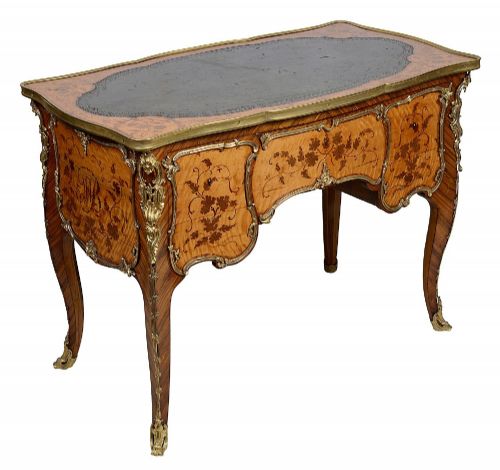
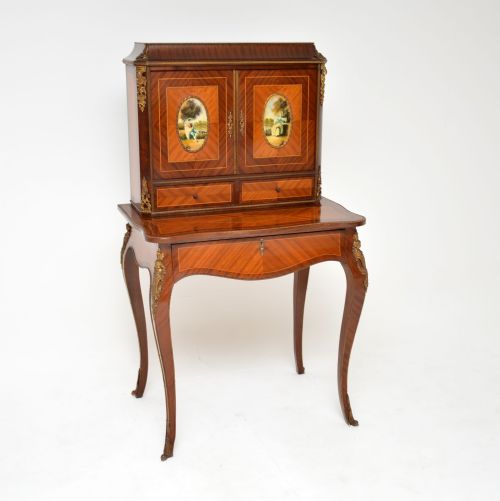
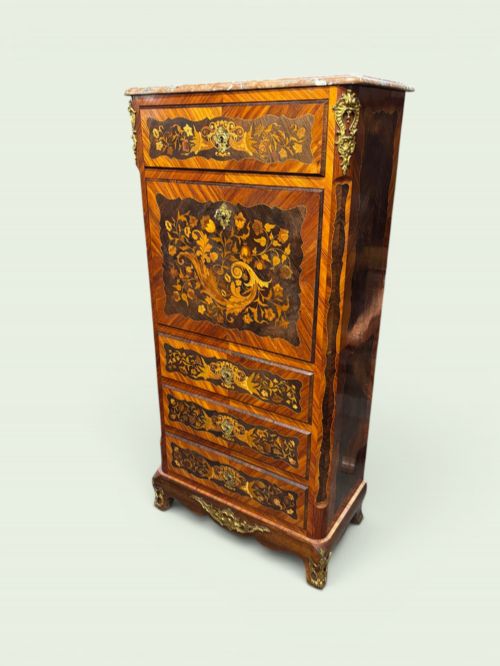
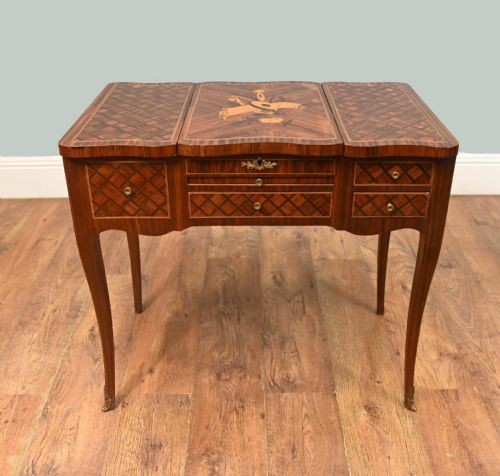
A french rosewood bureau spans 19th Century forms, from fall-front escritoires to small writing desks and lady's writing cabinets known as bureau de dame or bonheur du jour. These pieces emerge across Victorian and later decades, drawing on Louis XV Revival and Louis XVI styles.
The version most commonly met on this page is the bureau de dame or writing table, often featuring marquetry inlay, slender cabriole legs, and tabletop superstructures with small drawers.
Materials and construction
Craftsmen built these desks using timber veneers like rosewood, kingwood, tulipwood, and satinwood laid over solid carcasses, frequently combining parquetry and marquetry geometric patterns or floral motifs.
Gilt bronze and ormolu mounts, brass banding, and leather writing inserts punctuate the timber surfaces, while marble tops appear on select secretaire cabinets and escritoires.
French Rosewood Bureau Retail Price Guide 2026
Typical asking prices for french rosewood bureau among the pieces listed under this phrase on Sellingantiques today, from the lower quarter to the upper quarter. They describe what is for sale here now, not the wider market.
Secret drawers tucked behind dummy book spines or sliding panels gave Victorian letter writers a private hiding spot for love letters.
Gradations in craftsmanship
The distinction between tiers rests upon the precision of the cabinetwork, the crispness of the chased ormolu mounts, and the complexity of the marquetry layout.
Finer examples retain original marble slabs, working locks with keys, secret drawers, and secondary timbers of substantial gauge, whereas simpler pieces rely on painted lines rather than inlaid veneers.
CH. Jeanselme and Co·Donald Ross·John McLean
The French Rosewood Bureau Glossary
- Bureau de dame
- A small lady's writing desk, typically featuring a sloping fall-front or a fitted upper tier with small drawers.
- Ormolu
- Gilt bronze mounts cast and chased with decorative foliage, scrollwork, or rococo motifs, applied to corners, legs, and aprons.
- Marquetry
- The art of forming decorative patterns using fitted wood veneers of various natural colours and grains.
- Escritoire
- A writing cabinet featuring a fall-front writing surface that conceals internal pigeonholes and small drawers.
- Bonheur du jour
- A small light writing desk with a tiered superstructure of shelves and drawers above the main work surface.
French Rosewood Bureau: Frequently Asked Questions
What is a bureau de dame?
A bureau de dame is a compact writing desk designed for female use, featuring a sloped writing flap or a superstructure of miniature drawers.
These pieces were typically placed in private boudoirs or drawing rooms for letter writing and keeping personal papers.
How do I care for rosewood veneer?
Rosewood veneer requires stable room humidity and protection from direct sunlight to prevent the timber from fading and the glue from drying.
Dust gently with a dry cloth and apply occasional specialist wax polish sparingly to nourish the grain.
What is the difference between an escritoire and a bureau plat?
An escritoire is a vertical cabinet with a drop-front writing panel that conceals internal compartments, while a bureau plat is a flat-topped table designed for writing.
Escritoires save floor space and secure contents behind locked doors, whereas bureau plat tables offer open kneehole workspaces.
How do I identify Louis XV Revival style?
Louis XV Revival pieces display asymmetrical curves, cabriole legs, floral marquetry, and scrolling ormolu mounts inspired by mid-eighteenth-century French design.
Nineteenth-century makers adopted these motifs enthusiastically to create ornate furniture for grand domestic interiors.