

French Marble Chest
When considering a french marble chest, a buyer seeks a substantial storage piece grounded in stone and timber history.
French Marble Chest
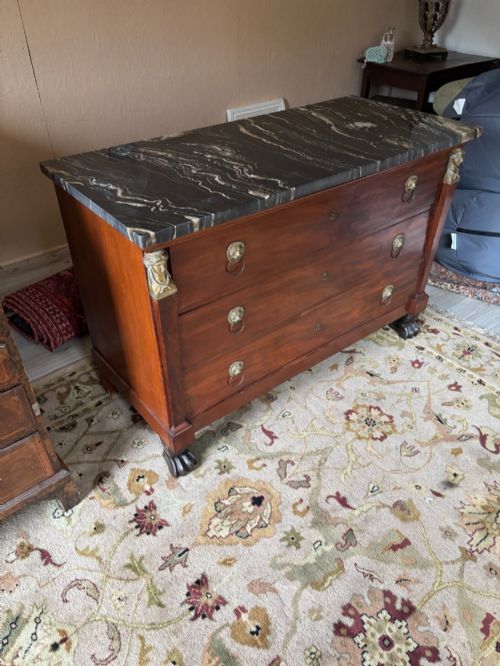
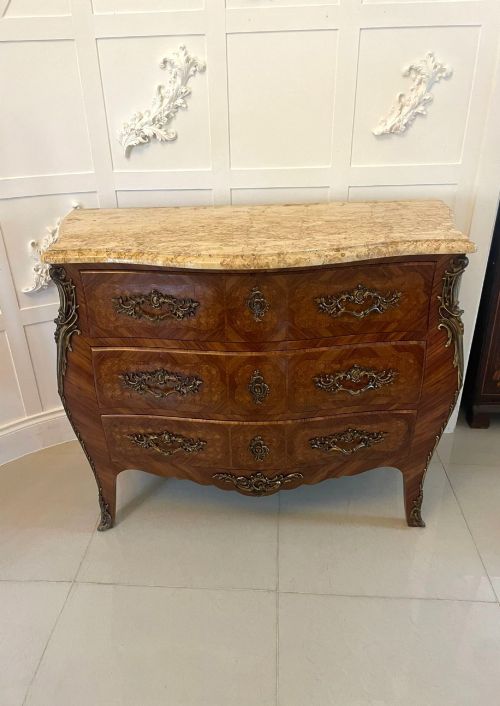
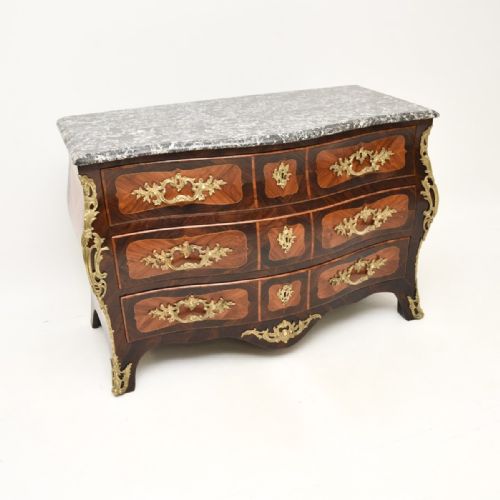
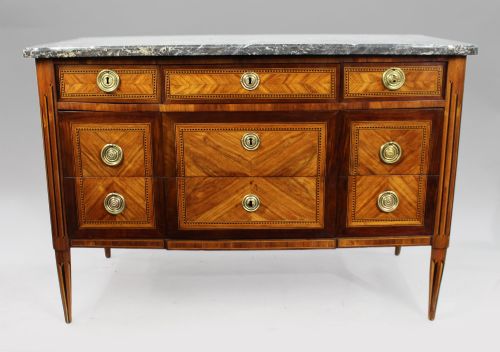
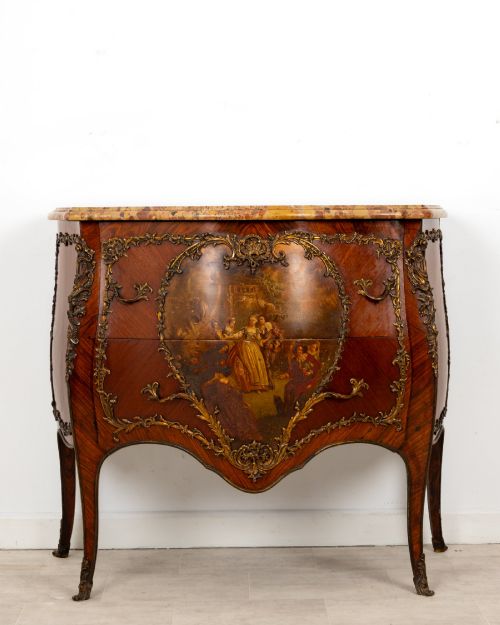
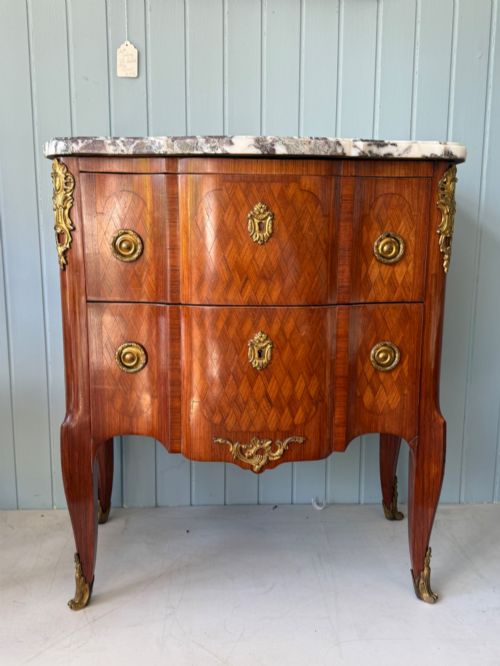
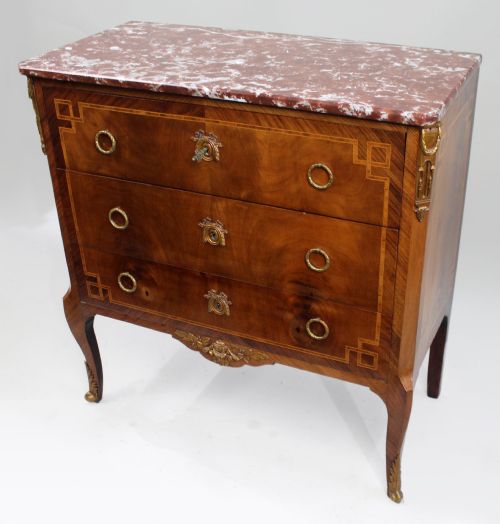
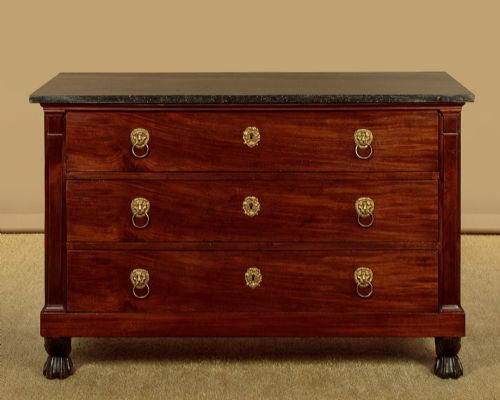
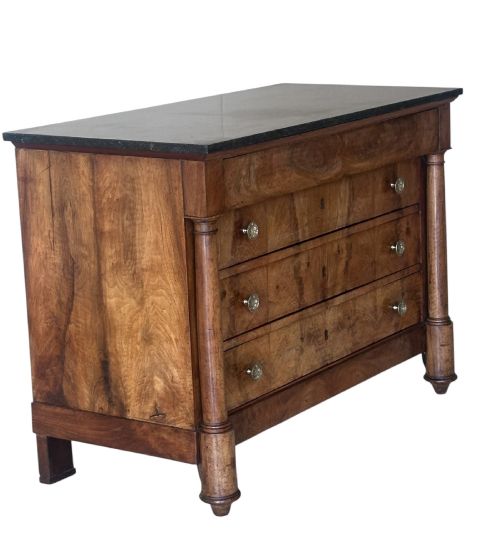
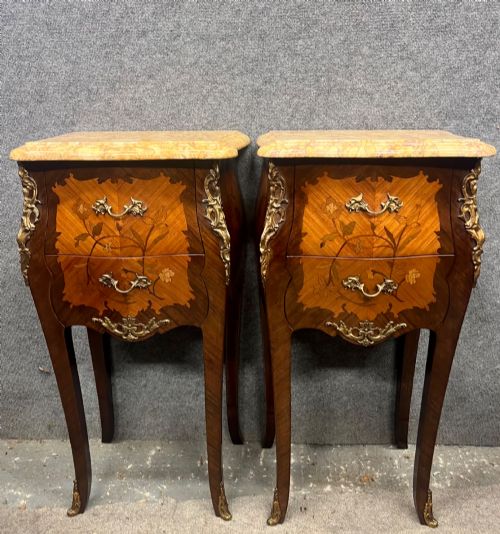
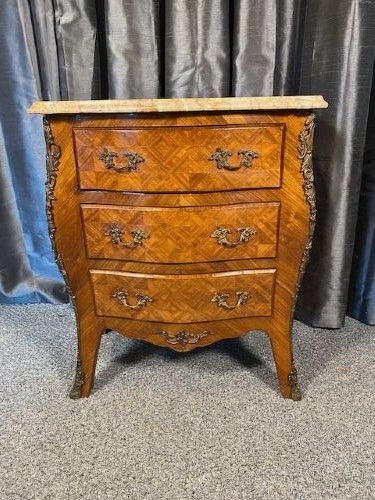
A french marble chest typically takes the form of a commode, bedside cabinet, or small chest of drawers designed for domestic use. The most common iteration met on this page is the nineteenth-century walnut or kingwood commode topped with veined marble.
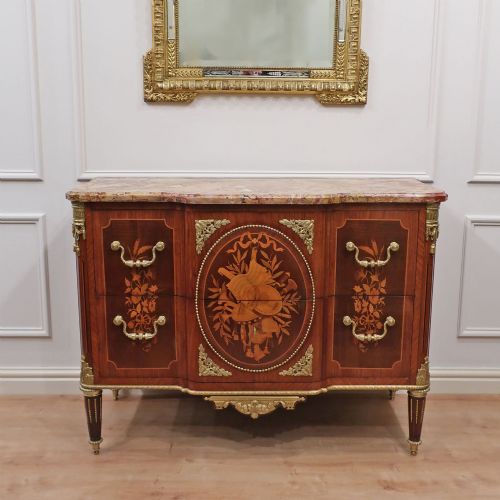
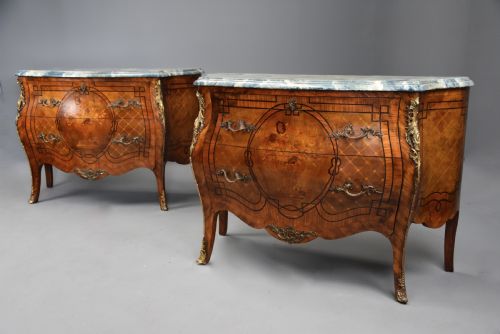
These pieces range from provincial cherrywood and oak examples to elaborate nineteenth-century revival commodes employing parquetry and marquetry. Formats span straightforward rectilinear drawer banks to serpentine and bombe shapes supported by short cabriole legs.
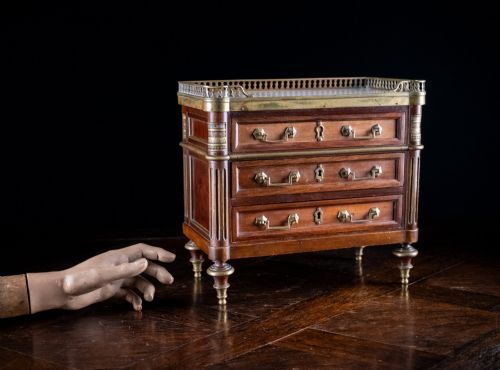
Origins stretch from eighteenth-century workshops in Paris and the provinces through to nineteenth-century revival pieces that echo the reigns of Louis XV and Louis XVI. Smaller bedside chests and miniature chests of drawers also appear regularly alongside full-sized commodes.
What Varies in Quality
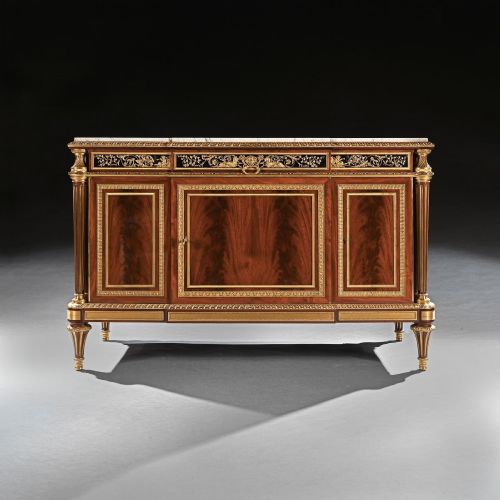
Quality rests upon the precision of the timber work and the execution of the bronze mounts. Finer examples display seamless veneer matching and deeply chased ormolu mounts rather than rudimentary cast brass.
The weight, selection, and edge-profiling of the marble top also dictate the tier of the piece. Thick, richly figured marble slabs fitted flush to the wooden carcase signal superior workshops.
Listings feature marble tops in grey, rouge, and fossil varieties paired with walnut, mahogany, and kingwood carcases.
Jacques Bircklé·Henry Dasson·Weisweiler·E. Kahn·Bruneau
The French Marble Chest Glossary
- Commode
- A low chest of drawers, typically standing on legs, originating in France during the eighteenth century. This term is frequently used interchangeably with chest of drawers in marketplace listings.
- Ormolu
- Gilded bronze applied as decorative mounts to furniture frames and drawer fronts. This material requires careful casting and mercury or galvanic gilding techniques.
- Marquetry
- The art of applying pieces of veneer to a structure to form decorative patterns and pictorial designs. Craftsmen utilise contrasting woods such as kingwood and walnut for visual depth.
- Parquetry
- Geometric mosaic woodwork used to cover floors or furniture surfaces. Squares, triangles, and diamonds of timber create repeating patterns.
- Bombé
- A swollen, convex shape characteristic of certain eighteenth-century and revival furniture styles. This contour demands advanced woodworking skill to maintain structural integrity.
- Vernis Martin
- A type of simulated Japanese lacquer developed in France to imitate Asian screens and panels. Artisans apply multiple coats of translucent varnish over painted scenes.
French Marble Chest: Frequently Asked Questions
How do I clean the marble top?
Use a soft cloth dampened with warm water and a neutral soap, avoiding acidic cleaners that etch the stone.
Dry the surface thoroughly afterwards to prevent water spotting or mineral rings from forming on the polished finish.
Are these drawers suitable for daily use?
Most antique commodes and chests function well for modern storage, though nineteenth-century drawer runners may require occasional wax lubrication.
Care should be taken not to overload deeper drawers, as historical timber joints respond best to moderate weights.
How can I tell a revival piece from an eighteenth-century original?
Examine the secondary woods inside the carcase and the construction of the drawer dovetails, which reveal the period of assembly.
Nineteenth-century revival pieces often employ machine-sawn elements and standardised hardware alongside hand-cut dovetails.
What is the difference between a commode and a bedside chest?
Commodes are larger storage units designed for primary rooms, featuring multiple wide drawers and substantial marble tops.
Bedside chests and lamp tables are scaled down in width and depth to sit beside a bed or in smaller spaces.