
French Louis Commode
A French louis commode brings undeniable presence to a room, offering sculptural timber work and heavy marble tops.
French Louis Commode
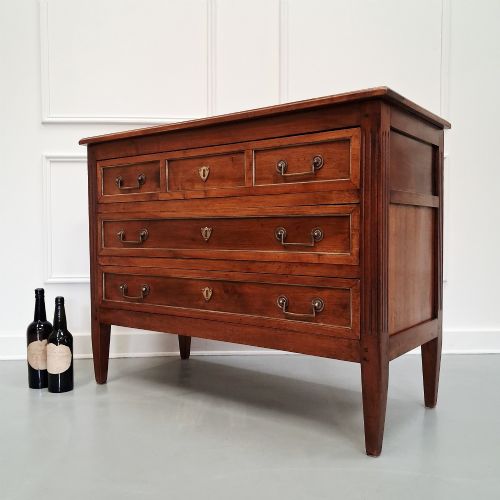
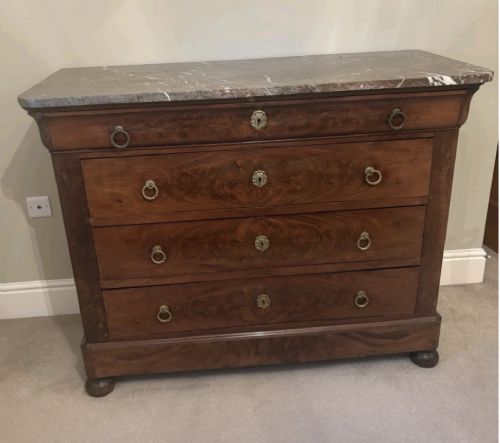
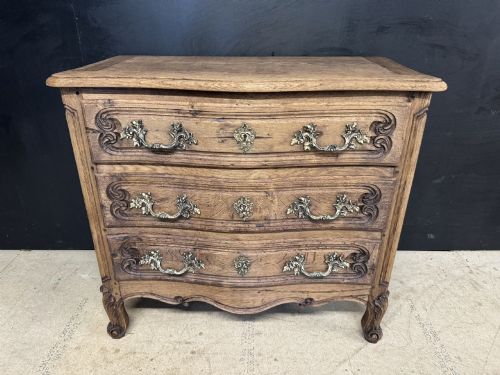
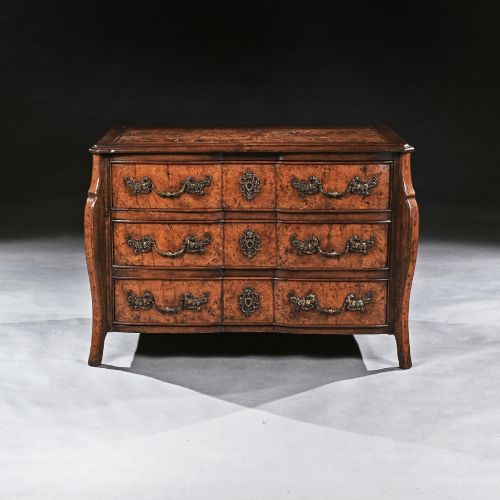
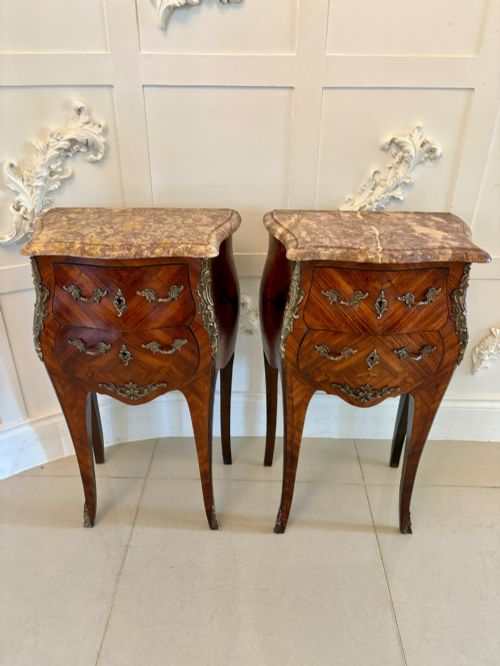
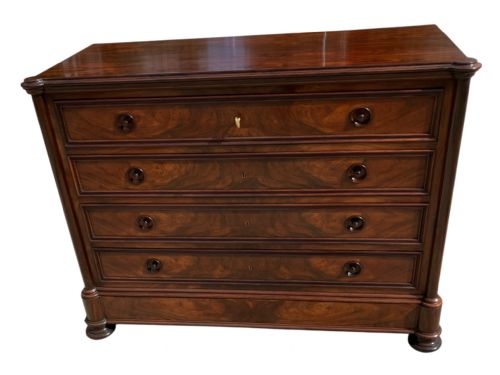
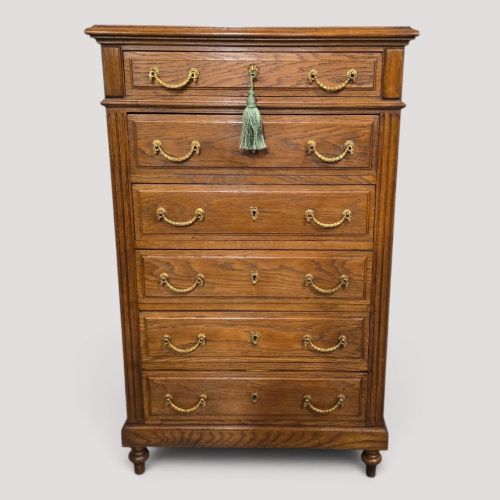
When searching for a french louis commode, a buyer encounters case furniture originating from various periods spanning the eighteenth through the early twentieth century. These pieces primarily function as chests of drawers, side cabinets, and bedside tables, taking forms from straight-fronted profiles to dramatic bombe shapes.
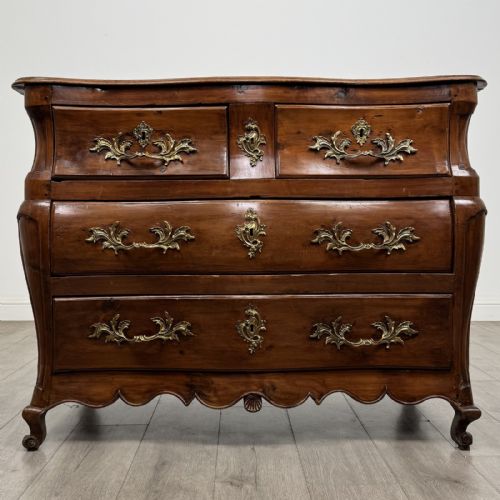
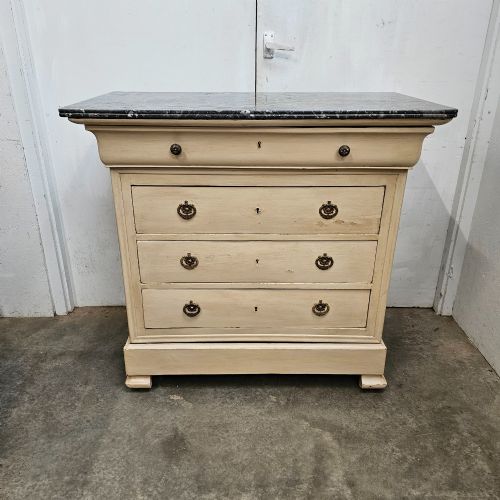
The selection here ranges from provincial eighteenth-century burr elm examples to nineteenth-century revival pieces and twentieth-century interpretations. Walnut, mahogany, and kingwood carcasses frequently appear alongside painted finishes and intricate parquetry work.
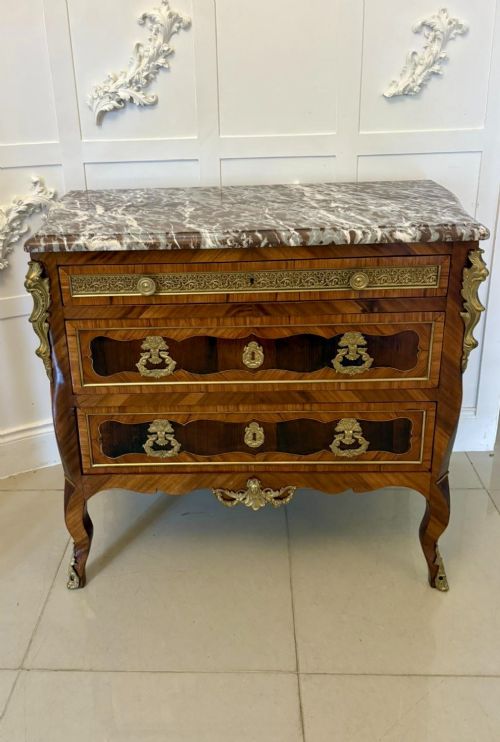
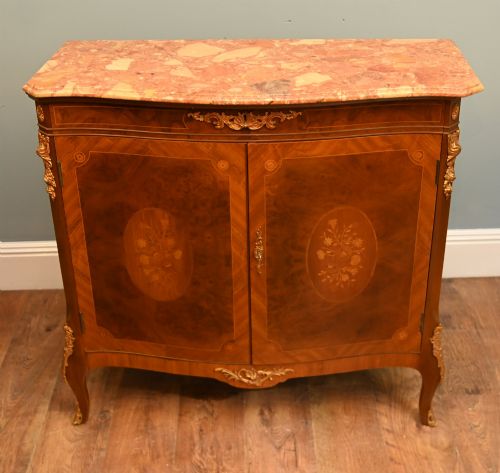
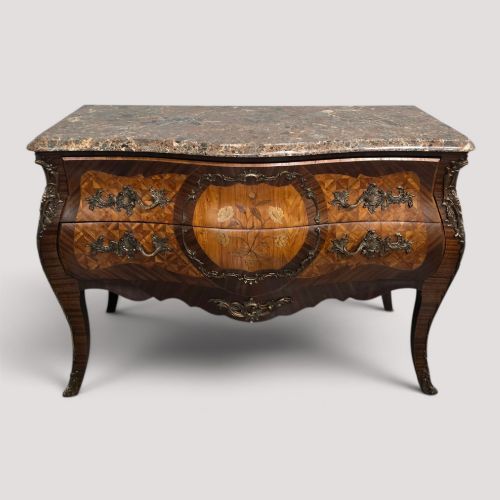
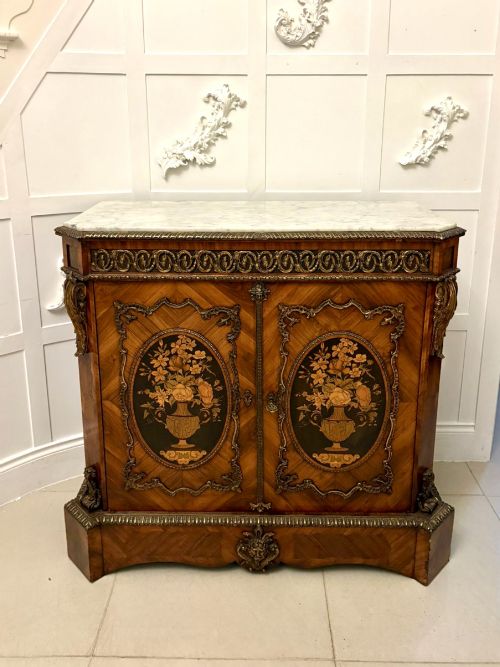
Provincial variations show simpler lines and local timbers, whereas revival and eighteenth-century pieces often display serpentine fronts and elaborate marquetry. Buyers meet both grand salon commodes and more modest bedside proportions across these listings.
How They Were Made
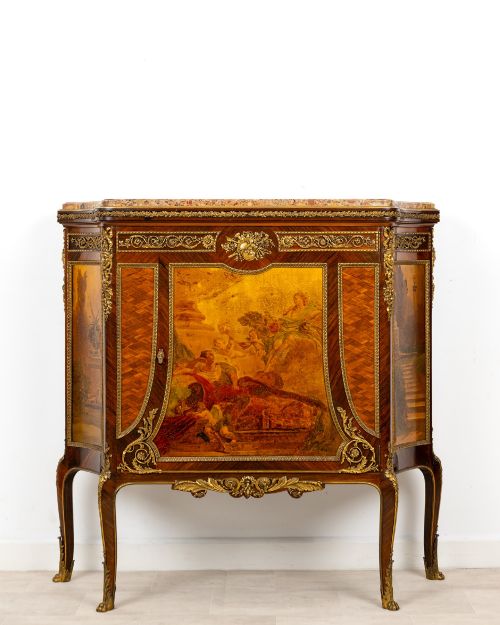
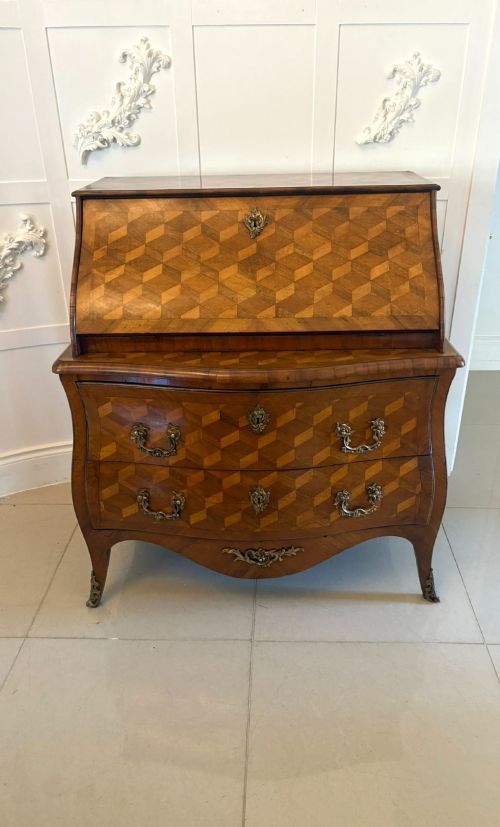
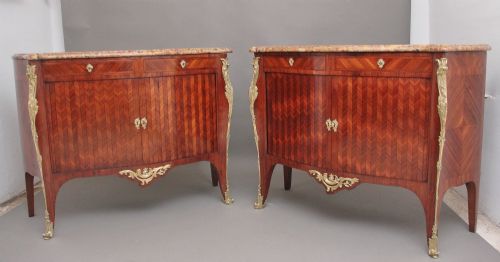
Cabinetmakers constructed these frames using solid timbers like oak, walnut, and mahogany, frequently applying decorative veneers such as kingwood and rosewood in geometric parquetry or floral marquetry patterns. Carcasses often receive shaped marble tops in shades of white, grey, or rouge.
Mounts and handles utilise cast or gilt bronze and ormolu, fastened to secure the corners and frame the drawer fronts. Vernis Martin finishes appear on specific revival cabinets, adding painted decorative panels beneath clear varnish coats.
Materials recorded across the inventory include marble, ormolu, walnut, kingwood, and mahogany.
What Varies in Quality
The standard of a piece rests largely on the precision of the cabinetmaker's marquetry cuts and the crispness of the gilt-bronze or ormolu mounts. Finer examples display seamless veneer alignment across drawer divides and substantial, heavy marble slabs shaped specifically to the carcass curve.
Workmanship in the drawer framing and timber selection distinguishes standard production from exceptional pieces by recorded makers. Original mounts that fit their beds precisely indicate higher execution levels than replacement hardware.
François Linke·Epstein·Jacques Bircklé·Henry Dasson·Weisweiler
The French Louis Commode Glossary
- Commode
- A low chest of drawers or cabinet developed in France during the seventeenth century. It typically stands on four legs and serves formal reception spaces or bedrooms.
- Bombe
- A swelling, outward-curving contour found on the front and sides of furniture carcasses. This curved profile requires specialised shaping of both timber and marble.
- Ormolu
- Gilded bronze used for decorative mounts and furniture hardware. It provides metallic contrast against dark woods and marble.
- Marquetry
- The art of applying small pieces of veneer to a structure to form decorative patterns or pictures. Craftsmen utilise various coloured woods to achieve tonal depth.
- Parquetry
- Geometric patterns formed by wood veneers inlaid into a furniture surface. Squares, triangles, and lozenges create repeating motifs.
- Vernis Martin
- A simulated Japanese lacquer technique developed in eighteenth-century France. It employs multiple varnish layers over painted scenes.
French Louis Commode: Frequently Asked Questions
What is a commode?
A commode is a decorative chest of drawers or low cabinet originating in France. These pieces typically feature a flat top of marble or timber and stand on short legs.
They served primarily in formal rooms and bedrooms for storage and display.
How do I spot revival pieces?
Revival commodes date from the nineteenth and early twentieth centuries, copying earlier eighteenth-century Louis styles. They often utilise machine-cut veneers and standardised mount castings.
Examination of the interior construction timbers helps differentiate original eighteenth-century carcasses from later interpretations.
Are marble tops original?
Many commodes feature shaped marble tops fitted directly to the wooden carcass. These slabs match the serpentine or straight profiles of the furniture beneath them.
Replacement marble occasionally occurs during a piece's history, often visible through alterations to the upper timber frame.
Where should I place it?
These cabinets suit reception rooms, hallways, and principal bedrooms as statement storage. Their finished backs and sides allow placement against walls or within open room layouts.
Consider the clearance needed for opening drawers and doors when positioning shaped or bombe profiles.