


French Hanging Fixture
These French hanging fixture designs illuminate rooms with cast metal frames and glass crystals from the nineteenth and early twentieth centuries.
French Hanging Fixture
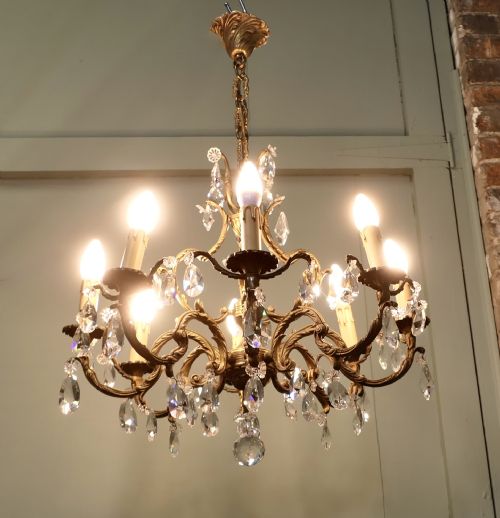
A french hanging fixture encompasses chandeliers, lanterns, and pendant lights originating from periods such as the nineteenth century, Edwardian era, and the nineteen-twenties. These pieces hang from ceilings to provide illumination in hallways, living spaces, and dining rooms.
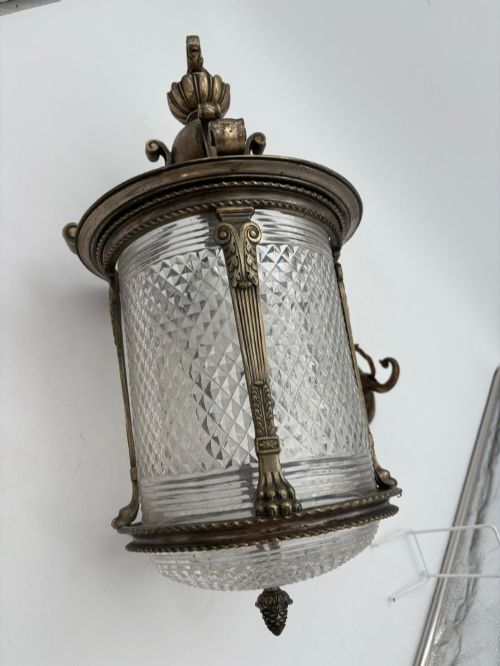
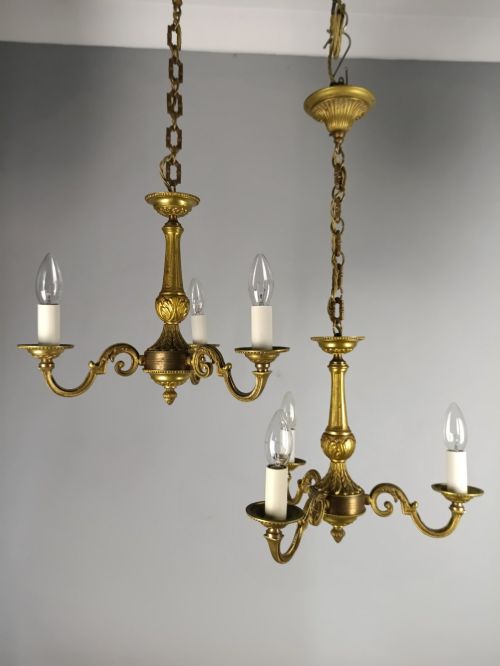
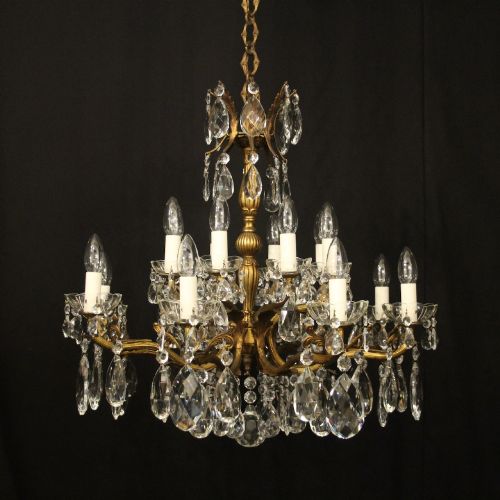
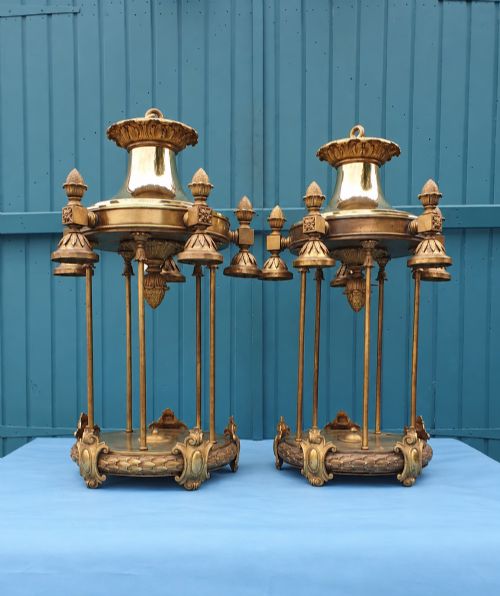
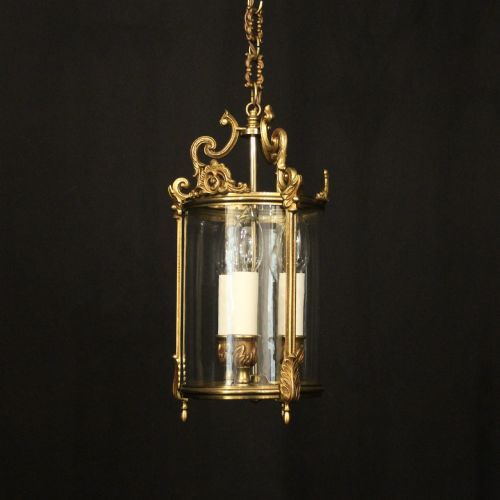
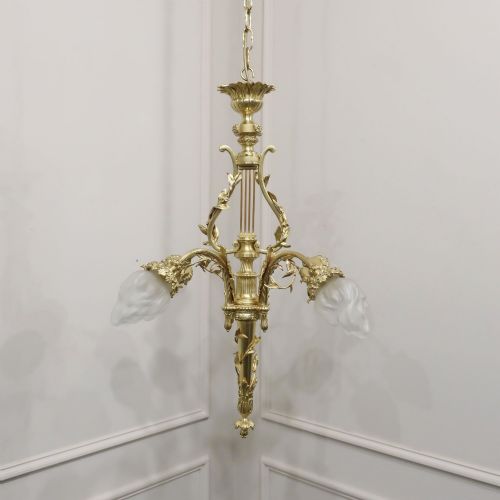
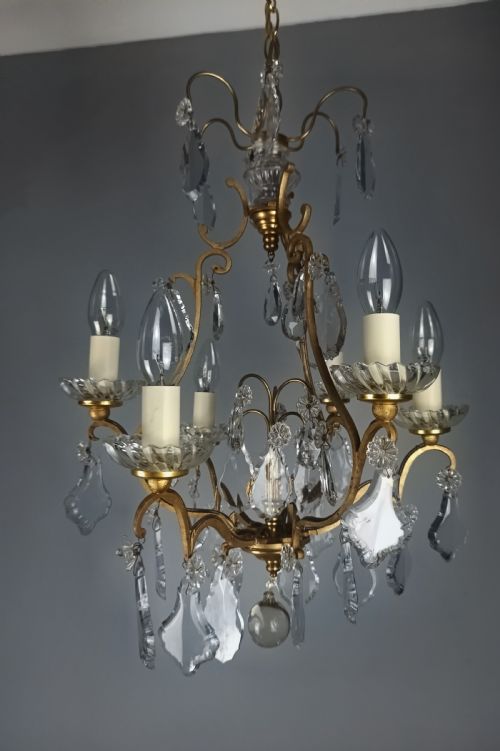
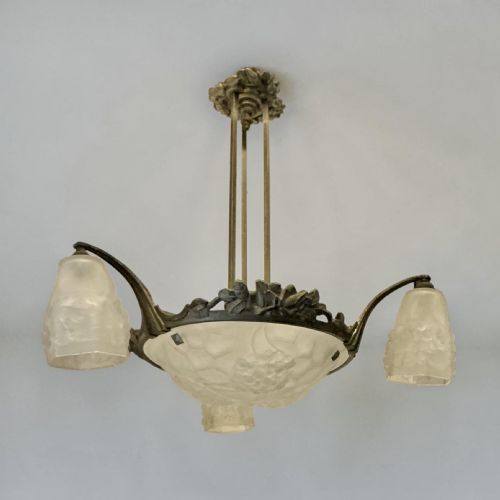
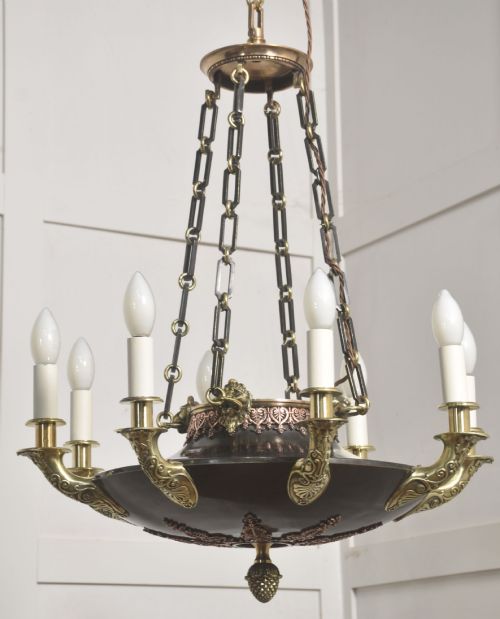
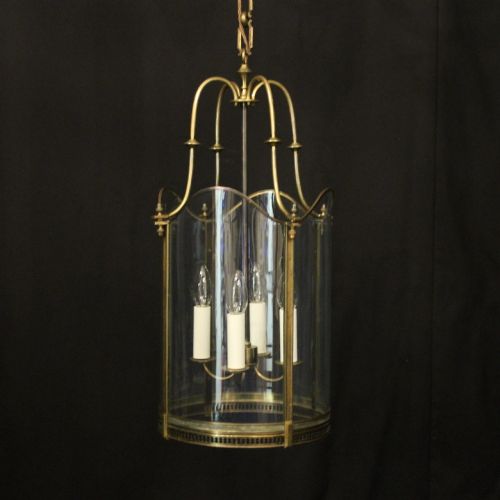
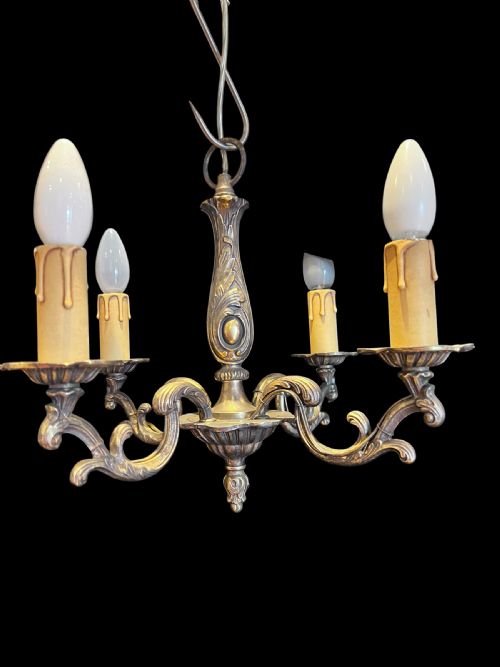
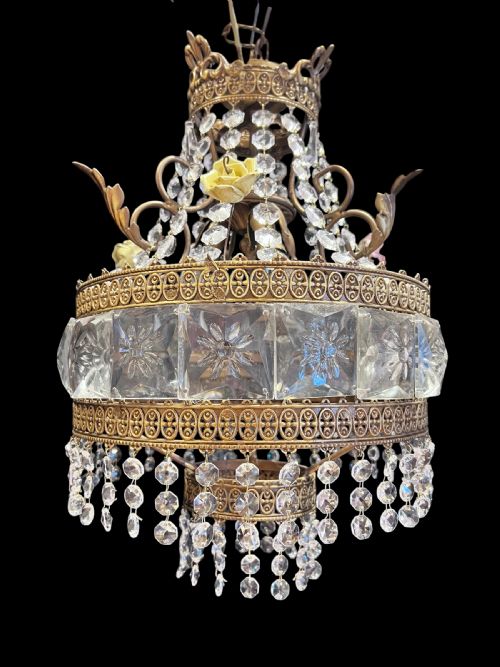
The most common variations on this page include multi-light chandeliers and convex hall lanterns styled in French Rococo, Art Deco, and Neoclassical designs. Metal frames support glass drops, crystal lustres, and ceramic flowers.
Makers and designers from these periods produced works utilising brass, bronze, and gilt metal. Formats range from large eighteen-light chandeliers to small single-bulb glass globes.
How they were made
Casting and gilt work form the structural basis of these fixtures, using bronze, brass, and copper shaped into frames, lyres, and birdcage configurations. Artisans applied gilt surfaces or silver gilding to metal components to reflect light.
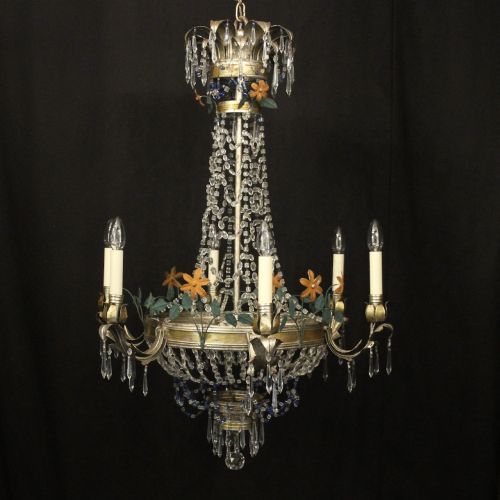
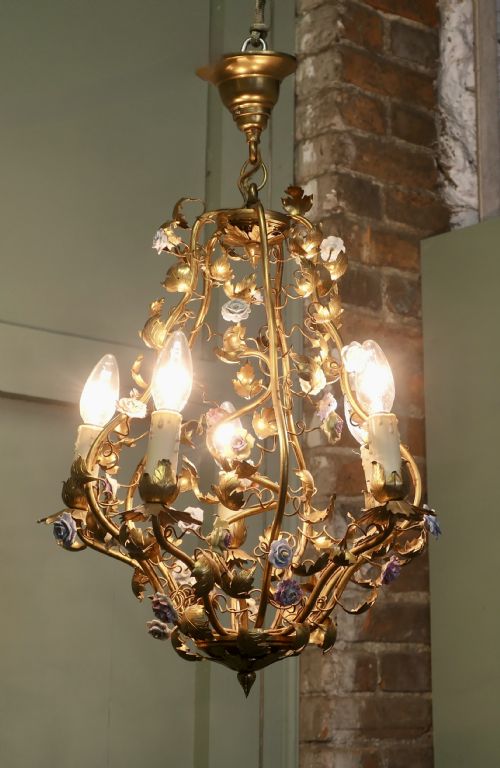
Glassmaking and crystal cutting supplied the teardrops, prisms, and convex panels that drape from arms and enclose bulbs. Tolewear elements and ceramic flowers were integrated into specific frames to add colour and botanical detail.
French Hanging Fixture Retail Price Guide 2026
Typical asking prices for french hanging fixture among the pieces listed under this phrase on Sellingantiques today, from the lower quarter to the upper quarter. They describe what is for sale here now, not the wider market.
Several fixtures come decorated with fragile ceramic flowers that bloom permanently in brass branches.
What varies in quality
The density and clarity of the crystal components distinguish different grades of these fixtures, alongside the intricacy of the metal casting. Heavy gilt bronze frames with precise chasing sit at the upper end, while lighter brass or gilt metal forms represent simpler production.
Completeness of the hanging lustres, prisms, and crystal teardrops alters the visual weight of each piece. Hand-painted ceramic elements and intact silver gilding indicate careful original manufacture.
Degué·Émile-Jacques Ruhlmann
The French Hanging Fixture Glossary
- Gilt bronze
- Bronze metal treated with a thin layer of gold or gold-coloured alloy. This technique provides a durable metallic sheen across nineteenth-century frames.
- Crystal lustre
- A cut glass pendant or drop hung from chandelier arms to refract light. These elements take forms such as teardrops and prisms.
- Tolewear
- Painted sheet metal shaped into decorative floral or foliage motifs. It appears on branches and bobeches in specific period designs.
- Convex lantern
- A hanging light enclosed by curved glass panels mounted in a metal frame. These forms hang primarily in hallways and entryways.
- Birdcage chandelier
- A metal framework of curved straps resembling an aviary structure. Crystal strings and lights populate the interior space.
French Hanging Fixture: Frequently Asked Questions
Where should I hang a hall lantern?
Hall lanterns suit entryways, corridors, and high-ceilinged landings where vertical space allows downward illumination. Their enclosed convex glass protects the bulbs from drafts in narrow passages.
Ensure adequate clearance beneath the fixture for foot traffic while positioning the light to draw the eye down the length of the hall.
How do I identify a Neoclassical chandelier?
Neoclassical pieces display symmetry, geometric restraint, and classical motifs such as lyres, urns, and acanthus leaves. Their metal frames use clean lines rather than the sweeping asymmetries found in Rococo designs.
Look for architectural proportions and restrained gilt bronze work characteristic of late nineteenth-century French production.
What is an Art Deco hanging light?
Art Deco fixtures from the nineteen-twenties feature stylized geometric patterns, frosted glass globes, and streamlined metal structures. Designers like Degué focused on clean silhouettes rather than historical revival ornamentation.
These pieces integrate well into modern interiors by offering subdued illumination through moulded glass shades.
How do crystal lustres affect lighting?
Crystal lustres, prisms, and teardrops catch and refract light from the bulbs across walls and ceilings. Coloured crystal variations alter the warmth and tint of the emitted glow.
More pendant drops increase light dispersal through multiple facets, changing the brightness distribution of the room.