

French Empire Fixtures
French empire fixtures bring formal classical proportion to a room through heavy gilt bronze, brass and cascading crystal.
French Empire Fixtures
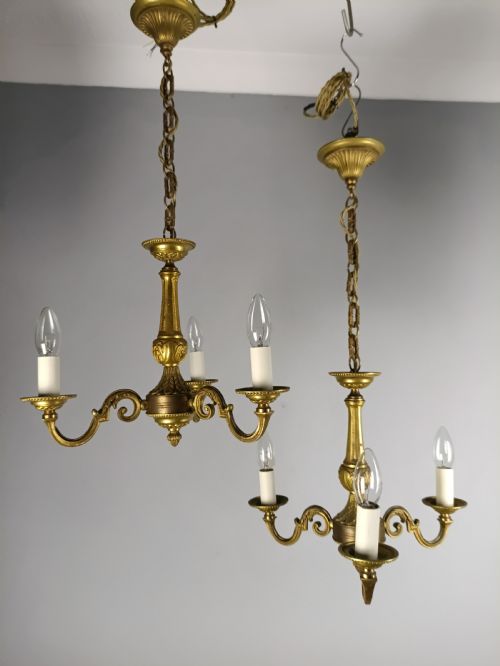
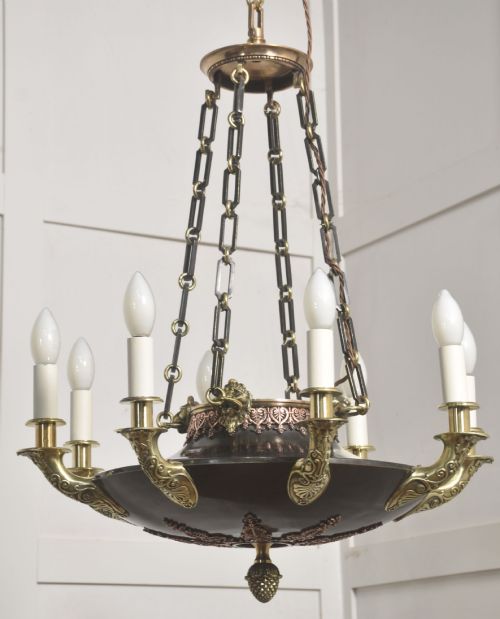
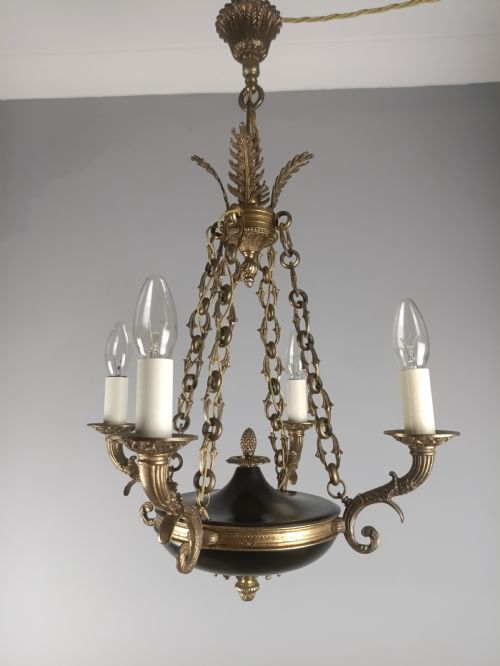
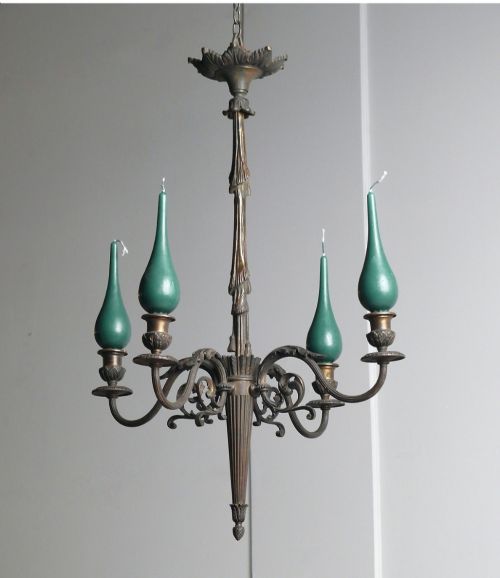
French empire fixtures encompass large chandeliers, wall lights, lanterns and torchères designed in classical neoclassical styles. These lighting pieces trace their origins to 18th century France, though the selection spans the 19th century and early decades of the 20th century.
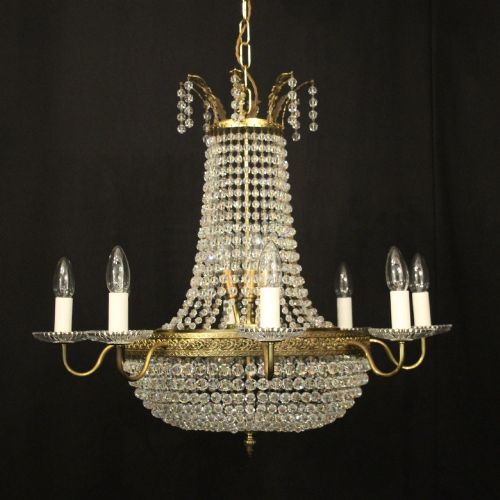
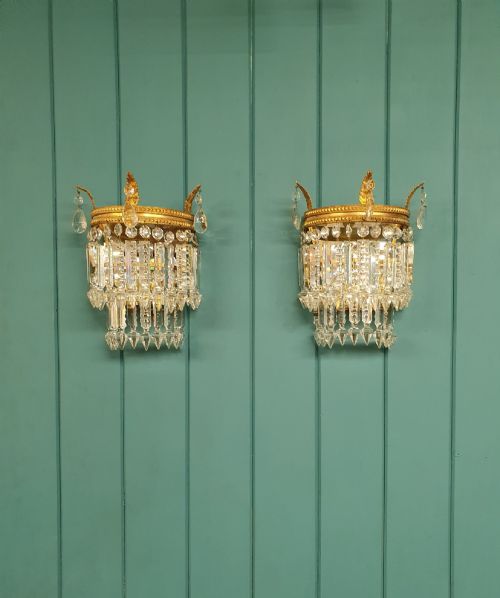
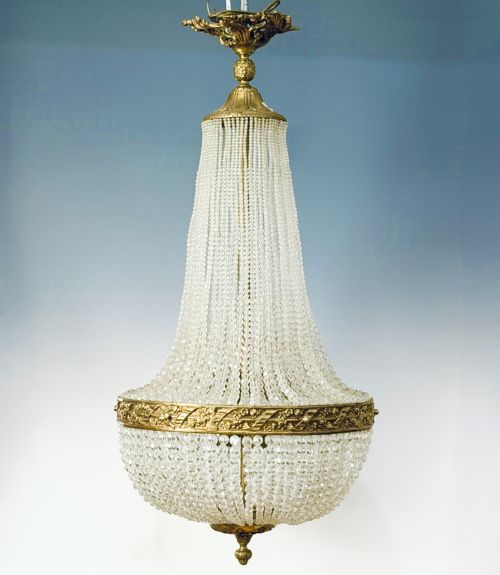
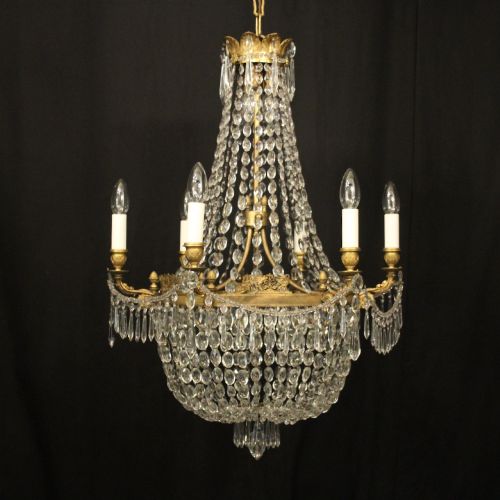
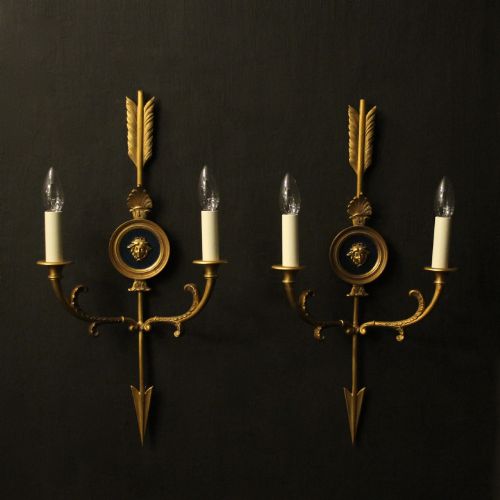
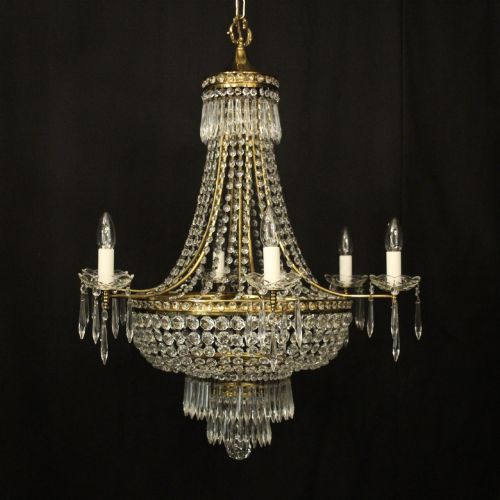
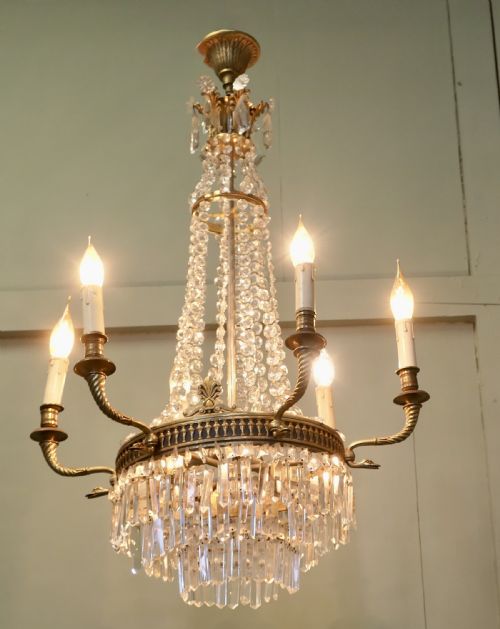
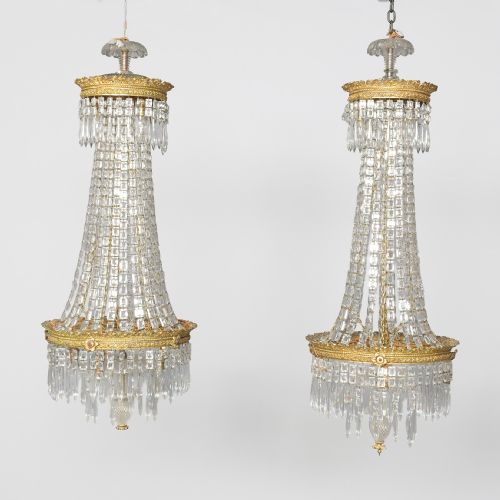
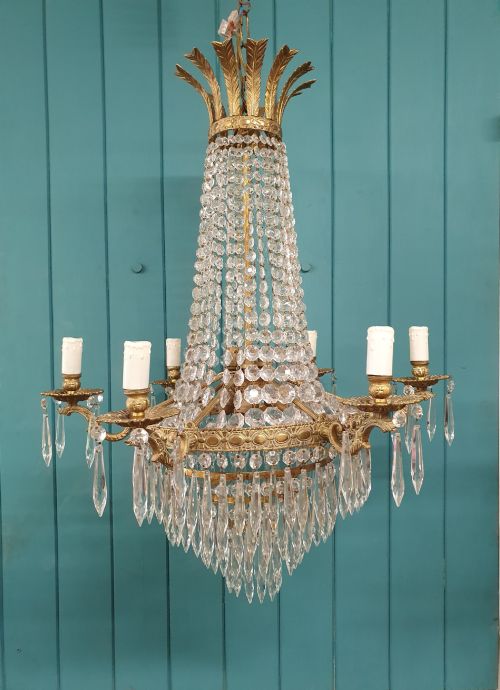
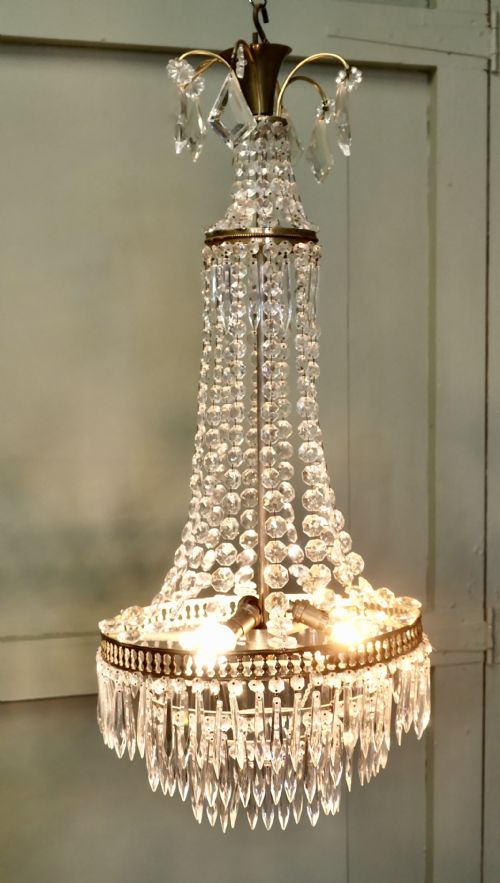
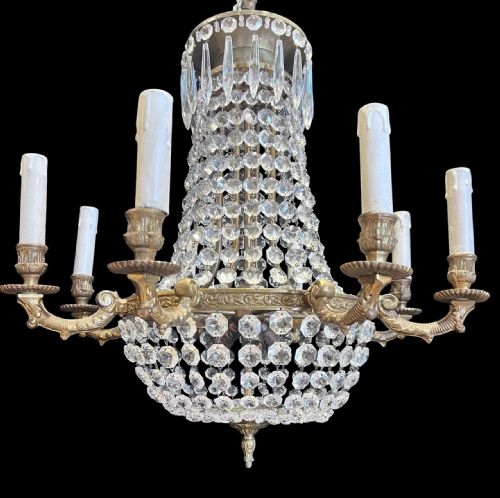
The prevalent form on this page is the tent and waterfall chandelier, often featuring multiple tiers of glass drops alongside several candle arms. Buyers will also encounter wall sconces, bouillotte lights with toleware shades, and giltwood wall pieces.
How They Were Made
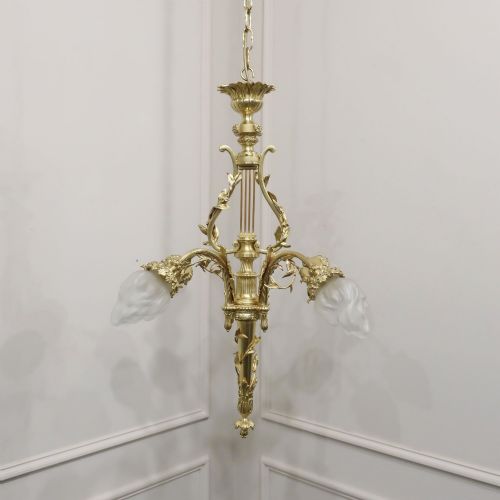
Metalwork forms the structural backbone of these pieces, utilising cast bronze, gilt brass, copper, and patinated bronze. Gilding is heavily applied to metal components to yield a bright, reflective surface that catches interior candlelight or electric light.
Glass elements are extensively hand-cut into crystals, prisms, and beads, then assembled into tents, waterfalls, and bags. These glass components suspend from metal frames using wire loops to create cascading curtains of light.
French Empire Fixtures Retail Price Guide 2026
Typical asking prices for french empire fixtures among the pieces listed under this phrase on Sellingantiques today, from the lower quarter to the upper quarter. They describe what is for sale here now, not the wider market.
The listings span brass, gilt bronze, and cut crystal across various 19th and early 20th century periods.
What Varies in Quality
The crispness of the bronze casting defines the upper tier of these fixtures, where leaf decoration and figural details remain sharp and deeply defined. Poorer examples rely on softer metalwork with smoothed-over ornamentation.
The density and cut of the glass components also separate standard items from finer work. Superior fixtures employ heavy cut crystal that refracts light sharply, while lesser versions use simple pressed glass.
François-Christophe-Armand Toussaint·Wedgwood
The French Empire Fixtures Glossary
- Tent and waterfall
- A chandelier style featuring an upper conical section of glass strings dropping down to a wider lower tier of lights.
- Gilt bronze
- Bronze metal treated with a thin layer of gold or gold-coloured alloy to give a rich metallic finish.
- Torchère
- A standing or wall-mounted light fixture designed to resemble a classical torch.
- Toleware
- Painted tin or metalware, often seen in green on bouillotte lamp shades.
- Prism
- A cut glass pendant suspended from the arms or frame to refract illumination.
French Empire Fixtures: Frequently Asked Questions
How do I hang a heavy bronze chandelier?
These fixtures require direct attachment to ceiling joists using a steel mounting hook rated for heavy loads. Professional installation is essential due to the substantial weight of cast bronze and crystal.
The wiring must also be checked and updated to safely handle modern electrical loads.
Where were wall sconces typically placed?
Wall lights and sconces adorned formal reception rooms, flanking mirrors, fireplaces, or architectural doorways. They served to supplement the central chandelier and provide low-level perimeter illumination.
Pairs of sconces create balanced symmetry along a panelled wall.
How do I distinguish 19th century pieces?
Nineteenth century examples display heavier cast bronze mounts, hand-cut crystal drops tied with wire, and patinated metal surfaces. The construction methods reflect traditional foundry techniques of the period.
Later revival pieces from the early 20th century often incorporate simpler mountings and machine-pressed glass components.