

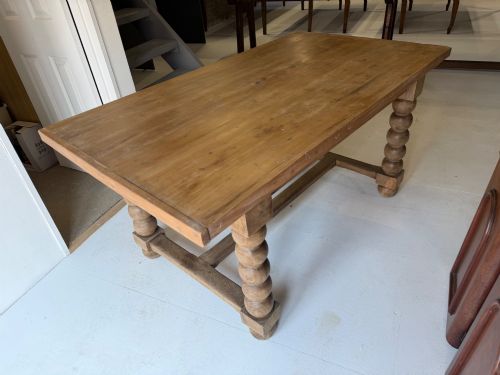
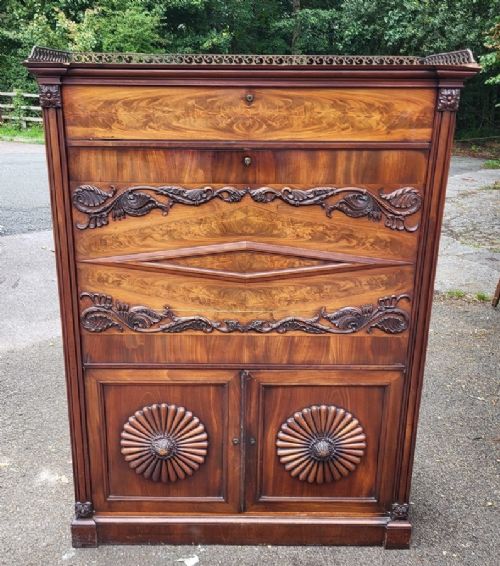
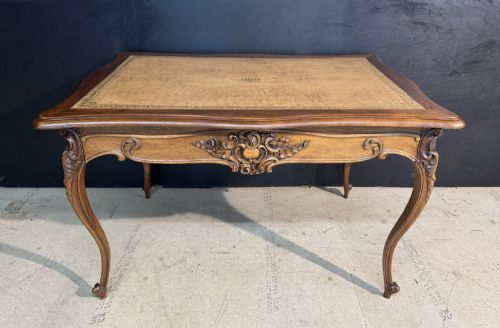
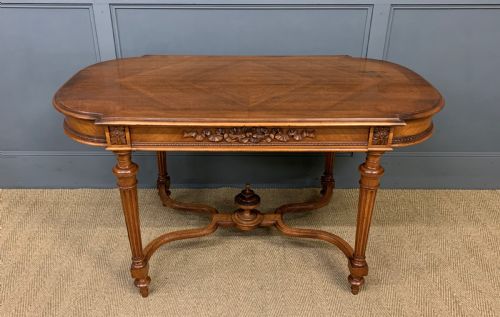

French Carved Writing Desk
A french carved writing desk brings continental elegance and practical surface space into a room, offering rich wood grains and intricate relief work.
French Carved Writing Desk
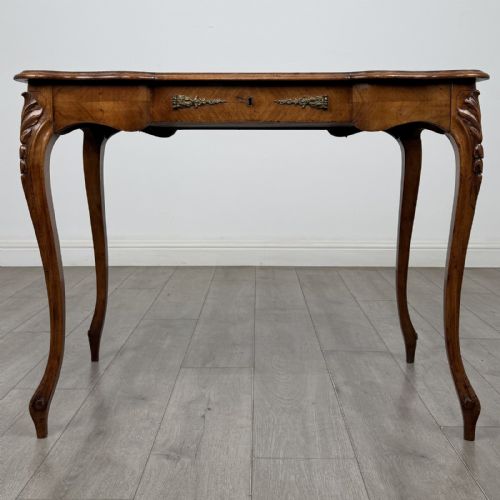
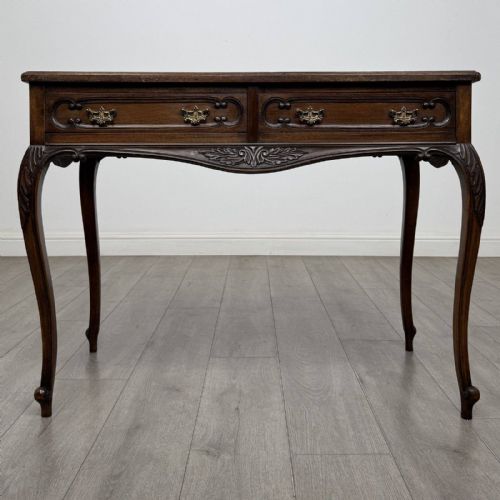
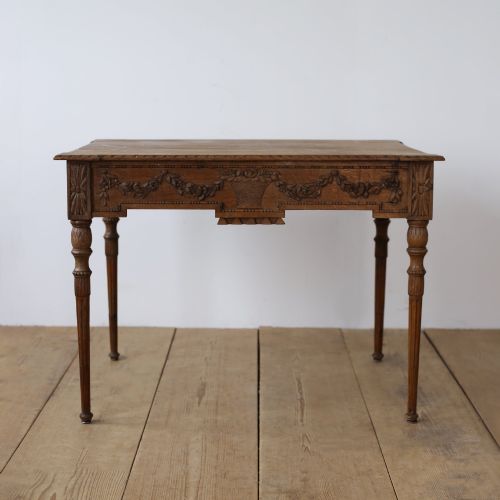
A french carved writing desk embodies the refined proportions and decorative craft associated with continental furniture traditions. These pieces range from modest provincial side tables adapted for correspondence to elaborate walnut and mahogany writing tables outfitted with brass mounts. Buyers encounter numerous examples originating from the nineteenth century, alongside earlier eighteenth-century provincial pieces and later revival iterations.
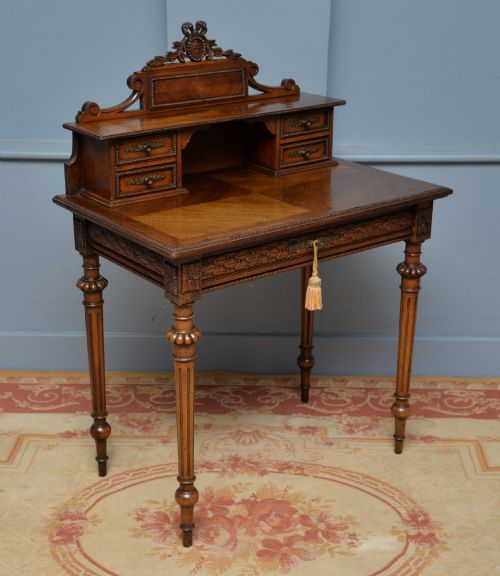
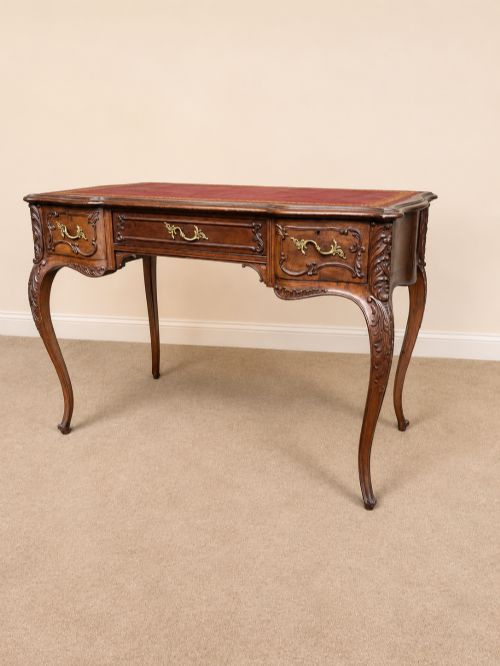
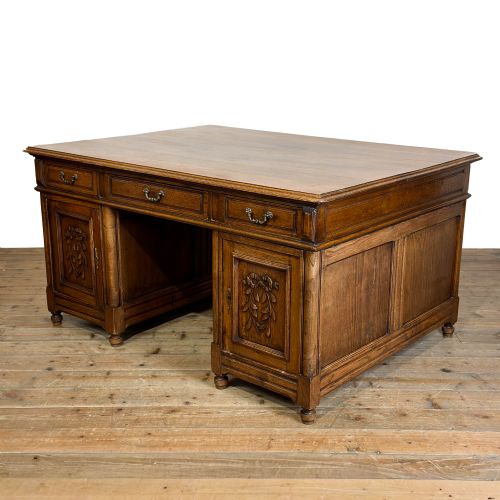
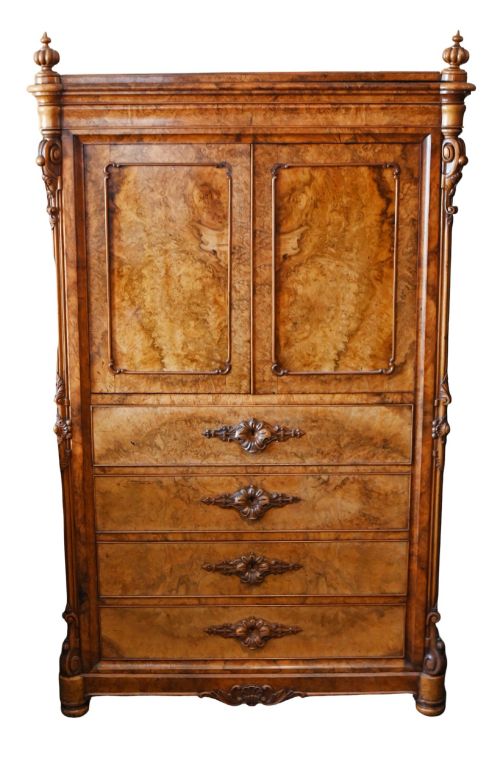
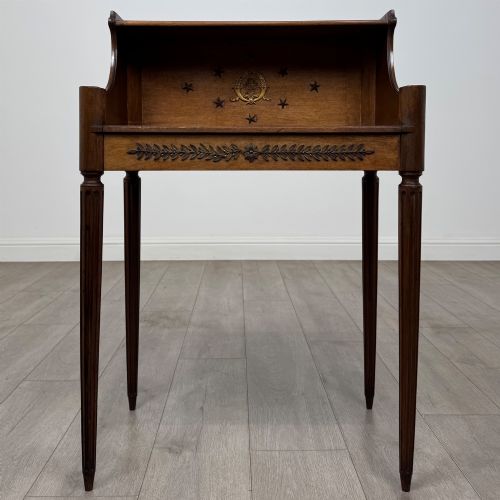
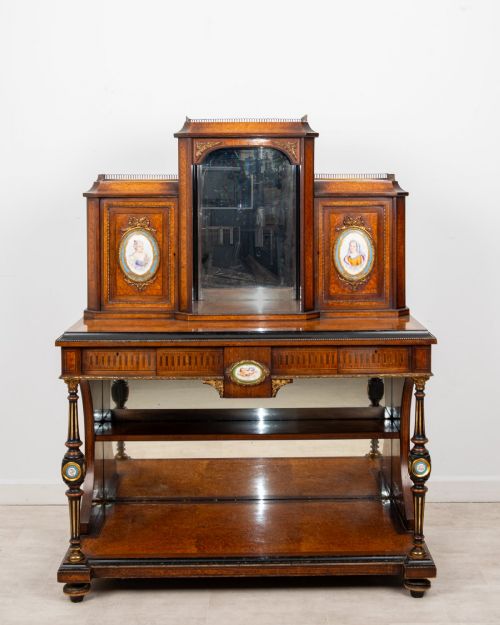
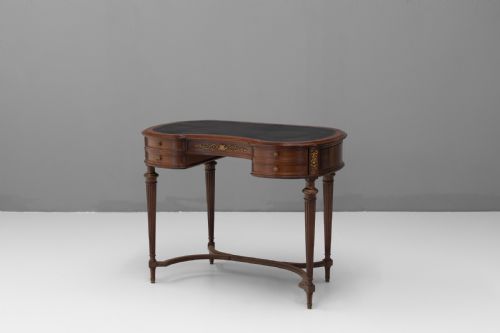
The primary forms on this page include bureau plat writing tables, compact bonheur du jour desks, and drop-front secrétaire cabinets. Many feature fitted drawers and leather-inlaid writing surfaces designed for correspondence rather than heavy clerical work. Walnut, mahogany, and carved oak dominate the listings, reflecting the regional workshops and stylistic revivals of their periods.
Materials and construction
Cabinetmakers constructed these desks using solid timbers such as walnut, oak, and mahogany, frequently applying burr walnut or flame mahogany veneers to display dramatic grain patterns. Structural carcases relied on traditional joinery methods, whilst decorative elements like floral carving and fluted legs were shaped directly into the solid wood. Secondary timbers were chosen for internal drawer linings and backboards.
Metal mounts in brass and ormolu often accent the corners, handles, and gallery rails, providing contrast against the dark polished timber. Leather inserts on the writing surfaces were hand-tooled or gilt-tooled around the perimeter. Surface finishes relied on shellac polish or wax to build a deep lustre over the wood grain.
French Carved Writing Desk Retail Price Guide 2026
Typical asking prices for french carved writing desk among the pieces listed under this phrase on Sellingantiques today, from the lower quarter to the upper quarter. They describe what is for sale here now, not the wider market.
Several desks still hide tiny secret compartments originally designed for love letters and hidden ledgers.
Judging quality and execution
The distinction between standard utility furniture and superior pieces rests in the depth and crispness of the hand-carving and the choice of timber veneers. Desks featuring finely figured amboyna, burr walnut, or matched marquetry demand greater skill from the cabinetmaker. The integration of cast ormolu mounts and porcelain plaques indicates a higher tier of production.
Structural integrity reveals itself in the smooth operation of drawers, the neatness of dovetail joints, and the retention of original brass hardware. Pieces that maintain a rich, undisturbed patina on the wood surface show careful preservation over generations. The presence of known attribution or maker signatures elevates the standing of an individual desk.
Jean-Joseph Chapuis·Étienne Kohlmann·Holland and Son·Henry Dasson·Viardot
The French Carved Writing Desk Glossary
- Bureau plat
- A freestanding writing table with one or more rows of drawers beneath the top. This form originated in France during the seventeenth century.
- Bonheur du jour
- A light lady's writing desk featuring a small cabinet or set of pigeonholes on the upper surface. These desks appeared during the mid-eighteenth century.
- Ormolu
- Gilt bronze mounted onto furniture as decorative hardware or feet. The technique involves applying a gold amalgam to cast bronze.
- Marquetry
- Inlaid patterns of contrasting wood veneers assembled to create pictorial or geometric designs. Craftsmen cut these elements meticulously to fit flush into the surface.
- Patina
- The surface sheen and colour acquired by wood and metal through age and handling. This appearance develops naturally over decades of use.
French Carved Writing Desk: Frequently Asked Questions
What is a french carved writing desk used for?
These desks serve as functional writing surfaces and decorative focal points within studies, bedrooms, or living rooms. Their compact proportions make them suitable for letter writing, laptop use, or displaying small objects.
Historically, they provided a dedicated private space for correspondence and record keeping. Today, collectors utilise them to bring warmth and historical character into modern interiors.
How do I identify the period of a desk?
Dating relies on examining the timber species, construction methods, and decorative style visible across the piece. Eighteenth-century examples often display simpler provincial lines or restrained walnut carving, whereas nineteenth-century pieces frequently adopt Louis XV or Empire revival motifs.
Secondary woods inside drawers and the type of hardware used also offer clues to the era of manufacture. Consulting the listed period and stylistic details helps narrow down the decade of origin.
How do I care for antique wood surfaces?
Preserving the finish involves keeping the desk away from direct sunlight and extreme changes in temperature or humidity. Applying a quality furniture wax periodically helps nourish the timber and maintain the soft sheen.
Avoid using modern liquid polishes containing silicone, as these can damage historical finishes over time. A soft, dry cloth is sufficient for regular dusting.
What is the difference between a bureau plat and a secrétaire?
A bureau plat is an open table with drawers beneath the writing surface designed for general correspondence. It stands on four legs and remains accessible from the front.
A secrétaire typically incorporates a cabinet section, often featuring a drop-down writing flap that conceals inner pigeonholes and small drawers. This design allows the user to close away writing materials when not in use.