

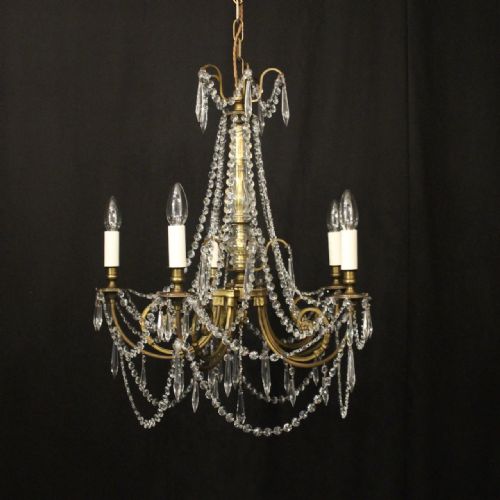


French Bead Chandelier
A French bead chandelier brings sparkle and height to a room through cascading glass drops and delicate metalwork.
French Bead Chandelier
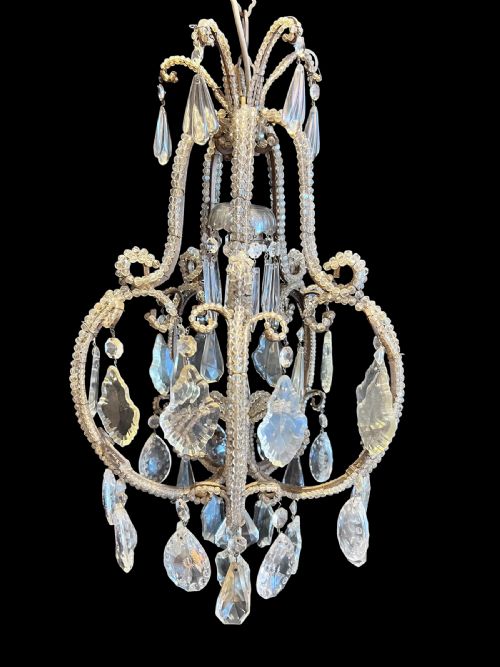
When searching for a french bead chandelier, buyers encounter decorative ceiling lights primarily originating from the nineteenth and early twentieth centuries. These fixtures combine metal frames with extensive beadwork, swags, and cut-glass drops.
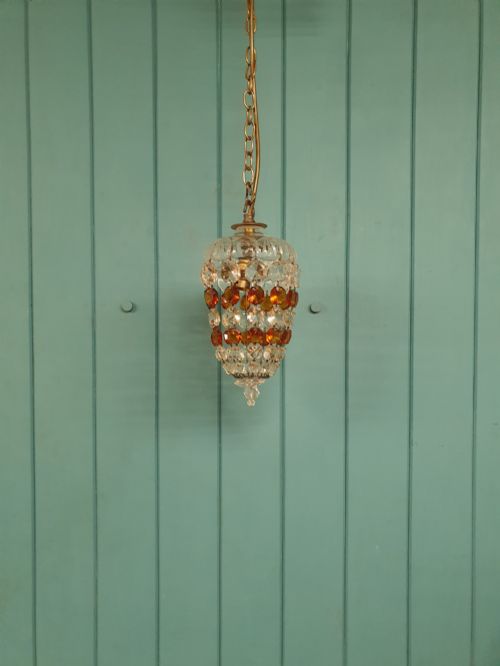
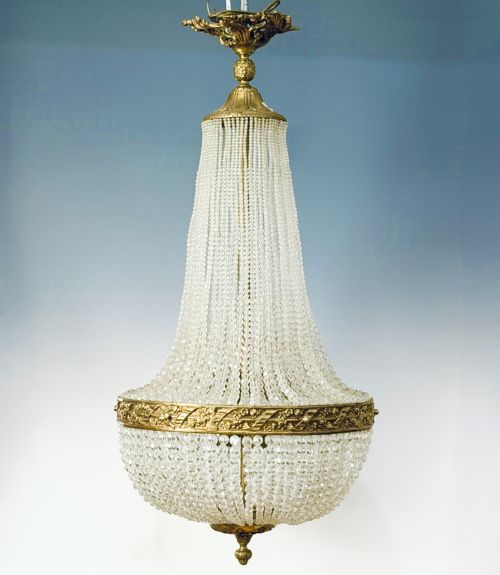
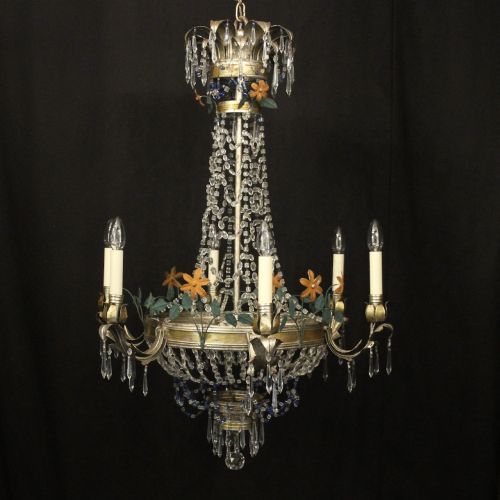
The selection ranges from compact bag and basket forms to large multi-light Empire and Florentine fixtures. Pieces often feature specific regional styles such as French Rococo, Regency, and Art Deco.
Smaller examples measure only a few inches across, while grander versions span multiple lights and branches. Most date from the Edwardian era through the nineteen-thirties, reflecting diverse European craftsmanship.
How they were made
Manufacturers built structural frames using brass, gilt metal, iron, or gilt bronze to support the hanging weight. These metals were often silver gilded, painted as tolewear, or left in their natural polished brass finish.
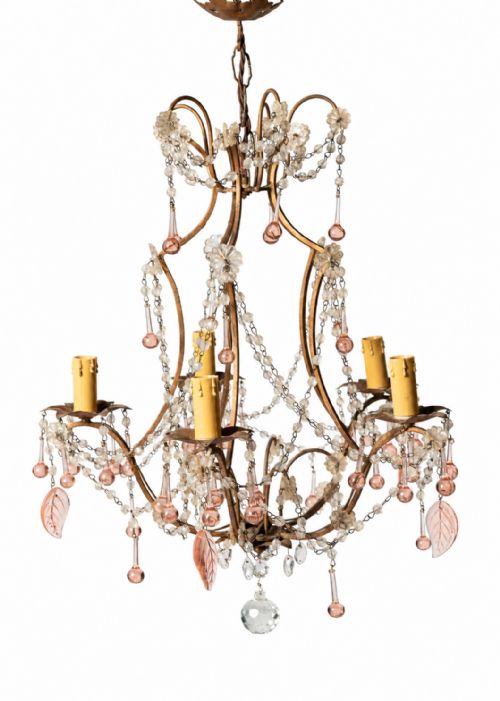
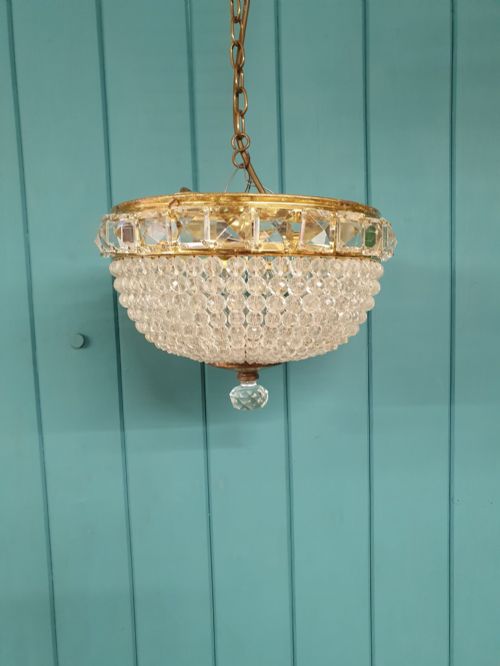
Artisans strung thousands of individual crystal and glass beads into tents, cascades, and swags. Cut-glass drops, prisms, and moulded fruit shapes like grapes and apples were then wired directly onto the metal framework.
French Bead Chandelier Retail Price Guide 2026
Typical asking prices for french bead chandelier among the pieces listed under this phrase on Sellingantiques today, from the lower quarter to the upper quarter. They describe what is for sale here now, not the wider market.
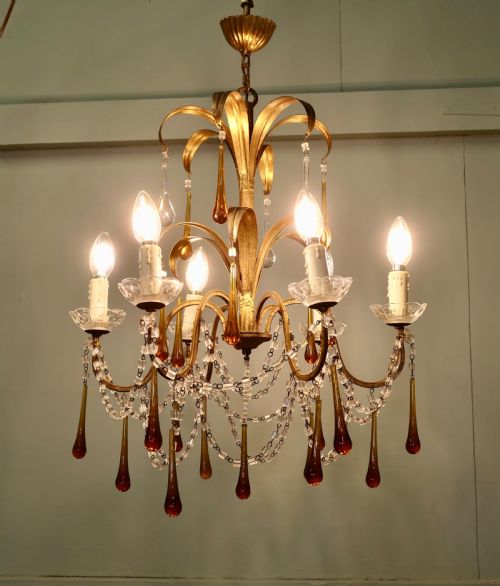
Several chandeliers include colourful glass fruit clusters shaped like grapes, apples, and pears hidden among the crystal swags.
What varies in quality
The density and cut of the crystal determine the brilliance of the fixture, with finer examples utilising precision-cut glass that catches and refracts light more cleanly. Heavier metal castings and more intricate wirework support larger, complex arrangements like tent and waterfall designs.
The integrity of the original hanging schemes and matching components elevates a piece, as does the complexity of coloured crystal elements such as blue prisms or red drips. Subtleties in frame gilding and the preservation of delicate glass flowers distinguish standard utility lighting from superior decorative works.
Wedgwood
The French Bead Chandelier Glossary
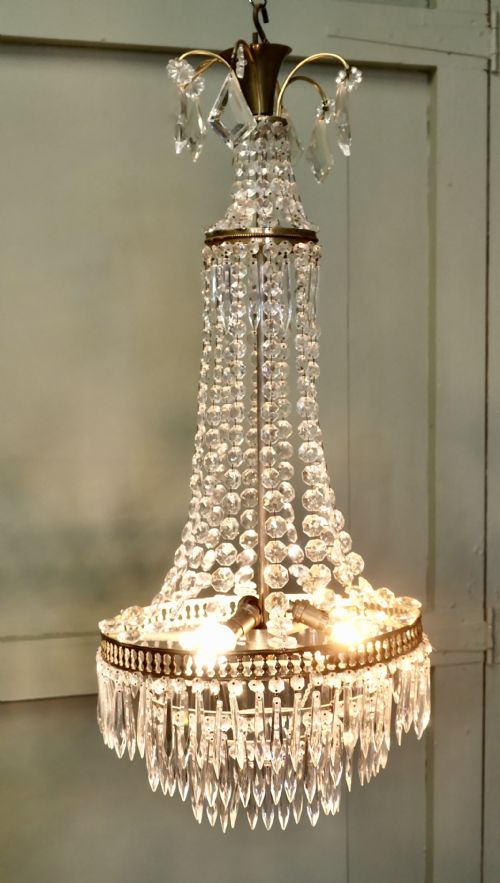
- Tent and waterfall
- A lighting configuration where beads form an upper conical tent shape above a wider cascading waterfall of drops.
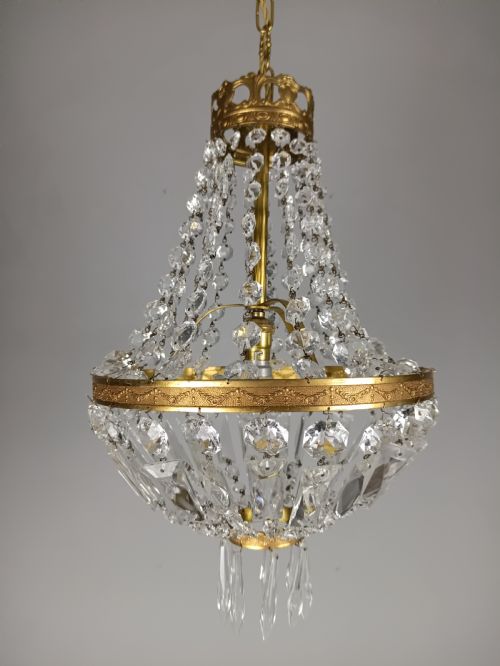
- Bag chandelier
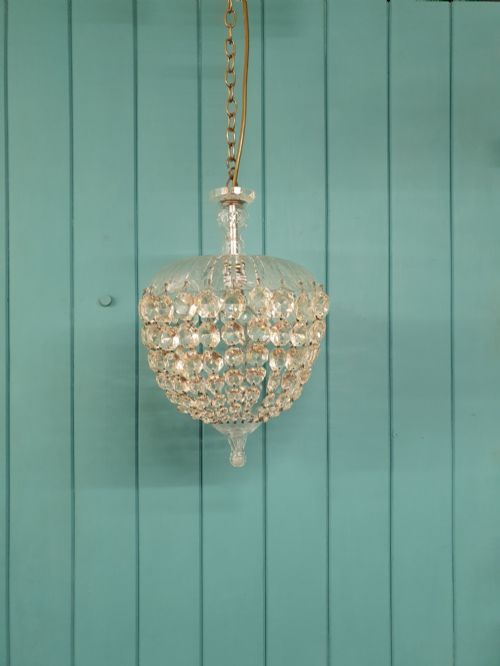
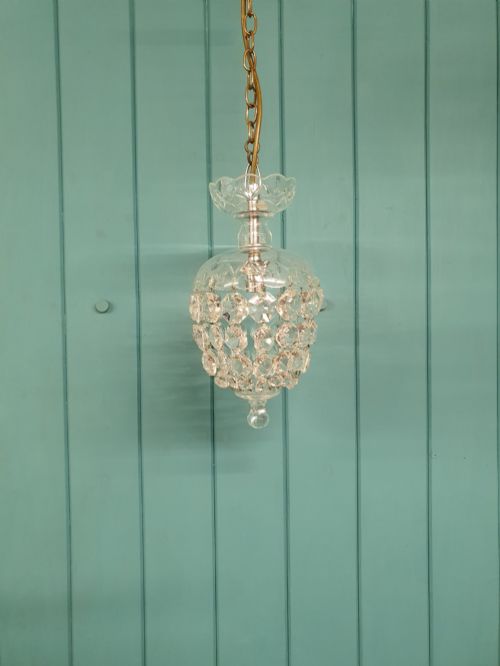
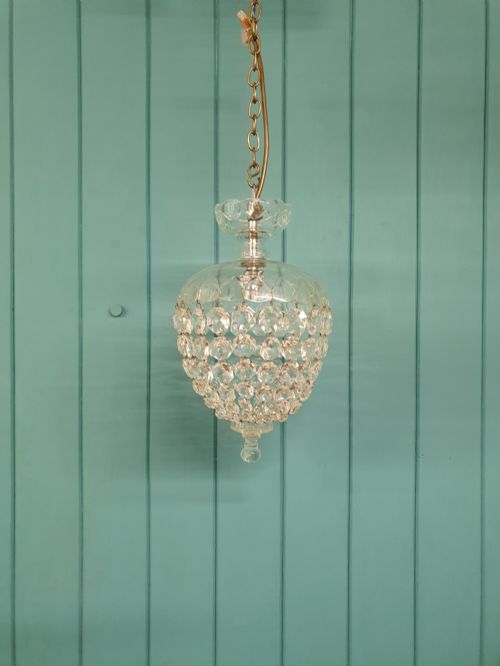
- A fixture shaped like a tapered mesh bag filled with glass beads and finished with a fringe of drops.
- Tolewear
- Painted sheet metal used to mimic various decorative finishes on lamp bodies and frames.
- Prism
- A cut-glass pendant designed to refract light into spectral colours when illuminated.
- Florentine style
- An ornate decorative approach characterised by rich gilding and elaborate floral or scroll metalwork.
French Bead Chandelier: Frequently Asked Questions
How do I clean a beaded chandelier?
Maintenance involves wiping individual glass beads and drops carefully with a mild cleaning solution while the fixture remains supported.
Technicians recommend avoiding harsh chemicals that might strip gilt finishes from the underlying metal frame.
Are these chandeliers wired for modern use?
Most antique fixtures require professional rewiring to meet contemporary electrical standards before installation in a home.
Local electricians can adapt older lamp holders to accept standard modern bulbs safely.
What rooms suit a bag chandelier?
Compact bag chandeliers fit smaller spaces like hallways, dressing rooms, or powder rooms where lower ceilings demand modest proportions.
Their tapered profile directs light downward without overwhelming the surrounding area.
How do I identify an Empire style fixture?
Empire style pieces typically feature symmetrical geometric lines, classical motifs, and prominent tent and waterfall bead configurations.
These designs draw inspiration from neoclassical architecture and nineteenth-century French interior trends.