


French Bag Light
A french bag light brings sparkle and proportion to a ceiling, combining brass frames with tiered glass drops.
French Bag Light
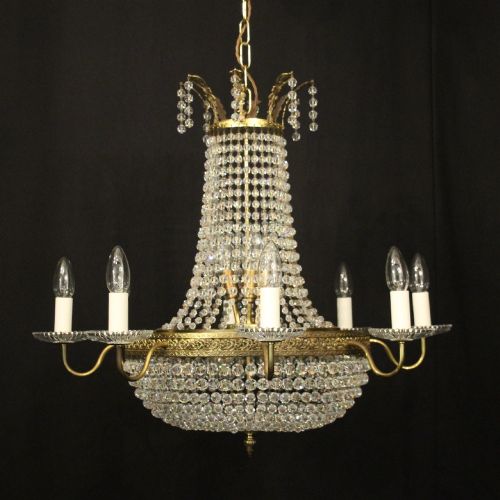
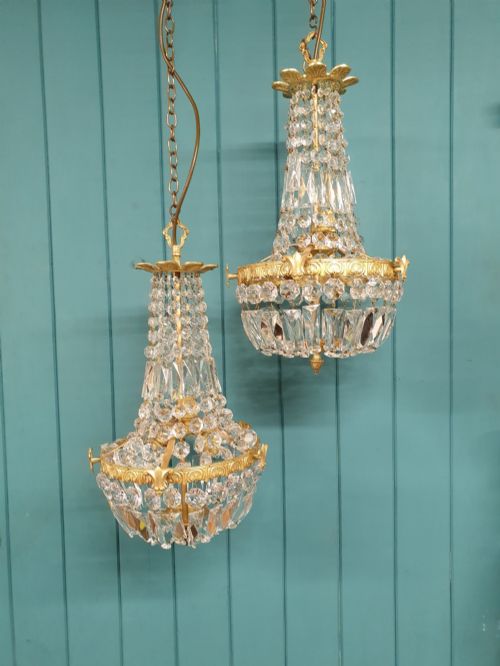
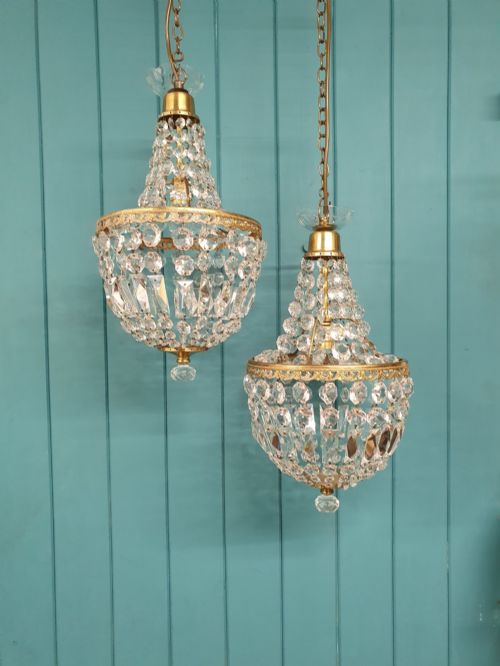
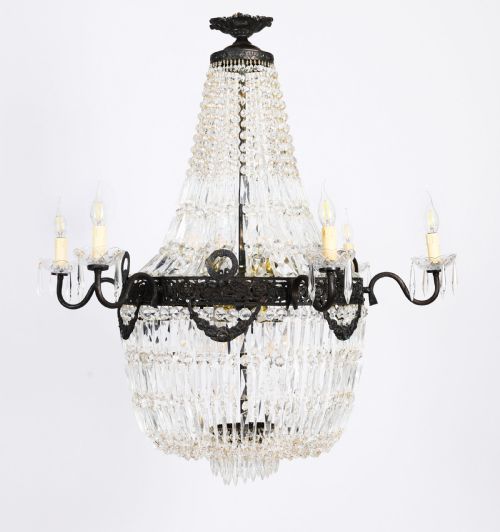
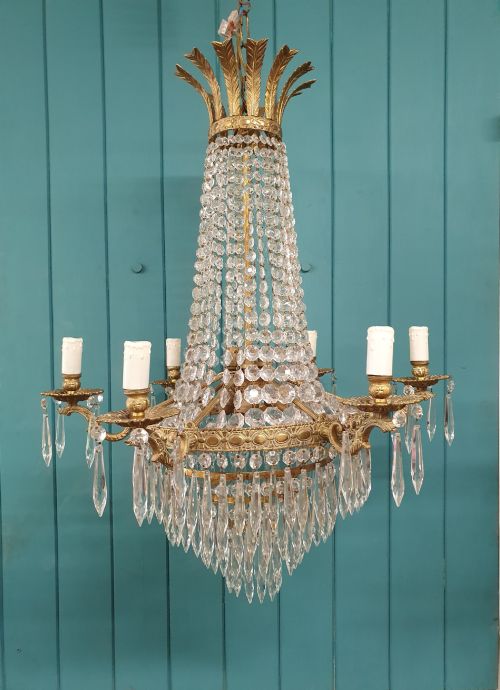
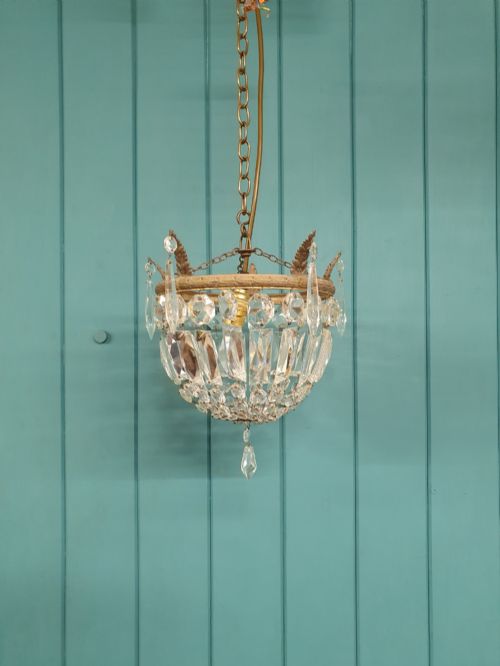
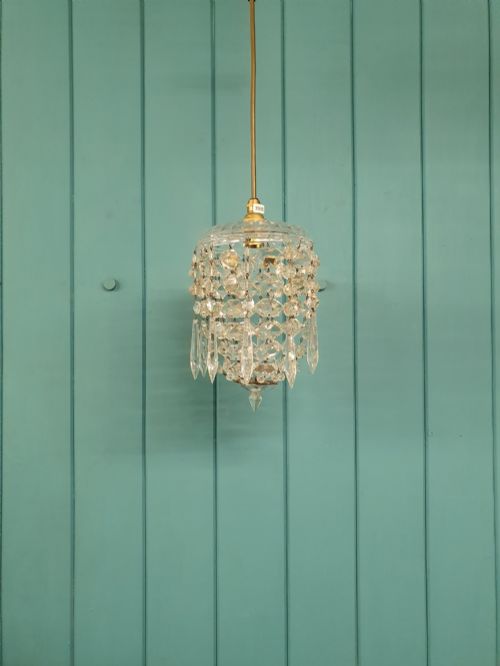
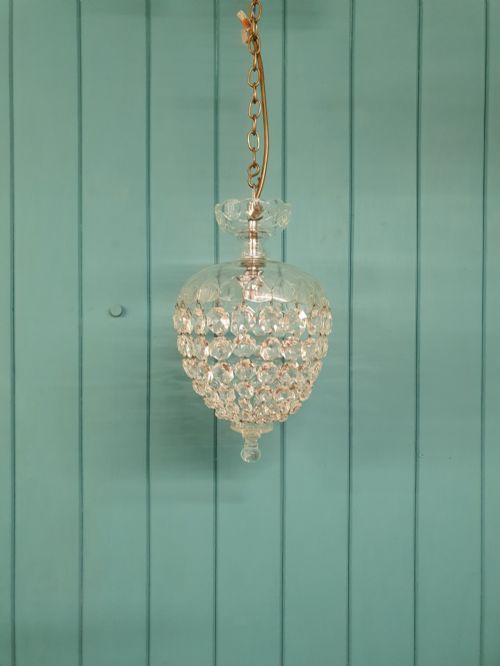
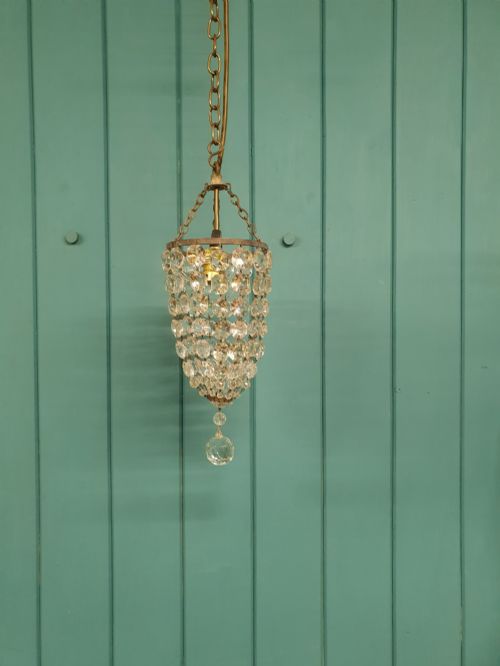
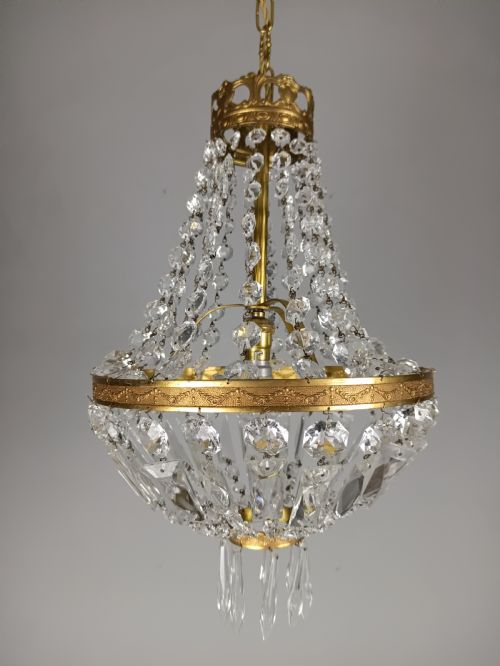
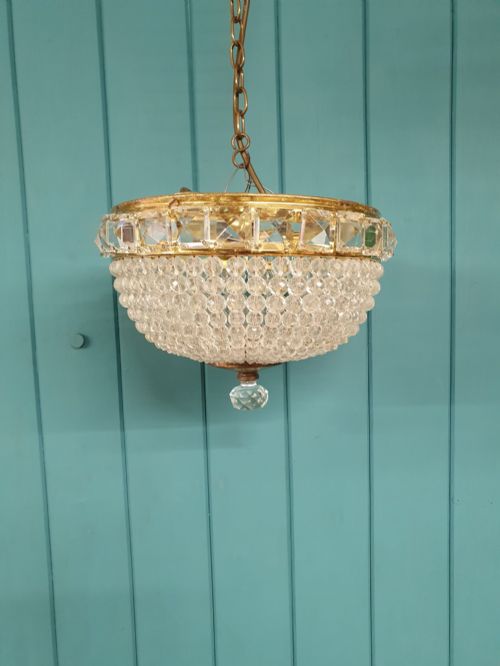
A french bag light sits close to the ceiling or hangs on a short drop, taking the form of a flattened basket or bag composed of dense glass drops and beads. These fixtures appear primarily in Edwardian and 1920s iterations, alongside occasional French Empire and Louis Revival forms.
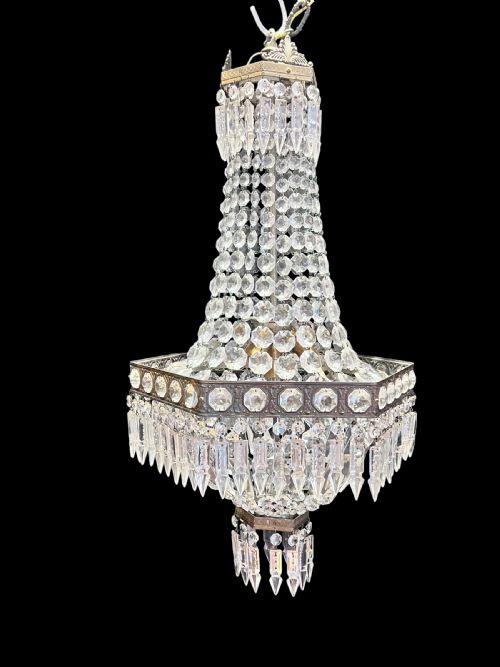
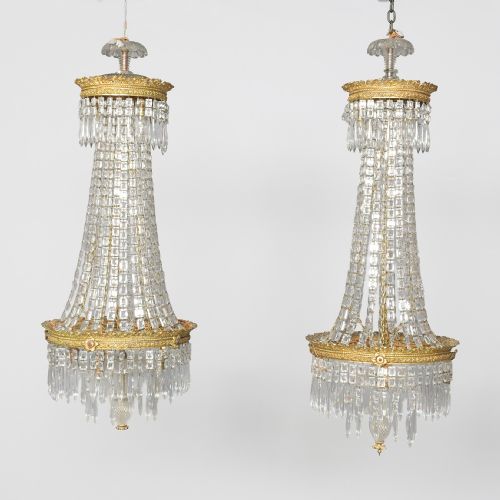
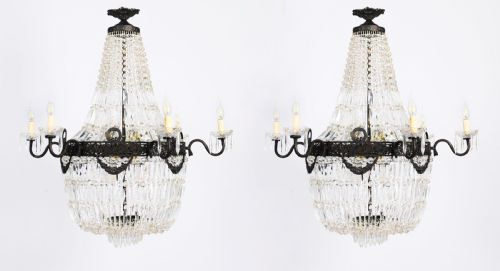
The silhouettes range from compact domes and tapered bags to larger basket chandeliers with extensive crystal fringes. Wall lights and smaller ceiling fittings also emerge in these designs, frequently pairing brass mounts with cut glass prisms.
How they were made
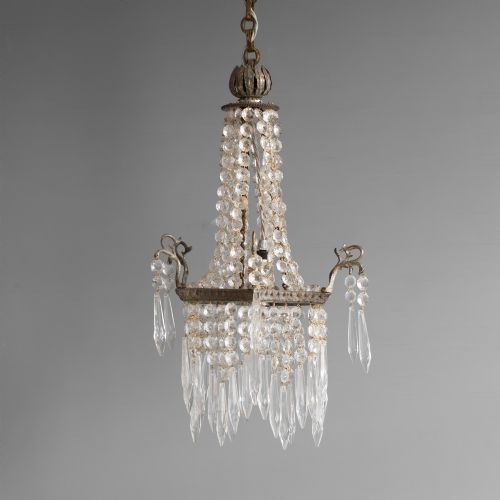
Makers constructed the structural frames from cast or spun brass, gilt metal, and gilded bronze to support the weight of the glass components. These metal mounts often feature decorative elements such as leaf motifs, spikes, or cherubs.
Artisans wired countless individual pieces of cut glass, crystal, and beaded strands onto the metal armature to form the characteristic bag or tent profile. Coffin prisms, bead strings, and lower bag sections catch and refract the illumination from multiple internal light sources.
French Bag Light Retail Price Guide 2026
Typical asking prices for french bag light among the pieces listed under this phrase on Sellingantiques today, from the lower quarter to the upper quarter. They describe what is for sale here now, not the wider market.
Some fixtures include unexpected red drip details on the glass components.
What varies in quality
The refinement of the metalwork and the clarity of the glass determine the character of each piece. Superior examples display crisp casting on the brass mounts alongside high-grade cut crystal that refracts light cleanly through dense beadwork.
Proportion and scale dictate the visual weight of the fixture within a room. Well-balanced tent and bag constructions maintain an integrated harmony between the upper crown and the cascading lower crystal apron.
Wedgwood
The French Bag Light Glossary
- Bag chandelier
- A lighting fixture shaped like a tapered bag or pouch, formed entirely from strings of glass beads suspended from a metal ring. This design sits close to the ceiling and distributes ambient illumination evenly.
- Tent chandelier
- A lighting fixture featuring an upper canopy of glass strings rising to a central point above the main body. The upper section resembles a miniature tent before cascading down into lower tiers.
- Coffin prism
- A long, flat-faced glass drop cut in a geometric shape resembling a coffin. These prisms hang along the lower edges of fixtures to add weight and movement.
- Gilt metal
- Metal that has been coated with a thin layer of gold paint or leaf to give a bright finish. This material forms the supporting structure for many decorative glass fittings.
- Louis Revival
- A decorative style popular in the early twentieth century that borrows heavily from eighteenth-century French royal aesthetics. Pieces in this style incorporate elaborate ornamentation and classical symmetry.
French Bag Light: Frequently Asked Questions
What is a french bag light?
A french bag light is a compact ceiling fixture featuring a metal frame draped with cascading glass beads and cut crystals.
These pieces emerged in various forms throughout the early twentieth century, drawing on French Empire and Louis Revival design traditions.
How were these chandeliers used?
These fixtures provided ambient illumination in principal rooms, hallways, and boudoirs where space or ceiling height limited larger hanging lights.
The dense beadwork scattered light across the ceiling and walls to create a warm atmosphere.
How do I clean a bag light?
Cleaning requires careful wiping of individual glass drops and beads while they remain attached to the frame using a mild glass cleaner.
Removing the brass mounts or glass elements is rarely necessary if maintenance happens gently in place.
How do I date a crystal fixture?
Dating relies on examining the construction methods of the brass frame, the cut of the glass prisms, and the wiring style.
Edwardian and 1920s pieces often exhibit specific brass casting techniques and distinct bead configurations that separate them from later reproductions.