



French Accent Cabinets
French accent cabinets bring European charm to a room, offering practical surface space and storage through refined historic designs.
French Accent Cabinets
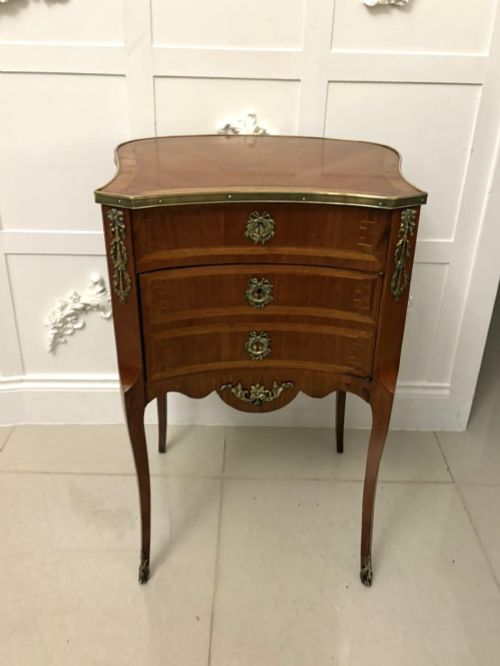
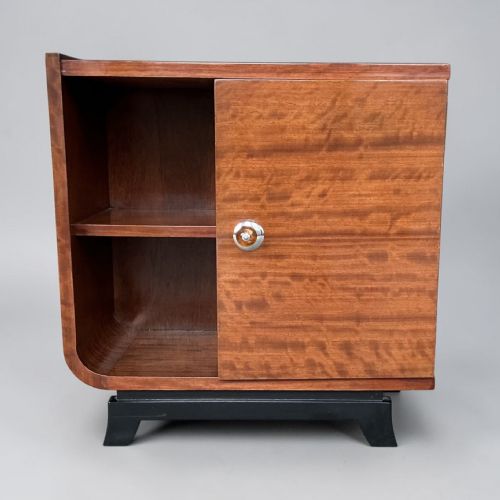
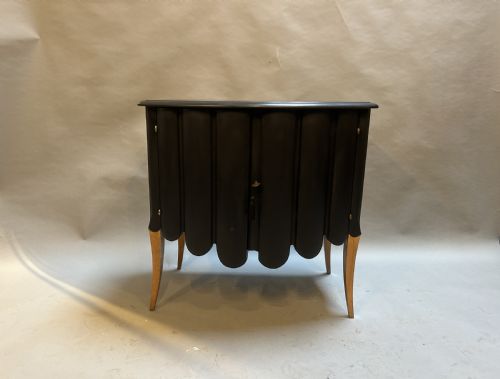
French accent cabinets encompass a diverse range of historic small-scale furniture designed to introduce decorative character and function into domestic spaces. These pieces span from the late nineteenth century through to the Art Deco period of the 1930s, reflecting changing aesthetic preferences across decades.
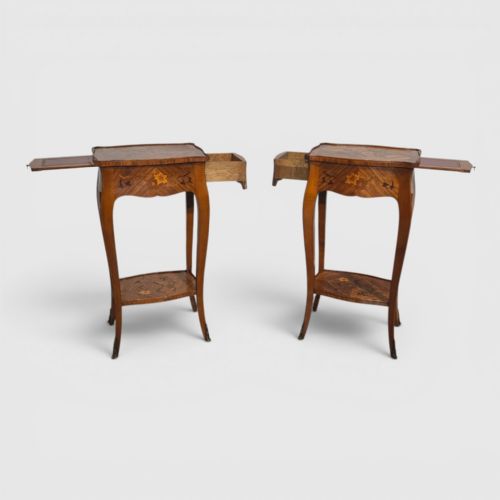
The selection on this page relies heavily on revival movements, particularly Louis XV and Louis XVI styles, alongside specific Art Deco interpretations. Buyers frequently encounter bedside tables, side cabinets, and occasional tables that showcase classic continental proportions.
Forms range from intimate kidney bean nightstands and marquetry side chests to marble-topped dumb waiters and glazed bijouterie cabinets. Each variation offers a distinct footprint suited for corners, beside seating, or flanking a bed.
Assessing quality
Quality rests upon the precision of the cabinet work, from the intricacy and tightness of the marquetry and veneer matching to the solidity of the underlying timber frame. Finer examples display meticulous attention to detail in the carving and the seamless fit of drawers and doors.
The execution and finish of cast metal mounts, such as ormolu or silvered bronze, distinguish superior pieces from standard production. Heavier, crisply detailed mounts integrated harmoniously with the wood indicate higher craftsmanship.
French Accent Cabinets Retail Price Guide 2026
Typical asking prices for french accent cabinets among the pieces listed under this phrase on Sellingantiques today, from the lower quarter to the upper quarter. They describe what is for sale here now, not the wider market.
Listings feature pieces spanning the late nineteenth century through to the Art Deco period of the 1930s.
Gabriel Viardot
The French Accent Cabinets Glossary
- Marquetry
- The art of applying pieces of veneer to a structure to form decorative patterns. Craftsmen use various coloured woods to create intricate pictorial or geometric designs.
- Ormolu
- Gilded bronze used for decorative mounts on furniture. This technique adds metallic highlights and ornate detailing to cabinet corners and feet.
- Bijouterie cabinet
- A glazed display table or cabinet designed for showing small valuable objects. These pieces often feature glass panels and velvet-lined interiors.
- Dumb waiter
- A tiered movable serving table. These multi-level pieces provide additional surface space for holding items during dining or social gatherings.
French Accent Cabinets: Frequently Asked Questions
Where should I place a French accent cabinet?
These versatile pieces suit various domestic settings, functioning effectively as bedside tables in a bedroom or as lamp tables in a living room. Their compact proportions allow them to fit easily into hallways and empty alcoves.
Selecting a specific form, such as a marble-topped dumb waiter or a glazed bijouterie cabinet, determines its utility for display or storage within a chosen room.
How do I identify a Louis XV revival piece?
Louis XV revival pieces typically exhibit characteristic serpentine lines, cabriole legs, and asymmetrical floral marquetry. These design elements mimic the curves and ornate decoration popular during the eighteenth century.
Later interpretations from the nineteenth and twentieth centuries often combine these traditional curved silhouettes with period-appropriate timber veneers and cast ormolu mounts.
What is the difference between an occasional table and a side cabinet?
Occasional tables are primarily open-surface stands designed for general use, such as holding lamps or small decorative items. They prioritise surface utility and leg framing over enclosed storage.
Side cabinets incorporate enclosed storage spaces like doors, drawers, or cupboards. They offer a combination of surface display area and concealed compartment organisation.
How do I care for antique wood and marble surfaces?
Maintain timber surfaces by applying appropriate furniture wax sparingly and buffing gently with a soft cloth. Avoid placing wooden cabinets in direct sunlight or near heat sources to prevent timber movement.
Keep marble tops clean by wiping them down with a damp cloth and mild soap, avoiding acidic cleaners that can etch the polished stone surface.