



Fred Lawson Art
Fred Lawson art brings the quiet charm of early twentieth century Yorkshire and historic towns directly to your walls.
Fred Lawson Art
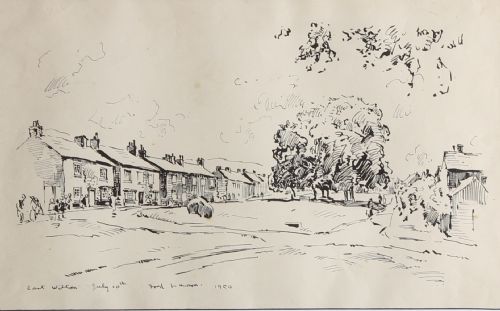
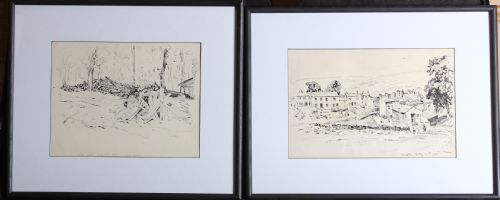
When you search for fred lawson art, you encounter a focused collection of works on paper, primarily watercolour paintings and ink drawings. These pieces capture rural landscapes, winter scenes, and townscapes from periods spanning the 1910s to the 1960s.
The most common versions met on this page are landscape watercolours depicting Yorkshire locations such as Wensleydale, Castle Bolton, and local bridges, alongside architectural views of Lincoln and Knaresborough.
Categorised largely within 20th Century British and Modern British styles, these works operate as fine art paintings, wall art, and detailed drawings reflecting a distinct regional perspective.
Materials and technique
These works rely on paper as the primary support, utilising watercolour paint and watercolour pigment to build atmospheric landscapes and town views. Ink is frequently combined with watercolour in expressive ink watercolour drawings, defining outlines before applying washes of colour.
Pencil is also utilised for linear studies, whilst wood and glass typically frame and protect these delicate works on paper. The application of watercolour pigment captures specific lighting, from winter snow in Wensleydale to the stone structures of Yorkshire castles.
Fred Lawson Art Retail Price Guide 2026
Typical asking prices for fred lawson art among the pieces listed under this phrase on Sellingantiques today, from the lower quarter to the upper quarter. They describe what is for sale here now, not the wider market.
Listings span periods from the 1910s to the 1960s, documenting early twentieth century British and Modern British styles.
Variations in quality
The standard of fred lawson art is distinguished by the clarity of the ink work and the fluidity of the watercolour wash. Pieces that successfully balance detailed architectural line work with luminous washes of watercolour pigment represent the stronger examples of the medium.
Distinctions across the range depend on the compositional depth of the landscape and the preservation of the paper surface. Works showing robust handling of tone and specific topographical detail hold particular visual interest compared to simpler sketches.
Fred Lawson
The Fred Lawson Art Glossary
- Watercolour
- A painting method where fine pigment is suspended in a water-based solution, applied to paper. It allows for transparent washes of colour.
- Ink
- A liquid containing pigments or dyes used for writing and drawing lines. It provides sharp contrast beneath watercolour washes.
- Townscape
- An artistic representation of the physical aspects of a city or urban area. These often include historic bridges, harbours, and streets.
- Landscape
- An artwork depicting natural scenery such as mountains, valleys, trees, and rivers. These scenes often focus on rural Yorkshire settings.
Fred Lawson Art: Frequently Asked Questions
What subjects appear in Fred Lawson art?
The works primarily depict rural Yorkshire landscapes, including Wensleydale, Castle Bolton, and local rivers and bridges. Townscapes from Lincoln, Knaresborough, and Stirling also feature prominently.
Scenes range from wintry village views and agricultural settings to architectural studies and coastal harbours.
Which materials did the artist use?
The pieces utilise paper as the base support for all watercolours, drawings, and ink works. Watercolour pigment and paint provide the colour washes.
Ink and pencil are frequently employed for underlying lines and detailed preparatory drawings.
How should these works on paper be displayed?
Works on paper require framing behind glass to protect the delicate medium from moisture, dust, and handling. Acid-free mounts prevent chemical damage to the paper over time.
Placement away from direct sunlight preserves the vibrancy of the watercolour pigments.
Which periods are represented?
The available pieces date from the early twentieth century through the mid-century period. Dates span from the 1910s and 1920s into the 1930s, 1940s, 1950s, and 1960s.
This timeline encompasses the development of British Impressionism and Modern British art styles.