


Framed Watercolour Drawings
Framed watercolour drawings capture light and line with immediate freshness, offering a direct encounter with the artist's hand.
Framed Watercolour Drawings
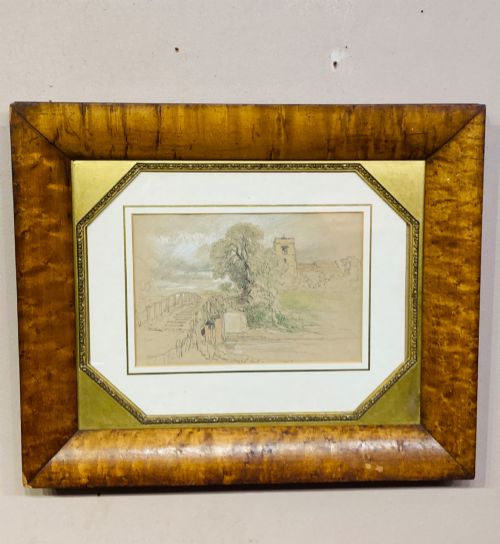
Framed watercolour drawings comprise works on paper created using water-soluble pigments, often combined with ink, pencil, or pastel, and secured behind glass within protective wooden or giltwood frames. When you search for framed watercolour drawings, you encounter pieces spanning from the Georgian and Regency eras through the Victorian period and into mid-century modern British and continental art.
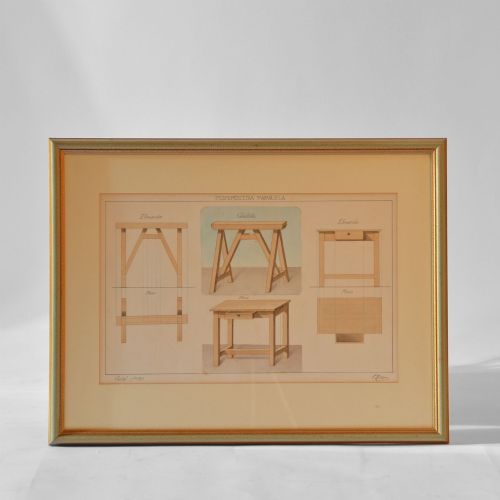
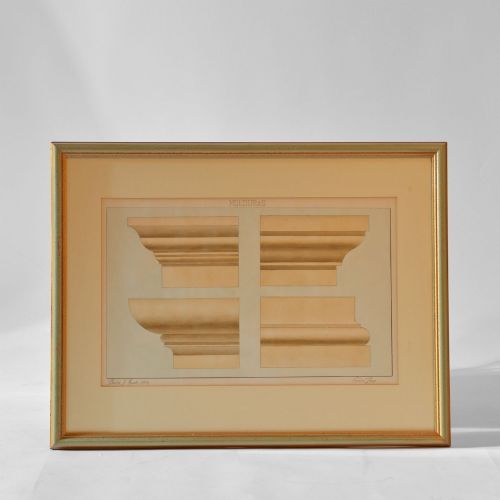
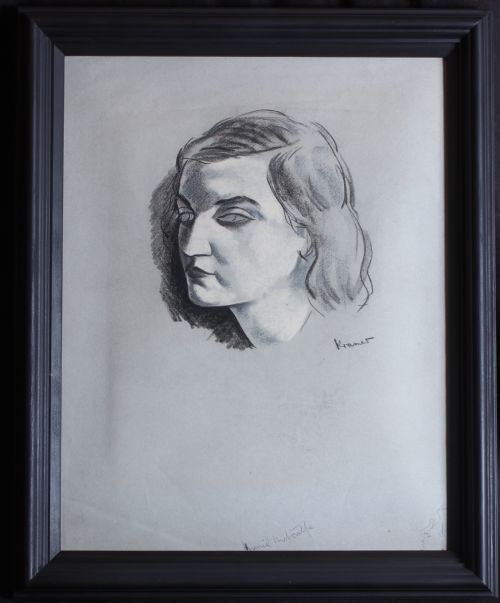
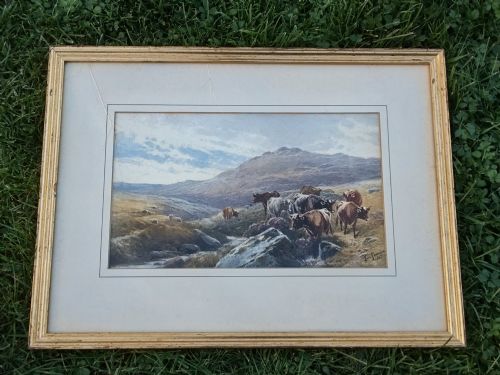
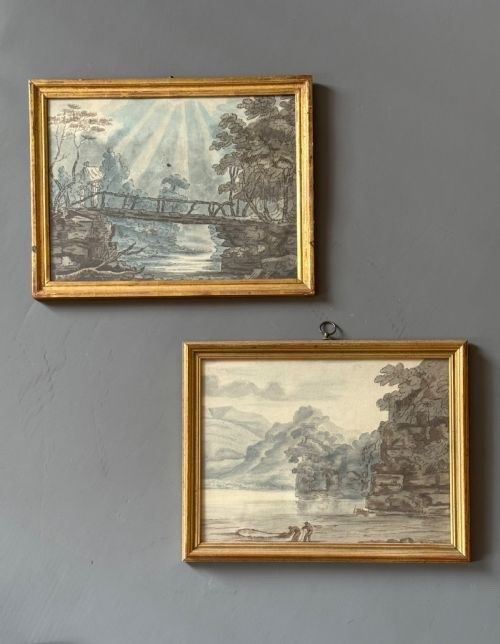
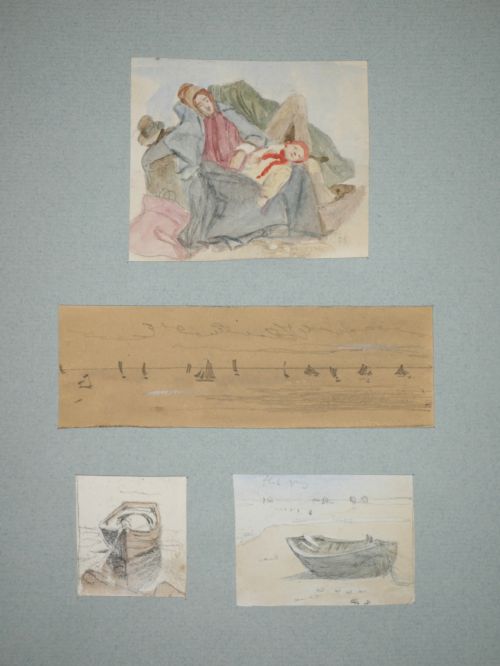
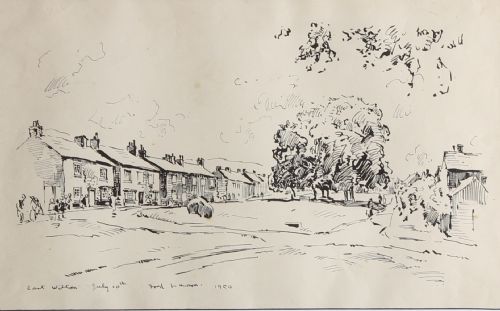
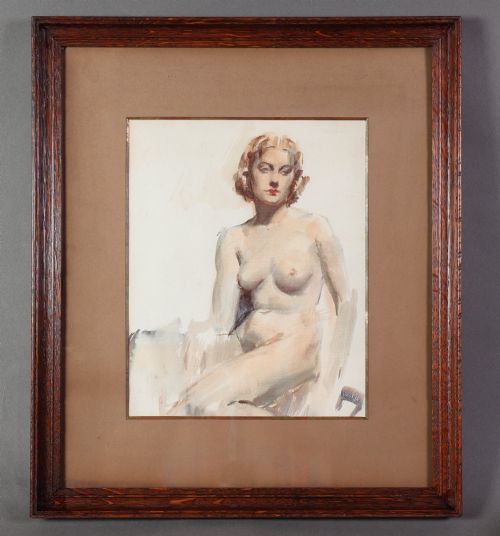
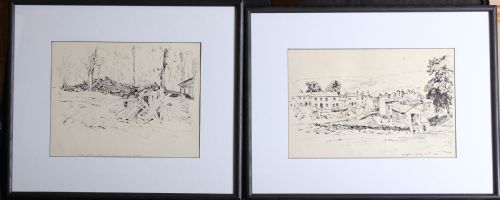
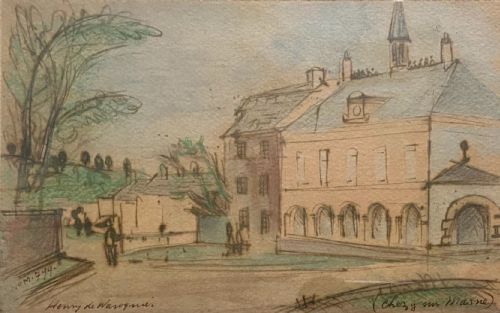
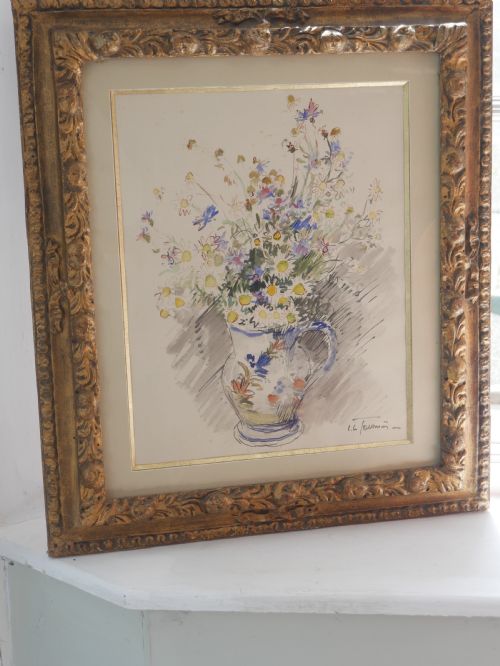
The subjects on this page range widely from marine sketches, architectural studies, and Grand Tour scenes to botanical still lifes, landscapes, portraits, and cartoons. Nineteenth-century marine views and portraits sit alongside mid-century abstract compositions and regional landscapes.
Most selections reflect British and European traditions, incorporating works by named artists alongside pieces originating from the British School.
How they were made
Watercolour pigment relies on finely ground colour suspended in a water-soluble binder, applied to paper surfaces in translucent washes to build depth and luminosity. Artists frequently laid down an initial graphite pencil or pen and ink sketch to establish the composition before adding colour.
Many works incorporate mixed media elements such as pastel, bodycolour, or ink to heighten contrast and texture within the drawing. Traditional framing methods enclosed these delicate works on paper beneath glass within wooden or giltwood mouldings to protect the surface from atmospheric damage.
Framed Watercolour Drawings Retail Price Guide 2026
Typical asking prices for framed watercolour drawings among the pieces listed under this phrase on Sellingantiques today, from the lower quarter to the upper quarter. They describe what is for sale here now, not the wider market.
A delightfully naive portrait captures a three-month-old infant endowed with the dignified facial expression of a mature adult.
What varies in quality
Quality rests upon the sureness of the draftsmanship and the vitality of the brushwork, where confident handling brings immediacy and presence to the paper. Superior works maintain luminosity in the pigment washes without becoming overworked or muddy.
The integrity of the preservation directly influences the standing of a piece, including the stability of the paper support and the retention of original tone beneath the glass. Contemporary or period framing that complements the scale and palette of the drawing further enhances the overall cohesion of the object.
Bruce Bairnsfather·James Smetham·Fred Lawson·Henry de Waroquier·Michael Healy·Dame Elisabeth Frink·James Tower·William Frederick Settle·J Bizo·Stanley Orchart·J W Hogley·Raoul Millais·William Edward Frost·Samuel Owen·Robert Richard Scanlan·Arthur Todd·Adrian Heath·Pio Panfili
The Framed Watercolour Drawings Glossary
- Watercolour
- A painting method where the pigments are suspended in a water-based solution. The technique relies on the reflective quality of the white paper showing through translucent washes of colour.
- Giltwood
- Wood that has been treated with a thin layer of gold leaf or gold paint. This material is frequently found on traditional decorative frames surrounding antique works on paper.
- Grand Tour
- A cultural journey through Europe formerly undertaken by wealthy young men seeking exposure to classical art and antiquities. Watercolours from this genre typically depict Italian architecture and classical ruins.
- Mixed media
- An artwork combining two or more distinct artistic materials or mediums. Pieces recorded here often blend watercolour with pencil, ink, or pastel.
- Bodycolour
- Watercolour paint rendered opaque by the addition of a white pigment such as chalk. Artists utilise this to introduce highlights and solid areas of colour into a transparent wash drawing.
Framed Watercolour Drawings: Frequently Asked Questions
How should I hang framed watercolours at home?
Position watercolours away from direct sunlight to prevent the fugitive pigments from fading over time. Maintain stable indoor humidity levels to protect both the delicate paper support and the wooden frame.
Group pieces of complementary scale together on neutral walls to allow the fine ink and pencil lines to remain the focal point.
What is the difference between a watercolour and a drawing?
A drawing primarily relies on linear marks made with mediums such as pencil, ink, or pastel to define form and contour. Watercolour introduces fluid washes of coloured pigment to build tone and atmosphere.
Many historic works combine both approaches, using ink or pencil outlines beneath transparent layers of watercolour paint.
How do I identify the period of a watercolour?
Examine the paper type, framing style, and costume or architectural details depicted within the subject matter. Nineteenth-century works often feature expressive brushwork and detailed landscape or portrait subjects, whereas mid-century pieces tend towards abstracted forms or simplified regional views.
Signatures, inscriptions on the reverse, and artist biographies provide definitive chronological markers.
Were these watercolours intended as finished artworks?
Some watercolours functioned as preparatory studies or quick plein-air sketches recorded during travels, while others were created as fully realised finished paintings intended for exhibition or sale. Architectural prints and Grand Tour watercolours often served as portable records of continental sights before the advent of photography.