



Framed Water Colour
These framed water colour works bring pigment on paper into domestic spaces, offering direct touches of hand-painted artistry from past centuries.
Framed Water Colour
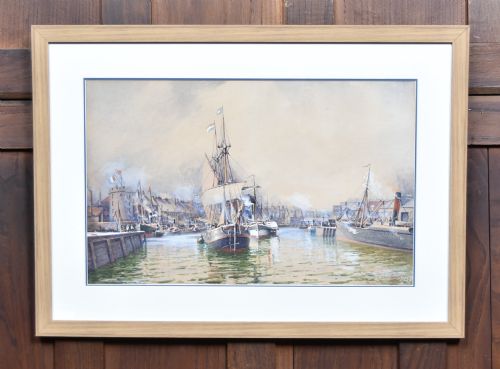
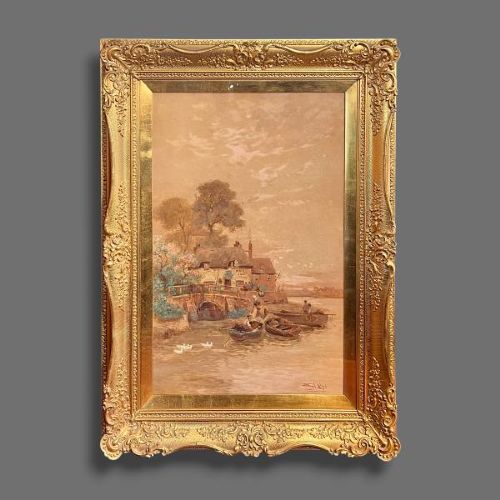
A framed water colour brings together paper, pigment, glass, and wood moulding to preserve and display delicate painted scenes. When searching for framed water colour, buyers encounter varied subjects ranging from nineteenth-century Italian landscapes and maritime views to twentieth-century illustrations.
The selection on this page spans distinct periods including the Victorian era, Edwardian period, and twentieth-century modernism. Works appear singly, in pairs, or in sets, showing subjects from local water fowl to foreign ports like Leith and Corfu.
Makers and artists range from named nineteenth-century painters to animators and illustrators of later decades. Most pieces present original artwork housed beneath glass within wooden or gilded frames appropriate to their creation date.
Materials and technique
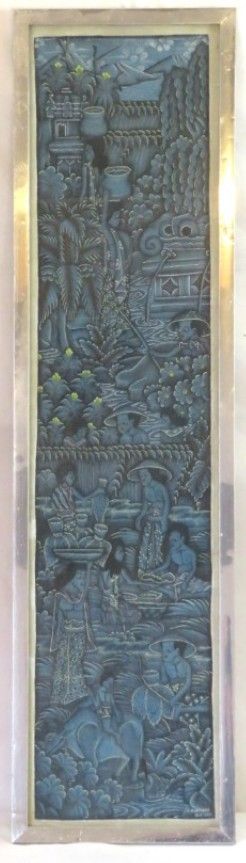
Watercolour pigment is applied directly to paper or fabric surfaces using water-soluble binders. Painters utilise transparent washes to build depth and light upon the sheet, capturing atmospheric effects particularly suited to landscapes and maritime subjects.
Protection is provided by glass mounted within timber frames, which frequently utilise gilt wood or plain wood mouldings. These enclosures shield the delicate pigment and paper from environmental damage while completing the presentation of the wall art.
Framed Water Colour Retail Price Guide 2026
Typical asking prices for framed water colour among the pieces listed under this phrase on Sellingantiques today, from the lower quarter to the upper quarter. They describe what is for sale here now, not the wider market.
Even an army officer must sit still long enough for water colour paints to dry.
Evaluating the range
The upper tier of works demonstrates confident brushwork and precise draughtsmanship by documented artists such as Stuart Lloyd or Charles H Poingdestre. These pieces display superior handling of light and composition, often supported by period framing that matches the exact era of the painting.
Simpler decorative works or anonymous studies form the other portion of the range, relying on charming subject matter rather than artistic renown. The integration of period glass and authentic giltwood frames distinguishes the more accomplished historical examples from ordinary framed artwork.
William Woolard·Stuart Lloyd·Edith E Caswall·B Kaufmann·Charles H Poingdestre·Belisario Gioja·Yves Brayer·Rev B Morris
The Framed Water Colour Glossary
- Watercolour
- A painting method where natural pigments are suspended in a water-based solution and applied to paper. The technique relies on the white of the paper to provide luminosity through transparent washes.
- Giltwood
- Timber carved and coated with gold leaf or a gold-coloured finish. This material is commonly found on nineteenth-century picture frames.
- Maritime
- Pertaining to the sea or shipping, frequently used to describe nineteenth-century coastal views and harbour scenes. These paintings often focus on sailing vessels and port activities.
Framed Water Colour: Frequently Asked Questions
How do I care for a framed water colour?
Keep water colour paintings away from direct sunlight to prevent the pigments and paper from fading over time.
Ensure they hang in rooms with stable humidity levels to protect both the paper support and the antique wooden frame.
Are these water colours original artworks?
The selection consists of hand-painted original works on paper or fabric rather than modern mass-produced prints.
Individual brushstrokes and pigment textures remain visible upon close inspection under the original protective glass.
How do I identify a Victorian water colour?
Victorian examples often feature romantic landscapes, maritime scenes, or detailed portraits rendered with meticulous nineteenth-century technique.
The framing materials, backing boards, and handwritten inscriptions on the reverse frequently point to this period.
Can I hang water colours in a hallway?
Hallways offer suitable spaces for framed art provided the wall does not experience dampness or direct sun exposure.
Smaller pieces and pairs work particularly well in narrow areas where viewers can appreciate them close up.