

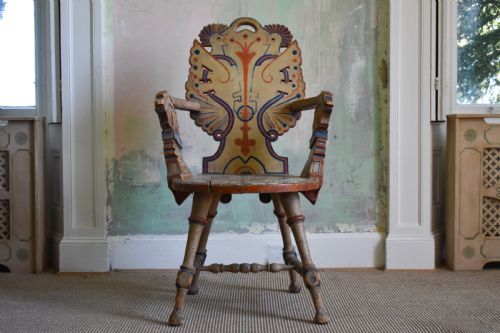
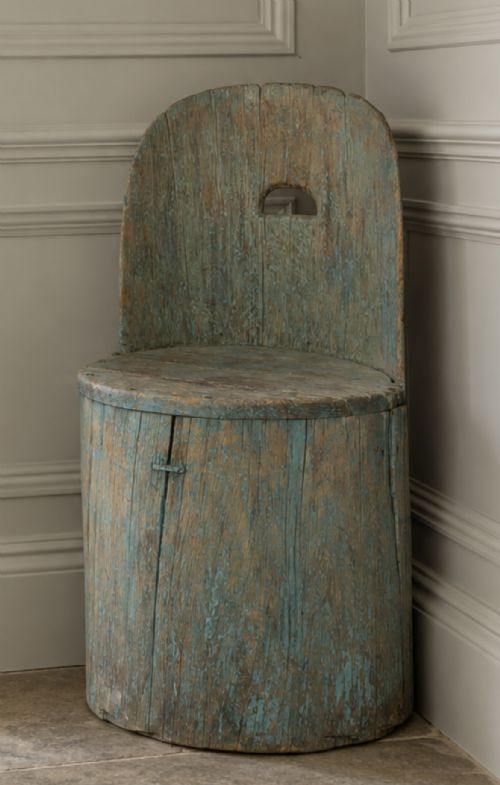


Folk Painted Armchairs
These folk painted armchairs bring regional character into a room through honest timber and honest colour.
Folk Painted Armchairs
Folk painted armchairs encompass sturdy seating forms rooted in vernacular traditions across Sweden, Ireland, Wales, and England. When searching for folk painted armchairs, buyers encounter diverse regional interpretations ranging from Scandinavian country styles to Welsh hoop-back stick chairs.
The pieces listed here span the Georgian, Regency, and Victorian eras, alongside specific 1800s dates. Forms vary from substantial rocking chairs and bobbin country thrones to low children's armchairs and dug out seats.
Scandinavian folk art and Irish vernacular pieces dominate the selection. Buyers frequently meet pine and birch frameworks finished in original painted surfaces, often accompanied by rush seating.
How they were made
Local joiners utilised readily available regional timbers such as pine, birch, beech, and assorted woods to construct these chairs. Solid planks formed dug out seats, whilst turned spindles and curved hoops created supportive backs.
Makers applied surface colour directly onto the timber using traditional paint. Surviving examples preserve this original paint layer, recording the historical decorative choices of rural workshops.
Folk Painted Armchairs Retail Price Guide 2026
Typical asking prices for folk painted armchairs among the pieces listed under this phrase on Sellingantiques today, from the lower quarter to the upper quarter. They describe what is for sale here now, not the wider market.
Several miniature chairs were built down to child scale, proving that rural toddlers sat just as sternly as their parents.
What varies in quality
The survival of an uncompromised original painted surface elevates a chair above examples stripped or repainted later in life. Depth of character in regional turning and the integrity of early construction methods separate standard utility pieces from exceptional vernacular works.
Proportion and scale influence desirability, particularly in rarer child's armchairs and substantial rocking forms. The harmony between the vernacular style, such as Gothic Revival details or bobbin turnings, and the underlying timber dictates the visual strength of the piece.
The Folk Painted Armchairs Glossary
- Vernacular
- Local or regional architecture and craft traditions built by jobbing joiners rather than urban cabinet makers. These pieces reflect the specific domestic needs and material availability of their home districts.
- Dug out chair
- A primitive seating form hewn directly from a single solid log of timber. The maker hollowed the trunk to form both seat and back.
- Bobbin turning
- A decorative lathe technique producing a series of rounded wooden beads resembling spools of thread. This detail appears frequently on 19th-century country framework.
- Hoop-back stick chair
- A seating design featuring a continuous bentwood rail supporting steam-bent or cleft spindles. These uprights slot directly into a thick wooden seat plank.
Folk Painted Armchairs: Frequently Asked Questions
How do I identify original paint?
Original paint exhibits natural craquelure, surface wear, and appropriate chemical ageing under magnification. Subsequent layers often show through chips or losses in the top coat.
Avoid pieces with modern synthetic emulsions or surfaces that feel uniformly flat and recent. Genuine historic pigment layers display subtle tonal variations from light exposure and cleaning over centuries.
Where were these chairs made?
Makers constructed these chairs in rural domestic workshops across Scandinavia, Ireland, and Wales. Local joiners responded to regional aesthetic demands rather than metropolitan fashion.
Specific stylistic markers, such as Swedish turnings or Welsh hoop-back construction, point directly to the geographic origins of each vernacular piece.
Are rocking chairs period correct?
Many country rocking chairs originate from the nineteenth century, including the Regency and Victorian periods. Traditional makers adapted standard armchair forms by adding curved wooden rockers to the base.
These additions served practical domestic purposes in rural nurseries and farmhouse kitchens. The rocking mechanism forms an integral part of the regional furniture tradition.
How should I care for painted wood?
Protect antique painted surfaces from direct sunlight and sharp fluctuations in room humidity. Stable environmental conditions prevent the underlying pine or birch from drying and splitting.
Clean the timber using a soft, dry cloth without applying modern chemical solvents or silicone polishes. Preserving the delicate skin of the original paint requires gentle, minimal physical intervention.