



Folk Art Armchair
A folk art armchair brings raw vernacular character and regional craft straight into a room.
Folk Art Armchair
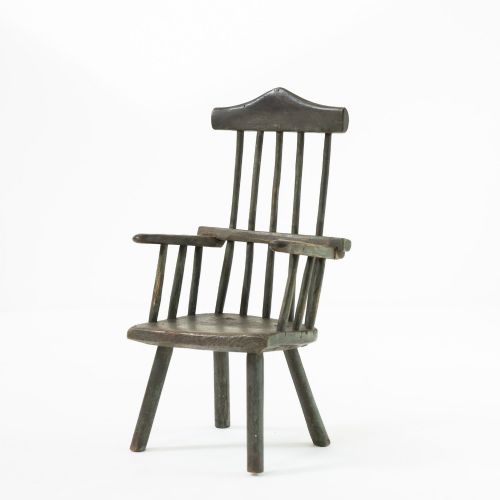
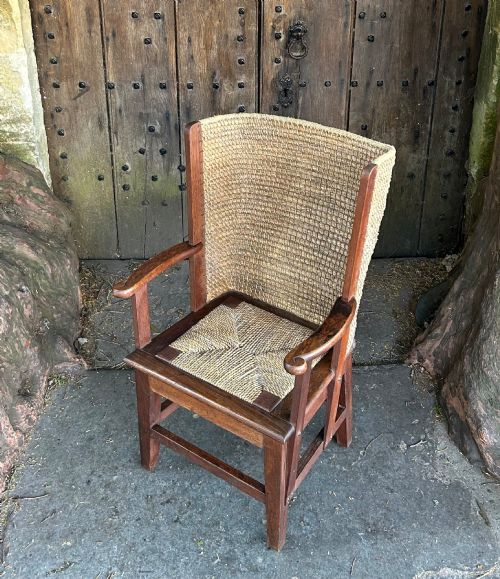
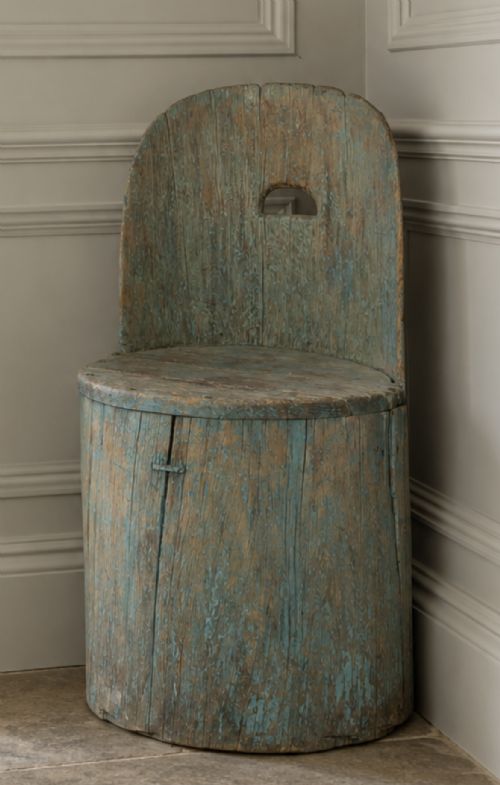
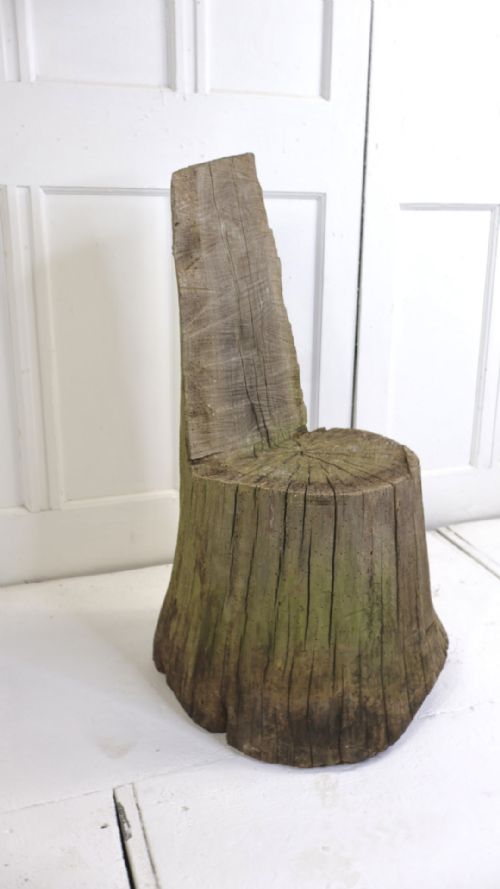
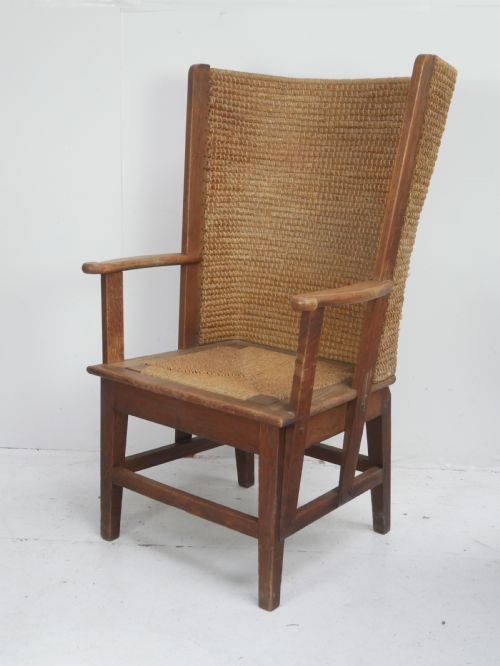
A folk art armchair represents unpretentious domestic seating shaped by regional traditions rather than urban workshops. These pieces span centuries of rural craftsmanship, taking forms such as stick backs, comb backs, dug outs, and Orkney chairs.
Most examples encountered here originate from Scandinavian, British, and Irish country traditions, often fashioned by local makers using readily available timber. The selection frequently includes child-sized variants, rocking chairs, and substantial throne armchairs.
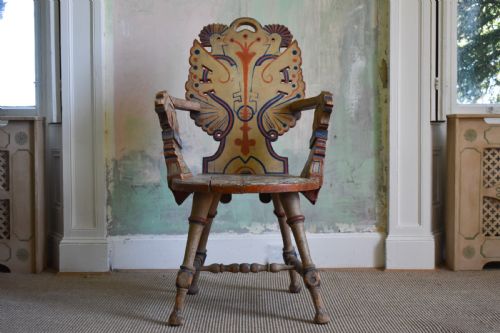
Every folk art armchair carries the distinct imprint of its maker's environment, utilising native woods and local construction methods. They serve as functional seating that doubles as sculptural woodwork.
Assessing quality and character
Quality rests in the integrity of the original construction and the preservation of untouched surfaces. Chairs retaining their early or original paint finishes command greater interest from collectors.
Proportion and sculptural presence distinguish exceptional pieces from ordinary utilitarian seating. The harmony between the maker's structural choices and the natural grain of the wood dictates the visual impact.
The Folk Art Armchair Glossary
- Dug out chair
- A seating form carved and hollowed directly from a single solid log or trunk. This ancient method produces heavy, sculptural chairs with deep seats.
- Stick back
- A chair construction where turned spindles or plain sticks are inserted directly into a solid wooden seat. This method forms both the backrest and structural support.
- Orkney chair
- A traditional Scottish armchair featuring a high back woven from straw or oat-grass. They often include wooden frames made from oak or beech.
- Comb back
- A Windsor chair variant where the vertical spindles of the backrest pierce a horizontal top rail. This resembles the teeth of a traditional hair comb.
- Vernacular furniture
- Domestic items built by local tradesmen or carpenters without academic architectural influence. These pieces prioritise local utility and available materials.
Folk Art Armchair: Frequently Asked Questions
How do I care for a painted wooden armchair?
Keep wooden armchairs away from direct heat sources and fluctuating humidity to protect the timber and original paint. Dust gently with a dry cloth and avoid modern chemical polishes.
Allow the surface to breathe naturally and maintain its aged patina. Gentle handling ensures the historic finish remains intact for years.
Are folk art armchairs comfortable to sit in?
Many country armchairs offer surprising ergonomic comfort despite their rustic appearance. High backs and deep seats provide solid physical support.
Adding a simple linen cushion can make daily use more comfortable. Their proportions are designed for relaxed domestic seating.
How can I tell if the paint is original?
Original paint shows natural wear patterns, fading, and micro-cracking consistent with age. Examination under natural light often reveals subtle layers and historical accumulation beneath the surface.
Repainted surfaces typically present a uniform texture without genuine underlying wear. Evaluating the interface between the paint and the wood grain helps confirm authenticity.