

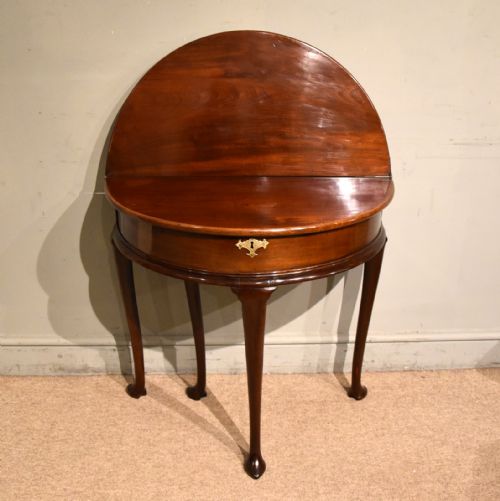


Folding Top Desk
A folding top desk or convertible table offers ingenious dual-purpose design, moving effortlessly from a compact console to a generous surface.
Folding Top Desk
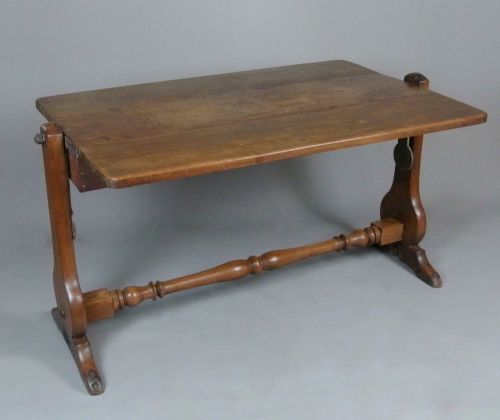
A folding top desk brings together multi-functional furniture designed to transform its surface area through hinged, swivel or drop leaves. When searching for a folding top desk, buyers encounter an array of period forms including tea tables, card tables, washstands and metamorphic writing desks.
The pieces span Georgian, Victorian and Edwardian eras, utilising clever mechanisms to conceal compartments or expand usable space. Mahogany, walnut and rosewood predominate amongst these versatile tables, often featuring inlaid details or leather writing surfaces.
Most examples originate from the eighteenth and nineteenth centuries, reflecting a period when domestic furniture required adaptability for entertaining, grooming or correspondence. These designs allow a single piece of furniture to serve multiple domestic functions without sacrificing floor space.
How they were made
Cabinetmakers utilised dense timbers like Cuban mahogany, walnut, teak and rosewood to ensure structural stability through decades of folding and unfolding. Secondary woods and solid frames supported hinged leaves, swing legs and clever pivot mechanisms.
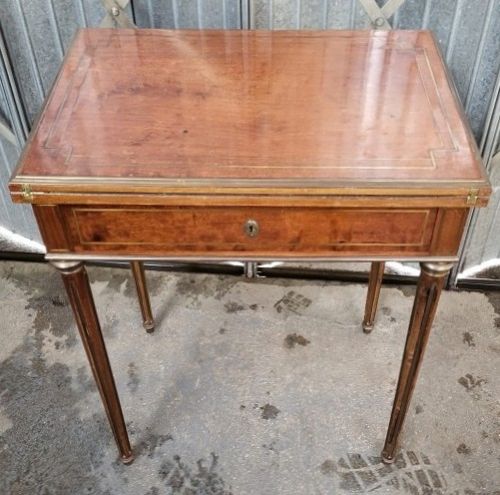
Brass hinges, corner brackets and locks provided both structural reinforcement and decorative contrast against polished timber surfaces. Marquetry, satinwood banding and leather inserts completed the decoration on refined examples intended for principal rooms.
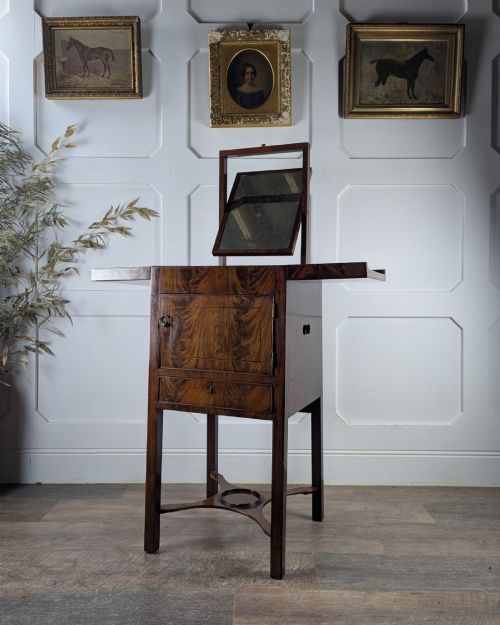
A gentleman could conceal his morning washbasin inside a seemingly ordinary mahogany side table before facing the polite Georgian world.
What varies in quality
Quality rests upon the precision of the folding mechanism and how seamlessly the leaves align when closed. Superior examples maintain stability across the joints without sagging or binding during transformation.
The choice of timber grain, the crispness of carved details, and the integrity of original brass hardware separate ordinary utility items from masterwork pieces. Finer specimens display carefully matched veneer grains that continue harmoniously across the fold lines.
J.C Vickery of London·Maples of London
The Folding Top Desk Glossary
- Metamorphic
- Furniture designed to transform from one form of object into another, such as a side table converting into a writing desk.
- Fold-over
- A table top construction featuring a hinged leaf that doubles the surface area when opened out flat.
- Turnover top
- A mechanism where the upper surface pivots and unfolds to reveal a baize-lined interior or concealed well.
- Satinwood
- A pale, lustrous hardwood utilised for decorative stringing and contrasting inlay work on Georgian and Edwardian pieces.
- Cuban mahogany
- A dense, richly figured tropical timber prized by eighteenth-century cabinetmakers for its deep colour and durability.
Folding Top Desk: Frequently Asked Questions
How do folding mechanisms work?
Most folding desks and tables utilise rotating hinges, swing legs, or pivoting tops that swivel ninety degrees before dropping flat onto a supporting rail. These clever joints allow a compact console to double its surface area instantly.
Heavier leaves often rely on gateleg actions or pull-out wooden brackets to support the extended weight securely during daily use.
Were these used for writing or games?
Many examples served dual purposes, functioning as side tables or tea tables by day and opening up to reveal baize-lined surfaces for card games by night. Writing desks incorporated similar folding lids to protect stationery and inkwells.
The interior compartments often stored counters, cards, or writing implements safely out of sight when closed.
How do I date a folding table?
Dating relies heavily on timber choices, leg profiles, and the style of the hinges or mechanical supports. Georgian pieces typically show straight or cabriole legs with dense mahogany construction, whilst Victorian examples introduce rosewood, walnut, and more elaborate turned bases.
Examining secondary woods underneath and the construction of the pivot joints also helps narrow down the period of manufacture.
Where should I place one?
These versatile pieces work exceptionally well in hallways, sitting rooms, or studies where floor space benefits from adaptable furniture. Kept in the closed position, they function as elegant console or side tables against a wall.
Opening the top creates an impromptu workspace or a convenient surface for entertaining guests when extra room is required.