


Flambe Glaze Pottery
Flambe glaze pottery brings together rich, pooling metallic colour and tactile forms that catch the eye instantly.
Flambe Glaze Pottery
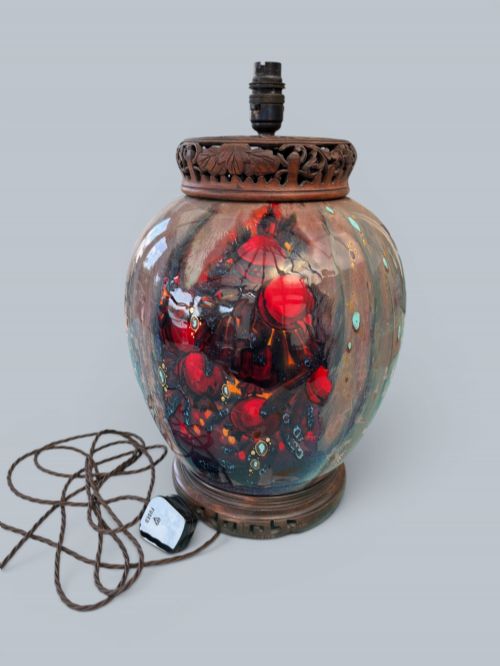
Flambe glaze pottery consists of ceramic vessels and decorative objects covered in vibrant, variegated runs of metallic and crystalline colour. When searching for flambe glaze pottery, buyers encounter a distinct range of Japanese Sumida Gawa wares alongside European art pottery from the early twentieth century.
The pieces appearing here span the periods from 1900 to 1930, capturing the shift from Meiji and Taisho Japanese traditions into mid-century European designs. Vases and decorative bowls form the core of the selection, accompanied by table lamps and teacups.
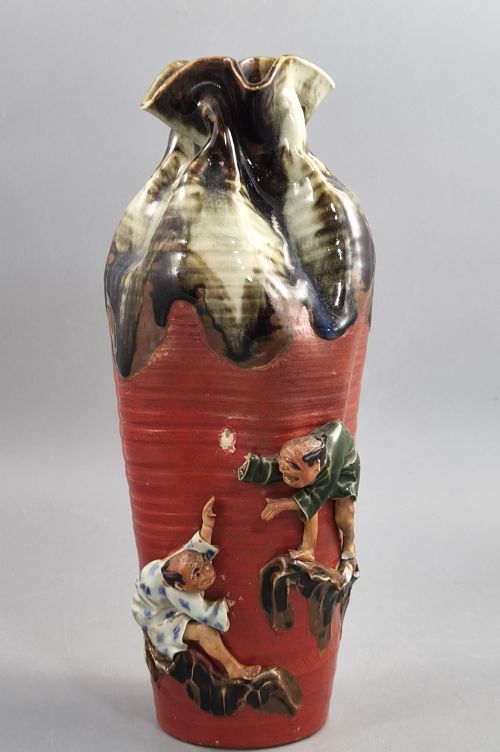
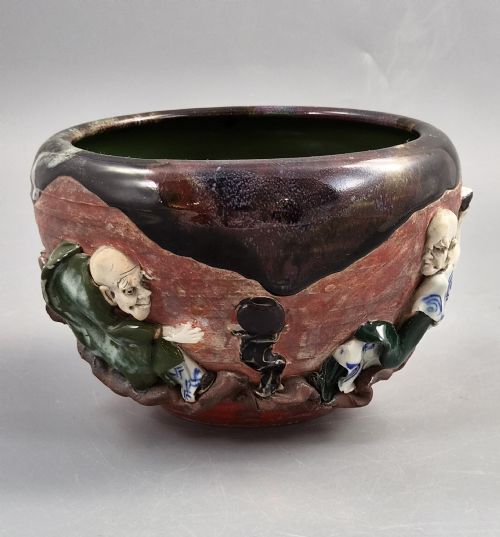
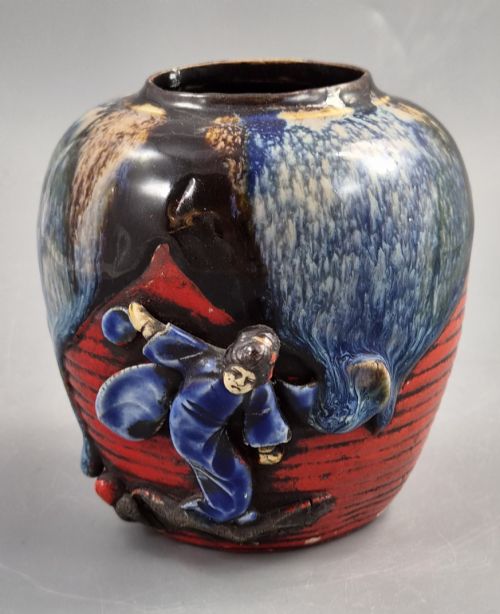
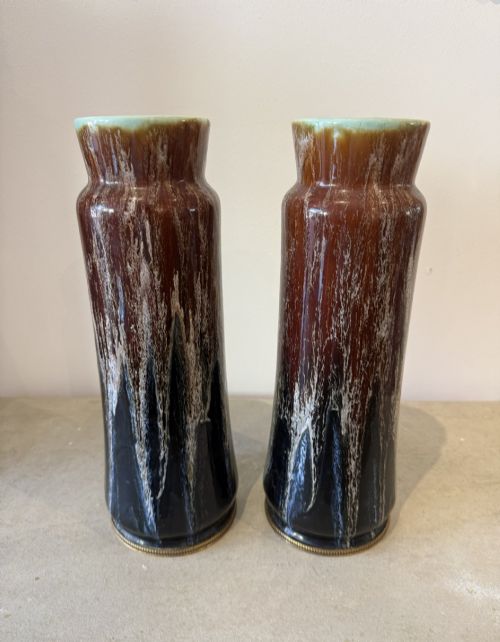
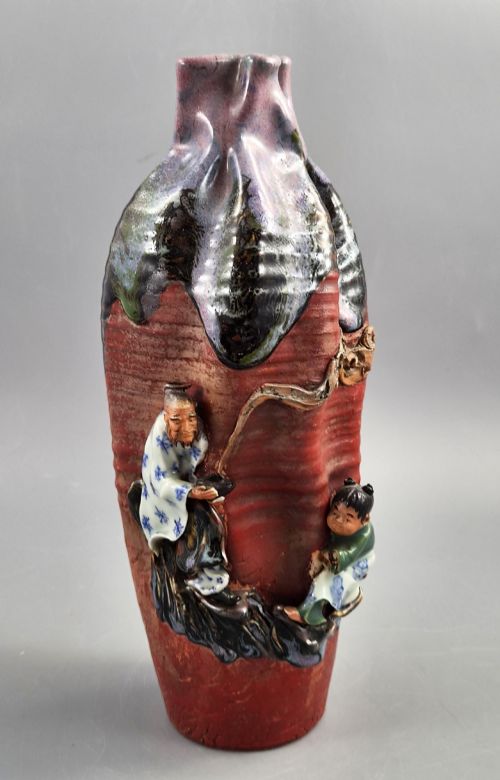
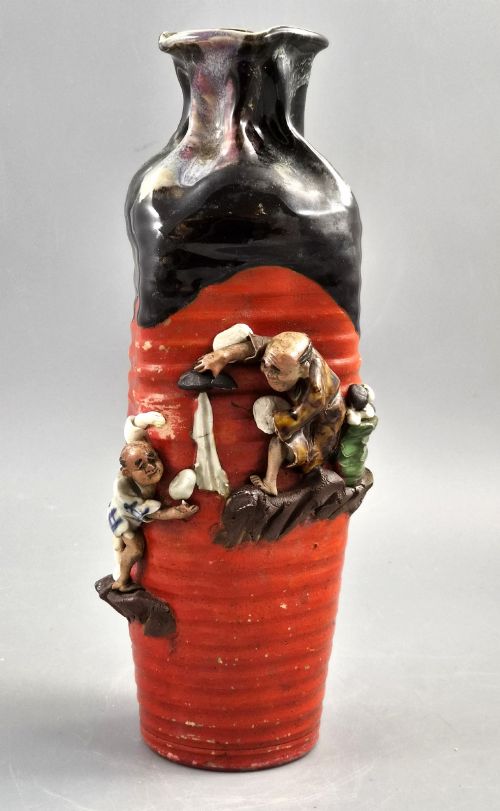
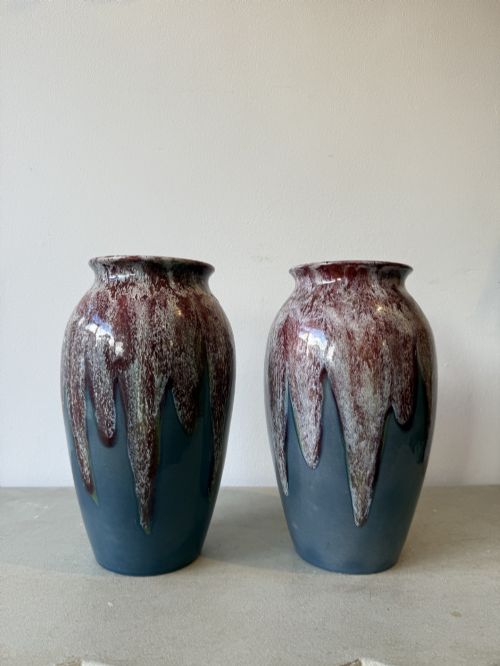
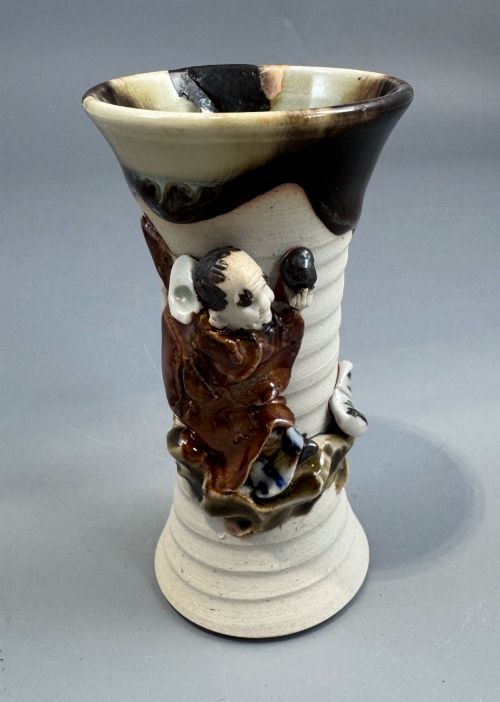
Japanese examples often feature pinched rims, applied figures in relief such as sages and karako, and heavily textured bodies. European makers contribute smoother earthenware and stoneware forms finished with dramatic red and crystalline effects.
How they were made
Makers utilised earthenware, stoneware, and terracotta bodies as foundations for heavy, reactive glaze applications. These ceramic bases supported varied surface textures, from smooth French vessels to the rough, modelled cliffs of Sumida Gawa pottery.
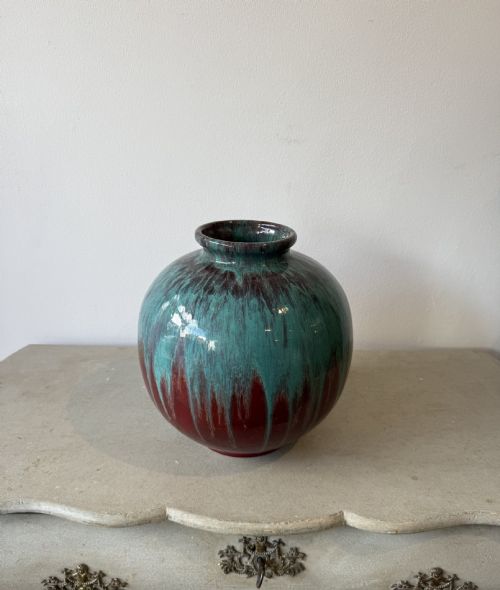
The distinct flambe and crystalline effects relied on precise kiln chemistry, where metallic oxides melted and ran during firing to create unpredictable streaks of oxblood, blue, and lavender. Additional decorative elements, including brass mounts and enamel details, occasionally complemented the fired ceramic bodies.
Several vases feature tiny, determined sages climbing cliffs and children peeking out from beneath heavy layers of molten glaze.
What varies in quality
Quality rests in the depth and control of the glaze movement, where pooling colours create rich visual complexity rather than muddy overlaps. Finer pieces display harmonious balance between the dramatic surface effects and the underlying form of the vessel.
On figural Japanese pieces, the crispness and expression of the modelled figures define the standard of the work. Maker signatures and clear period attribution further distinguish exceptional examples from standard production.
Inoue Ryosai·Ishiguro Koko·Bernard Moore·Royal Doulton·Boch Freres·Moorcroft
The Flambe Glaze Pottery Glossary
- Flambe glaze
- A reactive ceramic finish characterised by streaks and pools of red, blue, and purple tones. This effect results from metallic oxides manipulated during high-temperature firing.
- Sumida Gawa
- A distinctive type of Japanese art pottery originating around Tokyo in the late Meiji and Taisho periods. It is recognised by heavy glazes applied over dripped or sculpted earthenware surfaces.
- Stoneware
- A robust ceramic body fired at high temperatures until vitrified and impermeable to liquids. It forms a durable base for heavy experimental glazes.
- Karako
- A traditional Japanese motif depicting Chinese children at play. These figures frequently appear in relief on decorative art pottery.
- Crystalline glaze
- A specialised ceramic finish that encourages crystal growth within the glassy surface during cooling. It creates star-like patterns across the body of the pot.
Flambe Glaze Pottery: Frequently Asked Questions
What is flambe glaze pottery?
Flambe glaze pottery includes ceramic and stoneware pieces finished with reactive, metallic glazes that pool and streak during kiln firing. These finishes create dramatic shifts in colour, most notably rich oxblood and vibrant blues.
Items range from Japanese Sumida Gawa vases with modelled figures to European art pottery and table lamps produced in the early twentieth century.
How do I identify Sumida Gawa pottery?
Sumida Gawa pieces are recognised by their heavily textured, dripping glazes and applied figures in relief, such as sages, children, and animals. They often feature raw, unglazed clay sections alongside bright splashes of blue, lavender, or oxblood glaze.
Many examples from the Meiji and Taisho periods carry impressed or handwritten signatures from workshops associated with makers like Inoue Ryosai.
How should I display a flambe glaze vase?
Place these vessels where natural light can strike the reactive surface, as the metallic runs and crystalline effects change appearance depending on the angle of illumination. Keeping them away from direct, harsh sunlight protects any delicate enamel details.
Because many forms feature heavy applied figures or textured bases, ensure they rest on stable, level surfaces.
How do I care for antique art pottery?
Clean these pieces gently with a dry or barely damp microfiber cloth to remove dust from textured surfaces and applied figures. Avoid submerging older earthenware or pieces with delicate enamel work in water.
Check any fitted bases or mounted brass elements periodically to ensure the structure remains secure.