

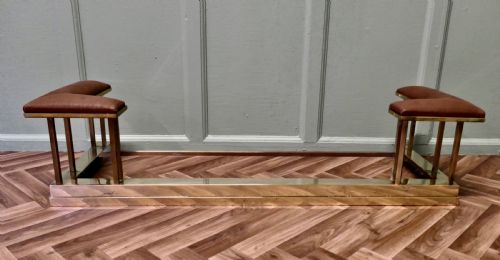


Fire Surround Seat
These fire surround seat pieces bring traditional fireside perching into the room, offering sturdy metal frames topped with comfortable leather.
Fire Surround Seat
A fire surround seat provides a fender base with integrated upholstered cushions, designed to sit directly in front of the hearth for warmth. Buyers searching for a fire surround seat will find sturdy metal and wooden frames dating from the nineteenth and twentieth centuries.
The most common examples on this page are club fenders, which combine heavy metal uprights with leather-covered seats flanking the fireplace opening. These pieces draw on Victorian, Edwardian, and Art Deco styles, ranging from simple wrought iron to substantial oak and brass designs.
Construction and materials
Makers built these frames using robust metals such as brass, steel, wrought iron, and cast iron, often combining them with hardwoods like oak and mahogany. These foundational materials ensured the frames could withstand heavy daily use close to open hearths.
Upholsterers finished the top rails with leather seats, sometimes incorporating adjustable mechanisms to fit varying hearth dimensions. Copper accents also appear on certain models, adding subtle metallic contrast to the dark wood and iron frameworks.
Fire Surround Seat Retail Price Guide 2026
Typical asking prices for fire surround seat among the pieces listed under this phrase on Sellingantiques today, from the lower quarter to the upper quarter. They describe what is for sale here now, not the wider market.
These seats ensured gentlemen could warm their shins without causing a diplomatic incident over who stood closest to the coals.
Judging quality and craftsmanship
Quality rests in the substance of the metal framework and the weight of the timber used in the base structure. Finer examples display meticulous joinery in woods like oak and mahogany alongside heavy-gauge brass or steel.
The finish of the leather top and the complexity of the metalwork further separate standard production from superior pieces. Adjustable mechanisms that operate smoothly indicate careful original engineering rather than basic assembly.
The Fire Surround Seat Glossary
- Club fender
- A low metal and upholstered frame designed to sit around a hearth and provide fireside seating. These structures originated in gentlemen's clubs before entering domestic country houses.
- Wrought iron
- Tough, malleable iron worked by hand into durable architectural and domestic hardware. This material resists heat and provides a rigid structural backbone.
- Arts and Crafts
- A design movement valuing honest construction, visible handcraftsmanship, and simple utility. Pieces from this tradition often highlight the natural grain of oak and the honest texture of forged metal.
- Art Deco
- A twentieth-century style defined by sleek geometric lines and modern industrial materials. This aesthetic introduced streamlined brass fittings and sharp profiles to fireside furniture.
Fire Surround Seat: Frequently Asked Questions
What is a fire surround seat used for?
A fire surround seat provides a practical perch close to the warmth of an open hearth. It allows people to sit directly in front of the fire while keeping the heat contained.
These pieces also act as traditional fenders, preventing stray embers from damaging surrounding carpets or flooring. Their dual purpose makes them a central feature of period living rooms.
How do I measure for a fire surround seat?
Measure the exact width and depth of your fireplace hearth to ensure the inner dimensions of the frame fit comfortably around the opening. Leave sufficient clearance on all sides so the metal structure rests securely on the floor without obstructing fire tools.
Check the height of the seat rails against your existing fireplace opening to maintain proper proportions. Some examples feature adjustable widths, offering flexibility for specific hearth sizes.
How do I care for the leather top?
Clean the leather seat gently using a dry or slightly damp cloth to remove household dust. Apply a specialist leather conditioner periodically to keep the hide supple and prevent cracking near the heat of the hearth.
Avoid placing these seats too close to active flames without adequate protection from sparks. Regular maintenance preserves both the colour and the structural integrity of the upholstery.
How do I identify a 19th-century piece?
Nineteenth-century examples typically feature heavier gauge brass, cast iron, or solid mahogany and oak construction. The hand-finished details and traditional joinery methods mark them out from later reproductions.
Examine the patination on the metal and the wear on the leather for signs of genuine age. The styles range from substantial Victorian frames to refined Arts and Crafts designs.