




Fine Emerald Jewellery
Fine emerald jewellery brings together the rich green of natural beryl and the sharp brilliance of diamond across rings, pendants and earrings.
Fine Emerald Jewellery
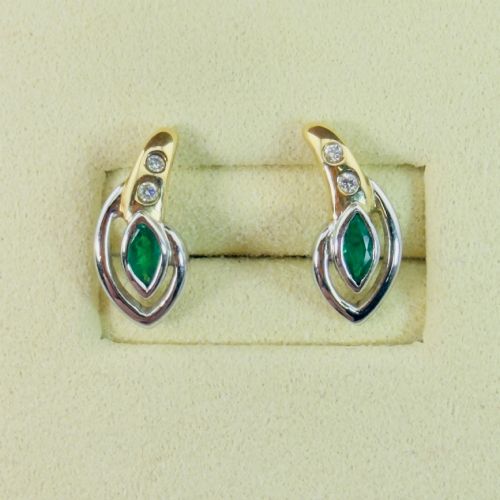
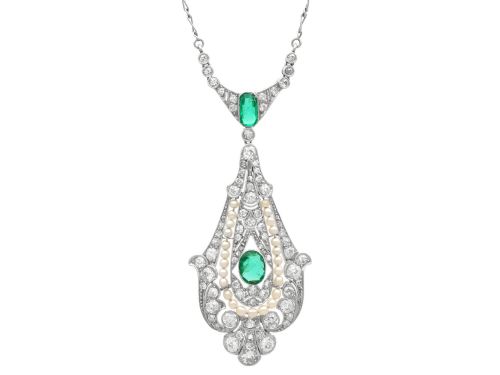
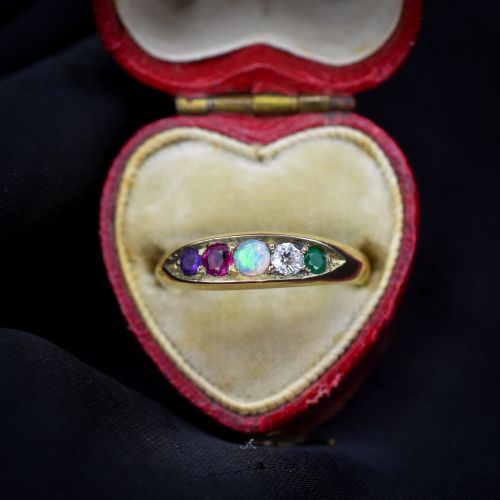
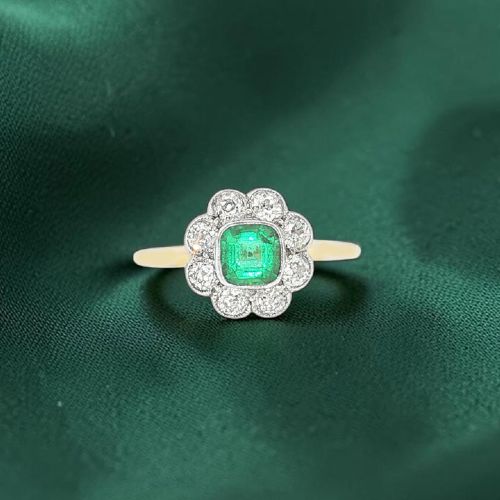
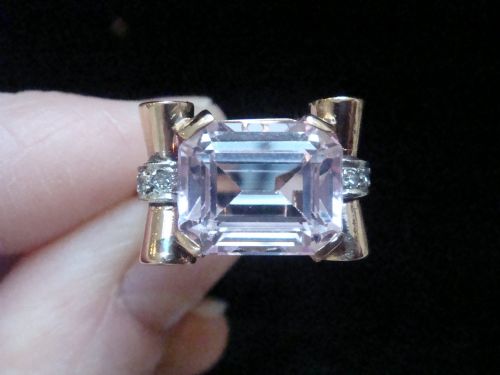
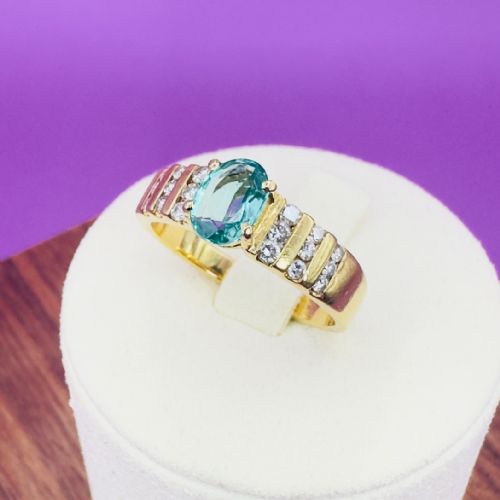
Fine emerald jewellery encompasses everything from delicate Edwardian cluster rings to bold mid-century cocktail pieces and geometric Art Deco bracelets. Buyers examining this category encounter a range of forms including drop earrings, multi-strand pearl necklaces with gem-set clasps, and substantial yellow or white gold dress rings.
The selection spans numerous decades, drawing heavily on pieces made during the 1920s, 1930s, 1950s and 1960s. Edwardian examples often feature intricate yellow gold settings, whilst later twentieth-century creations lean towards platinum and white gold mounts that showcase vibrant Colombian stones alongside brilliant-cut diamonds.
Materials and construction
Master jewellers combined emeralds and diamonds with platinum, 18ct yellow gold, 18ct white gold and 14ct gold to build durable yet refined settings. These precious metals were shaped into cluster rings, ballarina mountings, drop earrings and articulated bracelets designed to catch the light from every angle.
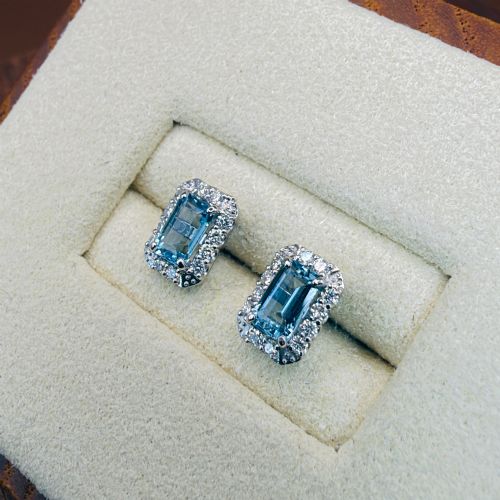
Stones are typically faceted in emerald, oval, princess or marquis cuts, secured with fine claws or flush channels alongside pavé-set diamond accents. The integration of pearls, coral or supplementary coloured gems in specific necklaces and brooches highlights the versatile lapidary techniques of the period.
Fine Emerald Jewellery Retail Price Guide 2026
Typical asking prices for fine emerald jewellery among the pieces listed under this phrase on Sellingantiques today, from the lower quarter to the upper quarter. They describe what is for sale here now, not the wider market.
A platinum duckling brooch waddles alongside the emerald rings, proving that mid-century jewellers had plenty of room for feathered humour.
Distinctions in craftsmanship and stone selection
The upper tier of fine emerald jewellery is defined by the provenance and clarity of the central gemstones, notably unheated or no-oil Colombian origins paired with high-colour diamonds. Superior examples display precise symmetry in their cluster or ballerina mountings, ensuring that every surrounding diamond enhances the vivid saturation of the central beryl.
Execution of the metalwork also marks the difference between standard production and master creation. Hand-finished platinum settings and fully articulated gold links demonstrate a level of structural integrity and detailed piercing that survives decades of wear while maintaining secure stone retention.
Gubelin·E. Wolfe & Co.·Asprey's
The Fine Emerald Jewellery Glossary
- Cluster ring
- A ring featuring a prominent central gemstone surrounded by a geometric arrangement of smaller stones, typically diamonds.
- Ballerina ring
- A mid-century cocktail ring style where tapered baguette diamonds radiate around a central stone to resemble a dancer's tutu.
- Columbian emerald
- A beryl gemstone originating from the renowned mines of Colombia, historically celebrated for an intense and luminous green hue.
- Art Deco
- A design style spanning the 1920s and 1930s characterised by clean geometric lines, stylised symmetry and sharp contrasts.
- Pavé
- A setting technique where small gemstones are closely set together with minimal visible metal, creating a continuous surface of sparkle.
Fine Emerald Jewellery: Frequently Asked Questions
How do I care for fine emerald jewellery?
Emeralds are a softer gemstone than diamonds and require gentle cleaning with warm soapy water rather than ultrasonic machines. Store each piece separately in a fabric-lined box to prevent scratching from harder metals and stones.
Avoid exposing vintage emerald settings to harsh chemicals, perfumes or sudden temperature changes, which can stress natural inclusions within the beryl.
What defines a cocktail ring?
A cocktail ring is a large, statement-making piece designed to be worn at evening social gatherings. These rings often feature oversized central stones like emeralds surrounded by dense clusters of diamonds.
Popularised during the mid-twentieth century, they prioritise bold visual impact and sculptural gold or platinum mountings over subtle everyday wear.
How can I tell an Edwardian ring from a mid-century piece?
Edwardian jewellery typically utilises yellow gold or intricate platinum-topped yellow gold settings with delicate millegrain detailing. The overall aesthetic leans towards lace-like lightness and graceful floral or ribbon motifs.
Mid-century pieces, by contrast, frequently employ heavy white gold or platinum mountings with bolder, more abstract geometric structures like ballerina styles and robust cluster designs.
Are all emeralds treated with oil?
Many emeralds undergo traditional clarity enhancement using colourless oil or resin to fill natural surface-reaching fissures. Untreated stones, particularly those with certified Colombian origin and no oil, are exceptionally scarce.
Gemological certificates often detail the presence or absence of these clarity treatments, which directly influence the character and evaluation of the piece.