




Faux Drawer Commode
A faux drawer commode masks its true function behind cabinetry designed to deceive the eye.
Faux Drawer Commode
A faux drawer commode presents as a standard chest of drawers or bedside cabinet while concealing a different internal purpose, such as a close stool or washstand. These pieces emerge in styles ranging from Georgian and Regency to Victorian country and Gustavian, spanning the eighteenth through the early twentieth centuries.
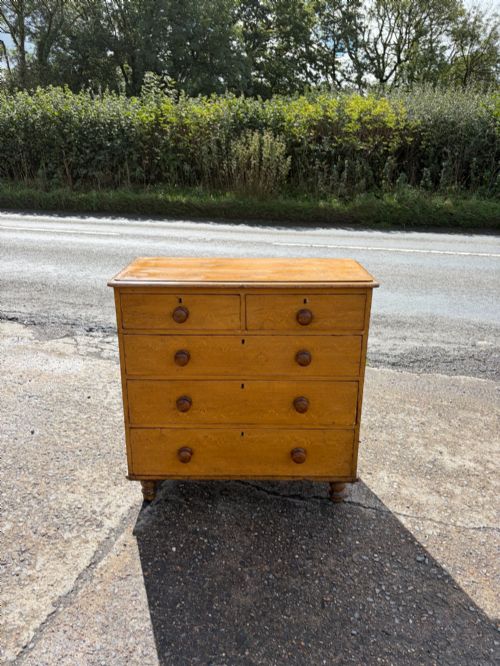
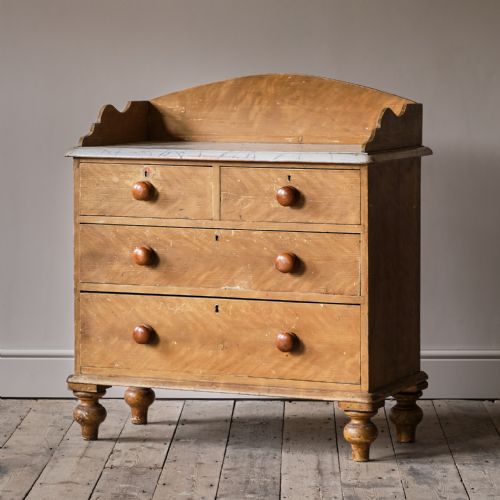
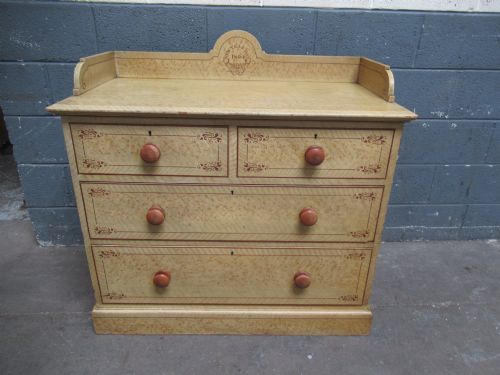
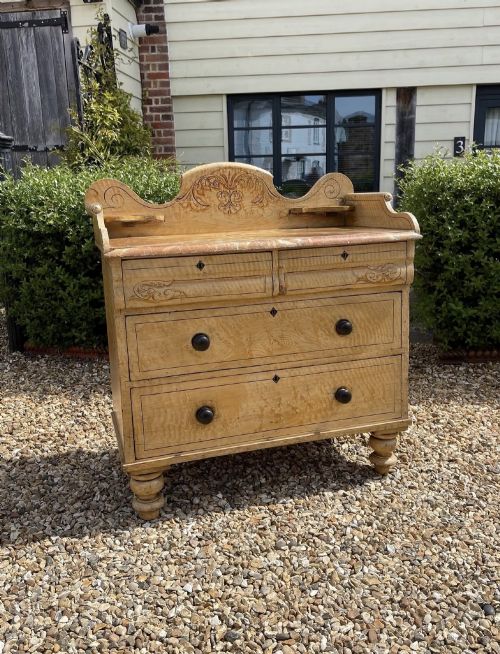
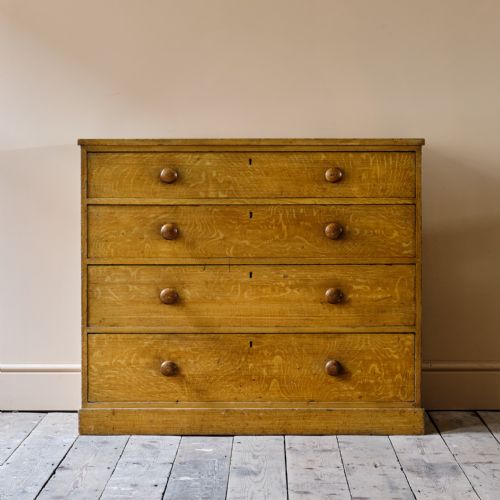
The version most commonly encountered on this page is the nineteenth-century pine chest of drawers or commode, frequently finished in original paint, scumble, or simulated wood effects. Alongside these, buyers find occasional walnut, mahogany, and elm examples, as well as French and Swedish imports featuring faux marble tops.
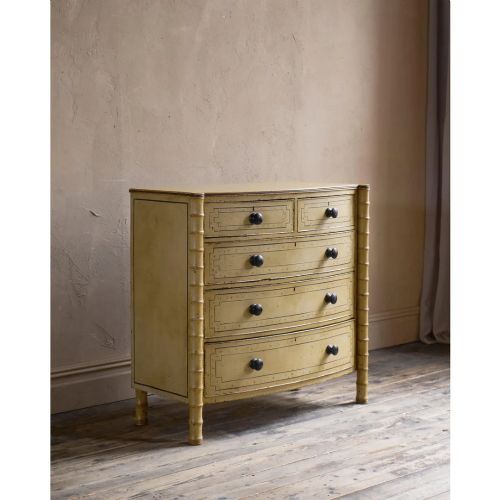
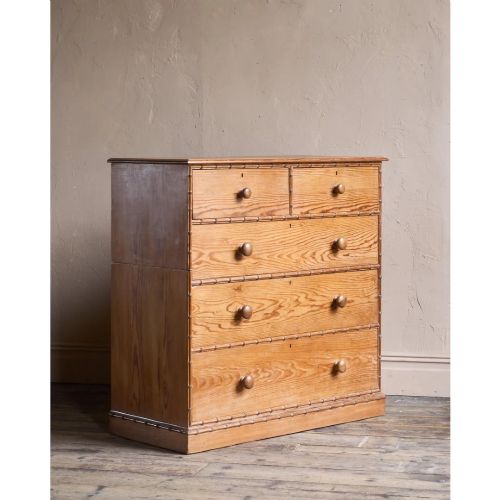
Forms vary from small bedside cabinets and washstands to full-scale chests of drawers and box close stools. The deception takes many visual routes, using painted panels or bamboo-turned mouldings to mimic multi-drawer fronts where single doors or deep compartments actually sit.
Materials and construction methods
Makers utilised pine, elm, walnut, mahogany, and oak as foundational woods, often applying surface treatments like hand paint, scumbling, or simulated graining to alter the visual texture. Brass hardware appears on drawer pulls and handles, while ceramic and marble components form durable tops on specific commode and washstand variants.
Cabinetmakers constructed carcasses using traditional joinery, adapting standard chest of drawers frameworks to house concealed interiors like close stools. Surface finishes required skilled brushwork to achieve the scumbled pine or faux bamboo effects seen across nineteenth-century English, French, and Scandinavian examples.
Faux Drawer Commode Retail Price Guide 2026
Typical asking prices for faux drawer commode among the pieces listed under this phrase on Sellingantiques today, from the lower quarter to the upper quarter. They describe what is for sale here now, not the wider market.
Some nineteenth-century makers went to extraordinary lengths, painting non-existent keyholes onto solid drawer fronts just to keep up appearances.
Judging quality and execution
The distinction between ordinary and superior pieces rests on the conviction of the decorative surface and the integrity of the original construction. Hand-painted scumbling or simulated wood graining that retains its depth and original pigment elevates a commode far above a later, flat respray.
Proportion and the cleverness of the deception dictate value in these deceptive cabinets. A well-executed faux drawer front aligns seamlessly with the internal compartment, whereas lesser examples reveal the true opening mechanism too readily through clumsy hardware or poor alignment.
Howard and Sons
The Faux Drawer Commode Glossary
- Scumble
- A decorative painting technique where a translucent glaze is dragged over a base coat to simulate wood grain or texture. It is widely seen on nineteenth-century pine chests.
- Close stool
- A piece of furniture enclosing a chamber pot, often disguised as a small chest of drawers or cabinet. Eighteenth and nineteenth-century examples frequently employ faux drawer fronts.
- Faux bamboo
- Wood turned and carved to imitate the jointed stalks of natural bamboo. This style was particularly popular in nineteenth-century French and English commodes.
- Gustavian
- The Swedish interpretation of French neoclassical style, characterised by lighter proportions and pale painted finishes. These pieces often feature muted, elegant colour palettes.
- Commode
- A low cabinet or chest of drawers, originating in France. In British usage, the term also encompasses bedside cabinets and indoor chamber-pot enclosures.
Faux Drawer Commode: Frequently Asked Questions
What is a faux drawer commode?
A faux drawer commode is a cabinet whose exterior is built to look like a set of drawers while housing a different internal function, such as a cupboard, washstand, or chamber pot enclosure.
Cabinetmakers used this design to maintain formal room aesthetics while concealing utilitarian objects during the eighteenth and nineteenth centuries.
How were these commodes used?
These pieces served practical household roles in bedrooms and dressing rooms, functioning as washstands, bedside cabinets, or disguised sanitary furniture.
Their deceptive fronts allowed owners to keep necessary domestic items out of sight without disrupting the decorative scheme of a polite interior.
How do I care for original painted surfaces?
Original paint and scumbled finishes require dry dusting with a soft cloth and protection from direct sunlight and moisture. Avoid modern chemical cleaners, which can strip historic surface layers.
Keeping the room climate stable prevents the underlying pine or hardwood from shrinking and cracking the aged paint above.
How can I tell a Georgian piece from a Victorian one?
Georgian examples often show finer proportions and timbers like elm or oak, occasionally built as box close stools with subtle architectural detailing. Victorian pieces on this market lean heavily towards painted softwood, scumbled finishes, and whimsical interpretations like faux bamboo.
Examining the internal construction and hardware provides further clues to the manufacturing decade.