
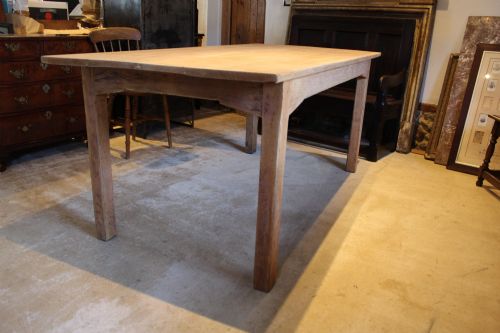
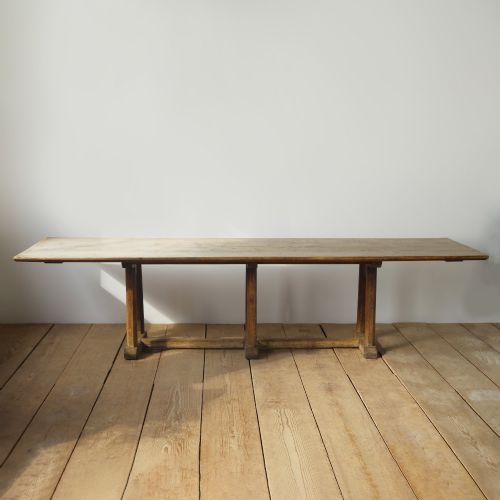
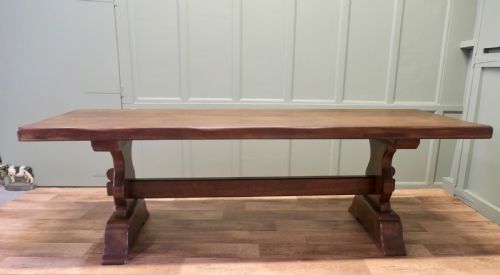
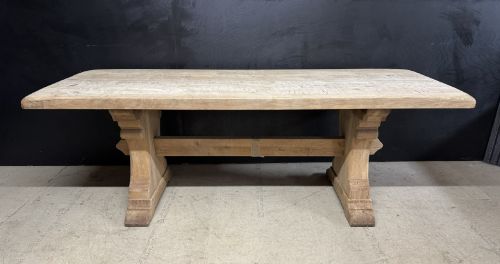
Farmhouse Oak Refectory Table
When choosing a farmhouse oak refectory table, you bring a heavy timber centrepiece of domestic social life into your dining room.
Farmhouse Oak Refectory Table
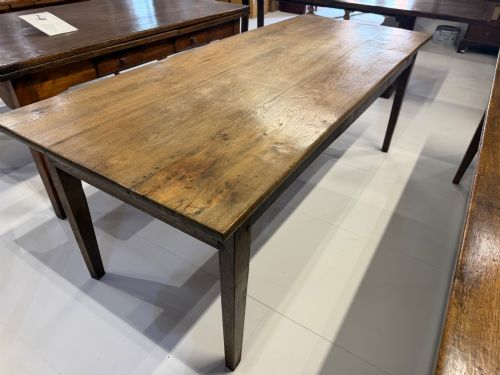
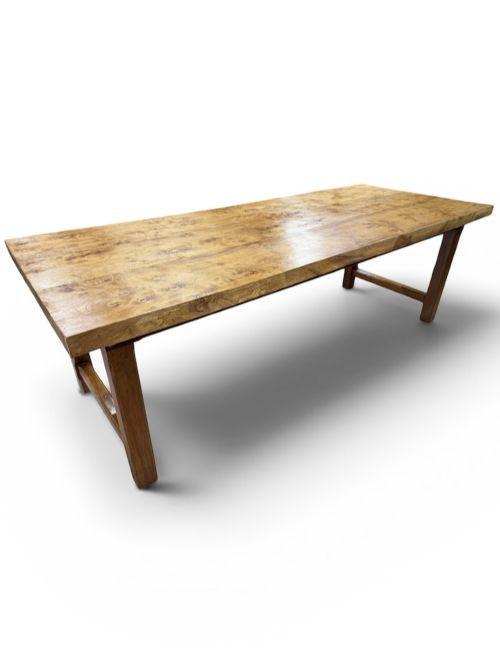
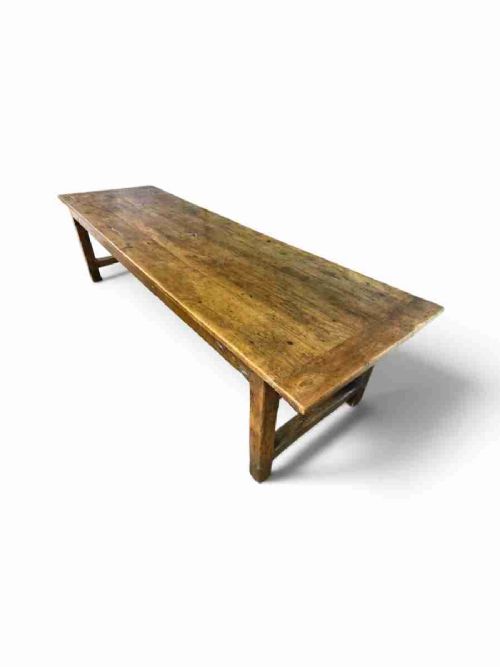
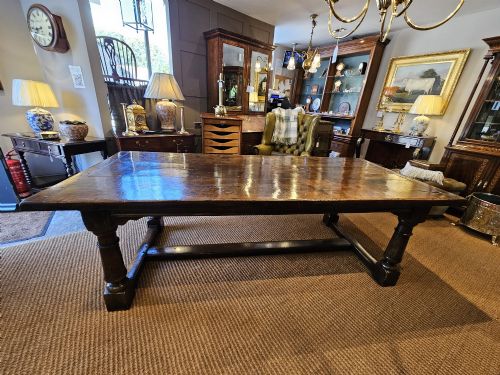
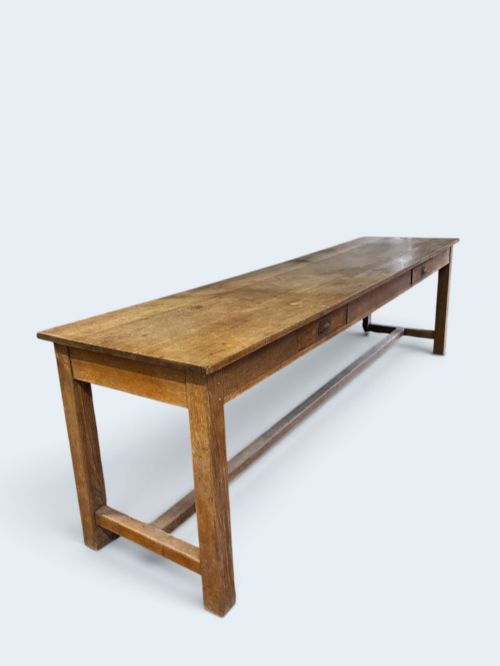
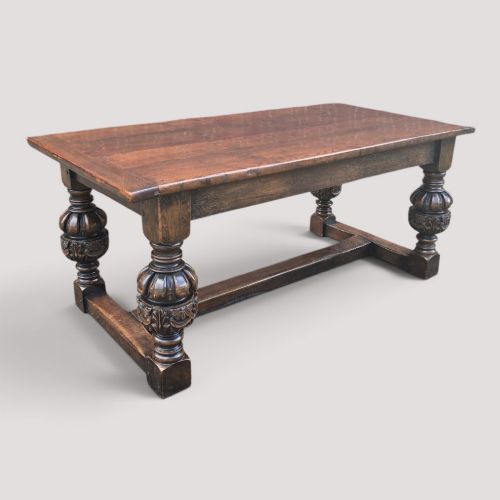
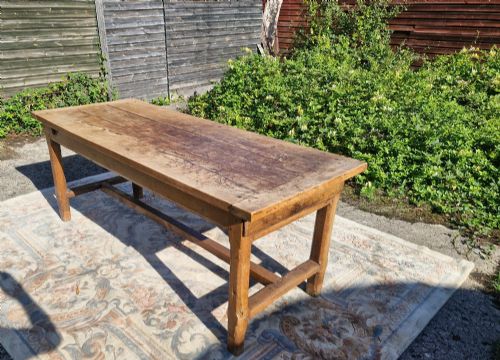
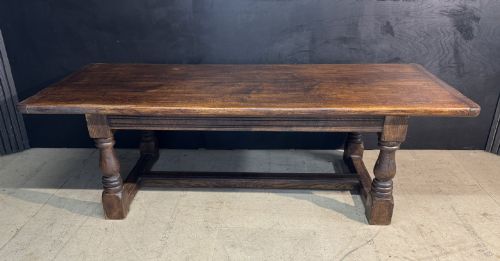
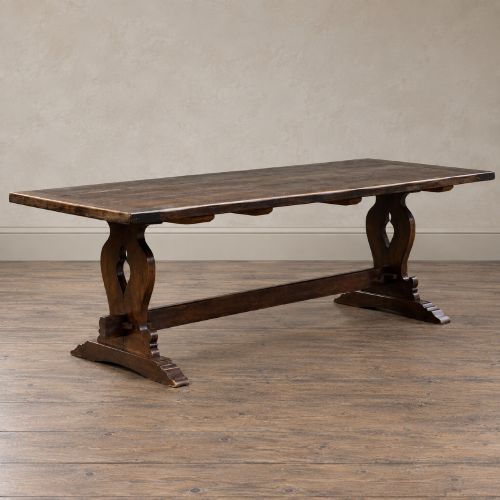
A farmhouse oak refectory table combines the long, narrow proportions of monastic dining boards with the utilitarian build of country kitchens. These pieces serve large households, accommodating seats for eight to twelve people across 18th century, Georgian, Victorian and early 20th century periods.
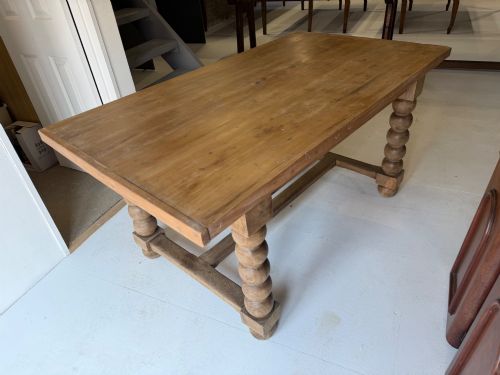
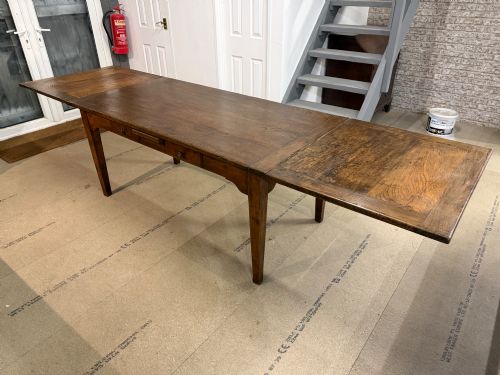
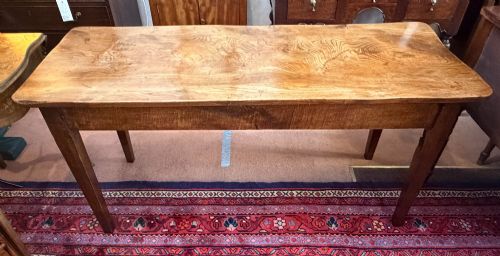
The selections here range from primitive French country scrub tops and 19th century English oak versions to substantial George III examples and Tudor Revival interpretations. Buyers encounter formats featuring double extensions, tapered legs, bobbin turnings and long single-plank surfaces.
Rooted in styles such as French provincial, rustic country and Victorian vernacular, these tables bridge formal dining architecture and everyday rural utility. They function as robust surfaces for daily dining, family gatherings and large kitchen spaces.
How They Were Made
Joiners built these tables primarily using solid oak, often supported by secondary timbers like beech, pine, elm or pitch pine for stretchers and underframes. Planks were hand-selected for width and thickness, occasionally utilising single wide boards across the top.
Construction relied on traditional mortise and tenon joinery secured with wooden pegs, creating rigid frames capable of withstanding heavy daily use. Surfaces received finishes ranging from natural wax and French polish to painted bases and bleached oak treatments.
Listings feature solid oak, pine, beech and pitch pine across 18th, 19th and early 20th century periods.
What Varies in Quality
Quality rests in the integrity of the timber selection and the honesty of the construction, where quarter-sawn oak boards display superior figure and resistance to warping. Tables retaining their original top-to-base proportions and untouched surface patination command greater regard from collectors.
The sophistication of the underframe and turning work separates standard utility boards from finer workshop pieces. Hand-carved friezes, robust stretchers and original extending mechanisms demonstrate superior craftsmanship compared to later secondary adaptions.
The Farmhouse Oak Refectory Table Glossary
- Refectory table
- A long, narrow dining table historically used in monastic dining halls. This form later translated into domestic country kitchens and large dining rooms.
- Scrub top
- A bare wooden table surface designed to be scrubbed clean with water and sand. This treatment leaves a pale, weathered texture.
- Stretcher
- A horizontal wooden brace connecting the legs of a table for structural stability. They often run low near the floor on country furniture.
- Monastic
- A heavy, austere style of furniture inspired by medieval monasteries. These pieces typically feature thick timber tops and simple, robust trestle or post bases.
- Quarter-sawn
- A method of cutting log sections radially to the growth rings. This technique produces stable timber marked by decorative medullary ray flecks.
Farmhouse Oak Refectory Table: Frequently Asked Questions
How do I seat ten people comfortably?
Look for lengths exceeding two metres and check the clearance between the underframe legs. Tables with recessed trestles or end-stretching offer extra foot room for added chairs.
Verify whether the piece includes an extending mechanism or drop-in leaves. Such formats expand your seating capacity during large gatherings without crowding the room.
Can I use daily cleaning products on antique oak?
Avoid modern chemical sprays and silicone polishes on old timber surfaces. Use a damp cloth followed by a dry buffing to clear away everyday dust.
Apply a traditional beeswax polish occasionally to nourish the dry wood. This preserves the historic patina built up over centuries of household use.
How do I distinguish 18th century examples from later revival pieces?
Examine the underside and joints for hand-cut pegging, tool marks and timber shrinkage patterns. Earlier 18th century pieces display irregular hand-planing and deep patination earned through long use.
Revival pieces from the Edwardian or Tudor Revival eras often show uniform machine milling and standardised joinery. Compare the timber density and fastener types against known period exemplars.
What is a bleached oak finish?
Bleached oak refers to timber treated to lighten its natural warm brown tone. This process achieves a pale, neutral colour suited to contemporary interiors.
Many French farmhouse examples feature this treatment naturally through sun exposure and washing, while others received gentle professional lightening.