

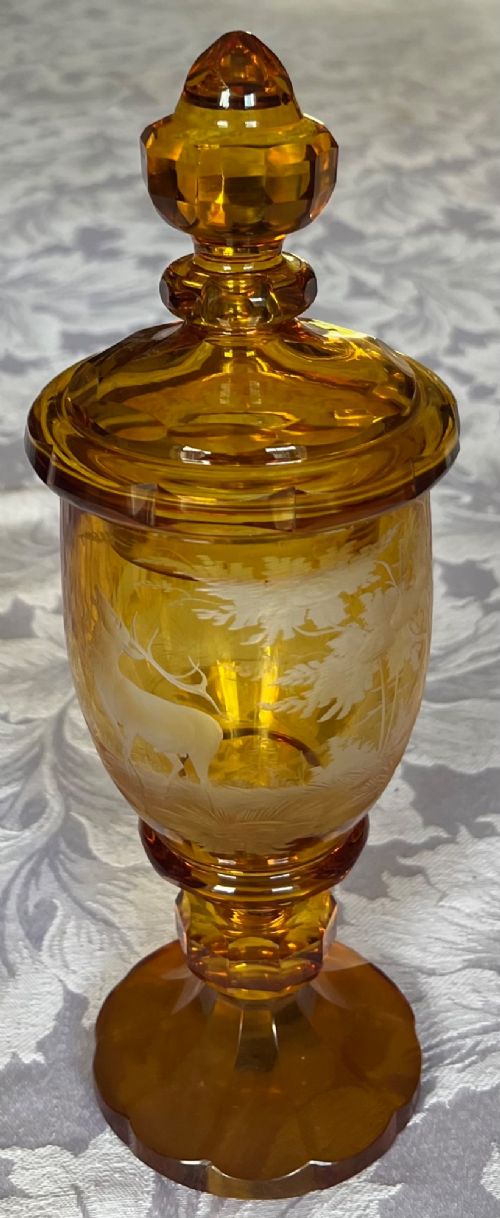





Facet Cut Goblet
A facet cut goblet brings sharp light through thick lead glass, offering the genuine weight of Georgian drinking vessels.
Facet Cut Goblet
A facet cut goblet places geometric ground facets directly along the stem or across the bowl, creating crisp planes that catch candlelight. These drinking vessels emerge most frequently from Georgian workshops, appearing alongside related wine glasses and commemorative items.
The selection ranges from eighteenth-century English drinking glasses with faceted stems to nineteenth-century Bohemian crystal pieces featuring engraving and gilding. Buyers encounter both single commemorative vessels and matched sets intended for formal dining.
Forms vary from sturdy wine glasses to taller presentation vases and covered vessels. Each piece demonstrates the heavy lead glass and clear metal characteristic of historical tablewares.
Materials and production methods
Maker operations relied heavily on lead glass and lead crystal, which provided the dense substance necessary for deep cutting. Artisans shaped the hot metal into stems and bowls before applying wheel-cut facets to the exterior surfaces.
Decoration often combined this geometric cutting with delicate wheel engraving, floral motifs, or symbolic imagery such as Jacobite emblems. Selected pieces received surface gilding to highlight the rims and engraved details.
Facet Cut Goblet Retail Price Guide 2026
Typical asking prices for facet cut goblet among the pieces listed under this phrase on Sellingantiques today, from the lower quarter to the upper quarter. They describe what is for sale here now, not the wider market.
Listings feature lead crystal, clear glass, and amber glass across Georgian, Victorian, and Edwardian periods.
Understanding quality differences
Excellence in a facet cut goblet rests upon the crispness of the ground planes and the relative clarity of the metal. Sharp, cleanly bounded edges between facets demonstrate superior wheel work by the glass cutter.
The proportion between the heavy faceted stem and the blown bowl determines the visual balance of the piece. Superior examples maintain a harmonious weight and clear ringing tone when struck gently.
James Giles·Moser
The Facet Cut Goblet Glossary
- Facet cut
- The process of grinding flat planes into the surface of glass using a stone wheel. This technique creates a series of polished geometric windows that refract light.
- Lead crystal
- A high-density glass containing lead oxide, which increases brilliance and softness for cutting. It provides the heavy feel expected in historical drinking vessels.
- Engraving
- A decorative technique using small wheels to cut designs directly into the glass surface. This method creates fine lines for heraldry, portraits, or floral scenes.
- Gilding
- The application of a gold layer to the glass surface, typically fired to adhere. It often accents the rim or frames engraved panels.
- Pontil mark
- The rough scar left on the base where the glassblower's iron was snapped off. Its presence or smoothing indicates the finishing method of the period.
Facet Cut Goblet: Frequently Asked Questions
What is a facet cut goblet?
A facet cut goblet is a historical drinking vessel featuring geometric flat planes ground into the stem or bowl. These cuts catch and refract light, distinguishing them from smooth-blown glassware.
Such vessels were produced primarily during the eighteenth and nineteenth centuries for formal dining and toasts.
How do I identify a Georgian goblet?
Georgian examples display heavy lead glass construction with hand-cut stems and polished pontil marks on the base. They often feature specific bowl forms and engraved motifs typical of the period.
Examining the crispness of the facet edges helps confirm the period of manufacture.
Can I use these glasses today?
These historical drinking vessels are delicate and benefit from careful hand washing rather than machine cleaning. Their historical nature makes them suitable for special occasions or careful display.
Thermal shock should be avoided by keeping them away from extreme temperature changes.
What is Jacobite engraving?
Jacobite engraving refers to symbolic political imagery, such as roses and specific mottoes, applied to eighteenth-century glassware. Supporters of the exiled Stuart dynasty used these glasses for secret toasts.
Such engraved pieces are particularly sought after by historical collectors.