






Facet Cut Glassware
Facet cut glassware brings brilliant refracted light and satisfying weight to the table, uniting historic craftsmanship with functional daily use.
Facet Cut Glassware
Facet cut glassware encompasses functional drinking vessels and serving pieces defined by their geometric cut surfaces, ranging from wine glasses and champagne flutes to heavy decanters and vases. These objects span periods from the eighteenth century through the Victorian era and into the Art Deco twentieth century.
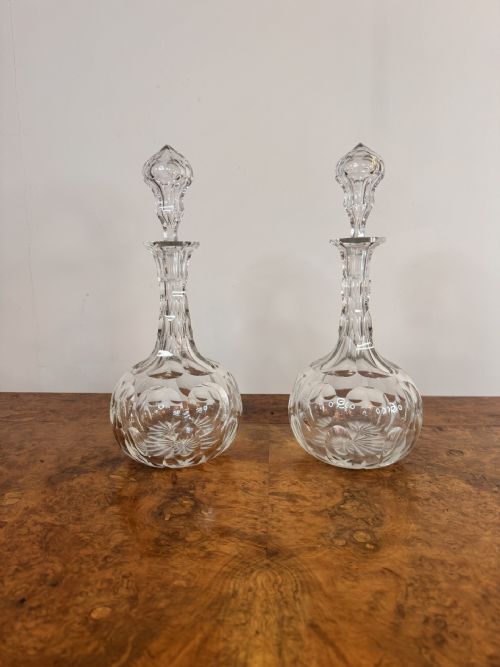
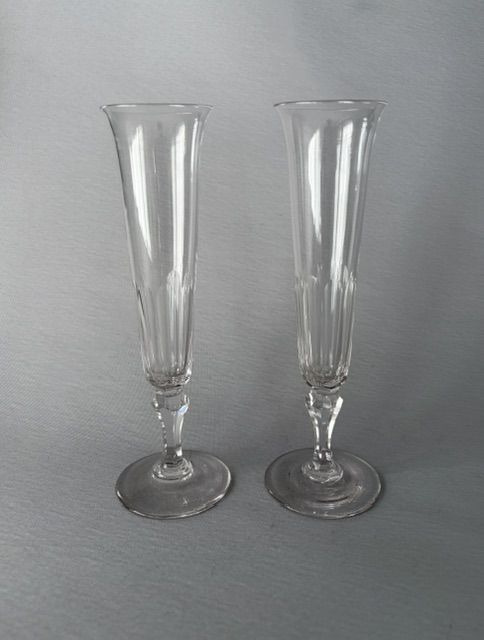
Buyers most frequently encounter Georgian and Victorian drinking vessels alongside Edwardian decanters on this page. Stemmed wine glasses with faceted stems sit alongside robust spirit decanters and Bohemian coloured pieces.
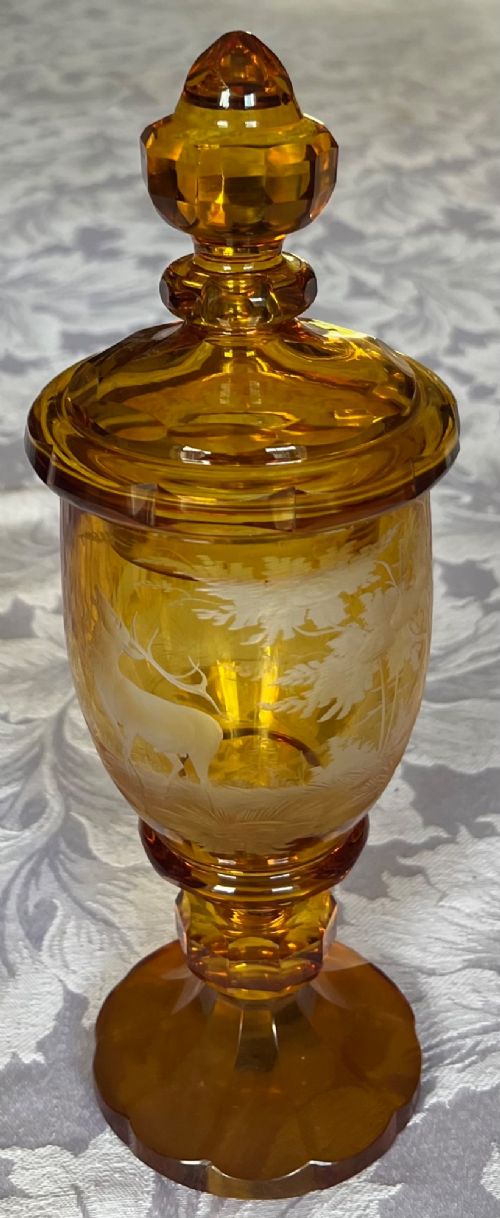
The assortment reaches across English, Irish, and continental European origins, displaying styles from Georgian refinement to Bohemian engraving and Art Deco Czech design.
Materials and Cutting Techniques
These pieces utilise lead crystal, lead glass, and clear glass shaped through blowing and moulded foundations before undergoing extensive hand cutting and polishing. The high lead content in crystal allows deep, sharp facets that refract light with exceptional clarity.
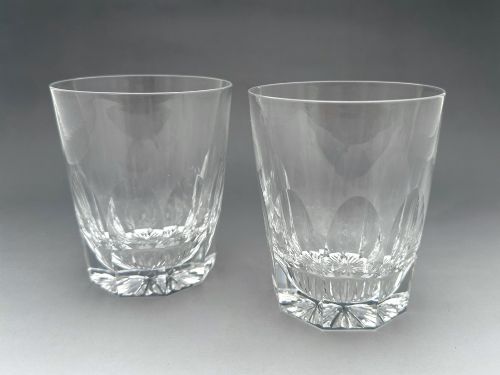
Surface decoration combines precise wheel-cutting of facets with supplementary engraving, etching, and occasional gilding. Makers apply these geometric planes to stems, bowls, and stoppers to catch the light from every angle.
Facet Cut Glassware Retail Price Guide 2026
Typical asking prices for facet cut glassware among the pieces listed under this phrase on Sellingantiques today, from the lower quarter to the upper quarter. They describe what is for sale here now, not the wider market.
A solitary royal coronation goblet stands ready to toast George V while neighbouring decanters hold your evening spirits.
Distinctions in Execution
Quality rests upon the crispness of the facet edges and the depth of the polish within the cut. Superior examples exhibit sharp, clean geometrical boundaries without rounding, alongside uniform wall thickness and balanced proportions.
The purity of the metal itself differentiates the work, with high-clarity lead crystal offering superior weight and brilliance compared to standard clear glass.
Charles Graffart for VSL·Moser
The Facet Cut Glassware Glossary
- Facet cut
- A surface formed by grinding flat planes into the glass body to create reflective angles. This technique is applied extensively to stems and decanter bodies.
- Lead crystal
- Glass containing a high proportion of lead oxide, increasing weight, brilliance, and softness for deep cutting. It forms the foundation of many fine historical vessels.
- Römer goblet
- A traditional large European drinking vessel, often featuring a ribbed or faceted stem and a wide conical foot. Bohemian examples frequently incorporate coloured overlays and detailed engraving.
- Decanter
- A stoppered vessel designed for holding and serving wine or spirits. Edwardian and Victorian iterations often display heavy geometric cutting on the body and matching stoppers.
- Jacobite engraving
- Historical decorative etching associated with eighteenth-century supporters of the exiled Stuarts, occasionally found on facet stemmed wine glasses.
Facet Cut Glassware: Frequently Asked Questions
How do I date antique facet cut glassware?
Dating relies on combining the silhouette of the object with the style of the facet cutting and the characteristics of the metal. Eighteenth-century drinking glasses typically feature narrow, hand-drawn stems with distinct facet planes, whereas Victorian and Edwardian pieces tend to show heavier, machine-polished cutting on thicker vessel walls.
Examining pontil marks on the base and consulting period forms helps narrow the decade of manufacture. Continental European pieces from Bohemia or Belgium often display specific regional engraving styles that anchor them to definite eras.
Can I use antique decanters for serving wine?
Antique glass decanters are suitable for serving wine and spirits provided they are handled with care and cleaned properly after use. The heavy lead crystal used in many Victorian and Edwardian examples makes them robust enough for regular dining service.
Hand washing in warm water without harsh abrasives preserves the clarity and protects the original stoppers. Avoid sudden temperature changes to protect the historic glass from thermal shock.
What is the difference between lead crystal and clear glass?
Lead crystal contains a significant percentage of lead oxide, which increases the density, refractive index, and overall weight of the material. This composition allows artisans to cut deeper, sharper facets that scatter light more brilliantly than standard clear glass.
Plain clear glass lacks this heavy lead content, resulting in a lighter feel and less intense light refraction. Historical pieces in both categories appear across different periods depending on the intended function.
How should I care for antique glass wine glasses?
Antique wine glasses and champagne flutes require gentle hand washing in lukewarm water with a mild detergent. Placing them in a modern dishwasher can etch the surface and damage the delicate faceted stems or historic engraving.
Storing them upright on a stable surface prevents chipping along the rim and the wide foot base. Drying with a lint-free cloth maintains the sparkle of the cut facets.