




Equestrian Sculpture Decor
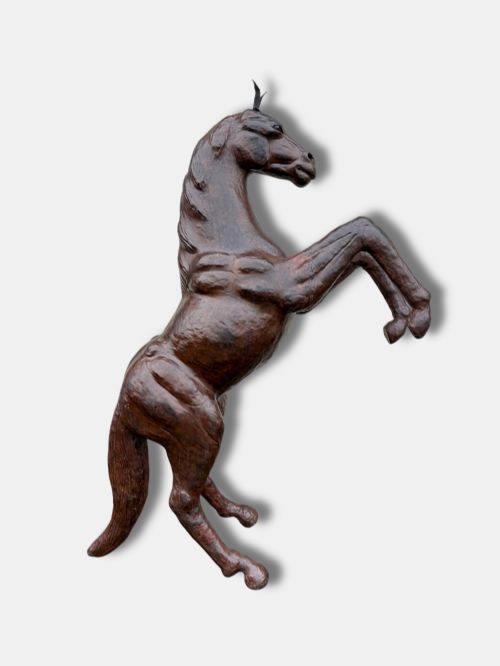
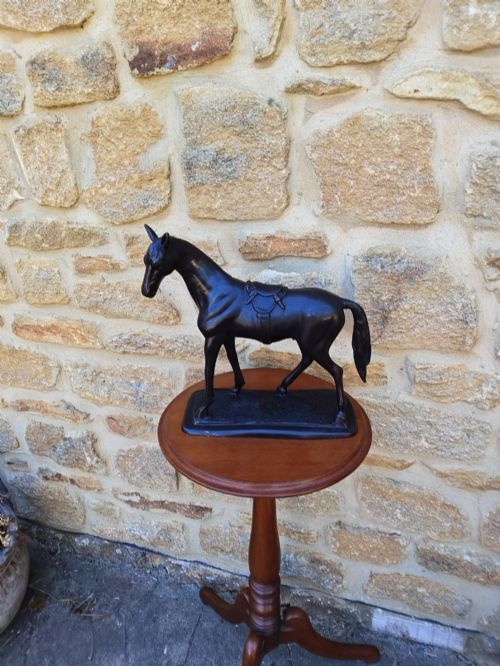
Equestrian sculpture decor brings the presence of the horse into a room through bronze, wood, and cast iron.
Equestrian Sculpture Decor
Equestrian sculpture decor encompasses figures and utilitarian objects that celebrate the horse, ranging from grand animalier bronzes to folk art wooden rocking horses and cast iron hitching posts. Pieces span the nineteenth century through the mid-twentieth century, drawing on Victorian, Arts and Crafts, Art Deco, and Neoclassical traditions.
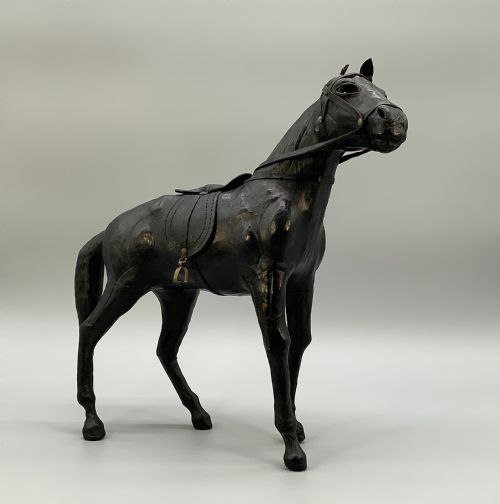
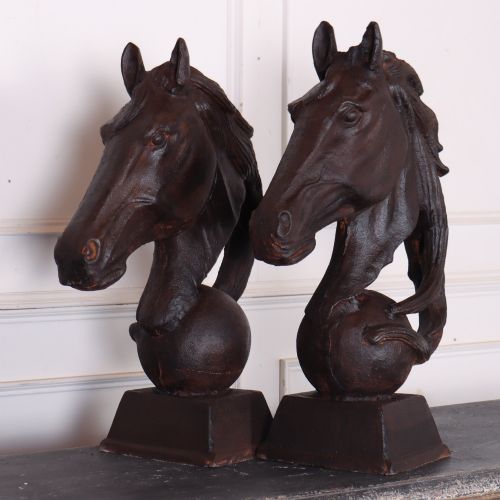
The most common forms on this page include desktop bronzes, large leather-bound display models, and architectural elements such as wall brackets and horse head hook mounts. English, French, and Spanish origins appear frequently alongside works after known makers and sculptors.
Buyers select these items to anchor a study, library, or hallway with traditional craftsmanship and sculptural weight. Whether through a naive painted wooden toy or a patinated metal relief, each piece reflects the utility and enduring aesthetic of the horse in interior spaces.
Materials and construction
Makers utilised cast bronze, iron, and sheet metal to capture muscular form and movement, often applying patination or paint to finish the surface. Bronze casts utilise traditional foundry methods, sometimes mounted on stone or wooden bases like olive wood.
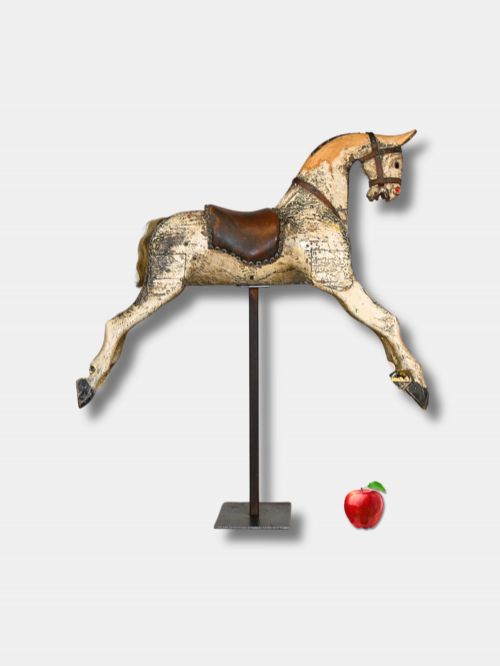
Wooden examples rely on carved solid timber, occasionally combined with genuine leather hides, horsehair, and brass hardware. Folk art pieces show hand-applied original paint finishes, while leather models require skilled taxidermy and saddlery techniques over internal armatures.
Equestrian Sculpture Decor Retail Price Guide 2026
Typical asking prices for equestrian sculpture decor among the pieces listed under this phrase on Sellingantiques today, from the lower quarter to the upper quarter. They describe what is for sale here now, not the wider market.
Object types range from large freestanding leather display models and rocking horses down to small bronze nostrils and crop hooks.
Factors determining quality
Quality rests upon the fidelity of anatomical modeling and the crispness of the casting or carving. Finer bronzes show sharp articulation in the muscles and head, whereas lesser examples lose detail in commercial replication or heavy overpainting.
Material integrity and surface preservation dictate the standing of a piece. Original patinas, untouched painted surfaces on folk art wood, and intact leather stitching hold more aesthetic weight than heavily restored or replaced elements.
G J Lines·Pierre Lenordez·Charles Crozatier·Liberty of London
The Equestrian Sculpture Decor Glossary
- Animalier
- A nineteenth-century artistic movement dedicated to the realistic portrayal of animals, particularly horses and big cats. Animalier sculptors focused on dynamic movement and accurate anatomy.
- Patina
- The surface sheen and coloration developed through age and chemical treatment on metal, wood, or leather. A desirable patina shows natural oxidation and handling wear.
- Neoclassical
- A style drawing inspiration from classical antiquity, often visible in balanced compositions and heroic equine postures. This aesthetic governed many academic bronzes of the nineteenth century.
- Cast iron
- An alloy poured into moulds to create heavy, durable architectural items such as hitching posts and wall brackets. It provides robust structural support and crisp relief detail.
Equestrian Sculpture Decor: Frequently Asked Questions
What materials are common in equestrian sculpture decor?
The evidence shows a strong reliance on bronze, cast iron, carved wood, and leather. Many pieces also incorporate horsehair, brass, paint, and sheet metal.
These materials appear across distinct periods, from nineteenth-century neoclassical bronzes to twentieth-century arts and crafts leather models and folk art wooden items.
How do I identify a folk art horse sculpture?
Folk art pieces typically feature hand-carved wood, naive proportions, and original painted surfaces. Items like rocking horses or pull-along toys display traditional craftsmanship distinct from foundry bronzes.
Makers often utilised local timber and simple iron fixings, resulting in characterful objects with visible tool marks and historic wear.
Where should I place a heavy cast iron horse bracket?
Cast iron horse heads and wall brackets function well as structural shelf supports or decorative hooks in hallways and studies. Their substantial weight requires secure mounting into wall studs or masonry.
These items bridge utility and decor, originating from nineteenth and early twentieth-century architectural hardware.
How do bronze horse sculptures differ in style?
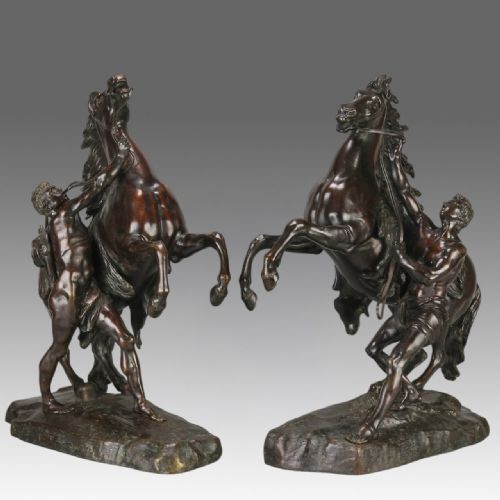
Bronzes span classical animalier works after sculptors like Coustou and Remington, alongside French neoclassical figures and signed reliefs. The style dictates the posture, from rearing Marly horses to bucking broncos.
Details such as olive wood bases and rich patinas help distinguish nineteenth-century salon pieces from later twentieth-century interpretations.