



Engraved Napkin Rings
These engraved napkin rings bring tactile weight to a dining table, offering the refined presence of sterling silver and silver plate from past centuries.
Engraved Napkin Rings
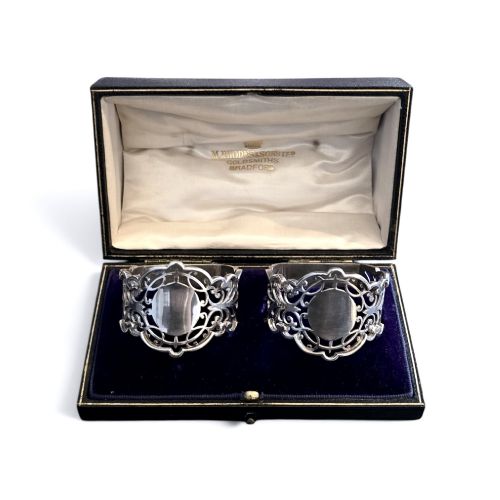
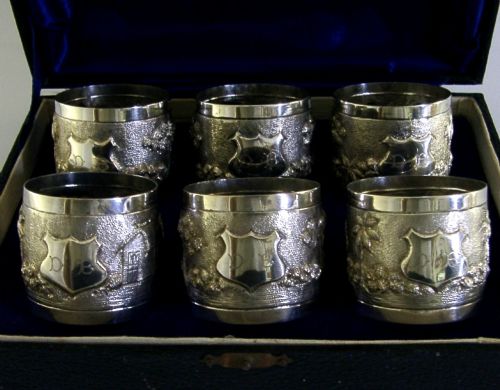
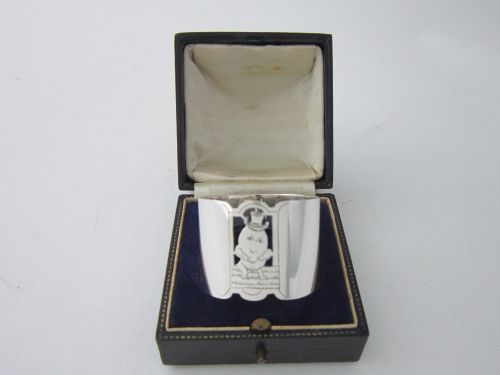
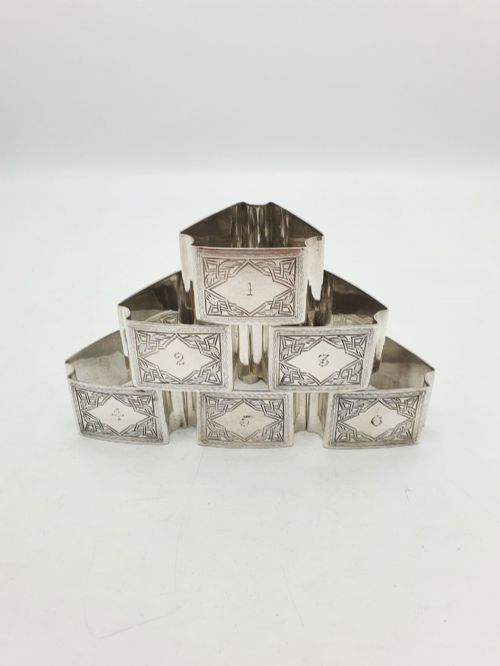
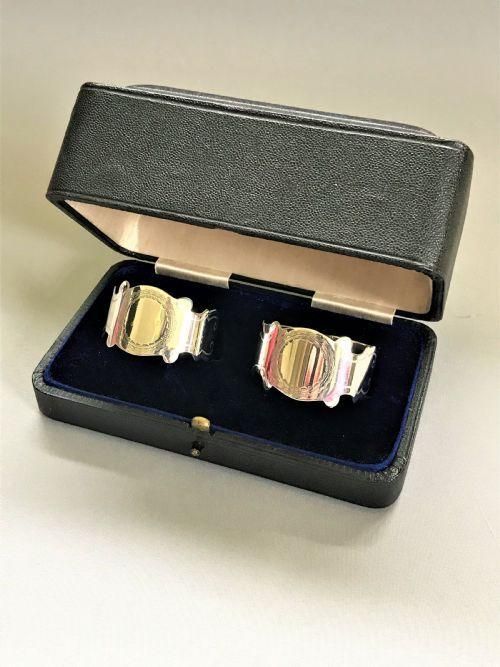
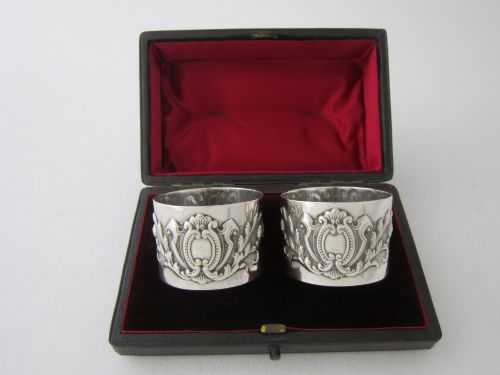
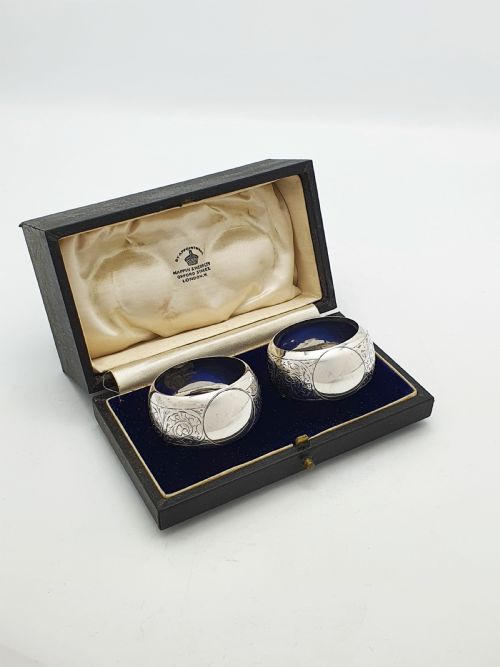
When you search for engraved napkin rings, you encounter practical table accessories designed to mark individual places at dinner parties, appearing frequently in Victorian, Edwardian, and George V styles. The pieces range from single items to matched sets of six, sometimes housed in fitted boxes lined with velvet, silk, or leatherette.
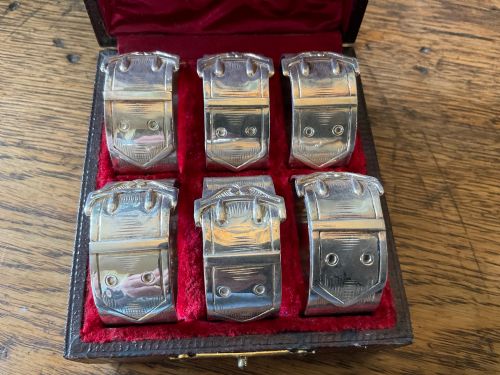
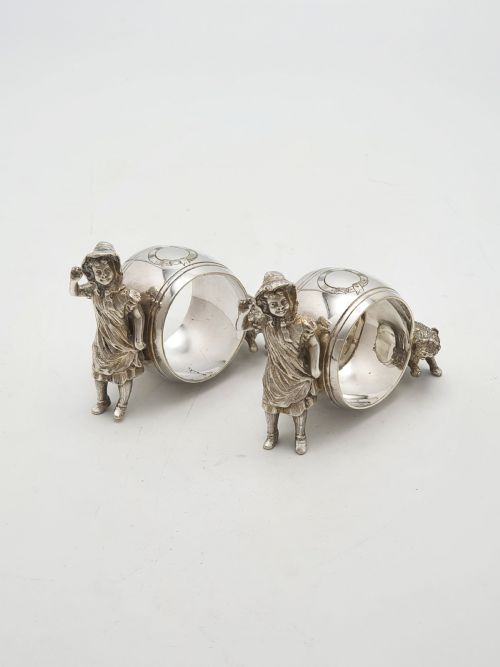
The forms span simple circular bands to novelty designs modelled as belt buckles or featuring figural elements, alongside occasional related items like christening sets. Most examples originate from the late nineteenth century through to the mid-twentieth century, capturing the domestic habits of those eras.
Materials and construction
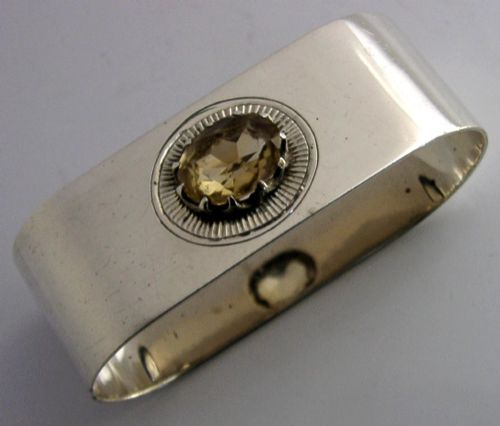
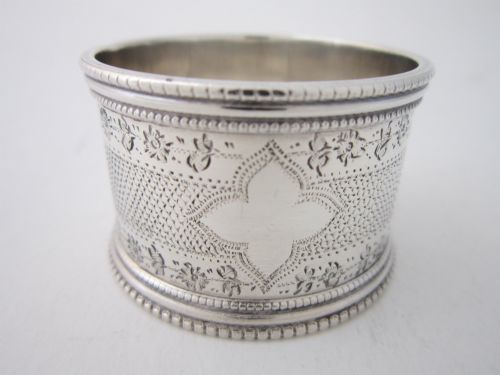
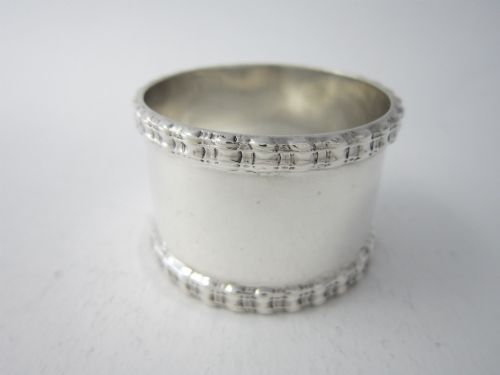
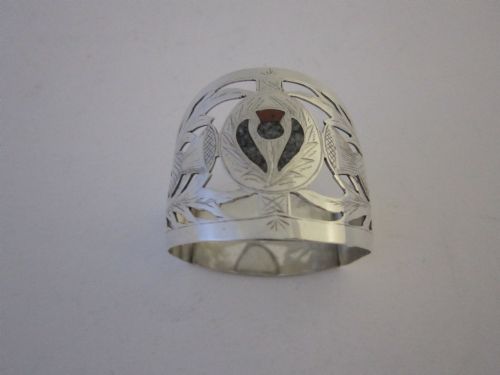
The construction primarily relies on sterling silver and silver plate, shaped into cylindrical bands that provide a smooth surface for hand-engraved patterns. Gemstones such as citrine and agate occasionally appear as decorative insets on specific pieces.
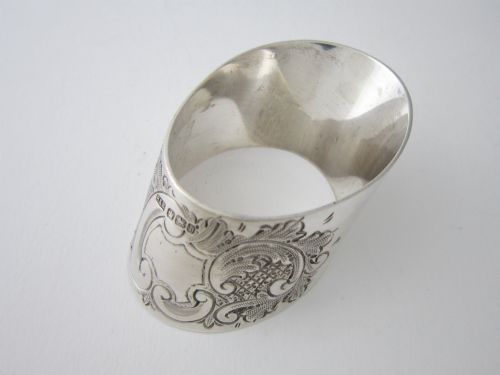
Presentation cases utilise materials like leatherette, velvet, and silk to protect the metalwork. Hallmarks stamped into the silver record the assay office, year of manufacture, and maker.
Engraved Napkin Rings Retail Price Guide 2026
Typical asking prices for engraved napkin rings among the pieces listed under this phrase on Sellingantiques today, from the lower quarter to the upper quarter. They describe what is for sale here now, not the wider market.
Several Victorian napkin rings are cleverly modelled to look entirely like miniature belt buckles, ready to cinch your table linen.
Distinctions in quality
The division between standard and superior pieces rests on the weight of the metal and the crispness of the hand-engraving. Heavier gauge silver provides a substantial feel in the hand, while finer engraving maintains sharp detail without wearing thin.
Complete matched sets housed in their original fitted presentation cases command greater interest than assembled groups or loose single pieces. The presence of clear hallmarks and distinct stylistic motifs, such as Arts and Crafts or aesthetic movement designs, elevates the character of an item.
Martin Hall & Co·Mappin & Webb·Henry Wilkinson
The Engraved Napkin Rings Glossary
- Sterling silver
- A silver alloy containing 92.5 percent pure silver by mass, providing the durable metal base for the majority of these napkin rings.
- Silver plate
- A layer of silver applied to a base metal core, offering the appearance of solid silver at a different production tier.
- Hallmark
- An official stamp applied by an assay office to indicate the purity of the metal, the maker, and the year of production.
- Christening set
- A matched group of items, often including a napkin ring, presented as a traditional gift for the birth or baptism of a child.
- Aesthetic design
- A stylistic approach focusing on visual beauty rather than narrative meaning, seen on select pieces from the 1930s.
Engraved Napkin Rings: Frequently Asked Questions
What periods do these napkin rings come from?
The available pieces originate predominantly from the Victorian and Edwardian eras, extending through the George V period into the 1930s and mid-century.
Production dates span from the late nineteenth century up to 1959, encompassing styles such as Art Deco and Arts and Crafts.
Are they sold as single pieces or sets?
You find both individual napkin rings and coordinated groups, with sets typically numbering two or six pieces.
Many of these sets arrive in their original velvet-lined or silk-lined presentation cases.
What materials are used in their construction?
The primary materials are sterling silver and silver plate, occasionally enhanced with gemstones like citrine and agate.
Storage boxes incorporate exterior leatherette alongside interior linings of silk and velvet.