




English Victorian Brass Casket
These English Victorian brass caskets bring solid nineteenth-century craftsmanship and warm metallic lustre straight to a modern desk or dressing table.
English Victorian Brass Casket
When you search for an english victorian brass casket, you enter a field of nineteenth-century decorative containers ranging from desktop letter cases to travelling vanity boxes. The examples you encounter on this page span the Victorian era, particularly the middle and late decades of the nineteenth century.
Forms include jewellery boxes, stationery boxes, card and games boxes, and multi-piece desk sets. Many pieces combine brass mounts with wood carcasses such as coromandel and burr walnut, while others feature porcelain plaques, glass, or leather.
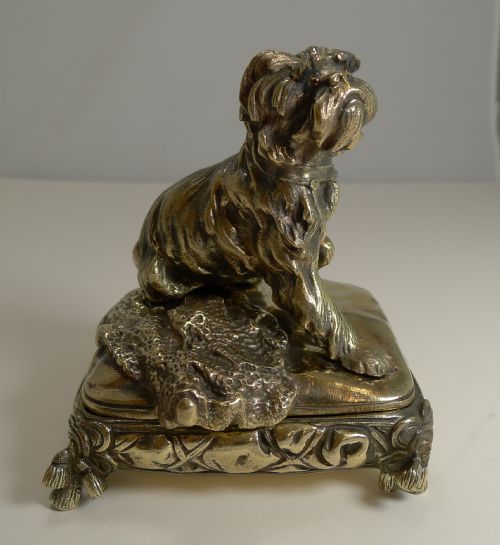
The aesthetic movement and distinct Victorian tastes influence these objects, which often integrate brass with semi-precious stones like agate or incorporate figural bronze elements like dogs. Each piece serves a domestic function rooted in nineteenth-century study and bedroom organisation.
Materials and Construction
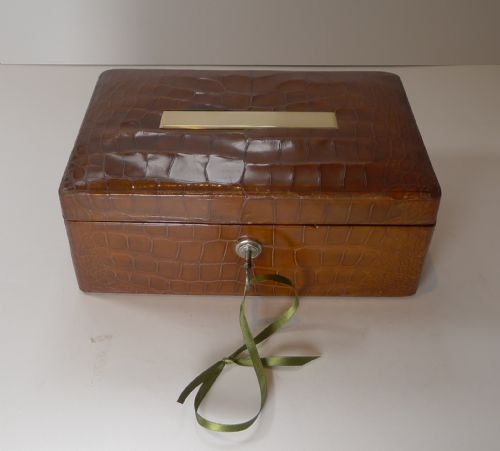
The construction of these caskets relies upon sturdy wood foundations of coromandel or burr walnut encased or mounted in heavy brass and ormolu. Artisans also utilised exotic skins such as crocodile and alligator over rigid carcasses.
Decorative surfaces often incorporate hand-painted porcelain plaques, inlaid brass strapwork, and polished agate cabochons secured in metal settings. Interior compartments typically feature velvet, silk, and leather linings tailored for letters, jewellery, or writing implements.
English Victorian Brass Casket Retail Price Guide 2026
Typical asking prices for english victorian brass casket among the pieces listed under this phrase on Sellingantiques today, from the lower quarter to the upper quarter. They describe what is for sale here now, not the wider market.
A cast bronze dog stands guard over one Victorian jewellery box, keeping watch across the centuries.
Distinguishing Quality
Quality reveals itself in the precision of the brass mounts, the weight of the bronze or brass castings, and the complexity of the wood grain selected for the body. Pieces with integrated hand-painted porcelain or inset agate cabochons demand higher skill than plain metal containers.
The integration of maker details, such as specific cabinetmaker signatures on the lockplates or wood, elevates a piece. Superior examples maintain the integrity of their fitted interiors, original hinges, and working brass locks without replacement elements.
Trussell Brighton
The English Victorian Brass Casket Glossary
- Coromandel
- A dense, heavily figured exotic timber from Southeast Asia utilised for luxury nineteenth-century boxes. Its rich brown colour and dark striping make it highly desirable for high-end Victorian furniture and caskets.
- Ormolu
- Gilded bronze applied as mounts and decorative highlights on nineteenth-century boxes and desk sets. The technique involves applying a mercury-gold amalgam to bronze before heating.
- Cabochon
- A gemstone or mineral, such as agate, polished smooth rather than faceted into cuts. These rounded stones frequently appear inset into nineteenth-century brass mounts.
- Stationery Box
- A tabletop desk accessory designed to hold writing paper and envelopes in upright compartments. Victorian examples often feature sloping lids and matching brass handles.
English Victorian Brass Casket: Frequently Asked Questions
What were brass caskets used for?
These caskets served various domestic storage purposes across nineteenth-century households. Owners kept correspondence, personal jewellery, or playing cards inside them.
Desk sets and stationery boxes held writing equipment for correspondence, while vanity cases transported personal grooming items during travel.
How do I date a Victorian casket?
Dating relies on stylistic markers, material combinations, and construction techniques associated with specific decades of the nineteenth century. Aesthetic movement influences and specific brass mount patterns help narrow the creation period.
Makers' marks on locks or hinges occasionally provide specific workshop attributions and production years.
Are these boxes made entirely of brass?
Most pieces combine a solid wood carcass, such as coromandel or burr walnut, with heavy brass mounts, straps, or hinges. Some items feature brass or bronze as the primary structural shell.
Other decorative elements frequently include porcelain plaques, agate cabochons, and leather or skin coverings.
How do I care for coromandel wood?
Coromandel requires stable indoor humidity away from direct sunlight to prevent the timber and veneers from drying out. Gentle dusting with a dry, soft cloth preserves the polished surface.
Avoid liquid cleaners and harsh polishes that can damage the historic varnish and the surrounding brass mounts.