




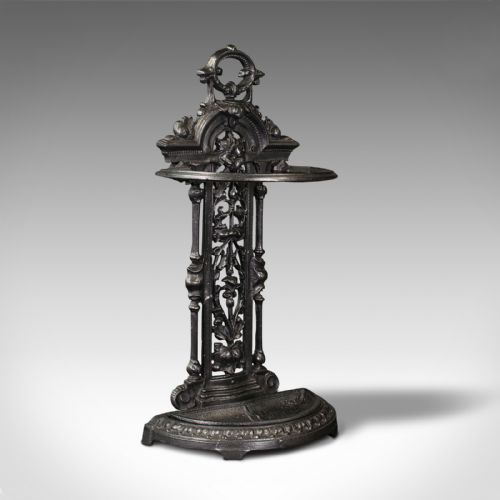


English Umbrella Rack
An English umbrella rack organises the hallway with durable metals and rich timbers designed to hold walking sticks and wet canes.
English Umbrella Rack
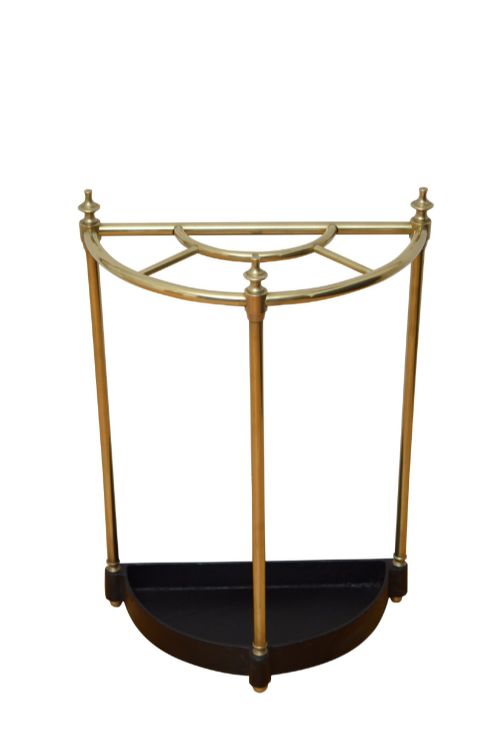
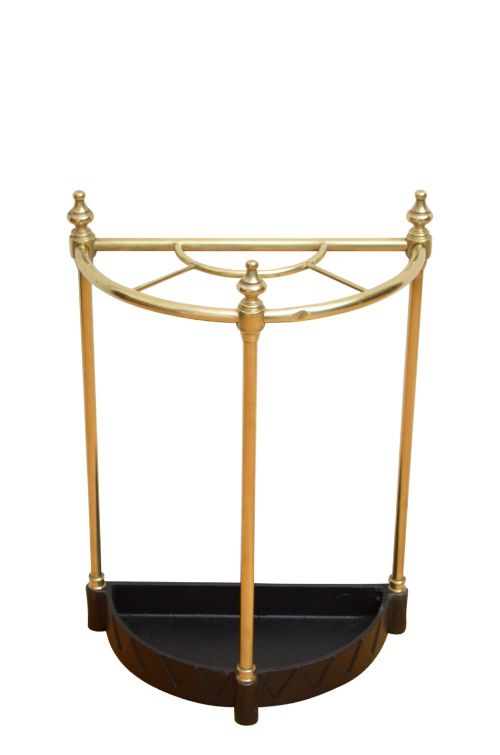
An English umbrella rack serves as a practical entryway fixture, combining umbrella stands, stick stands, and combined coat stands for the reception hallway. These pieces range from compact demi-lune designs to large country house and portico hall racks with multiple divisions.
Victorian examples dominate the selection, spanning periods from the mid-nineteenth century into the Edwardian era and the nineteen-twenties. Buyers frequently encounter cast iron and brass frames alongside timber constructions in oak, walnut, and mahogany.
Stylistic influences vary significantly across the period, taking in Gothic Revival, Arts and Crafts, Art Nouveau, and Jacobean tastes. Some metal stands follow the aesthetic of Coalbrookdale, while others lean towards a Liberty-esque aesthetic.
Materials and Construction
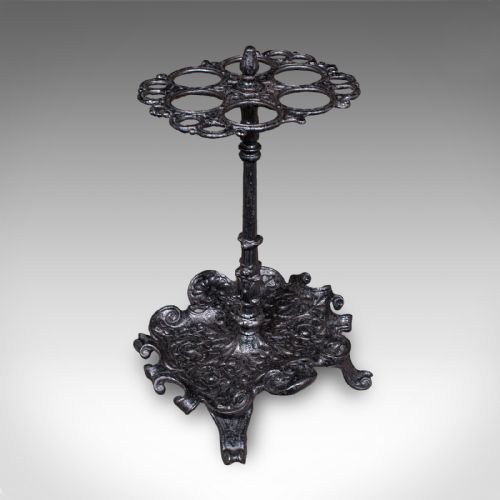
Metal umbrella racks utilise cast iron and brass, often fashioned into intricate stick loops, drip trays, and ornate openwork frames. Coopered techniques appear in wooden barrels made from oak with metal banding, while other wooden racks employ solid walnut and mahogany.
Makers integrated functional elements such as dog tooth trays and multi-division umbrella loops to catch moisture from wet items. Combinations of timber and metal appear frequently, pairing turned wooden posts or panels with brass rails and cast iron bases.
English Umbrella Rack Retail Price Guide 2026
Typical asking prices for english umbrella rack among the pieces listed under this phrase on Sellingantiques today, from the lower quarter to the upper quarter. They describe what is for sale here now, not the wider market.
Many a Victorian hallway relied on a trusty dog tooth tray to keep muddy puddle water off the parquet.
Judging Quality
Quality rests upon the weight and complexity of the casting in metal stands, or the selection of figured timber in oak, walnut, and mahogany pieces. Finer examples display crisper detailing in decorative motifs, superior structural rigidity, and well-integrated original drip trays.
The scale of the piece dictates its presence, with larger country house and portico hall racks offering substantial division counts compared to smaller demi-lune or single-loop umbrella stands. Originality of components, including brass rails and iron loops, separates standard utilitarian examples from more decorative pieces.
The English Umbrella Rack Glossary
- Demi-lune
- A half-moon shape common in wall-hugging brass and iron stick stands designed to save hallway space.
- Coopered
- Constructed from staves of wood bound together with metal hoops, typical of barrel-form stick stands.
- Stick loop
- A metal divider or hoop that keeps walking sticks and umbrellas upright within the stand.
- Portico coat stand
- A tall hallway piece combining coat hooks with integrated umbrella racks.
- Dog tooth tray
- A base tray featuring a serrated or zig-zag decorative border to catch water drips.
English Umbrella Rack: Frequently Asked Questions
How were these stands used?
These stands functioned as practical entryway furniture where residents and guests placed walking sticks, canes, and wet umbrellas upon entering a home. The integrated metal loops and dividers kept items upright and separated.
Lower trays or bases caught rainwater from wet canopies to protect hallway flooring. Larger examples combined this storage with coat hooks and mirrors as comprehensive hall furniture.
How do I live with one?
Living with an umbrella rack involves placing it in a hallway or boot room where its materials can handle damp items. Metal stands require occasional dusting, while wooden variants benefit from standard timber maintenance.
Ensure any metal drip tray is checked and emptied periodically to protect the base of the stand and surrounding floors. Their substantial weight makes them stable enough for daily household use.
How do I tell periods apart?
Differentiating periods relies on observing stylistic details, materials, and construction techniques characteristic of nineteenth and early twentieth-century design. Victorian pieces often display Gothic Revival or ornate cast iron work, whilst Edwardian and later examples lean towards lighter brass forms or Arts and Crafts simplicity.
Timber choices also shift, with heavier walnut and mahogany joined later by lighter oak and distinctive Art Nouveau or Liberty-esque stylistic touches.