

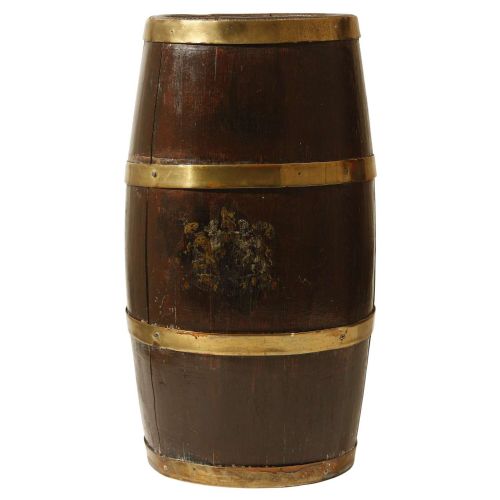


English Umbrella Holder
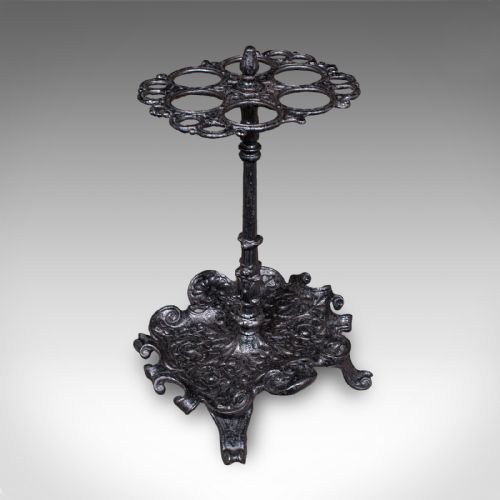
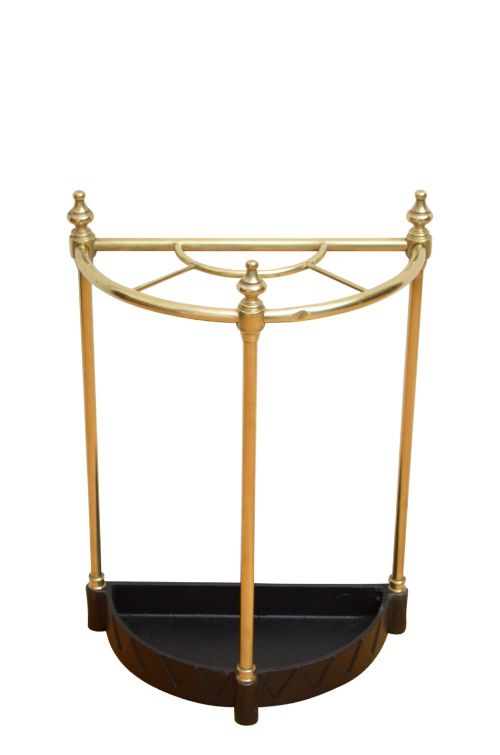
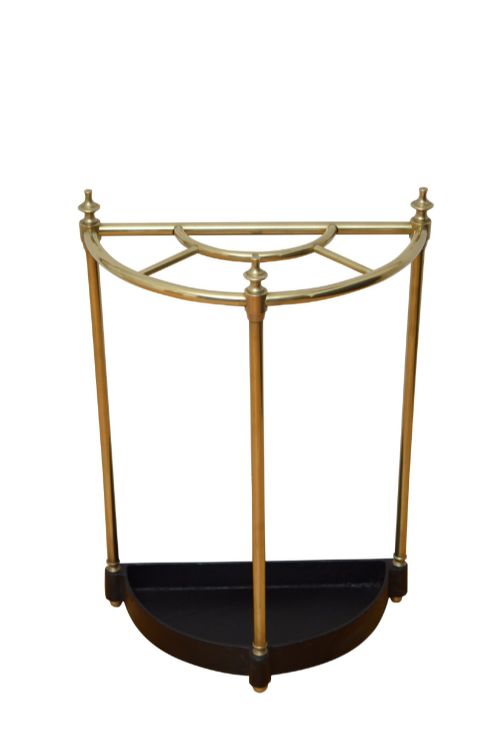
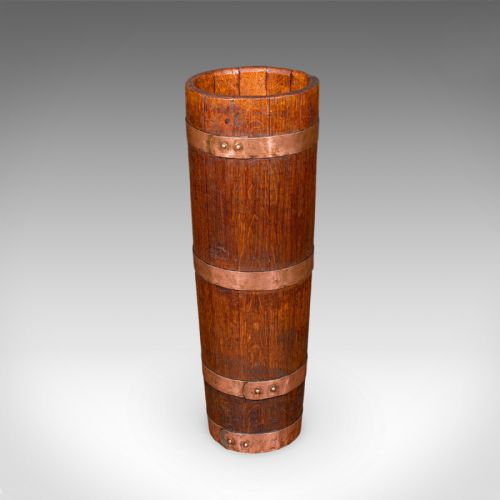
An English umbrella holder commands the reception hallway, offering a sturdy brass-bound oak barrel or a cast-iron portico frame to catch the drips from wet canes.
English Umbrella Holder
When searching for an english umbrella holder, you encounter robust hall furniture designed to receive wet walking sticks and umbrellas upon entering a home. These hall pieces typically appear in forms such as coopered oak barrels, half-round brass frames, and tall cast-iron racks.
The material palette spans durable hardwoods and metals, with Victorian and Edwardian examples dominating the selection. You find oak barrel stands alongside brass demi-lune frames and substantial cast-iron portico designs intended for busy entranceways.
How They Were Made
Coopers constructed the timber barrel stands from oak and walnut staves, securing the vessels with heavy brass or copper bands. Joiners shaped the wood to form sturdy receptacles while preserving the natural grain.
Metal versions relied on casting techniques, particularly for iron portico frames and decorative brass loop stands. Foundry workers utilised moulds to create intricate patterns, incorporating drip trays to protect entrance flooring.
English Umbrella Holder Retail Price Guide 2026
Typical asking prices for english umbrella holder among the pieces listed under this phrase on Sellingantiques today, from the lower quarter to the upper quarter. They describe what is for sale here now, not the wider market.
A dog tooth tray sits at the base to bite the dampness away from your best flooring.
What Varies in Quality
The distinction between standard examples and finer pieces lies in the integrity of the construction and the presence of original components like drip trays and maker-attributed detailing. Heavier gauge brass and properly tensioned barrel hoops indicate superior original manufacture.
Design complexity also separates pieces, ranging from simple metal loops to elaborate carved hall racks with multiple divisions. The presence of specialised ornamentation, such as coats of arms or distinct stylistic influences like Arts and Crafts, elevates the standing of an individual piece.
The English Umbrella Holder Glossary
- Demi-lune
- A half-moon shape common in brass stick stands designed to sit flush against a hallway wall. This configuration saves valuable floor space in narrow entrances.
- Coopered
- Built using wooden staves bound together with metal hoops, much like a traditional drinking cask. Oak barrel umbrella stands utilise this specific woodworking method.
- Stick loop
- The metal or wooden upper framework that keeps walking sticks and umbrellas upright and separated. It prevents the contents from leaning excessively or spilling outwards.
- Portico
- An architectural framework applied to larger hall stands, resembling a miniature porch structure. These tall cast-iron or timber designs often incorporate coat hooks alongside umbrella racks.
English Umbrella Holder: Frequently Asked Questions
Where did these stands live in the house?
These umbrella holders stood directly in the reception hallway or entrance vestibule. They waited near the front door to receive damp walking sticks and umbrellas immediately upon arrival.
Their practical placement protected interior floor coverings from rainwater while keeping outdoor accessories accessible for departure.
How do I spot a coopered oak stand?
A coopered oak stand is constructed from individual curved wooden staves fitted tightly together to form a cylindrical barrel shape. Metal braces or hoops encircle the wood to maintain structural tension.
This method mirrors traditional barrel-making techniques used for storage casks, adapted specifically for domestic hallway furnishings.
Are these stands suitable for daily use?
These pieces remain fully functional for holding modern umbrellas and walking sticks in a busy entranceway. Their original construction in heavy cast iron, solid oak, and brass ensures lasting durability.
Checking for an intact internal drip tray ensures moisture is contained away from your flooring.