

English Staffordshire Figures
English Staffordshire figures bring the colour and character of nineteenth-century domestic life straight onto a mantelpiece.
English Staffordshire Figures
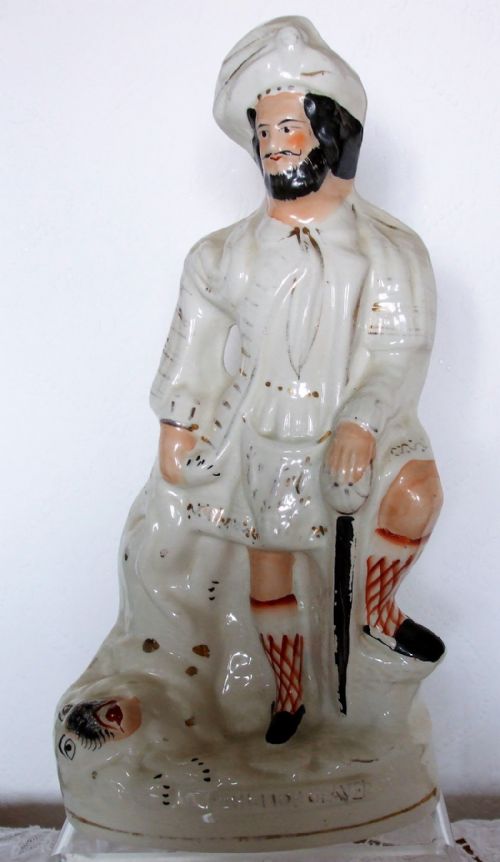
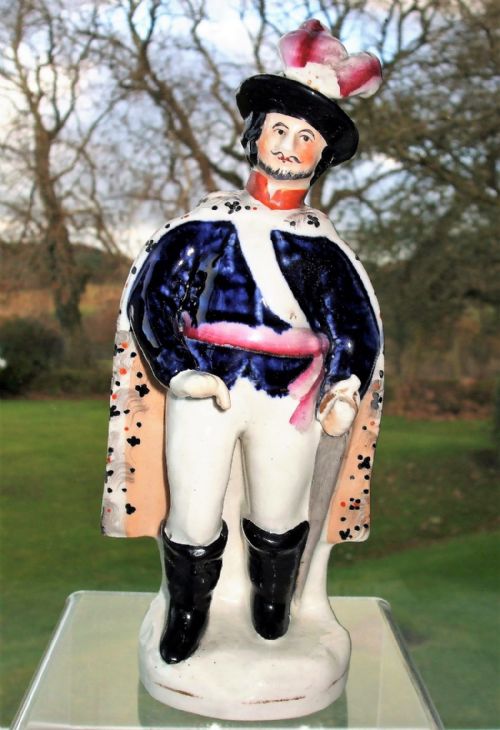
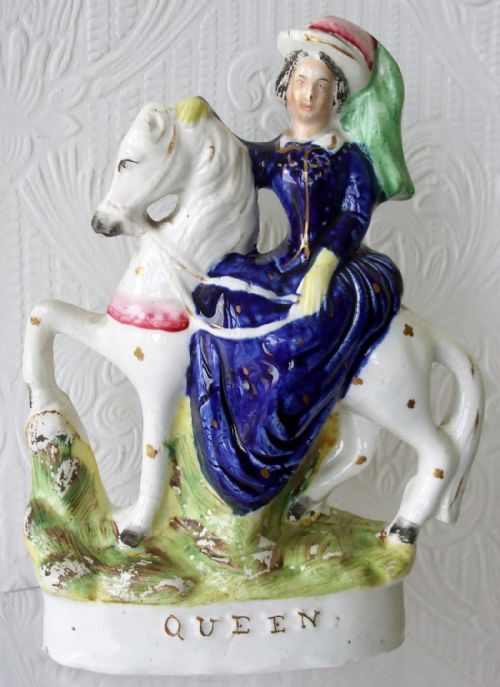
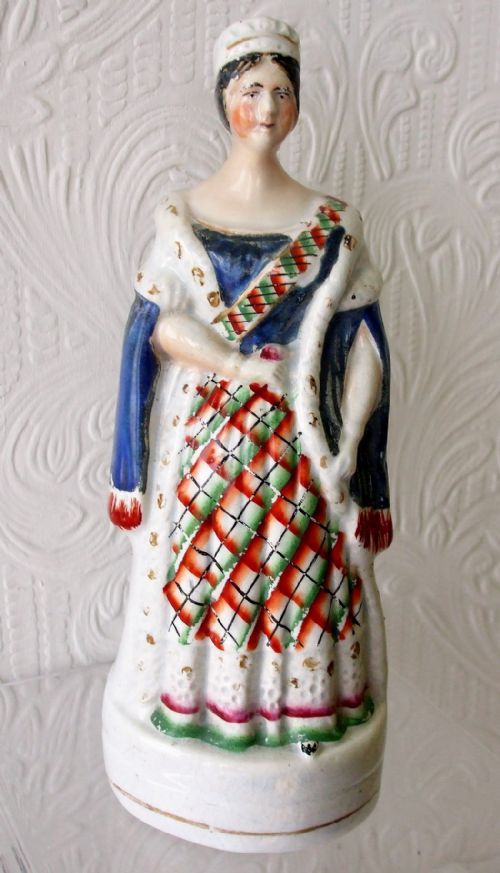
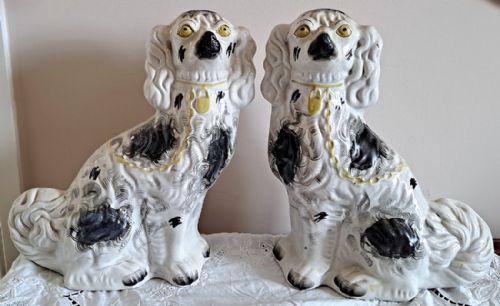
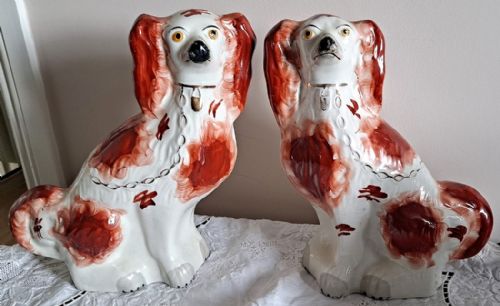
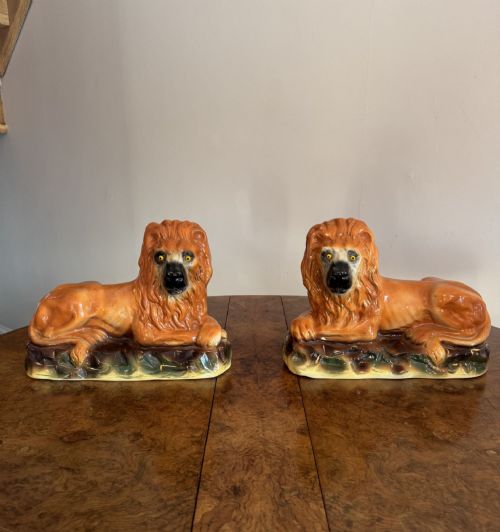
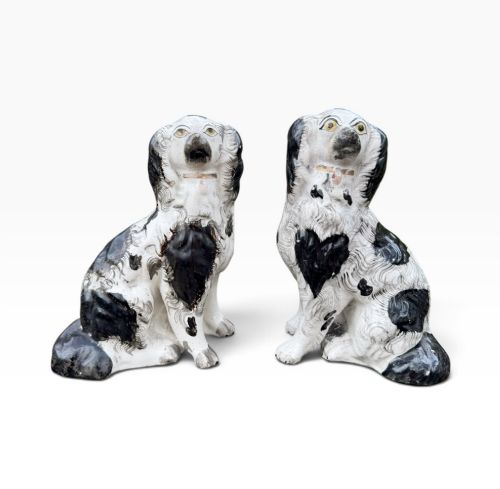
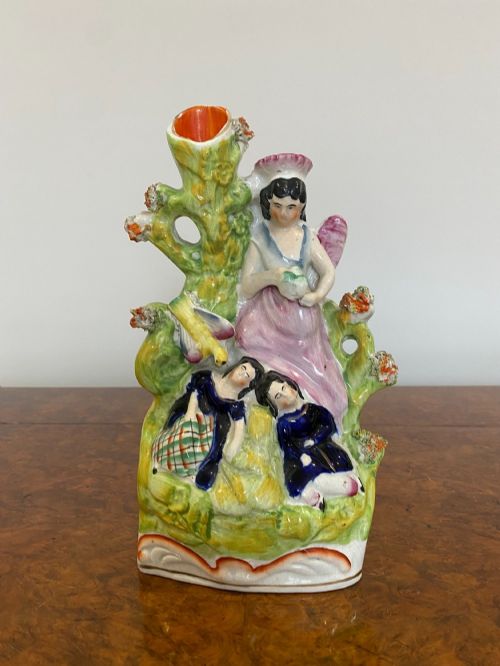
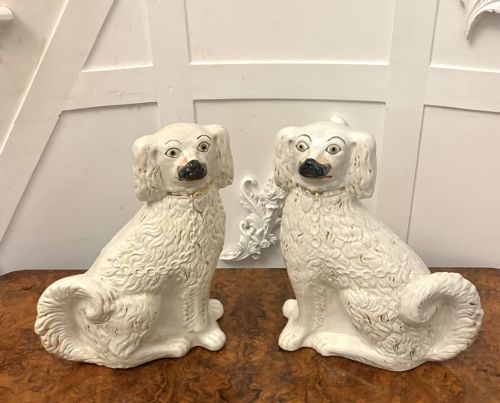
English Staffordshire figures span decorative figurines, spill vases, portrait groups, and Toby jugs that populate Victorian and Georgian interiors. Buyers searching for english staffordshire figures most frequently encounter nineteenth-century earthenware spaniels, lions, literary heroes, and theatrical pairs designed for display.
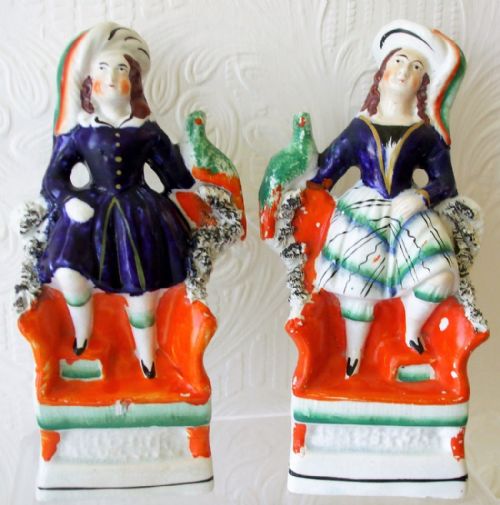
Makers shaped these pottery figures across periods ranging from the mid-eighteenth century to the close of the nineteenth century. The selection includes flat-back subjects intended to stand against a wall, alongside sculptural pairs of greyhounds, poodles, and country gardeners.
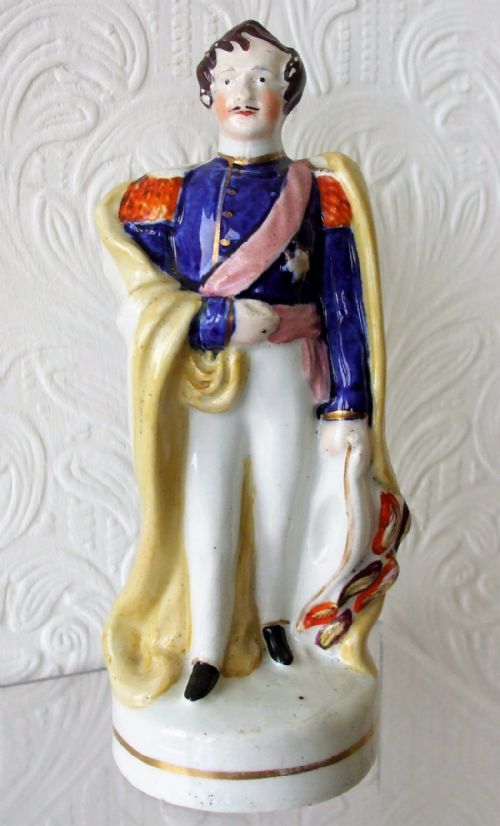
Subjects draw heavily from contemporary events, royalty, stage performers, and domestic animals like hares and terriers. The pieces combine vernacular charm with historical narrative, reflecting popular taste across Victorian country pottery and urban parlours.
Materials and technique
Potters shaped these figures primarily in earthenware, pearlware, and ceramic, utilising clay pressed into moulds and finished by hand. Workshops then applied lead glazes or enamel colours to the surface before firing.
Decoration relied on hand-painted details combined with enamel highlights and occasional gold leaf. Treacle glaze appears on robust animal figures, creating a dark, glossy finish characteristic of certain nineteenth-century regional potteries.
English Staffordshire Figures Retail Price Guide 2026
Typical asking prices for english staffordshire figures among the pieces listed under this phrase on Sellingantiques today, from the lower quarter to the upper quarter. They describe what is for sale here now, not the wider market.
Snow leopards and Maltese terriers keep company with statesmen on the mantelpiece.
Judging quality
The weight of the ceramic and the depth of the glaze set finer studio output apart from simpler output. Painted expressions and careful detailing separate standard mantel ornaments from expressive portrait figures.
John Bevington·Rockingham Pottery·Longton Hall·Mexborough
The English Staffordshire Figures Glossary
- Pearlware
- A fine earthenware developed in the eighteenth century featuring a subtle bluish tinge in the glaze. It provided a paler ground for enamel painting than traditional creamware.
- Flat back
- A figure modelled with a finished front and sides while the reverse remains plain. This construction allowed the piece to sit flush against a wall or mantelpiece.
- Spill vase
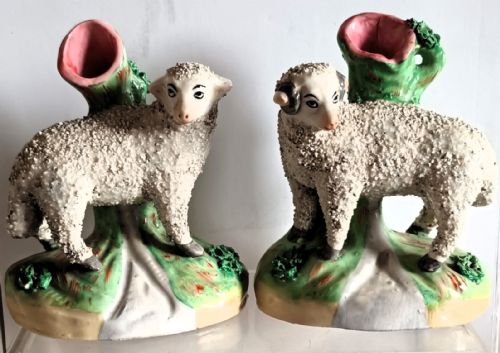
- A hollow ceramic figure incorporating a small tubular holder designed to contain wooden spills for lighting candles or fires. These combine practical utility with sculptural form.
- Lead glaze
- A glossy coating containing lead oxide applied to ceramic bodies before firing. It produces a vitreous sheen that protects the underlying enamel colours.
- Toby jug
- A pottery jug modelled in the form of a stout seated figure, usually holding a mug and a pipe. They depict archetypal characters and historical personages in colourful period attire.
English Staffordshire Figures: Frequently Asked Questions
How do I spot a reproduction?
Look closely at the glaze consistency, the weight of the ceramic, and the crispness of the painted details. Modern copies often show uniform machine brushwork rather than the fluid hand-painting typical of nineteenth-century pieces.
Examine the base for signs of age, wear patterns, and the character of the earthenware body. Older pieces display appropriate crazing and softening in the enamel colours accumulated through generations.
Were these figures meant for display?
Makers designed these earthenware pieces specifically for display on mantelpieces, sideboards, and wall brackets in Victorian parlours. Their flat backs allowed them to sit securely against interior walls.
Subjects ranged from comforting mantel dogs to topical portrait groups, serving as conversation pieces and markers of current events in middle-class homes.
How should I clean my figures?
Dust these ceramic pieces gently with a soft, dry brush to prevent dirt accumulation in the crevices of the mould. Avoid submerging them in water, particularly if the enamel or gold leaf shows vulnerability.
Harsh detergents and abrasive cloths will damage the historic glaze and hand-painted surface. Gentle, dry maintenance preserves the delicate colours applied by nineteenth-century decorators.
What subjects are most common?
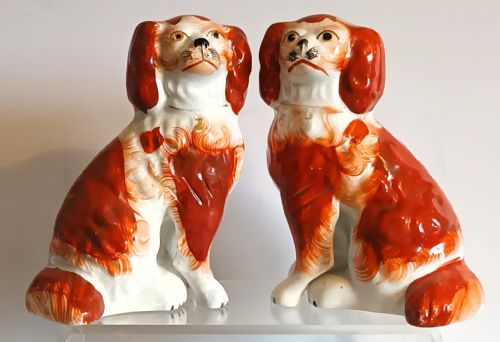
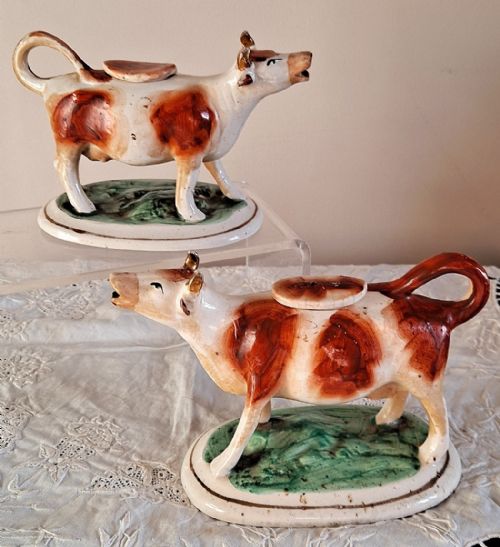
Pairs of spaniels, known as comforter dogs, appear most frequently alongside recumbent lions and rustic animal groups. These domestic subjects formed the backbone of regional pottery production.
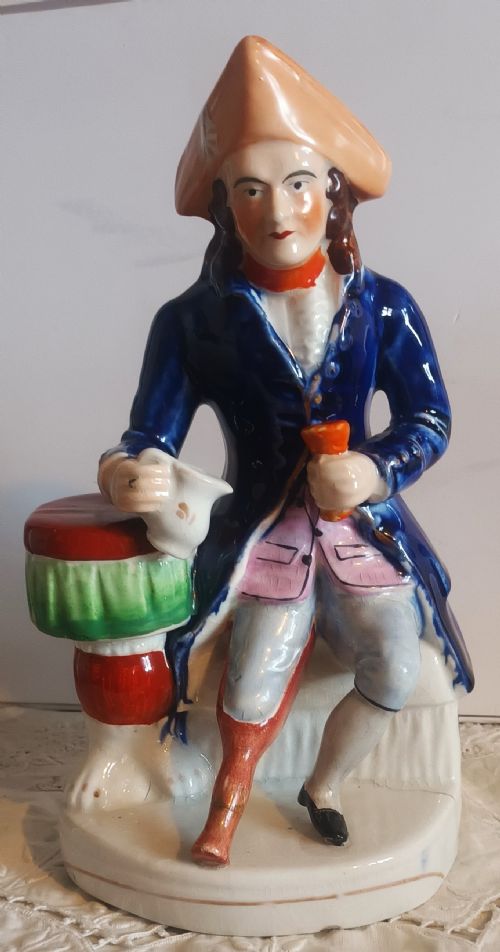
Portrait figures of military heroes, theatrical actors, and literary characters also fill the category, reflecting the popular culture and interests of the Victorian era.