



English Clock 1930s
An English clock 1930s brings functional Art Deco design into a room, combining geometric forms with materials like chrome and walnut.
English Clock 1930s
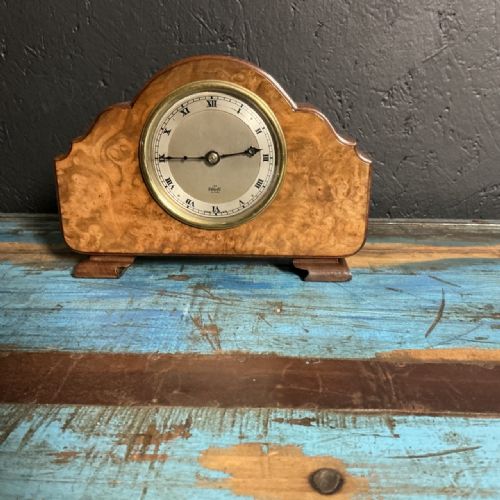
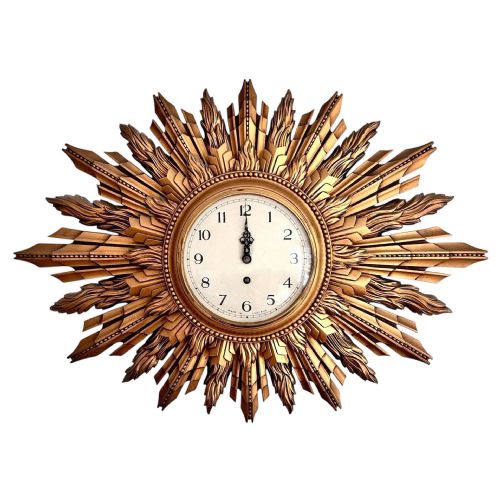
Every english clock 1930s belongs strictly to the Art Deco movement, manifesting as wall clocks, mantel clocks, desk clocks, and occasional desk sets that include barometers and thermometers. These pieces display distinct geometric silhouettes, octagonal formats, and star burst outlines typical of English production from the nineteen-thirties.
Makers such as Smiths and GEC dominate the forms seen, ranging from small desk pieces to large wall clocks. The construction relies heavily on the prevalent aesthetic of the period, prioritising clean lines and symmetry.
Materials and construction
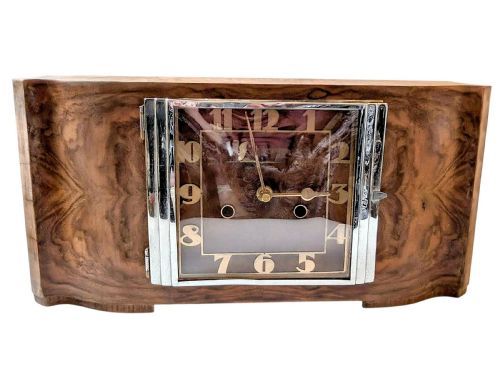
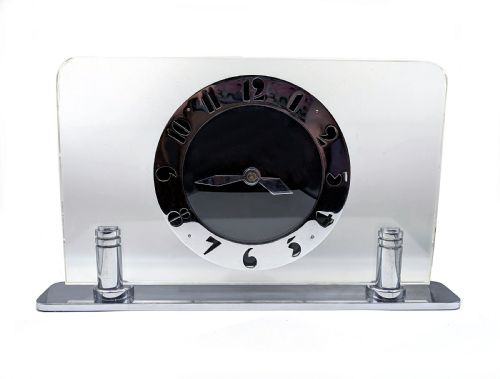
Makers utilised a combination of traditional cabinet woods like burr walnut and ebonised wood alongside contemporary industrial materials including chrome, brass, and coloured glass such as peach mirror or blue glass. Gilded wood and metal also appear to frame dial faces and construct structural surrounds.
Movements span mechanical wind-up systems, eight-day movements, and electric mechanisms. Woodwork involves veneered walnut bodies shaped into geometric profiles, whilst glass models incorporate mirrored panels and polished metal bezels.
English Clock 1930s Retail Price Guide 2026
Typical asking prices for english clock 1930s among the pieces listed under this phrase on Sellingantiques today, from the lower quarter to the upper quarter. They describe what is for sale here now, not the wider market.
Timekeeping meets weather forecasting in heavy onyx desk sets that monitor both the hour and the atmospheric pressure.
Distinctions in quality
Quality depends upon the complexity of the materials used, such as figured burr walnut veneers versus plain timber, and the presence of specialist elements like peach mirror glass or multi-material combinations including onyx, barometer, and thermometer sets. The choice of maker also influences the standing of the piece.
The sophistication of the movement, particularly eight-day mechanical calibres and specialised electric configurations by noted makers, separates standard timepieces from more desirable examples.
Smiths·GEC·A.L. Davenport
The English Clock 1930s Glossary
- Art Deco
- A design style spanning the 1920s and 1930s characterised by geometric shapes, streamlined forms, and modern industrial materials. This aesthetic defines the entire selection of pieces listed here.
- Eight Day Movement
- A mechanical clock movement designed to run for eight days on a single wind before requiring attention. This feature appears frequently in desk and wall clocks of the period.
- Mirror Glass
- Glass coated with a reflective metal backing, utilised extensively in peach or standard variants for decorative clock faces and surrounds. It creates a luminous, reflective surface typical of thirties glamour.
- Burr Walnut
- A highly prized timber veneer showing intricate, swirling grain patterns formed from tree growths. Cabinetmakers applied this wood to enrich the visual texture of mantel and wall clock cases.
- Electric Movement
- An early form of electrical timekeeping mechanism utilised by makers like Smiths to drive clock hands without manual winding. These represent the technological shifts occurring during the decade.
English Clock 1930s: Frequently Asked Questions
Where did people place these clocks?
Mantel clocks found homes on living room mantelpieces, while smaller desk clocks sat on office desks and dressing tables. Wall clocks hung prominently in hallways, kitchens, and communal rooms.
Larger striking models and desk sets combining barometers and thermometers served multiple domestic functions in primary reception rooms.
How do I wind an eight day clock?
Insert the appropriate winding key into the dial arbors and turn clockwise until gentle resistance indicates the mainspring is fully tensioned. Care ensures the internal mechanism remains undamaged.
Avoid overwinding the spring to preserve the longevity of the vintage movement.
Are these clocks electric or mechanical?
The inventory includes both mechanical wind-up mechanisms and early electric movements. Smiths produced prominent examples utilising electrical systems alongside traditional eight-day mechanical calibres.
Buyers should examine the specific listing details to confirm whether a piece requires manual winding or an electrical source.
What materials define thirties clock design?
Designers favoured a mix of natural woods and industrial substances. Walnut, burr walnut, and ebonised wood provided warm cabinet cases, while chrome, brass, and coloured mirror glass added modern sheen.
Onyx also appears as a heavy stone housing for combination desk sets containing barometers and thermometers.