


English Armchair Castors
English armchair castors provide the vital mobility and period floor clearance for heavy nineteenth century library and country house seating.
English Armchair Castors
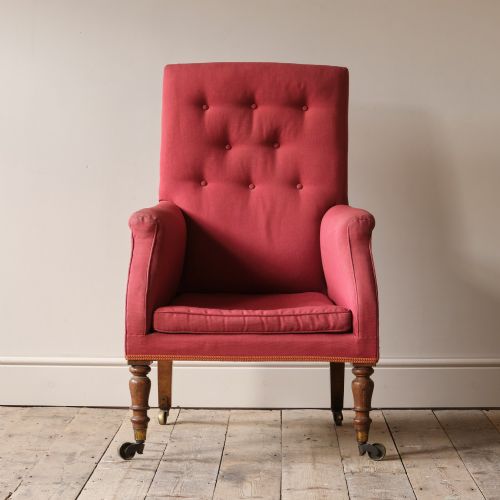
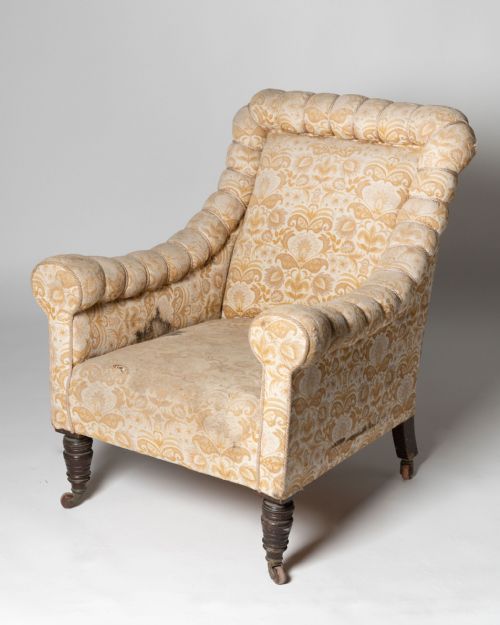
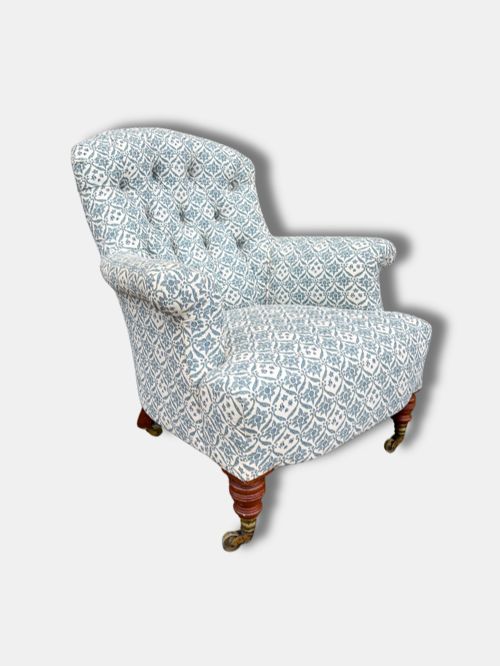
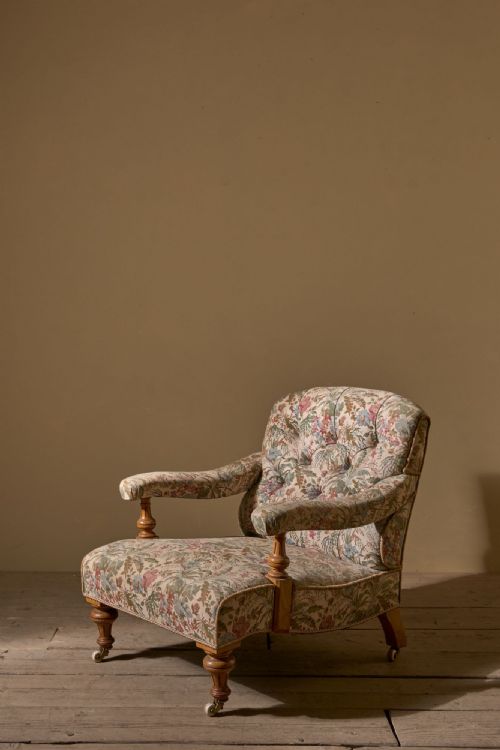
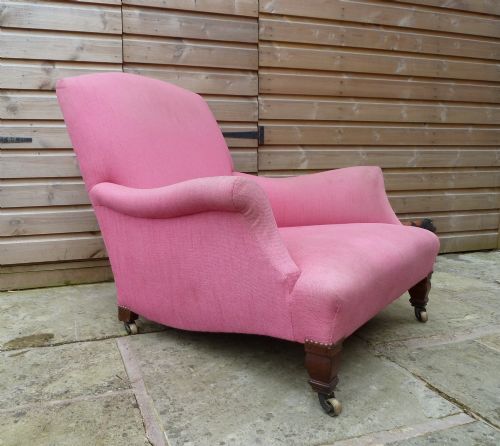
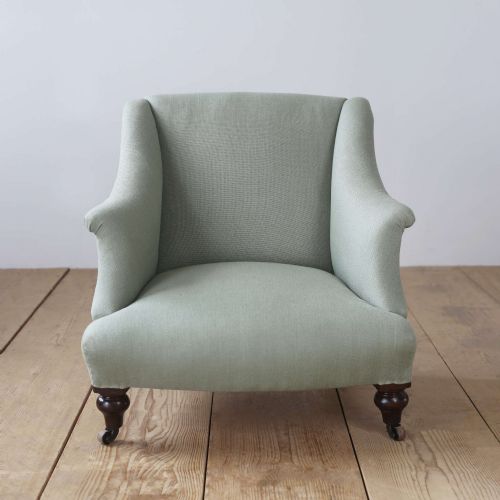
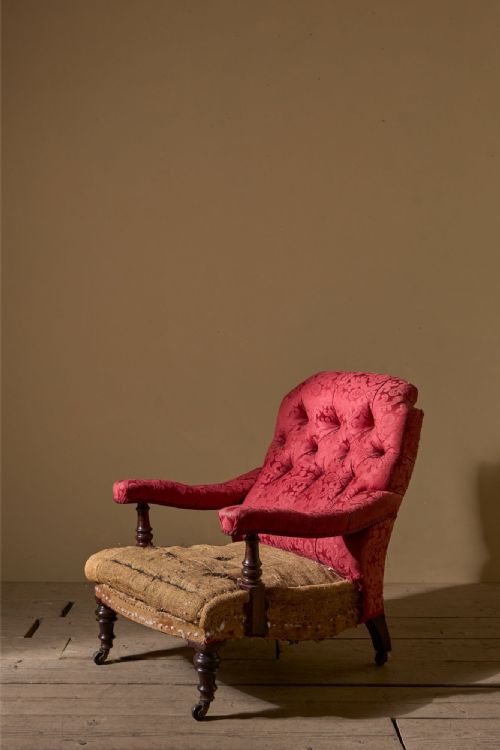
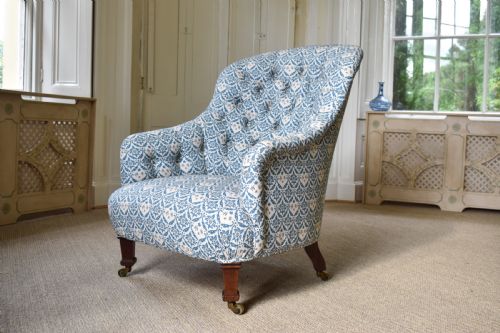
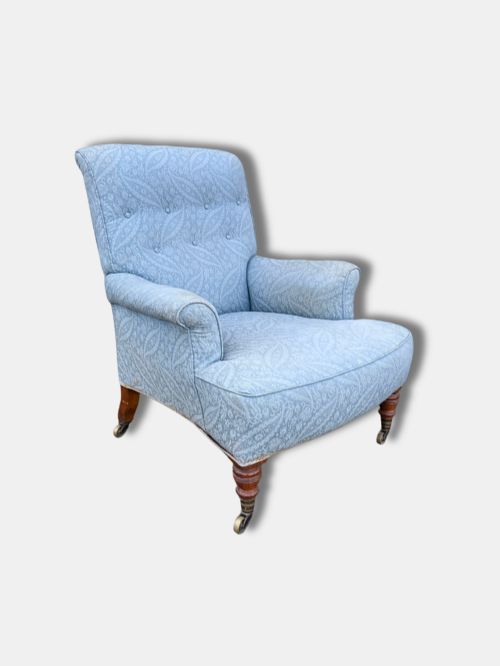
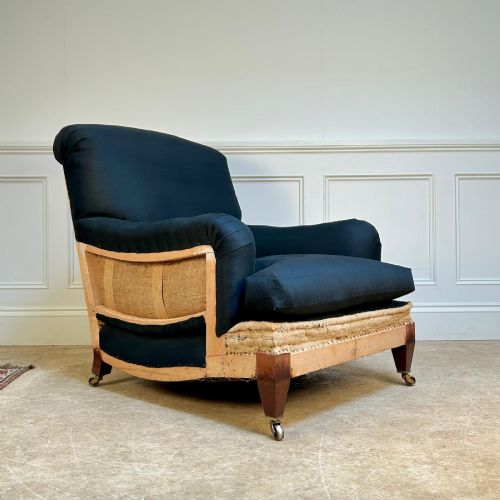
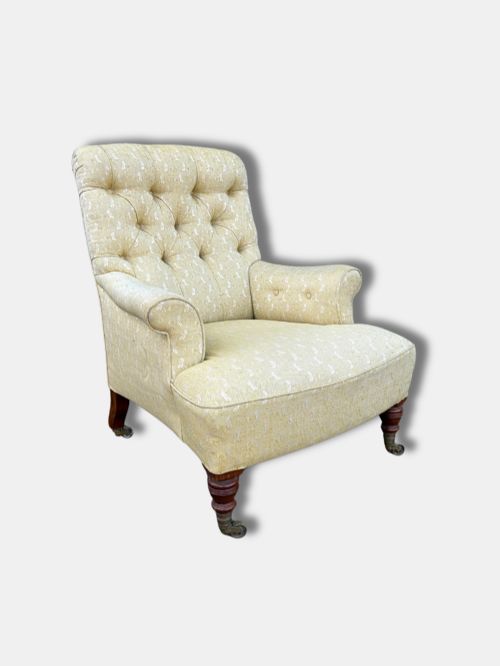
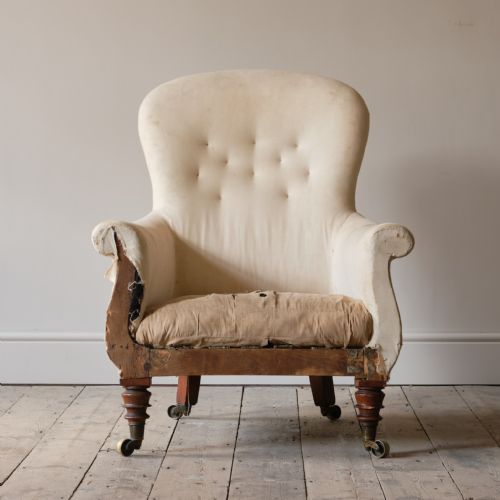
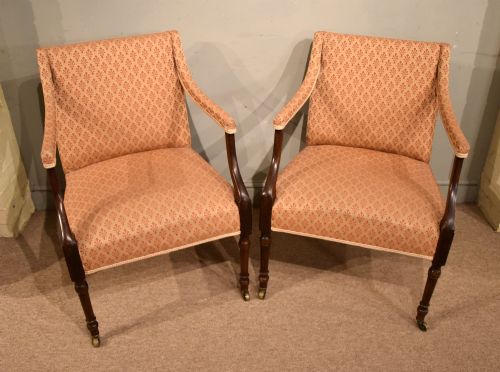
These items are the functional metal wheels fitted beneath the legs of period seating, most frequently encountered on nineteenth century Victorian and Edwardian country house armchairs. When exploring english armchair castors, a buyer observes how hardware connects directly to low timber frameworks designed for deep seating.
The selection ranges from early Regency library chairs in rosewood and George IV library chairs to later button back armchairs and club armchairs. Most examples emerge from the Victorian era and the decades around nineteen hundred, reflecting the heavy proportions typical of English country house upholstery.
Makers such as Howard and Sons and Gillows feature prominently alongside vernacular country house styles and comfortable scroll back designs. The physical hardware enables substantial upholstered forms to shift across carpets without damaging timber floors.
Judging quality in construction
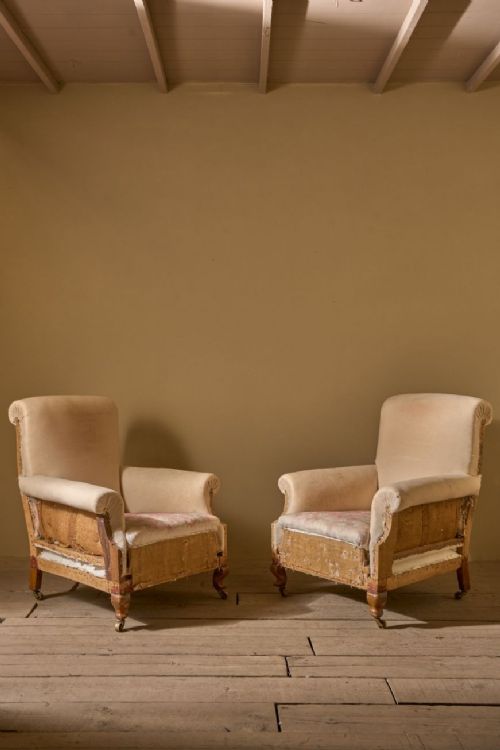
Superior examples demonstrate substantial proportions paired with fine timber frames, such as figured mahogany or rosewood, rather than basic secondary hardwoods. The integration of the castor into the leg reveals the precision of the joinery and the original integrity of the mount.
The depth of the upholstery work and the pedigree of the maker elevate certain pieces above standard vernacular seating. Upholstery finish, from ticking to crewelwork and button backing, indicates the original tier of commission.
English Armchair Castors Retail Price Guide 2026
Typical asking prices for english armchair castors among the pieces listed under this phrase on Sellingantiques today, from the lower quarter to the upper quarter. They describe what is for sale here now, not the wider market.
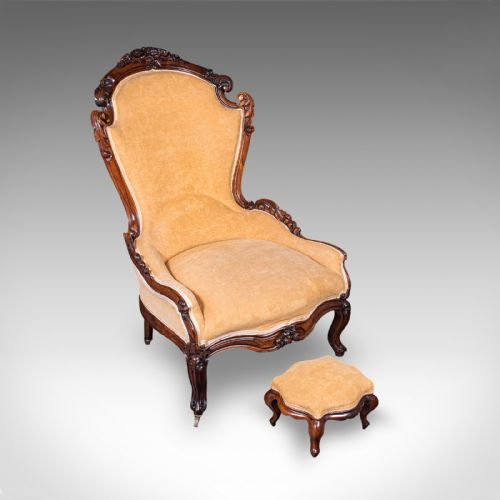
The collection includes a colonel who apparently required a dedicated matching stool for his parlour seat.
Howard and Sons·Gillows
The English Armchair Castors Glossary
- Castor
- A small wheel fixed to the base of a leg to allow smooth movement across floors. These brass fittings support the weight of heavy library chairs.
- Show frame
- A wooden structural skeleton left visible around the upholstered portions of a chair. Mahogany and rosewood are typical show frame materials.
- Ticking
- A tightly woven heavy cotton or linen fabric traditionally used as an inner lining or outer loose cover. It often appears on country house armchairs.
- Bergère
- An enclosed upholstered armchair with exposed wooden frames and cane or upholstered sides. Regency library chairs frequently adopt this format.
- Button back
- An upholstery style where depressions are formed in the padding by stitches pulled tight and secured with buttons. This method defines many Victorian armchairs.
English Armchair Castors: Frequently Asked Questions
What periods do these armchairs cover?
The listings span from the Regency and George IV periods through the Victorian era into Edwardian times and the nineteen thirties. This covers substantial nineteenth century country house seating alongside later traditional variations.
Most pieces concentrate in the Victorian and Edwardian periods, reflecting the peak era of deep seated upholstered comfort in English domestic interiors.
Which woods appear in the frames?
Mahogany and rosewood provide the primary polished show frames for library chairs and open armchairs. Other listings simply record hardwood or general timber beneath the upholstery.
Concealed structural elements often utilise secondary timbers, while visible legs and frames display the grain of walnut or mahogany.
How do library chairs differ from club chairs?
Library chairs often feature exposed wooden frames in mahogany or rosewood, sometimes incorporating cane panels or open arms. They originate frequently from the Regency and early Victorian periods.
Club chairs and country house armchairs prioritise fully upholstered deep seating covered in ticking, leather, or fabric. These heavier forms developed strongly through the later nineteenth century.
What fabrics cover the upholstery?
Original and replacement coverings include simple ticking, calico, hessian, fabric, wool plaid, and leather. Crewelwork and button back upholstery also appear across Victorian examples.
Many country house pieces retain traditional ticking or heavy fabric covers that complement the substantial proportions of the chair.