



Enamelled Butterfly Brooch
An enamelled butterfly brooch brings together bright metallic work and colourful wings, offering a charming piece of wearable history for any jewellery collector.
Enamelled Butterfly Brooch
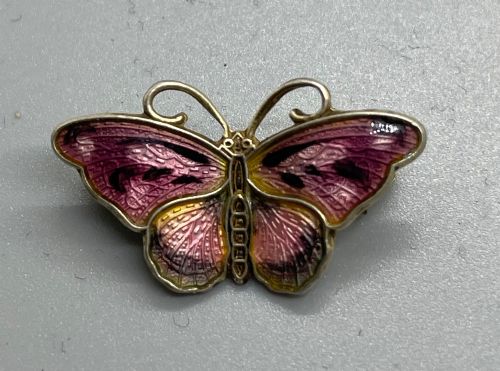
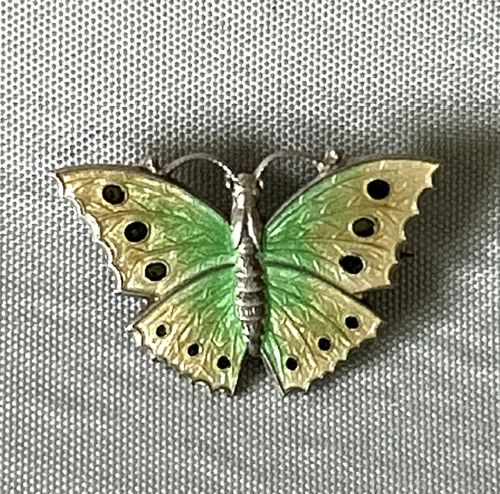
When you search for an enamelled butterfly brooch, you encounter pieces spanning several decades from the early to the mid-twentieth century. The selection includes items shaped in distinct periods such as Art Deco, Art Nouveau, and Mid-Century Modern styles.
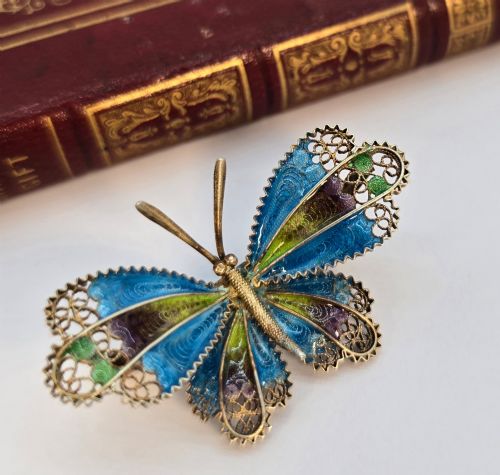
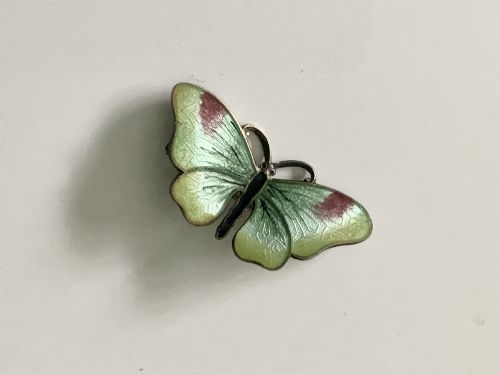
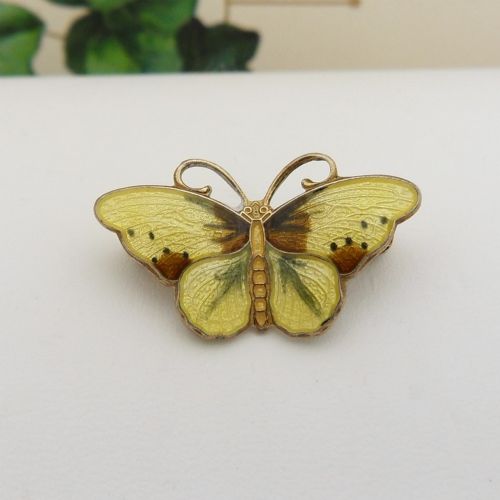
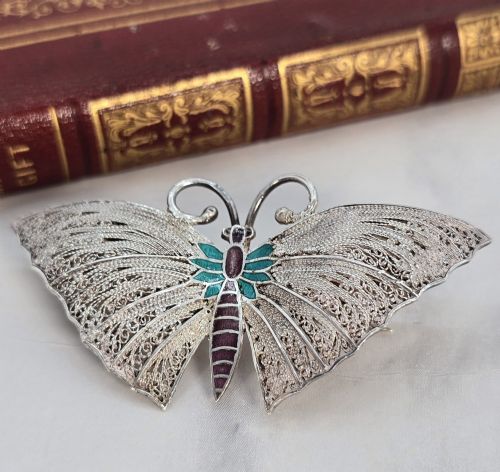
The version you are most likely to meet on this page is a silver piece featuring colourful enamel, often originating from Norway or showing Chinese export work. These range from tiny pins to larger statement items incorporating delicate filigree or guilloche details.
How they were made
Makers fashioned these pieces primarily using silver, sterling silver, or silver gilt, sometimes adding gold vermeil to enrich the metallic finish. Artisans then applied vitreous enamel or glass into the metal cells to create the vibrant wing patterns.
Some examples incorporate traditional filigree wirework or precise guilloche engraving beneath translucent layers of enamel. A few unusual designs even utilised butterfly wing material alongside glass elements within the metal frame.
Even the smallest Norwegian pins manage to capture the startled expression of a tiny metal insect caught mid-flight.
What varies in quality
The standard of an enamelled butterfly brooch depends largely on the precision of the metalwork and the clarity of the vitreous enamel. Finer pieces display smooth, even colour application without cloudiness, while simpler items show heavier or more uniform casting.
Origin and design complexity also dictate the character of the piece, with Norwegian designer work and detailed silver filigree sitting distinctively apart from simpler mass-produced variants. The integration of the pin mechanism and the weight of the silver substrate complete the assessment.
Hroar Prydz
The Enamelled Butterfly Brooch Glossary
- Silver gilt
- Silver that has been coated with a thin layer of gold to give it a rich yellow metal appearance. This technique adds warmth to the underlying silver structure.
- Guilloche
- A decorative engine-turning technique that etches a precise, intricate geometric pattern into metal. Translucent enamel is often layered over this engraving to catch the light.
- Vitreous enamel
- A material made by fusing powdered glass to a metallic substrate through firing at high temperatures. It creates a durable, glossy coloured surface that resists fading.
- Silver filigree
- Delicate jewellery-making work consisting of fine silver threads twisted and soldered together into openwork patterns. It creates a lace-like framework for the enamel wings.
- Gold vermeil
- Sterling silver thickly coated with gold. This provides the durability of silver beneath a substantial gold outer layer.
Enamelled Butterfly Brooch: Frequently Asked Questions
How do I date an enamelled butterfly brooch?
You can approximate the age of an enamelled butterfly brooch by looking at the stylistic markers, such as geometric Art Deco lines or mid-century Scandinavian forms. Hallmarks and stampings on the reverse of the silver often provide further clues to the decade of manufacture.
Makers frequently utilised specific enamelling techniques and metal alloys during certain periods. Comparing the clasp type and the framing style against known pieces helps narrow down the production era.
What is guilloche enamel?
Guilloche enamel involves mechanical engraving of a precise pattern into a metal base before applying translucent coloured glass enamel over the top. The underlying engraved design shines through the transparent coating to create depth and movement.
This technique was particularly popular in Scandinavian and European jewellery production during the earlier part of the twentieth century. It requires considerable skill to ensure the enamel fires evenly across the machined metal lines.
How should I care for vintage enamel?
Vintage enamel requires gentle handling because the glass surface can chip or scratch if struck against hard objects. Clean your brooch using a soft, dry cloth rather than harsh chemical dips or ultrasonic jewellery cleaners.
Store each piece separately in a lined box to prevent the silver and enamel surfaces from rubbing against other items. Avoid exposing them to prolonged direct sunlight or extreme temperature shifts.
Where were most vintage butterfly brooches made?
Many fine examples found today originated in Norway, where workshops specialised in guilloche enamelled silver jewellery. Other notable pieces emerged from Continental Europe and Chinese export workshops.
Regional differences are often visible in the choice of colours, the weight of the silver filigree, and the overall silhouette of the insect. Scandinavian pieces tend to favour clean, translucent colour palettes, while Chinese export work often highlights intricate wire filigree.