



Empire Bureau
An empire bureau brings architectural symmetry and rich mahogany or walnut tones to a room, offering clever concealed compartments alongside a functional writing surface.
Empire Bureau
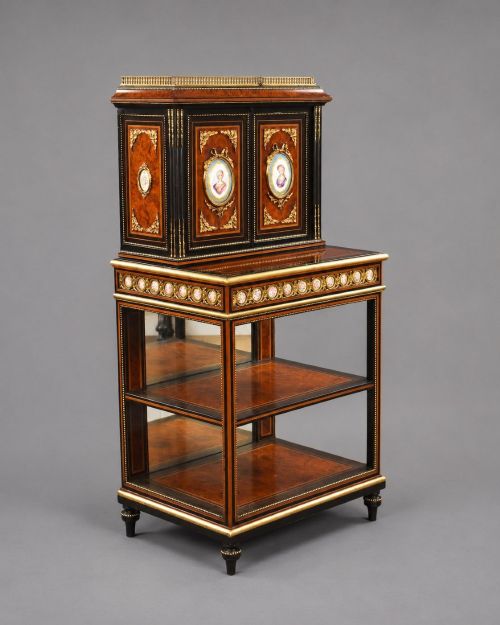
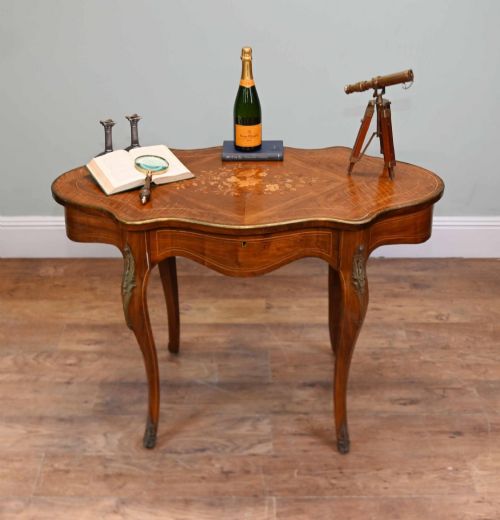
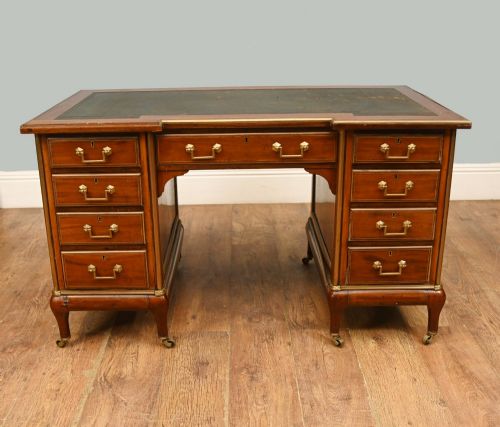
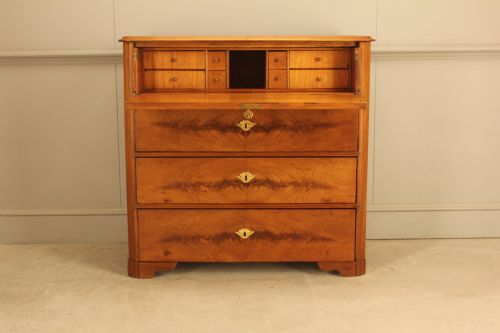
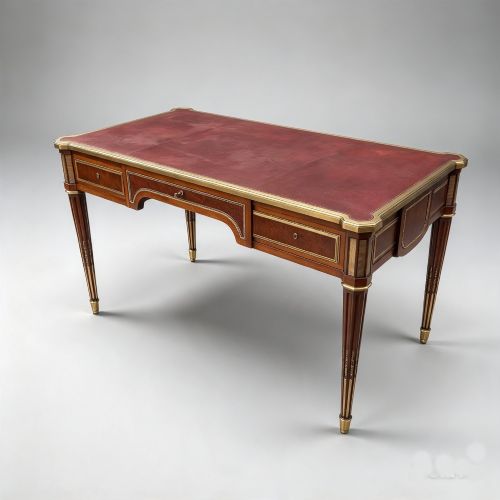
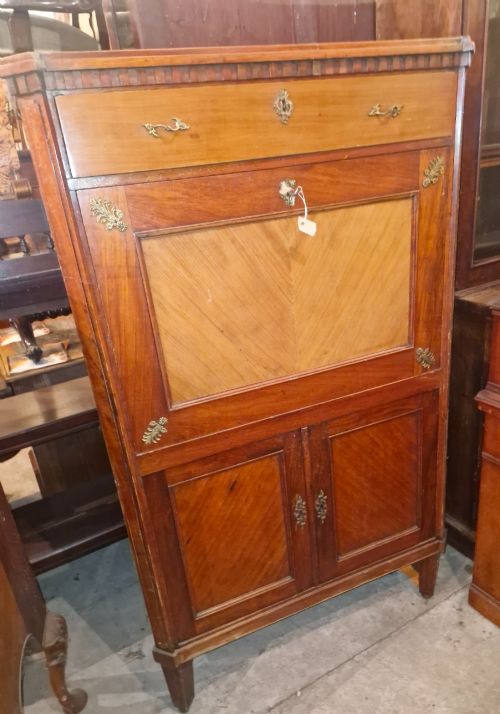
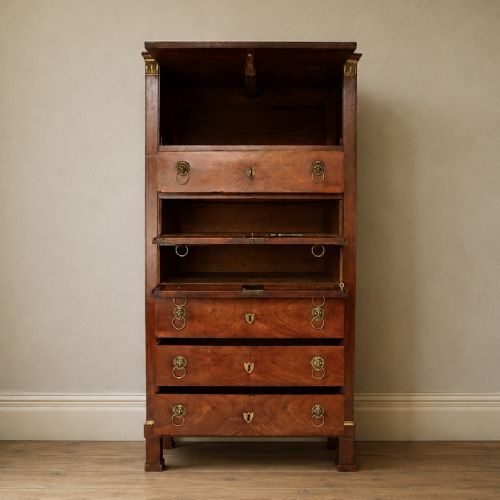
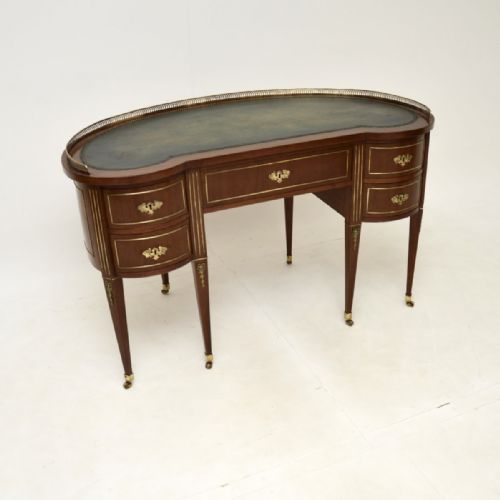
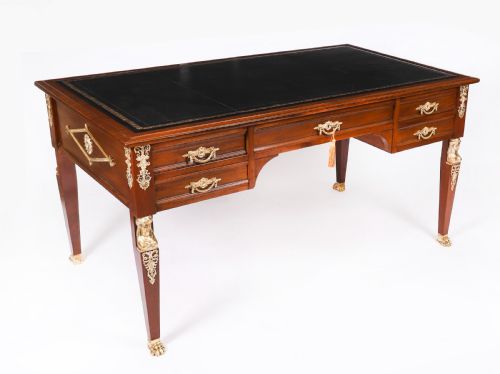
When searching for an empire bureau, collectors encounter pieces spanning the nineteenth century, including French Empire, Austrian Empire, and Biedermeier expressions. These objects bridge the gap between grand reception furniture and private writing quarters, often taking the form of drop-front secretaire abattants or sprawling bureau plat writing tables.
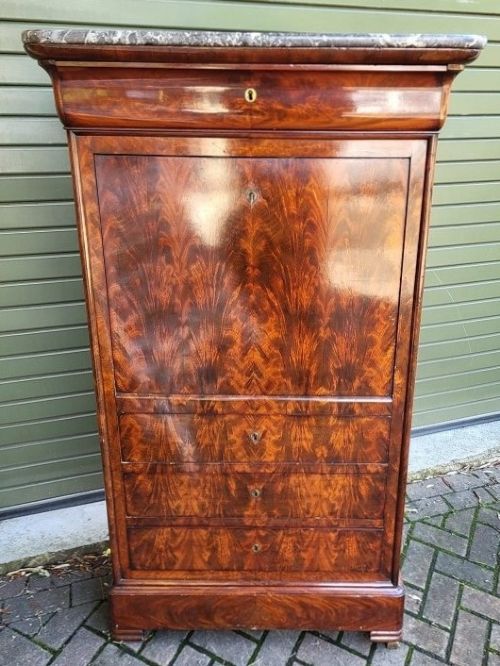
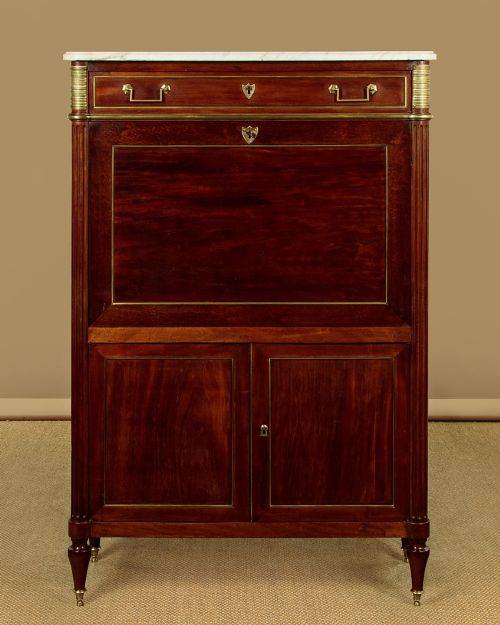
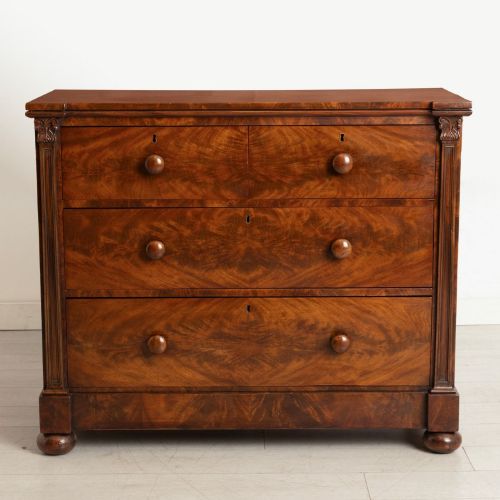
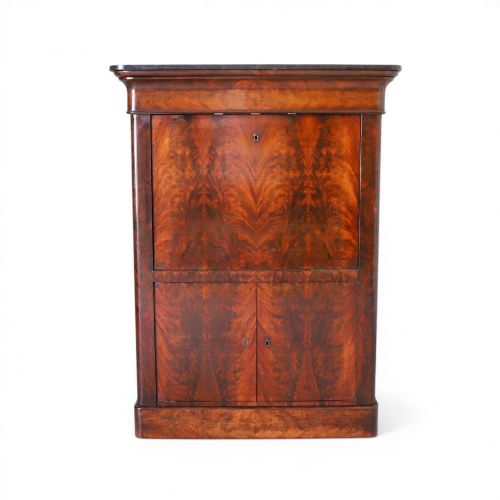
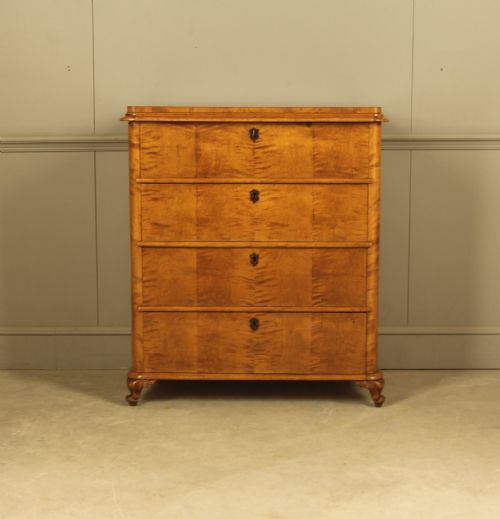
The dominant forms present on this page combine architectural proportion with figured timbers such as flame mahogany, burr walnut, and tiger birch. Alongside upright secretaire cabinets with marble tops and secret drawers, buyers meet cylinder desks, partner writing tables, and occasional desk chairs designed to complement the writing suite.
Originating largely from French and continental workshops, these items reflect the heavy neoclassical influence of the period, sometimes carrying later revival styling from the late nineteenth century. Pieces range from monumental library desks to compact ladies writing tables suitable for smaller domestic spaces.
Materials and construction
Cabinet makers utilised dense structural carcases of oak or pine, veneered extensively with ribbon-striped mahogany, flame birch, or burr walnut to create striking symmetrical grain patterns on the drop-fronts and drawer faces. Timber selection prioritised visual impact, often framed by ebonised mouldings or subtle geometric banding.
Ormolu and gilt bronze mounts define the neoclassical aesthetic, applied meticulously to corners, key escutcheons, and drawer pulls to provide sharp metallic contrast against dark wood. Marble tops, frequently white or grey veined, add weight and a cool tactile surface to upright secretaire cabinets.
Internal compartments incorporate secret drawers and pigeonholes assembled with traditional dovetail joints, reflecting precise interior joinery hidden behind the main writing flap. Leather writing surfaces, often tooled in gold, insert directly into the desk platforms of bureau plat tables.
Empire Bureau Retail Price Guide 2026
Typical asking prices for empire bureau among the pieces listed under this phrase on Sellingantiques today, from the lower quarter to the upper quarter. They describe what is for sale here now, not the wider market.
Secret drawers require discovering hidden spring releases or sliding panels, proving that nineteenth-century cabinet makers enjoyed playing hide-and-seek with your stationery.
Distinctions in quality
The standard of an empire bureau rests primarily on the depth and figuration of the timber veneer, where book-matched flame mahogany or burr walnut creates a continuous mirror image across large drawer fronts. Lesser examples utilise plain or poorly matched veneers with minimal grain movement.
Chasing and fire-gilding on ormolu mounts separate high workshop output from routine production, as finer bronze fittings retain crisp facial details and sharp leaf work rather than soft, cast-indistinct edges. The weight and integration of solid marble tops further distinguish monumental library pieces from lighter commercial variants.
The Empire Bureau Glossary
- Secretaire abattant
- An upright cabinet featuring a drop-front writing flap that conceals an arrangement of small drawers and pigeonholes.
- Bureau plat
- A freestanding double-sided writing table, typically fitted with drawers along the frieze and standing on four legs without an upper superstructure.
- Ormolu
- Gilded bronze ornamentation applied to furniture carcases to provide decorative metallic contrast against dark wood veneers.
- Flame mahogany
- A highly figured timber cut from the fork of the mahogany tree, producing a distinctive flickering flame pattern when polished.
- Escritoire
- A compact writing desk or chest fitted with a sloping or folding writing surface and internal compartments.
Empire Bureau: Frequently Asked Questions
What is an empire bureau?
An empire bureau is a nineteenth-century writing cabinet or table characterised by neoclassical symmetry, heavy proportions, and often rich mahogany or walnut veneers.
These pieces typically feature drop-front writing flaps or flat leather-lined tops designed for correspondence and administrative work.
How do I use a secretaire abattant?
The drop-front flap folds down horizontally on hinges to create an immediate writing desk surface, supported by internal catches or desk arms.
Lifting the flap reveals fitted interior compartments, pigeonholes, and hidden secret drawers for storing letters and stationery.
Where were empire bureaus made?
The majority of these pieces originate from continental European workshops, particularly in France, Sweden, and Austria.
They reflect stylistic movements such as French Empire, Biedermeier, and later nineteenth-century revival periods influenced by classical design.
How do I care for marble top desks?
Marble surfaces require regular dusting with a soft cloth and immediate wiping of any liquid spills to prevent staining on porous stone.
Avoid harsh acidic cleaners or abrasive scouring pads that can dull the polished finish of the marble top.